Mechnikov, Ilya Ilyich
Historical document, translated for reference. It reflects medical knowledge of the 1920s–30s and is not medical advice.
Summary
A biographical entry on Ilya Ilyich Mechnikov (1845–1916), the eminent Russian biologist and pathologist. This first part details his early life, education at Kharkov University, and his academic career in Saint Petersburg and Novorossiysk.
Encyclopedia article (1928–1936)
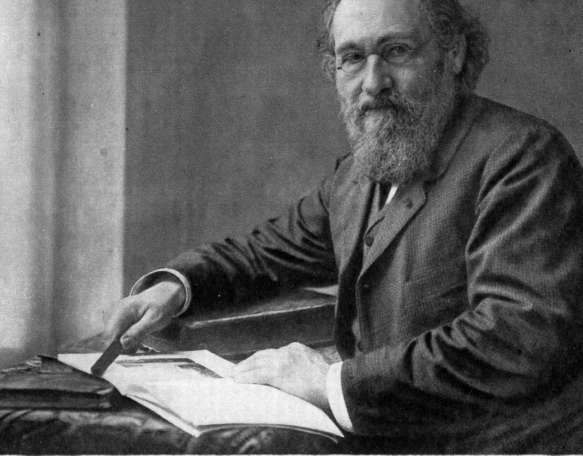
MECHNIKOV, Ilya Ilyich (1845–1916), an outstanding Russian scientist; born into a wealthy landowner's family in the Kupyansk district of the former Kharkov Governorate. After graduating in 1862 from the 2nd Kharkov Gymnasium, Mechnikov entered Kharkov University, where he worked mainly in the field of animal morphology in the laboratory of the professor of physiology, I. P. Shchelkov. Having completed the natural sciences department of the Faculty of Physics and Mathematics in two years with the degree of Candidate, Mechnikov went abroad in 1864, where for a short time he worked in Giessen in the laboratory of Rudolf Leuckart and then moved to Naples. In 1867, Mechnikov defended his dissertation in Saint Petersburg for the degree of Master of Zoology (on the developmental history of Sepiola) and in the same year was elected docent of the Novorossiysk University. In 1868, he transferred to Saint Petersburg University, where on December 28, 1868, he defended his dissertation for the degree of Doctor of Zoology (on the developmental history of Nebalia) and became an extraordinary professor. He then went abroad and worked in Naples and Messina. In 1870, he was elected
ordinary professor of zoology at Novorossiysk University and held this position until 1882. Under the influence of the reaction prevailing at that time in Novorossiysk University, he left the department and went abroad again. Ilya Ilyich Mechnikov spent the autumn and winter of 1882–83 in Messina, and in 1884 he visited Tangier. In 1886, Mechnikov became the head of the first Odessa Bacteriological Station in Russia, which he established by agreement with the Kherson Governorate Zemstvo and the Odessa Municipal Public Administration, but already in 1887 he left this post. At this time, Mechnikov's decision to leave Russia finally matured, and on October 15, 1888, at the invitation of Louis Pasteur, he moved to Paris, where he began working at the Pasteur Institute. This last period of Mechnikov's life lasted 28 years until his death. In 1908, Mechnikov received the Nobel Prize (shared with Ehrlich); in the spring of 1909, he was in Sweden and then visited Russia. In 1911, together with Burnet, Salimbeni, Yamaguchi, L. A. Tarasevich, and Shukevich, Mechnikov took part in an expedition to the Kalmyk steppes. In November 1915, Mechnikov fell ill and on July 16, 1916, passed away with symptoms of cardiac dysfunction. The urn with Mechnikov's ashes is kept in the library of the Pasteur Institute. Two periods are distinguished in Mechnikov's scientific activity. From 1862, when as a young man he published his first work, until 1883, Mechnikov was a zoologist. The second period is dedicated to pathology; this period lasted from 1883 until Mechnikov's death. Both periods, however, are closely linked, and Mechnikov's works in the field of pathology represent, to a certain extent, a further development and logical completion of his research in the field of zoology. In zoology, Mechnikov was predominantly an embryologist; together with his famous friend A. O. Kovalevsky, he shares the honor of resolving many complex problems of comparative embryology. Studying the development of the scorpion embryo, Mechnikov proved the existence of germ layers in this animal and the formation of organs from them according to the same plan that was already known in birds and mammals. This study, together with the works of A. O. Kovalevsky on the development of worms and insects, proved the existence of a developmental law of the animal organism common to all animals. Further, in studies on the development of echinoderms on the one hand and jellyfish and ctenophores on the other, Mechnikov showed that there is a genetic link between the development of acoelomate and coelomate animals. Mechnikov's research in the field of development of lower multicellular organisms, hydroid polyps, and jellyfish is of great importance. As is known, Haeckel created a theory according to which multicellular animals originate from a primitive, simply organized form having the appearance of a double-walled cup, the so-called gastrula. Working on the development of hydroids and jellyfish, Mechnikov proved that the form of larvae is often simpler and more primitive than the gastrula; in this most primitive stage, it is a compact mass of cells; the stomach-like form (gastrula) is acquired later. Thus, Haeckel's theory was modified by Mechnikov, and instead of the gastrula, the parenchymula or phagocytella, consisting of a compact mass of cells, was put forward. Mechnikov's discovery had very important consequences. Once in Giessen, he discovered an amphibious animal, Geodesmus bilineatus, whose body represented a parenchymatous mass of cells filled with semi-digested food. This new discovery served as an impetus to prove the existence of intracellular digestion; it was shown that parenchyma cells can capture solid food substances and digest them within themselves. Mechnikov proved this first of all regarding acoelous turbellarians; he then extended this pattern to more advanced animals equipped with a digestive cavity. Thus, the doctrine of intracellular digestion was created. Subsequently, Mechnikov proved that the ability to digest food belongs not only to the stationary cells of the digestive tract or parenchyma, but also to other mobile, amoeboid cells lying outside the digestive cavity. These are wandering cells of mesodermal origin, and the germ layer forming them originates from the endoderm. All these facts serve as proof that in the organism of animals equipped with digestive organs, there exist at the same time cells capable of digesting food but taking no direct part in digestion. The question arose as to the significance of these cells. The answer was Mechnikov's doctrine of phagocytosis. Mechnikov was led to the doctrine of phagocytosis by two observations: into the body of a transparent floating larva of a starfish (Bipinnaria), Mechnikov inserted a pointed glass rod, then broke off its outer end. Around this rod, leukocytes immediately accumulated, surrounding it on all sides and isolating it from the body of the larva. Another observation of Mechnikov was made on the so-called daphnia (water flea) infected with spores of a fungus (Monosporea bicuspidata). The needle-like spores of Monosporea, having penetrated through the walls of the digestive tract into the body cavity of the daphnia, are surrounded by leukocytes, phagocytosed (engulfed) by them, and digested; the daphnia, if there were not too many spores, recovers. The doctrine of phagocytosis was developed by Mechnikov into a harmonious system explaining the phenomena of immunity and inflammation. According to Mechnikov, microbes penetrating the organism attract phagocytes; the latter surround them, capture them with their pseudopodia, draw them inside the body, and digest them in special digestive vacuoles. Phagocytes are of two types: microphages, which include blood polynuclears, and macrophages, which combine blood monocytes, as well as various stationary cells of organs (brain glia, Kupffer cells of the liver, etc.). Microphages phagocytose microbes that cause acute infections, whereas macrophages phagocytose pathogens of protozoal origin, as well as microbes that cause chronic infections (tuberculosis, etc.) and spirochetal diseases. Mechnikov's doctrine of phagocytosis met with sharp opposition from representatives of the humoral direction in understanding the processes of immunity (Buchner, Behring, Pfeiffer, etc.). The struggle with them continued for a number of years and revealed Mechnikov as an outstanding polemicist; this struggle can be considered finished, and at present, there is hardly any doubt that Mechnikov's phagocytes play a prominent role in both natural and acquired immunity. Having created the doctrine of phagocytosis, Mechnikov naturally had to place it at the basis of the understanding of inflammation: in contrast to previous theories, according to Mechnikov, inflammation represents an active reaction of the organism against a pathogenic agent, carried out through micro- or macrophages; inflammation in itself, according to Mechnikov, does not present a danger to the organism and is a reaction beneficial to it (see Inflammation). The theory of phagocytosis was a turning point in Mechnikov's scientific activity; from 1883–1884, when his first reports on phagocytosis appeared, Mechnikov became a pathologist; zoology now occupied a very small place among his scientific interests. Mechnikov made the most diverse infections the subject of his study. He proved the possibility of destruction and granular degeneration of tubercle bacilli in the organism of animals immune to tuberculosis; he substantiated the doctrine of natural immunization of the population to tuberculosis, seeing in it a factor of the most essential significance in the epidemiology of this disease. Together with Émile Roux, Mechnikov induced experimental syphilis in monkeys (chimpanzees) and proved the possibility of obtaining an attenuated syphilitic virus by passing it through the organism of lower monkeys; he created a prophylactic agent against syphilis infection in the form of calomel ointment. Working in the field of cholera, Mechnikov established the role of microbes (Torula, Sarcina, Bacillus acidi lactici) which—in association with the cholera vibrio—promote the development of cholera infection; studying the so-called infantile cholera, Mechnikov proved by experiments on monkeys the infectious nature of this disease and came to the conclusion that a prominent place in the etiology of infantile cholera belongs to Bacillus proteus, with the association of Bacillus proteus with Bacillus perfringens (Welchii) being of particularly great importance in this respect; flies play a major role in the epidemiology of infantile cholera. Works in the field of studying typhoid fever were dedicated to proving the etiological significance of Eberth's bacillus (experiments on chimpanzees), as well as vaccination with sensitized vaccines; immunity by this method is unconditionally obtained. A special place in Mechnikov's scientific activity is occupied by works dedicated to the etiology of and the fight against aging. Mechnikov came to the conclusion that old age represents a chronically developing disease, at the basis of which lies autointoxication of the organism. The source of this chronic intoxication is intestinal microbes normally inhabiting the large intestine. Physiological arteriosclerosis, which in his opinion is the anatomical substrate of old age, is based on slow, continuous poisoning by aromatic substances produced by the microbes of the large intestine; of these substances, phenol and indole are of the greatest importance in this respect.
To combat old age, it is therefore necessary to replace the "wild" flora of the large intestines with a flora that does not lead to the excessive development of putrefactive processes in them; a dietary regimen with a predominance of vegetables and fruits rich in sugar brings absolute benefit in this respect; furthermore, the introduction of lactic acid bacteria (sour milk) into the intestine is recommended as antagonists of putrefactive microbes, etc. Mechnikov was highly engaged—especially in the last years of his life—with philosophical questions. The deeply pessimistic mood that possessed him in his youth was replaced in his mature years by an optimistic worldview. To the question of where man originated, Mechnikov gave a completely definite answer: "science, according to Mechnikov, teaches us that man is something of an ape-like freak. This ape... is endowed with a lively mind and is capable of great improvement" (cited by A. Besredka). Mechnikov had no illusions either about where we are going. A convinced atheist, he knew that, dying, we disappear. Thus, his philosophy is a doctrine of how to achieve happiness on earth. According to Mechnikov, one of the causes of human unhappiness is the numerous disharmonies of human nature. Diseases are such a disharmony; old age is also such a disharmony, being likewise a disease, since chronic intoxication (most often of intestinal origin) lies at the basis of senile changes and old age. At the present time, physiological death does not exist; man dies at a time when the instinct of life is still alive in him. Hence the task is to ensure that man dies only when his inherent instinct of life is replaced by the instinct of death; death will then be just as much of a physiological phenomenon as sleep. Mechnikov is confident that science, having conquered diseases, will also conquer—in the indicated sense—death. He also points out the means for this: a rational life based on scientific data ("orthobiosis") will postpone the moment of the onset of death and rid man of the fear of death. Mechnikov was never on the left flank of Russian public life; his political convictions were very moderate; calling himself a "progressive evolutionist," he had a negative attitude toward revolution, believing that only conscious, internal development leads to real progress. Nevertheless, his fighter's temperament, love for science, and deeply humanistic worldview made him a constant enemy of the tsarist government. In Novorossiysk University, he fought for the autonomy of higher education and protested against the persecution of students. His very departure from this university was a consequence of his struggle against the reaction within it. In the field of method, two features of Mechnikov's work must be noted: he introduced the comparative method into pathology, finding that complex pathological processes are best understood if one starts from studying them in simply organized animals; on the other hand, Mechnikov's strength lay in observation; he always preferred observation under natural conditions or under experimental conditions close to natural ones (observations on Daphnia, experiments with starfish larvae) to complex, artificial experiments; his weapon, in which he had no rivals, was the microscope. Mechnikov's significance in the history of science in general and in the history of microbiology in particular is extremely great. He created a school, among whose representatives are the greatest modern microbiologists (Bordet and others). Mechnikov's significance for Russian microbiology is especially great. His students were A. M. Besredka, L. A. Tarasevich, V. A. Barykin, and many others. A great many Russian microbiologists and physicians passed through his laboratory at the Pasteur Institute. A whole series of scientific and practical scientific institutions in the USSR bear Mechnikov's name. Recently, Mechnikov's views have been subjected to thorough criticism from the standpoint of dialectical materialism (see Phagocytosis). Mechnikov's most important works published in separate editions: "Lectures on the Comparative Pathology of Inflammation" (St. Petersburg, 1892; 2nd ed. in the series "Classics of Natural Science", Moscow-Petrograd, 1923, with a biographical sketch and a list of works); "Immunity in Infectious Diseases" (St. Petersburg, 1903); "The Nature of Man: Studies in Optimistic Philosophy" (Moscow, 1908; re-edited Petrograd, 1923); "The Prolongation of Life: Optimistic Studies" (Moscow, 1913); "Forty Years of Searching for a Rational Worldview" (collection of articles, Moscow, 1914; re-edited Moscow, 1925). In the major handbooks on immunity (Handbuch der Technik und Methodik der Immunitätsforschung, hrsg. v. R. Kraus u. C. Levaditi, B. II, Jena, 1909) and on microbiology (Handbuch der pathogenen Mikroorganismen, herausgegeben v. W. Kolle u. A. Wassermann, 2. Auflage, B. II, Jena, 1912), Mechnikov authored the chapters dedicated to the doctrine of phagocytosis.
Related articles
Cite this page
“Mechnikov, Ilya Ilyich.” Soviet Medical Encyclopedia. English translation of Bolshaya Meditsinskaya Entsiklopediya, 1st ed. (Moscow, 1928–1936), ed. N. A. Semashko. https://sovietmedicalencyclopedia.pages.dev/article/mechnikov-ilya-ilyich/