Minor
Historical document, translated for reference. It reflects medical knowledge of the 1920s–30s and is not medical advice.
Summary
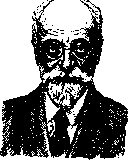
Lazarus Solomonovich Minor (b. 1855) was a prominent neuropathologist and founder of the 'Moscow' school of neurology at the turn of the 20th century. He made significant contributions to clinical neurology, particularly in the study of central hematomyelia, alcoholism, and epilepsy.
Encyclopedia article (1928–1936)
Minor Lazarus Solomonovich (b. 1855). Outstanding clinical neuropathologist, along with Kozhevnikov, Rot, Korsakov, Rossolimo and others, founder of the 'Moscow' school of neuropathologists of the late 19th and early 20th centuries. In 1927 he was awarded the title of Honored Scientist of Science. After graduating from the medical faculty in Moscow (1879), he studied under Kozhevnikov, Charcot, Westphal, and Mendel. In 1882 he defended his dissertation: 'On the significance of the corpus striatum' (M.). From 1884 he was a privat-docent at the university. From 1910 professor and director of the nervous clinic of the 2nd MSU, former M.V.Z.K. (since 1930 - 2nd Medical Institute). Consultant to many Moscow hospitals. Edited a number of specialized publications in Russian and German, for example together with E. Flatau and L. Jacobson the extensive collective 'Handbook of pathological anatomy of the nervous system' (Vol. 1-3, B., 1903). Honorary member of many scientific societies in the USSR and abroad (Parisian anatomical, psychiatric and neurological, German, Philadelphia, Estonian and other neurological societies). Honorary member of the upcoming first world neurological congress in Bern in 1931.
Minor's works are predominantly of a clinical nature, but also concern histological techniques and histology of the nervous system. A number of clinical forms and symptoms are associated with his name; central hematomyelia of Minor, Minor's conus, Minor's phenomenon in sciatica (see) (Deutsche med. Wochenschr., 1898, No. 23-24), Minor's point in injuries to the sympathetic nerve, the doctrine of poly-pathies. He wrote extensively about alcoholism, epilepsy, professional diseases of the nervous system. Of his 160 works, in addition to those mentioned above, the following should be noted: 'Central Hematomyelia' (Collection of articles on neuropathology and psychiatry dedicated to A. I. Kozhevnikov, M., 1890); 'On the localization and significance of the so-called bone or vibratory sensitivity' (J. Neurol. Psychiat., Vol. II, 1902); 'On traumatic injuries to the n. sympathici and some head nerves during the Japanese war' (ibid., Vol. VII, 1907); 'Numbers and observations from the field of alcoholism' (ibid., Vol. X, 1910); 'Hallux valgus hemiplegicorum, materials for the doctrine of combinations and diatheses' (ibid., Vol. XI, 1911); 'Electrical resistance of the skin in military traumatic injuries to the n. sympathicus' (ibid., Vol. XV, 1915); works on essential hereditary tremor (the last of them - Russ. clin., 1929, No. 68).
Related articles
Mentioned in
Cite this page
“Minor.” Soviet Medical Encyclopedia. English translation of Bolshaya Meditsinskaya Entsiklopediya, 1st ed. (Moscow, 1928–1936), ed. N. A. Semashko. https://sovietmedicalencyclopedia.pages.dev/article/minor/