Scipione
Historical document, translated for reference. It reflects medical knowledge of the 1920s–30s and is not medical advice.
Summary
Italian physician (1540-1615) known for his obstetrics textbook 'La Comare o Raccoglitrice' which described the turn on the foot similar to Braxton Hicks maneuver and included illustrations of obstetric instruments and the Walcher hanging position.
Encyclopedia article (1928–1936)
Scipione Mercurio (Mercurio Scipione, 1540-1615), Italian physician, who became famous for his book "La Comare o Raccoglitrice" (The Midwife or Obstetrician). This book was first published in 1595, and in the 17th century went through 17 editions, including one German edition, and is a popular guide for midwives. The author received his medical education at the famous University of Padua, was a student of the anatomist Aranzio, was well-versed in contemporary literature, had his own experience in general medicine and particularly in obstetrics and gynecology. The historical interest of the book lies in that it describes a turn on the foot resembling the Braxton-Hicks maneuver, provides illustrations of obstetric instruments of the time, an illustration of cesarean section, and especially an illustration of the position which a parturient woman should assume in difficult labor. This position almost coincides with what is now known as the Walcher hanging position (see). No less valuable is the chapter on cesarean section (del parto cesareo), in which S. for the first time speaks of a narrow pelvis as an indication for cesarean section.
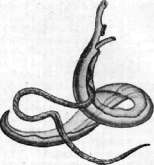
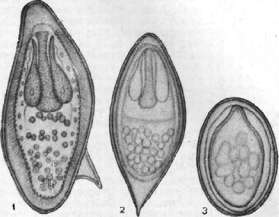
Figure 1. Figure 2. -- . r-v.,

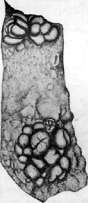
Figure 3.
Figure 1. Schistosoma japonicum. Male (broad); and his body is clamped a thin female (according to Neumann and Meyer), Figure 2. Female schistosomes: 1 - Schistosoma Mansoni; 2-Schistosoma haematobium; 3-Schistosoma Japonicum (according to Meyer). Figure 3. Papillomatous growths on the mucous membrane of the rectum on the basis of Japanese schistosomiasis (according to Neumann and Meyer). Figure 4. Sleeping sickness. Fig. 4. 15'S»
Related articles
Cite this page
“Scipione.” Soviet Medical Encyclopedia. English translation of Bolshaya Meditsinskaya Entsiklopediya, 1st ed. (Moscow, 1928–1936), ed. N. A. Semashko. https://sovietmedicalencyclopedia.pages.dev/article/scipione/