Simpson
Historical document, translated for reference. It reflects medical knowledge of the 1920s–30s and is not medical advice.
Summary
James Young Simpson (1811-1870) was a highly gifted Scottish physician known as the 'father of anesthesia' who made significant contributions to obstetrics, surgery, and medical instrumentation. He introduced ether and chloroform for medical use and developed innovative surgical techniques and instruments.
Encyclopedia article (1928–1936)
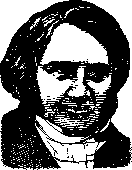
SIMPSON James (James Young Simpson, 1811-70), a highly gifted and versatile Scottish physician, the 'father of anesthesia,' renowned obstetrician, surgeon, inventor, public health organizer, and archaeologist. The son of a modest baker, S. began his life's career as an apprentice in his father's bakery and was solely indebted to himself for the fact that he entered the medical faculty of the University of Edinburgh, which he passed with distinction and at the age of 29 already occupied the chair of obstetrics at the same university. Here S. quickly emerged as an outstanding clinician, remarkable teacher, and skillful operator. Having become acquainted with the anesthetic effect of ether, S. was the first to apply it in obstetrics. Further work by S. on anesthesia led him to the discovery of the anesthetic effect of chloroform, which he introduced into obstetrics and surgery. S.'s works on anesthesia have not become obsolete to the present day and, due to their enormous significance for the development of medicine, give S. every right to the title of 'father of anesthesia.' Of S.'s numerous works on obstetrics, the most important was the work 'on turning in place of perforation and high forceps' (1850). Here the theory and practice of the so-called 'preventive turning' were developed—this operation lost its significance only with the expansion of indications for cesarean section (see Obstetric turning). S. invented and improved a number of instruments, of particular importance are the invention of the cranioclast and the improvement of obstetric forceps (see Obstetric instruments). In surgery, S. proposed a new method for stopping bleeding from severed and injured vessels by the method of needling and compressing the bleeding vessel with a needle. This method, 'acupressure,' for its time (1859) was undoubtedly a major innovation. At the present time it has only historical interest. S.'s works on obstetrics and anesthesia—'The obstetric memoirs and contributions'—were published in two volumes (Edinburgh, v. I-II, 1855-56), clinical lectures on women's diseases—in one volume—'Clinical lectures on diseases of women' (Philadelphia, 1863).
Related articles
Cite this page
“Simpson.” Soviet Medical Encyclopedia. English translation of Bolshaya Meditsinskaya Entsiklopediya, 1st ed. (Moscow, 1928–1936), ed. N. A. Semashko. https://sovietmedicalencyclopedia.pages.dev/article/simpson/