Janet Method
Historical document, translated for reference. It reflects medical knowledge of the 1920s–30s and is not medical advice.
Summary
This article from the 1928–1936 Soviet Great Medical Encyclopedia details the Janet method, proposed in 1892 by the French urologist Jules Janet for treating acute gonorrhea using copious irrigation of the urethra with medicinal solutions.
Encyclopedia article (1928–1936)
JANET METHOD (Jules Janet), proposed in 1892 by the French urologist J. for the treatment of acute gonorrhea, consists of washing out the urethra with an abundant amount of a medicinal solution. Janet considers potassium permanganate to be the best medicinal agent, assigning second place to mercury oxycyanide and argyrol, and completely rejecting all other silver salts (lapis, protargol, albargin, etc.), carbolic acid, picric acid, and corrosive sublimate. The latter, while acting bactericidally in particular on the gonococcus, at the same time act in a caustic (and consequently destructive) manner on the cylindrical epithelium of the urethra; they cause irritation and enhance leukocytosis, which, according to J.'s opinion, creates conditions favorable for the reproduction of gonococci. J. bases his proposed method on the following provisions: a) the task of gonorrhea therapy should be reduced to freeing the urethra from gonococci as quickly as possible, while the method of treatment should reduce the possibility of any complications to a minimum; b) copious irrigations of the canal wash gonococci from the surface of the mucosal canal; c) by contributing to the reduction of leukocytosis, irrigations thereby eliminate conditions favorable for the reproduction of gonococci; d) by weakening the inflammatory process and thus returning the tissues to their normal anatomical state, copious irrigations give the body the ability to cope with the weakened gonococci still remaining in them.—Proceeding from these provisions, J. recommends: a) applying the method of copious irrigations in all cases, regardless of the degree of their acuteness; b) directing treatment only to infected parts, and therefore limiting it to the anterior part of the urethra if only it is affected; c) applying a concentration of potassium permanganate solution inversely proportional to the intensity of inflammation of the canal; d) not stopping treatment in the event of complications, whatever they may be, excluding cases of acute epididymitis; e) prohibiting the introduction of any instruments whatsoever into the canal in the presence of gonococci in it, excluding emergency cases of complete urinary retention; f) stopping all local treatment for at least a month as soon as it is firmly established that gonococci have disappeared; the exception may be individual irrigations with a mercury oxycyanide solution in the presence of a secondary, non-gonococcal infection. The concentration of solutions should be weaker the stronger the inflammatory process. With the decrease (under the influence of treatment) in the intensity of the inflammatory process, the concentration should increase. J. gives several starting points determining the concentration of potassium permanganate solutions in various cases. [Table data: turbid urine with heavy threads 0.15 ‰ (1:6,500); slightly turbid urine with heavy threads 0.20 ‰ (1:5,000); transparent urine with light threads 0.25 ‰ (1:4,000). During prolonged treatment from 0.3 to 0.35 ‰ (1:3,500 - 1:3,000). In individual cases, the concentration has to be raised to 0.4–0.75 ‰.] If no improvement is observed from the first days when using the initial doses, the doses can be increased somewhat.—The frequency of irrigations is determined by the intensity of the inflammatory process. In particularly acute and stormy cases, it is advisable to perform three irrigations a day. In view of the danger in such cases of entrusting the patients themselves with doing the irrigations and considering the difficulty for patients to visit a doctor three times a day, one usually has to limit oneself to 2 irrigations, which should be continued for 3–5 days. With the cessation of stormy inflammatory phenomena, one can switch to one irrigation per day. At the same time, the concentration of the solution is gradually increased to 0.25 ‰ (1:4,000), at which one must remain for the greater part of the treatment. If after many days the discharge remains abundant, one should again switch to 2 irrigations per day. If the discharge has completely disappeared, but individual gonococci are still found in the threads, it is advisable to leave potassium permanganate and switch to mercury oxycyanide or argyrol. Irrigations must be regular and systematic—this is the disadvantage of the method, but in this also lies the guarantee of success. An interruption in treatment adversely affects the course of the disease.—The duration of treatment depends on when treatment is started: the earlier it is started, the faster recovery occurs. In 50% of abortive treatment cases, when treatment is started even before inflammatory phenomena appear, recovery occurs in a few days. A later start of treatment already requires 4–6 weeks. If recovery does not occur within the specified period, the presence of complications should be assumed: involvement of deep Morgagni's crypts, inflammation of the accessory glands of the canal, paraurethral passages.
Technique of irrigations. Irrigations of the urethra can be carried out in the lying, standing, and sitting positions of the patient. The position most convenient for the doctor and giving the possibility of greater accuracy is the lying position. J. recommends using for irrigations a table 1 m 70 cm long and 66 cm wide. The height of the table should be such that during irrigation the forearm of the person performing the irrigation is parallel to the surface of the table. Lying down on the table and getting off it, the patient should use a bench. For the runoff of fluid, a bedpan (oval in shape) is taken, or a depression is arranged in the middle of the table with a basin connected by a rubber tube to a bucket placed below (even better directly to the sewer). For the medicinal solution, J. proposed special mugs (Fig. 1), which can be replaced by a simple bottle with a siphon (Fig. 2). The glass cannula used for irrigations—the Janet cannula—must have the end introduced into the opening of the urethra somewhat rounded (Figure 3), since a sharp end can traumatize the canal. The concentrated solution of the medicine is prepared in advance (it is most convenient to take a 1% solution of it). To obtain, for example, a concentration of 0.25 ‰ (1:4,000), it is necessary to take 25 cm3 of such a solution per 1 liter of water. The optimal temperature of the solution is 38–40°. The amount of solution per patient is 1 liter. Before irrigation, the patient urinates preliminarily, lowers trousers and underwear as low as possible, and lies down on the table. The bedpan must closely fit the perineum so that the liquid does not leak under the patient (however, the edge of the bedpan must not press on the perineum). The patient's underwear is protected from splashes of the medicinal solution with a napkin. Before irrigation, the doctor thoroughly washes the edges of the urethral opening and the glans penis with a cotton swab moistened with some antiseptic solution (mercury oxycyanide), and wraps the sulcus coronarius with a strip of cotton wool moistened with the same solution and squeezed out, after which he proceeds to irrigation. The glans, with the prepuse pulled back, is held with the left hand close to the opening of the canal, but so that the canal is not squeezed (Fig. 4). Having opened the clamp of the gutta-percha tube, take the tube with the thumb and index finger of the right hand right at the tip so that, by squeezing the tube, the flow of liquid can be regulated. The movement of the liquid can be easily traced if air remained in the cannula—the movement is visible along the wall of the cannula. If there is no air in the cannula or there is little of it, then it is necessary to squeeze the gutta-percha tube about 10 centimeters above the cannula and release part of the liquid with two or three squeezes, which is replaced by air; if there is a lot of air, then the cannula is raised with the opening upwards and the air is expelled with liquid, leaving it in a volume of approximately 1/4 of the cannula. The height of the liquid column is set depending on whether irrigation of only the anterior part is intended...
Fig. 2.
Figure 3.

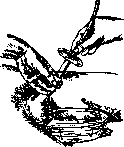
Figure 4. of the urethra or of the entire canal is total. In the first case, the initial height should be small—30 cm above the level of the table; in the process of washing, it can be raised to 40-50 cm; for total washing, one can start from a height of 60 cm and reach up to 90. The washing of the canal must be carried out in such a way that the jet of liquid deepens gradually. Having washed the glans with a jet of liquid and washed the navicular fossa with it, the cannula is inserted into the opening of the urethra, but not tightly, so that the liquid, penetrating into the initial part of the canal, flows back. Then, placing the cannula more tightly, the liquid is let in in small portions, each time removing the cannula and letting the liquid out. Gradually increasing the amount of liquid introduced into the canal, an ever-larger part of the canal is filled with it, finally reaching its bulbous part. At the same time, one should avoid compressing the canal with the fingers along its length and thereby preventing the penetration of the liquid—a manipulation that can traumatize the canal. Even more harmful is the compression of the bulbous part in order to prevent the penetration of the liquid into the posterior part of the urethra. During the washing, it is useful to stop the washing about three times in order to lightly press on the perineum with the free fingers of the right hand, thereby preventing the stagnation of the same liquid here. A significant obstacle to washing can be a narrow foreskin, when the liquid, washing the preputial sac, does not penetrate into the canal. In such cases, having thoroughly washed the preputial sac with a jet of liquid and maximally pulling back the foreskin, one should perform the washing with a closed glans—then the liquid usually penetrates into the canal. Another obstacle to normal washing can be severe inflammation of the canal with edema of its mucous membrane, as well as an erection sometimes occurring during washing. It is then necessary to increase the pressure. For washing the anterior part of the canal, 1/2 to 1 liter of liquid should be taken. In some patients, the sphincter is so weak that the liquid, having reached the bulbous part, easily penetrates into the bladder. In such cases, if it is desired to produce a washing of only the anterior part of the canal, the temperature is lowered to 38-36°. If this does not help, one should, to avoid possible complications, do a total washing. Total, so-called big washing, begins with washing the anterior part of the canal, on which about 1/2 liter of liquid should be spent, after which they proceed to filling the bladder. The cannula is applied tightly to the opening of the urethra, by the pressure of the liquid the sphincter opens, and the liquid begins to penetrate into the bladder. As soon as resistance from the sphincter is noticed (air from the cannula rises into the tube), it is necessary to interrupt the filling, give the sphincter a rest, and begin filling again. Cases are frequent when the sphincter stubbornly does not relax. In such cases, the patient should be advised to relax the perineal muscles, make movements as during urination to release the last drops of urine, and breathe more often with deep exhalations. Sometimes an increase in the temperature of the liquid by 1-2° helps to accelerate the passage of the liquid. Increasing the pressure to a height of 1 m is permissible only as an extreme measure. If the liquid, despite the indicated measures, still does not pass, one has to resort to cocainization; it is best to use a 1% novocain solution. The latter is introduced into the canal in an amount of 3-4 cm3 after preliminary thorough washing of the anterior part of the canal. The solution should be kept for 1-2 minutes, then, without letting it out of the canal, start filling, pushing the novocain toward the sphincter with a jet of liquid. Usually, after several washings with novocain, further filling is successful without it. In individual cases, the liquid passes into the bladder too quickly; it is then advisable, compressing the rubber tube with the fingers, to weaken the force of the jet and thereby reduce the speed of filling. When the bladder is full and the patient feels the urge to urinate, he should be given the opportunity to release the liquid. It is best if the patient releases it without getting up from the table (in most cases this is successful); if the patient cannot do this, he releases the liquid after getting off the table, then lies down again for repeated filling. Secondary filling must be done in cases where no more than 200-250 cm3 of liquid has entered the bladder; if 300-400 cm3 or more has entered, then one can be limited to one filling, using the remaining solution for the final washing of the anterior part of the canal. It is not recommended to retain the liquid in the bladder after it is filled. Frequently, thanks to the contraction of the seminal vesicles, semen clots turn out to be in the released liquid, which sometimes frightens patients (baselessly). In many patients, frequent urges to urinate are noticed after washing; nevertheless, patients should be advised to urinate as long as possible after washing. Often urination is painful; if the pain is severe, one must switch to the use of weaker solutions. Some authors use a bulb or syringe for washing. J. does not recommend doing this mainly because of the impossibility of regulating the pressure of the liquid. When using a bulb or syringe, the canal is easily traumatized. Even more negatively should one treat washing through a catheter. One can resort to this only in exceptional cases, with urinary retention, and the canal should be thoroughly washed beforehand and then a soft Nelaton catheter No. 13-14 inserted. Whether to apply washing of only the anterior canal or total washing with filling of the bladder depends, according to J., on which part of the canal is affected. In the presence of inflammation only in the anterior part of the canal, J. limits himself to washing this part; in case of damage to the posterior part as well, he recommends total washing. A number of authors (Nogues, Delbet, Bronner) recommend total washings in all cases. When a patient has a weak sphincter and during washing of the anterior canal the liquid easily penetrates into the bladder, J. himself recommends total washing regardless of the state of the posterior part of the canal. He recommends doing the same in patients accustomed to washing and easily passing the liquid into the bladder. J. refuses total washing in case of damage only to the anterior part of the canal solely out of fear of traumatizing the urethra. J. is a supporter of autojaneting by patients, but on condition of applying it not at the beginning of the disease, but when acute phenomena have passed and when
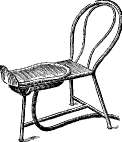
Figure 5.
the patient can carry it out aseptically. Autojaneting can be carried out in dispensaries, which gives a large economy in personnel. Before proceeding to autojaneting, patients must be thoroughly instructed. Autojaneting at the very beginning of the disease, in the presence of violent inflammatory phenomena, can easily lead to complications. It is most convenient to carry out autojaneting while sitting. For this, J. proposed a special chair (Fig. 5). The Janet method has an advantage over all other methods of treating acute gonorrhea, rapidly reducing the inflammatory state of the canal, stopping abundant purulent discharge, and giving a minimum of complications.
Related articles
Mentioned in
Cite this page
“Janet Method.” Soviet Medical Encyclopedia. English translation of Bolshaya Meditsinskaya Entsiklopediya, 1st ed. (Moscow, 1928–1936), ed. N. A. Semashko. https://sovietmedicalencyclopedia.pages.dev/article/janet-method/