Koltsov
Historical document, translated for reference. It reflects medical knowledge of the 1920s–30s and is not medical advice.
Summary
Nikolai Konstantinovich Koltsov (1872-?) was a prominent Soviet biologist who made significant contributions to cytology, genetics, and experimental biology. He established several research institutions and developed the 'Koltsov principle' regarding cellular structure.
Encyclopedia article (1928–1936)
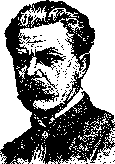
Koltsov Nikolai Konstantinovich (born in 1872), outstanding biologist. Graduated from Moscow University in 1894 from the physics-mathematics faculty, at which he was retained to prepare for a professorship. In 1897 he was sent abroad. He worked with Flemming, O. Hertwig, O. Bütschli and other major biologists. In 1903 K. was invited as a privat-docent at Moscow University and professor at the Moscow Higher Women's Courses, where he gave lectures on biology, zoology and cytology. In 1908, upon the organization of the Shanyavsky University, he was invited to the zoology department. In 1911, during the suppression of Moscow University, he resigned. In 1915, the Physics-Mathematics Division of the Academy of Sciences nominated him for the position of full academician, but, not wishing to leave Moscow, he withdrew his candidacy and received the title of corresponding member of the Academy of Sciences. In 1918 he was appointed professor at 1st MSU on the physics-mathematics faculty. He took an active part in the organization of the Institute of Comparative Anatomy of Moscow University, founded a zoological laboratory at the Moscow Higher Women's Courses, and a biological laboratory of experimental zoology at 1st MSU. In 1917 he founded the Scientific Research Institute of Experimental Biology of the Moscow Scientific Institute. In 1920 this institute was accepted by the People's Commissariat of Health and, under K.'s directorship, became part of the GINZ. In 1918 he founded a poultry farming experimental station near Zvenigorod, which was reorganized in 1925 into the Central Station for Genetics of Agricultural Animals of the People's Commissariat of Agriculture, where he serves as director.
K.'s first works belong to comparative anatomy ('Development of the head of the lamprey', Scientific Notes of the Imperial Moscow University, vol. 16, pp. 1-395, Moscow, 1901), then he moved to cytology ('Studies on the sperm of decapod crustaceans', ibid., vol. 20, pp. 1-200, Moscow, 1905). In a series of works under the general title 'Studien über die Gestalt der Zelle' (Vol. 1 - Arch. f. mikr. Anatomie, Vol. LXVII, 1906; Vol. 2 - Arch. f. Zellforschung, Vol. II, 1908; Vol. 3 - ibid., Vol. VI, 1912), K. developed the idea that in the liquid aggregate state of protoplasm, the external form of the cell or its various components is determined by a solid skeletal formation - shells, threads, spirals, as in the well-known experiments by Plate. This principle received the name of the Koltsov principle in science (R. Goldschmidt, M. Hartmann). Then K. moved to the application of physico-chemical methods in the study of the cell and published a number of works on the influence of ions on life processes ('Über die Wirkung der H-Ionen auf die Phagozytose von Carcesium lachmanni', Zeitschrift f. phys.-chem. Biologie, Vol. 1, 1914, etc.). In this field K. created a school of pupils who were physicists and chemists (Skadovsky and others). Then came K.'s works in the field of studying the biological action of hormones, and in this field K. also created a group of pupils (M. M. Zavadovsky and others). When the Institute of Experimental Biology was founded, attention was paid to the development of genetic research, which until that time had been conducted almost nowhere in the USSR. Here also arose the Moscow school of geneticists from K.'s pupils and collaborators (S. S. Chetverikov, A. S. Serebrovsky). K. was the first in the USSR to pay attention to the problem of human genetics and eugenics. K.'s latest experimental works belong to the field of studying the physico-chemical foundations of excitability of effector organs (pigment cells, muscles, glands) in isolated organs. A major researcher, K. also pays attention to natural philosophical problems, occupying positions of simplified, mechanistic materialism. K. himself calls his views on living nature 'mechanistic'. Partly in connection with this stand his idealistic views in the field of eugenics and in particular his desire to reduce social phenomena to biological laws (struggle for existence, natural selection). According to K., the state should pay special attention to the higher 'intelligent' layers of society, which should be placed in especially favorable conditions. In this sense Koltsov is not original, repeating the views of Western bourgeois eugenicists. In recent years K., apparently, is moving away from these positions (see his article Eugenics in BME).- K. is a member of various biological societies in the USSR and abroad. He is the founder of the Russian Eugenics Society, the Society of Racial Pathology, took an active part in the organization of the Russian Protozoological Society, was (and is) editor of journals: 'Transactions of Shanyavsky University', 'Nature', 'Progress of Experimental Biology', 'Russian Eugenics Journal', 'Journal of Experimental Biology', 'Scientific Word', 'Our Achievements'. K. is editor of the biological department of BME. In addition to the listed works, the following by K. should be mentioned: 'Studies on the chemical hereditary properties of blood' (Usp. exp. biol., vol. 1, 1923); 'Physico-chemical foundations of morphology' (M.-L., 1929).
Related articles
Mentioned in
Cite this page
“Koltsov.” Soviet Medical Encyclopedia. English translation of Bolshaya Meditsinskaya Entsiklopediya, 1st ed. (Moscow, 1928–1936), ed. N. A. Semashko. https://sovietmedicalencyclopedia.pages.dev/article/koltsov/