Aggregate State
Historical document, translated for reference. It reflects medical knowledge of the 1920s–30s and is not medical advice.
Summary
This article defines the three states of matter—gaseous, liquid, and solid—explaining their physical properties, including the laws of gases and the molecular forces in solids. It also discusses the biological significance of these states, particularly regarding protoplasm, colloids, and the micellar theory of cellular structure.
Encyclopedia article (1928–1936)
AGGREGATE STATE, gaseous, liquid, and solid state of matter. These three types of states of matter have been distinguished since ancient times: the symbol of the first was fire, of the second—water, and of the third—earth. At the present time, the distinction between the last two states—liquid and solid—should be considered deeper than just a difference in external appearance: there exist solids which, in their structure, are more similar to liquids, only with enormous internal friction (e.g., resin, pitch, etc.). On the other hand, some liquids exhibit an internal structure typical of a solid body (liquid crystals). Only gases in a normal state exhibit characteristic properties that sharply distinguish them from solid and liquid bodies. One of such properties is the tendency of a gas to occupy, if possible, a larger volume: gas molecules repel one another, move freely in all possible directions, and the pressure arising in one place in a gaseous medium is immediately transmitted from point to point; as a result, the pressure is equalized everywhere. The volume which a given mass of gas occupies, and the pressure which it exerts on the walls of the vessel, are connected by the Boyle-Mariotte law: the product of volume and pressure is equal to a constant value (if temperature does not change). When temperature changes, a gas can behave in two ways: if it is given freedom, it will expand upon heating and contract upon cooling, whereby, with a change in temperature of one degree Celsius (or on the absolute scale), the volume will change by 1/273 of the value which it had at 0 degrees Celsius. This follows from the laws of Gay-Lussac and Dalton. At a temperature of -273°, the volume of an ideal gas would, therefore, have to turn into zero. This temperature is called absolute zero (see Absolute temperature). If a gas is enclosed in a vessel where it cannot change its volume, then, with a change in temperature, the pressure of the gas will change: increase upon heating and decrease upon cooling. According to the Gay-Lussac law, the pressure also changes by 1/273 with a change in temperature of 1°. Combining the mentioned relations into one, the equation of state of a gas is written in the form: p · v = R · T, where p is pressure, v is volume, T is absolute temperature, R is a constant, identical for all gases approaching the properties of an ideal one. Gases begin to differ from the latter when their molecules turn out to be too close to one another (upon lowering the temperature or increasing the pressure beyond a known limit). In such cases, interparticle forces begin to have an effect, and the dimensions of the molecules themselves become commensurate with the distances between them. The equation of state here turns into the Van der Waals form: (p + a/v2)(v - b) = RT, where a and b are new constants, different for different gases. At a certain temperature, called critical, and below it, any gas can be converted into a liquid with a sufficient increase in pressure. In a liquid, molecules can move freely in different directions but no longer have a tendency to fill the entire volume of the vessel: the liquid occupies a completely definite volume in it, sharply limited by the surface level. Characteristic states for a liquid are the forces acting on surface particles—forces of surface tension (or, as they are sometimes called, capillary forces). Molecular forces manifest themselves especially sharply in solid bodies: in a typical solid body, a crystal, under their action, individual atoms are arranged into a regular crystal lattice, the form of which is at present being studied with the help of X-rays.
V. Shuleikin. Aggregate state in biology. The question of the aggregate state of substances entering into the composition of a living organism or cell constitutes one of the fundamental problems of biology. On the one hand, a definite, more or less complex form (“morpha,” whence the name “morphology”—the study of form) is the most essential sign of a living organism and every cell, at least of every nucleus, and elasticity, i.e., resistance to a change in form—the main distinguishing sign of a solid body—is inherent in every living cell. On the other hand, biochemists are inclined to admit that all basic processes of vital metabolism occur in a liquid medium, extending to biochemistry the obsolete assertion: “Corpora non agunt nisi soluta.” From the 60s of the 19th century, the concept of “protoplasm” as the basic living “substance,” to which later biologists attribute a definite liquid aggregate state. But in order to construct the concept of primary living substance, it was necessary to exclude from it such important organs of the cell as the membrane, nucleus, various fibers, etc. “Living substance” cannot exist, because the basic sign of substance—divisibility—does not extend to organisms and the cell: a part of a cell does not possess the same properties as the whole cell. A cell is a mechanism consisting of various parts and substances, some of which can be in a liquid, and others in a solid aggregate state. The majority of substances entering into the composition of the cell, and primarily proteins, are known only in a colloidal state and are encountered in the form of either sols or gels. Hydrosols—colloidal solutions—have all the properties of liquids of greater or lesser viscosity. Their difference from true solutions of crystalloids consists in the fact that colloidal particles, moving freely in the solvent (dispersion medium), are not molecules, but aggregates of molecules—minute solid crystals of a definite form, surrounded by a water shell. Ambronn (N. Ambronn, 1919), Schmidt (N. I. Schmidt, 1924), Steinbrink (C. Steinbrink, 1925), and others, to designate these particles, restore the old term of C. Naegeli (C. Naegeli, 1858)—“micelles.” In contrast to hydrosols, hydrogels possess all the properties of a solid aggregate state. They possess clearly expressed elasticity, in some cases almost not yielding to the elasticity of iron, and usually exhibit optical phenomena characteristic of the solid aggregate state: in polarized light they are anisotropic, in X-rays they give spectra characteristic of crystalline structures. Ebner (v. Ebner—1882, 1906) attempted to explain the anisotropy of hydrogels by the ordered arrangement of amorphous particles as a result of one-sided tension; but Ambronn, by means of a series of experiments with plant, animal, and artificial fibrils, proved that anisotropy in these cases is composed of two different components: 1) anisotropy depending on tension, thanks to which micelles are arranged in definite rows, and 2) anisotropy depending on the crystalline structure of the micelles themselves. The basic property of the majority of organic hydrogels is their “swellability,” the ability, in connection with a change in active reaction, to be impregnated with water, as a result of which a hydrogel can turn into a hydrosol. The micellar theory supposes that in this process, the gaps between micelles are filled with water and increase, the attraction between micelles weakens, and they can randomly scatter in the dispersion medium. Apparently, in many cases, the micelles themselves also swell, whereby the volume of water bound by their crystalline base increases and their specific form turns into the spherical form of a liquid drop; probably, it is precisely by this swelling that the circumstance is explained that until now it has not yet been possible to obtain point or linear X-ray diffraction gratings for protein solutions and protein crystals, although Szegvari (Szegvari, 1920–1924) does claim that such gratings for very well-purified proteins have been obtained by him. In the cell and formations connected with it (membranes, cuticles, intermediate substances arising in connection with the activity of the cell—lymph, fibers, cartilage, bone, etc.), there are all transitions from hydrosols with weak viscosity through hydrosols with increased viscosity and hydrogels with weak elasticity to highly elastic hydrogels. The cytoplasm of the cell body, nuclear sap, just like lymph and blood plasma, are hydrosols and exhibit all signs of a liquid aggregate state. Inside the cytoplasm, no elastic resistance to the formation of spherical vacuoles is noticed, and pieces of cytoplasm separated from the cell usually take the spherical form of liquid drops. Under the influence of a change in internal turgor, cells take a spherical form; thus, upon an increase in osmotic pressure in the surrounding solution, the cytoplasm of plant cells detaches from the membrane and takes the form of a drop, and many animal cells, not having a solid membrane, on the contrary, swell.
Fig. 1. a - normal plant cell, b - detachment of cytoplasm from the membrane into spheres upon a decrease in osmotic pressure from the outside (phenomenon of plasmolysis, see figures 1, 2, and 3). Contractile filaments (myonemes) in infusoria and in smooth muscle cells disintegrate into droplets under certain physical-chemical influences (see figure 7). The cytoplasm of cilia can also flow off solid fibers in the form of droplets (see figure 4). In many cells, Brownian motion is observed during life, which also testifies to a liquid aggregate state. On the other hand, a solid aggregate state has been established with certainty for a number of cellular structural formations. On a separate table (to articles 127-129, see 5 abc), X-ray diffraction patterns of a silk thread (a) and two plant fibers (b and c) are presented, with the fiber axis positioned parallel to the direction of the X-rays. These X-ray diffraction patterns testify to a strong bond between homogeneous longitudinally oriented crystalline micelles of plant and animal fibers. The elasticity of these fibers is very great,
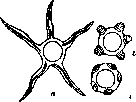
Figure 2. Crab sperm: a - in whole seawater; b and c - in seawater diluted 5 times.
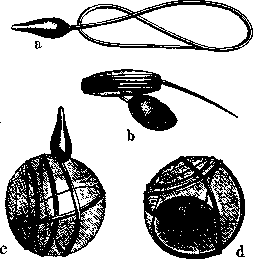
Figure 3. Human sperm: a - normal structure; b, c, d - plasmolysis under the action of a hypotonic urea solution.
the rupture of tendon fibers occurs only under a tension of 5 kg per 1 sq. mm (for bone, the corresponding figure Ka=10 kg per 1 sq. mm, for elastic fibers of ligaments - 0.13 kg per 1 sq. mm). In living cells, those parts that consist of hydrosols tend, according to Plateau's law, to a maximum reduction of the surface, i.e., to a spherical shape, while parts consisting of gels, possessing a certain elasticity, counteract this, and equilibrium occurs when there is equality between the elastic
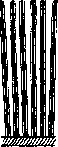
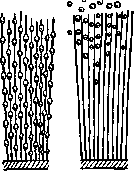
Figure 4. Droplet disintegration of the outer protoplasmic layer of cilia.
tension of solid elements in a forced state and the capillary tension of a liquid droplet, which deviates from a spherical shape in this process. In some cases, the function of fixing the shape belongs to a solid membrane, as in plant cells; in others, the role of a skeleton belongs to fibers consisting of hydrogel, which lie on the surface of the liquid phase, like hoops of different shapes in the well-known experiments of Plateau, and are wetted by a thin layer of hydrosol. Often these skeletal fibers have the shape of a spiral (see figure 5). Sometimes the fibers only fix a solid membrane. The shape of the nucleus, the pharynx of infusoria, and other internal organs of the cell, where there is a boundary of contact between liquid phases, is explained in the same way. In all cells and cellular organs (flagella, cilia, myonemes) that perform ordered movement, along with contractile liquid kinoplasm, solid skeletal formations are discovered - membranous sheaths and fibrils. In many cases, skeletal elements are permanent formations of high hardness. Such, for example, must be nerve fibrils, which throughout life maintain the connection between receptor and Figure 5. Sperm of Paludina vivipara under the influence of swelling in an acidified solution. two different effector organs, which lies at the basis of unconditioned and conditioned reflexes. But in temporary formations and during development, the emergence of unstable solid structures with low elasticity must play a significant role. In this regard, transitional stages between hydrosol with high viscosity and hydrogel with low elasticity are of interest to the biologist. Apparently, those transitional forms between liquid and solid play a role here,
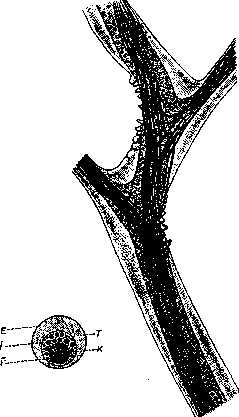
Figure 6. Stalk of Vorticella; on the left - cross-section: E - outer membrane; r - inner membrane; T - outer layer of protoplasm; K - inner, contractile layer of protoplasm; F - fibrils (skeletal fibers) at the boundary of the inner and outer layers of protoplasm.
aggregate states, which Lehmann called liquid crystals or crystalline liquids. At its core, Lehmann's doctrine is close to the modern theory of the crystalline nature of colloidal particles. On the surface of hydrosol droplets under the influence of surface tension, especially in places of the greatest forced deformation of these droplets, as well as in stream-like flows of protoplasm under the influence of unilateral tension, micelles fold into strands or membranes, which can either turn into fibers of the corresponding membrane or, upon a change in tensions, again scatter randomly into individual micelles. The process of formation of fibrin fibrils from blood hydrosol *
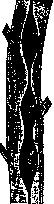
Figure 7. Stalk of Vorticella; droplet disintegration of the inner layer of protoplasm.
plasma is easily observed during blood clotting. Goldschmidt observed the emergence of flagella-like formations in a culture of germ cells. Belar, through a series of interesting experiments, showed that during mitosis, the central spindle is formed from temporarily emerging solid fibrils, which grow, pushing the poles away from each other, and disappear upon the completion of mitosis. Peterfi gave the name thixotropy to the phenomenon observed in many colloidal gels, which liquefy from simple shaking and then thicken again into a gel. Apparently, this kind of thixotropy is also found in many plasmatic structures. This probably explains the well-known observation of Kühne, who saw the movement of a roundworm inside a frog's muscle cell: the parasite pushed apart the discs of the striated muscle fiber, which immediately closed up again behind the worm. Methods for studying solid and liquid formations in the cell serve, firstly, the study of the effect on the cell shape of hyper- and hypotonic solutions or ions and other substances that change surface tension and the swelling of colloids, and secondly, the method of micrurgical operations. Peterfi, Chambers, and other authors introduced the finest needles into the cytoplasm and nucleus and moved them, observing the process of wound closure, the mobility of liquid phases, and the resistance of solid ones. Heilbronn introduced a tiny iron particle into the cell, attracted it from the outside with an electromagnet, determined the viscosity by the dimensions of its displacement, and in some cases observed that upon breaking the current, the particle returned to its former place, obviously under the influence of the elastic properties of the surrounding cytoplasm.
Related articles
Mentioned in
Cite this page
“Aggregate State.” Soviet Medical Encyclopedia. English translation of Bolshaya Meditsinskaya Entsiklopediya, 1st ed. (Moscow, 1928–1936), ed. N. A. Semashko. https://sovietmedicalencyclopedia.pages.dev/article/aggregate-state/