Lavoisier
Historical document, translated for reference. It reflects medical knowledge of the 1920s–30s and is not medical advice.
Summary
Antoine Laurent Lavoisier (1743-94) was a renowned French chemist who revolutionized chemistry through quantitative analysis and the discovery of oxygen's role in combustion. His work established the law of conservation of mass and laid the foundation for modern chemical nomenclature and theory.
Encyclopedia article (1928–1936)
Lavoisier Antoine Laurent (Antoine Laurent Lavoisier, 1743-94), renowned French chemist; he received his education at the Mazarin College and completed his law studies at the Faculty of Law in Paris. L.'s scientific activity was very diverse and fruitful. His first works were done under the influence of Guettard. In 1764, L. received a gold medal from the Academy of Sciences for his research on "The best method for illuminating the streets of a large city." In 1768, L. was elected to the Academy of Sciences as an adjunct chemist, and in 1772 as a full member.
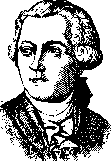
In the Academy, L. made numerous reports on the most diverse scientific and technical issues: from the analysis of zeolite to Chinese ink and a new mechanical chair for patients. He participated in numerous and very diverse commissions. From 1769, L. served as a farmer-general in the "General Farm." This position gave him large revenues, a significant portion of which L. used for scientific experiments and apparatus. While working in the Farm, he sought to improve the collection techniques, reduce administrative costs, and proposed a uniform method of tax collection for all of France. As manager of the powder magazines (1775-91), L., while studying methods of producing and purifying saltpeter, increased its production and significantly improved the quality of gunpowder. At his initiative, model workshops for weaving flax and hemp were established. On his estate, he demonstrated the advantages of scientific cultivation methods, introduced several improvements to local agriculture: grass seeding, improved livestock breeds, and cultivation of potatoes and beets. By order of the National Assembly in 1791, L. drafted a project for taxation, in connection with which he wrote the memoir "On the territorial wealth of France." Participating in the work of the "Commission of Weights and Measures" (1790-93), he with Guyot determined the density of water and developed a unit of weight, and with Borda determined the expansion of copper and platinum for the construction of the standard meter. L., whose closest ancestors belonged to the so-called third estate, inherited from his father the purchased title of hereditary nobleman. A revolutionary in his scientific activity, L. in his political pronouncements was closely connected with the interests of the privileged classes. As a collaborator of the General Farm, which collected oppressive indirect taxes from the population, L. personally managed to acquire an unfortunate popularity among the Parisian poor with his project to surround French cities with walls to facilitate the collection of duties on goods imported into the city. The revolutionary events brewing in France, the inevitability of which L. clearly understood, repelled and frightened him. At the very beginning of the revolution, L., who at that time held the position of director of the powder magazine, was arrested, but soon released and then until the end of 1793 performed responsible work in the Chamber of Weights and Measures on the introduction of the metric system. At the most tense moment of the revolution, during the period of intervention and terror, in November 1793, on the proposal of Deputy Bourdon, Lavoisier along with other farmer-generals was arrested, brought to trial, and although his personal guilt was not proven, he was guillotined on May 8, 1794.
L. was a reformer of chemistry, in which at that time there was still no concept of simple bodies-the concept of four elements still existed: air, water, earth, and fire; there was no method of quantitative research, as balances were used only occasionally. The basic phenomena of chemistry: combustion and oxidation processes, the composition of air, the role of oxygen, the structure of the main groups of compounds-oxides, acids, salts, etc.-were not yet explained; the theory of phlogiston prevailed, which had been established since the time of Stahl (early 18th century). According to this theory, in all bodies capable of burning or oxidizing, there is a special principle-phlogiston, which is released during combustion, leaving "lime"-a simple body.-L. in his laboratory, relying only on his own resources, over twenty years renewed chemistry. He gave the basic law of chemistry-the law of conservation of matter, without knowing about similar research by Lomonosov. L. created the research method-the method of quantitative analysis, following from this law, and finally created a system of chemistry. In his research "On the nature of water," L. shows what important significance the application of precise weighing has, by means of which L. proved the error of the opinion about the transformation of water into "earth." The formation of an earthy sediment observed by many researchers when evaporating water in a glass vessel was explained either by the transformation of water into earth, or by the fact that earth already exists in water in the form of a special compound, or by the attachment of matter from outside. On the basis of the fact that during the distillation of triply distilled water in a closed apparatus the weight of the apparatus with water and the weight of water during the experiment did not change, while the weight of the glass apparatus decreased, and the decrease was equal to the weight of the resulting sediment, L. proved that the sediment resulted from the dissolution of the glass. From 1772 to 1778, the subject of a series of memoirs (about 60) by L. was the theory of combustion and the related question of the composition of air. In the memoir "On the calcination of tin," again by the method of weighing, he proved that the well-known fact of the increase in weight of metals when transformed into "earth" (oxide) is explained by the combination of metals with a part of the air. L. finds that in a given volume of air only a certain amount of metal can be oxidized, and a certain amount of air disappears. This leads him to the idea of the complexity of air. After the discovery of oxygen by Priestley, L. performs analysis and synthesis of air, precisely determining its composition: 1) from pure, "healthy" air, capable of intensifying combustion-oxygen and 2) mephitic, "unhealthy"-nitrogen, not possessing this property. At the same time, he establishes the composition of carbonic acid. Subsequently, L. proceeds to the study of oxidation phenomena. A series of memoirs on this question appears and the treatise "On combustion in general." The result of these works was the first scientific classification of chemical compounds, establishing 3 main groups: oxides, acids, and salts. L. introduces the concept of simple bodies. These works by L. already eliminated the theory of phlogiston, and in 1783 L. published "Reflections on phlogiston," in which he proved the complete untenability of this theory and its harm to the development of chemistry. However, the new theory still did not explain the combustion of organic bodies or the formation of salts, because the role of hydrogen was unknown. Only in 1783, after the discovery by Cavendish of the formation of water during combustion-of hydrogen, L. performed the first analysis of water by means of iron and its synthesis from hydrogen and oxygen. Having clarified the composition of water, L. explained the formation of salts when metals dissolve in acids and the reduction of metallic oxides by hydrogen. He determined the composition of organic bodies, establishing from their combustion products (water and CO2) that carbon, hydrogen, and oxygen are contained in them, and thereby laid the foundation for organic analysis. L. also studied fermentation processes and established the breakdown of grape sugar into alcohol and CO2. L. in collaboration with Guyton de Morveau, Fourcroy, and Berthollet created a simpler chemical nomenclature. In 1789, L. combined all his works in a condensed form in "Traité élémentaire de chimie" (v. I-II, P., 1789). The entire book is composed of the author's works; most of the terms are given by L.; most of the apparatus, including the gasometer and calorimeter, were also invented by him. L.'s works are characterized by the accuracy of observation, masterful determination of facts, and logicality of conclusions. L.'s works captured not only the field of chemistry; they opened a new period in physiology, which until then had explained all life phenomena by a vital force; L., however, reduced them to the action of physical and chemical forces. He established the doctrine of respiration as slow oxidation within the organism, in which oxygen, combining with the elements of tissues, gives water and CO2. The exchange of gases was studied by him with extreme completeness. No less important is his doctrine of animal heat, which, according to L., develops as a result of the combustion of tissues at the expense of oxygen absorbed during respiration. The expenses incurred by the organism are replenished by digestion. L. noted the existence of the circulation of matter between the inorganic and organic world. Studying heat, L. and Laplace created an important chapter in physics-calorimetry ("Sur la chaleur", P., 1780). They also gave the method for determining the expansion of solids (1781-82). Finally, L. raised the question of the three states of matter and the connection of these states with heat. He recognized the possibility of the transformation of all gaseous bodies into liquid and solid ones by lowering the temperature and increasing pressure. The works of L. are collected in 6 vols. ("Oeuvres de Lavoisier", v. I-VI, P., 1864-93).
Related articles
Mentioned in
Cite this page
“Lavoisier.” Soviet Medical Encyclopedia. English translation of Bolshaya Meditsinskaya Entsiklopediya, 1st ed. (Moscow, 1928–1936), ed. N. A. Semashko. https://sovietmedicalencyclopedia.pages.dev/article/lavoisier/