Mikhail Lomonosov
Historical document, translated for reference. It reflects medical knowledge of the 1920s–30s and is not medical advice.
Summary
A biographical overview of Mikhail Vasilyevich Lomonosov (1711-1765), highlighting his pioneering contributions to physics, chemistry, and natural philosophy as presented in the first edition of the Great Medical Encyclopedia.
Encyclopedia article (1928–1936)
LOMONOSOV, Mikhail Vasilyevich (1711–1765); born in the village of Denisovka near the town of Kholmogory, Arkhangelsk Governorate. At the age of twenty, Lomonosov arrived in Moscow and entered the Slavic-Greek-Latin Academy at the Zaikonospassky Monastery. In early 1736, he was accepted as a student, and in the following year, he was sent abroad, first to the University of Marburg to the renowned Christian Wolff, and then to the Saxon metallurgist Henckel in Freiberg. Wolff was the central figure of 18th-century German enlightenment, and Lomonosov found himself at the focus of European scientific life. Here he studied philosophy, mathematics, mechanics, physics, chemistry, metallurgy, and mining. In 1741, Lomonosov returned to St. Petersburg, and in 1745, he was appointed professor of the chair of chemistry at the Academy of Sciences, soon becoming the first academician of Russian nationality. From this time on, Lomonosov began to display an unusually vigorous and diverse activity. He organized the first chemical laboratory in Russia at the Academy (1748), initiated the foundation of the first Russian university in Moscow (1755), energetically engaged in physics, chemistry, and mosaic art, wrote odes, established a factory for colored glass, delivered lectures, and pursued Russian history, grammar, literature, and so forth.
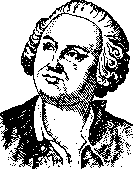
Despite such dispersion of efforts, Lomonosov left many brilliant works in the fields of physics and chemistry that far outpaced his age. The genius of Lomonosov was the product of two different influences. The economic shift of the 17th century manifested itself particularly brightly in England through political storms and strong intellectual fermentation. The central figure of England's intellectual life was the famous physicist and chemist Boyle. Lomonosov keenly perceived his doctrine and developed it like none of his great European contemporaries. He transformed Boyle's corpuscular theory into an entire system of corpuscular philosophy. As its application to physics, the mechanical theory of heat and the mechanical theory of the structure of gases appeared—differing little in essence from modern ones—and as its application to chemistry, the atomic-molecular theory of the structure of matter in the form it holds today. Another influence on Lomonosov was that of the German enlightenment. Here he underwent a sound philosophical training on the basis of rationalism and the philosophy of Wolff. He was the first to vividly develop the idea that chemistry is a quantitative science where "weight, measure, and proportion" must come first. Earlier than Lavoisier, with scales in his hands, he proved the law of the constancy of matter and was the first to clearly formulate the law of conservation of energy. He viewed electricity, light, and heat as forms of energy, and in these views, he outpaced his contemporaries by a century, who regarded them as weightless material substances. Lomonosov denied the existence of "weightless substances," which explains his reserved attitude toward the phlogiston theory. His mechanistic worldview and corpuscular theory left no room for phlogistic speculations. This is why Lomonosov is justly considered the father of physical chemistry. The first collected works of Lomonosov were published during his lifetime (St. Petersburg, 1751, 1757–59) and were repeatedly republished in whole and in parts. Lomonosov's works in the field of natural history sciences were published by the Academy of Sciences in 1912 (St. Petersburg). Lomonosov's physical and chemical works were collected in the series "Classics of Natural Science" (Moscow-Petrograd, 1923).
Related articles
Cite this page
“Mikhail Lomonosov.” Soviet Medical Encyclopedia. English translation of Bolshaya Meditsinskaya Entsiklopediya, 1st ed. (Moscow, 1928–1936), ed. N. A. Semashko. https://sovietmedicalencyclopedia.pages.dev/article/mikhail-lomonosov/