LITVINOV
Historical document, translated for reference. It reflects medical knowledge of the 1920s–30s and is not medical advice.
Summary
Mikhail Pavlovich Litvinov (1846-1918) was a prominent zemsky psychiatrist who established the Burashev psychiatric colony in 1884, the first institution in Russia with extensive labor therapy for the mentally ill. He later worked in various medical and administrative positions, facing political persecution, and authored several works on psychiatry.
Encyclopedia article (1928–1936)
LITVINOV Mikhail Pavlovich (1846-1918), an outstanding zemsky psychiatrist. He deserves credit for creating the Burashev psychiatric colony—the first institution in Russia with extensive labor therapy for the mentally ill (founded in 1884). Here, for the first time, a series of small wooden houses was built for patients, where patients lived under a free regime and with self-care—a type of care that is now entering a new phase of its development under Soviet conditions (in-hospital patronage). Burashev was for a long time a kind of school for hospital colonial and social psychiatry; from this colony came a whole series of leading physician-organizers (Yakovenko, Kashchenko and others.). L. was director of the colony until 1896, when he was removed from his position by the Tver governor for reasons of political unreliability. After this, he continued to work as a physician until 1903, and then in elective zemsky positions (as a deputy and chairman of the Novotorzhsky district zemsky administration), and here he repeatedly faced repression from the tsarist government. From 1906 to 1918, L. managed a shelter for the incurable in Moscow. To his credit belong a number of original, popularizing, and translated works on psychiatric topics, including one of the first Russian psychiatric reports, as well as annual reports on the Burashev colony he organized (Tver, from 1886), which has now been named after him. CASTING FEVER (synonyms: brass founder's fever, brass fever, lathe fever, Giess-fieber, Messinggiessfieber, Zinkfieber, Gelbgiessfieber in German authors; brassfounder's ague, brass chills, zinc chills, zinc asthma in English authors), a manifestation of acute professional poisoning of brass founders, caused by inhaling zinc vapors that form when casting alloys containing zinc.
Historical data. L. f. was first described in 1848 by Blandet. A more thorough description was given by Greenhow in 1865. Even these authors believed that L. f. was caused by the effects of zinc vapors and that copper had no pathogenetic significance for the occurrence of the illness. Later researchers of the issue, Hirt and Villaret, believed that the combined influence of zinc and copper was important, since L. f. was not observed by them when casting zinc and was observed when casting brass. The work of Lehmann can be considered to have firmly established the significance of zinc itself in the occurrence of L. f.! Etiology and pathogenesis. Hirt and Villaret, as mentioned, believed that for the occurrence of L. f., the combined action of zinc and copper was necessary and that zinc by itself could not cause L. f. This opinion was based on the fact that when casting brass, not only vigorous boiling but also evaporation of zinc occurs, because for this casting temperatures are used that far exceed the boiling point of zinc (930°). In reality, however, melting even pure zinc at temperatures as high as those used for melting brass (t° about 1600°) can cause the occurrence of L. f. Thus the first factor for the occurrence of acute poisoning is the melting temperature of the metal. On the other hand, L. f. occurs only when casting brass containing significant amounts of zinc (30% and higher) and is not observed when casting brass with low zinc content. Consequently, for the occurrence of acute poisoning in the form of fever, it is necessary that both the melting temperature of the alloys and the amount of zinc in them be sufficiently significant. The higher the temperature in the melting furnace and the greater the amount of zinc in the alloy, the more likely the occurrence of acute poisoning and the more intense its manifestation.
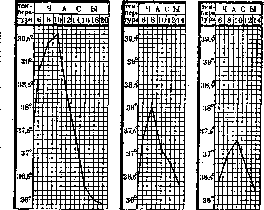
The mechanism of poisoning should be imagined as follows: under the conditions mentioned above, thanks to temperatures far exceeding the boiling point of zinc, an extremely energetic decomposition of the latter into the finest aggregates of molecules occurs, which enter the surrounding air (if their removal from the foundry premises is not ensured by proper ventilation systems) in larger quantities, the higher the temperature in the melting furnace and the richer the alloy in zinc. In the air, zinc vapor oxidizes, and the resulting zinc oxide, in this state forming the finest dispersion of zinc fume, is carried throughout the room. Research by Drinker, Thomson, and Fitchet showed that such fume consists of particles ranging in size from 0.4 to 0.6 μ, which according to Gibbs' classification belong to the type of particles in a state of constant active Brownian motion. When inhaled in this state, they are carried into the respiratory passages and reach the smallest bronchioles and alveoli. Here they enter into an intimate connection with cellular protein and coagulate it. The proteins thus altered become foreign to the cells, are eliminated from them, and are absorbed into the blood. Particles of oxidized metal in such a fine dispersion state can not only affect the lung parenchyma but can also pass directly through stomata between cells into the bloodstream and lymphatic system, where they act on globulins, causing their denaturation. Denatured proteins circulate in the blood, and the body reacts to their presence with a febrile process. The hypothesis that L. l. is caused by the absorption into the bloodstream of proteins of the body that have become foreign to it under the influence of zinc vapor was put forward by Lehmann in 1910, supported by Kissfcalt in 1912, and in 1924 confirmed by the experimental work of Jacobson, who by means of the precipitin reaction demonstrated the presence of denatured proteins in the blood of animals poisoned by brass fumes. Since the cause of L. l. is the resorption of protein acting heterologously, the possibility of chronic forms of poisoning in brass founders is quite natural, if the amount of denatured protein entering the bloodstream is not so great as to produce an expressed form of poisoning. Besides the sharply expressed L. l., other forms may exist with weakly or unclearly expressed symptoms of poisoning (abortive and rudimentary). The existence of such forms of poisoning is largely confirmed by the blood picture in brass founders. Indeed, in long-working brass founders, a neutrophilic shift to the left and neutropenia are regularly observed, which may indicate the presence of chronic irritation of the bone marrow on the basis of intoxication. In this respect, the similarity between the hemograms of founders and malaria patients is extremely great, which must be explained by some commonality in the pathogenesis of foundry fever and malarial fever, since malaria is also based on the influence of heterologous protein formed from the parasites' organism during sporulation. Symptomatology. The onset of poisoning is preceded by an incubation period of 3-4 hours, during which there are no signs of the poisoning that has occurred. This is followed by a prodromal period of 2-4 hours, during which symptoms of severe irritation from the respiratory tract develop, strong dry cough, tightness and pain in the chest; to this is added an intensifying headache, especially in the forehead area, extreme fatigue, loss of appetite and even aversion to food. The conjunctiva are hyperemic, the sclera are injected. In the legs, a feeling of leaden heaviness. Sometimes nausea and vomiting are added to this. Following this period of precursors, usually 5-6 hours after inhaling zinc vapor, chills set in, at first mild, however forcing the patient to lie in bed, then increasingly intensifying and taking the form of shaking chills with considerable trembling of the body. The skin is cold to the touch, the face is cyanotic; the patient wraps himself up carefully but cannot warm up. Sometimes the chills are accompanied by joint pains and even convulsions. The stage of chills lasts 2-2½ hours and is replaced by a period of dry heat. The skin gradually becomes hot and red, the temperature in the armpit rises to 39° and even 40°, the pulse becomes rapid and tense, the heart's activity is significantly increased. The headache is very intense, the patient sleeps very restlessly, often wakes up; he is often in a state of semiconsciousness; his psyche is depressed, he is indifferent to his surroundings; sometimes a state of almost complete prostration may be observed. The stage of heat lasts 6-7 hours and passes into the stage of profuse sweating. The temperature drops critically to normal or even subnormal values (see figure). The patient's condition improves; he falls into a peaceful sleep. This 3rd stage of fever lasts 3-4 hours and usually ends by the morning of the next day (if poisoning occurs during morning working hours). In the morning, a person often wakes up completely healthy and able to work; sometimes, however, fatigue, reluctance to work, and weakness remain after waking for several hours. In the blood during L. l., high leukocytosis, neutrophilic shift to the left, and sometimes anisocytosis are observed. Protein is often found in the urine, and sometimes zinc can be found in small amounts. L. l. that has been contracted often leaves immunity behind. Siegel considers that up to 70% of founders acquire immunity. Other authors, on the contrary, claim that only 20-30% of all workers become insensitive to the fever. This contradiction in data is quite natural if one proceeds from the theory of the pathogenesis of L. l.: if the intervals between attacks are small (less than 10-12 days), then immunity is more likely to occur (if the organism does not have an idiosyncrasy to denatured protein); if the intervals are longer, then conditions are present for the onset of an anaphylactic state. As for the circumstances predisposing to the disease, besides the appropriate concentration of zinc oxide vapor in the air, it is necessary to note first of all cooling of the body as a factor generally lowering the body's resistance. Cases of especially intensely expressed forms of fever have been repeatedly observed during severe frosts and cold or when a worker, after work, remains in a cold room or bed. Poor nutrition, an immoderate lifestyle, especially excessive alcohol use, are always factors predisposing to fever and aggravating its course. Women and adolescents suffer more frequently and more than men. Toxicology. Regarding the concentration of the quantity of zinc oxide vapor that can produce an expressed attack of fever, the question cannot be considered finally clarified. Lehmann obtained expressed poisoning when the worker inhaled 86 mg during the working day; Jacobson calculates this amount as 80 mg of zinc. Diagnosis and prognosis. Since L. l. gives a clear and characteristic picture, confusion with other diseases is difficult. However, confusion of L. l. with malaria is possible, especially in malarial areas. Differential diagnosis in doubtful cases can be made with certainty on the basis of data from blood examination for malarial plasmodia, since despite the significant similarity of the clinical and hematological picture, relying only on symptomatic data is risky. Treatment is only symptomatic; aspirin, antipyrine, pyramidon can give relief to some symptoms. It is important to ensure the patient increased expectoration and diuresis through abundant and warm drinking. Warm baths often have a good effect. Prophylaxis. The most effective means is the proper installation of ventilation systems for removing metal vapor during casting and such organization of casting that ladles with molten metal are not carried throughout the room, but pouring of molds is done at specific points in the foundry equipped with appropriate exhaust devices (see Foundry production).
Related articles
Cite this page
“LITVINOV.” Soviet Medical Encyclopedia. English translation of Bolshaya Meditsinskaya Entsiklopediya, 1st ed. (Moscow, 1928–1936), ed. N. A. Semashko. https://sovietmedicalencyclopedia.pages.dev/article/litvinov/