Milk (Milk, the product of secretion of the mammary)
Historical document, translated for reference. It reflects medical knowledge of the 1920s–30s and is not medical advice.
Summary
This article from the 1928–1936 Great Medical Encyclopedia explores the physiological, nutritional, and commodity characteristics of milk, its role in human diet and public health, and its chemical and physical properties.
Encyclopedia article (1928–1936)
Milk, the product of secretion of the mammary glands of mammals, serves for the nutrition of young animals during the first months or weeks of life, until the organism develops and strengthens enough to be able to perceive and assimilate other, more concentrated food. From a commodity standpoint, milk is a liquid food product obtained by milking the udders of cows or other dairy livestock. Physiological value and consumption of milk. For humans, milk is one of the most important food resources: a person feeds on it not only in the first months of life, but also throughout their entire life, using animal milk for this purpose. Milk plays a particularly important role in the nutrition of children of all ages, weak individuals, the sick, those recovering from debilitating diseases, and the elderly. Not a single children's institution, not a single good hospital, sanatorium, and nursing home for the elderly can do without milk and dairy products. Finally, the food of adults, completely healthy people, loses much in its variety, taste, and nutritional value if milk and such dairy products as butter, sour cream, cottage cheese, etc., are eliminated from it. The high nutritional value of milk is due to its pleasant taste, good digestibility, and the content of high-grade proteins, high-grade fat, milk sugar, and mineral salts and vitamins that are very valuable for the animal organism. The nutritional value of milk as a source of potential energy is 655 net calories in 1 liter. If we take into account that to maintain the energy balance of a person not engaged in physical labor, about 2,500 net calories per day are sufficient, then to satisfy this need about 4 liters of milk will be required. Such an amount more than covers the daily need of the organism for proteins and fats. The disadvantages of milk as a universal food for adults should include its excessively high water content and very low iron content. According to the research of Rubner and many other authors, humans assimilate (on average) 92% of proteins, 95% of fat, and 100% of carbohydrates from cow's milk. Milk proteins are among the high-grade ones; they contain all the amino acids necessary for the organism, especially such important ones as tryptophan, cystine, and lysine, as well as arginine and histidine; tryptophan is contained in about 1.6% in casein and a certain amount in albumin; cystine - 0.25% in casein and 1.7% in albumin; lysine - 5.95% in casein and 9.87% in albumin; tyrosine - from 4.5% to 5.7% in casein and from 0.85% to 1.95% in albumin; arginine - 4.84-3.81% in casein and 3.47% in albumin; histidine - 3.39-2.50% in casein and 2.61% in albumin. According to Osborne and Mendel, it can be accepted that the organism can use from 75% to 100% of the consumed milk proteins, from 50% to 65% of grain proteins, and from 35% to 40% of legume proteins. Milk proteins are of particular importance in a mixed protein diet. For example, in a mixture with cereal product proteins, they increase the digestibility of the latter. The table below illustrates the importance of such a mixed diet, in which plant proteins predominate. The experiment was performed on piglets. Table 1. Percentage of milk proteins in the diet relative to the total amount of proteins | Total percentage of proteins in the given diet | Percentage of plant protein assimilated by the organism: 3.2 | 8.6 | 51.6; 6.4 | 8.9 | 48.0; 11.7 | 9.4 | 49.5; 20.7 | 10.2 | 58.1; 28.5 | 10.9 | 77.0. Fat. Milk fat is valuable for the organism as an easily digestible and vitamin A-rich substance. Mineral salts contained in milk are also of great importance from the standpoint of the organism's nutrition. Of great importance is the high assimilation by the organism of calcium and phosphorus compounds found in milk. Milk contains a greater amount of calcium per unit of dry matter or per 1 calorie than most other food products. Experiments on dogs have shown that milk calcium is better assimilated than calcium carbonate introduced into food in the same amounts. Sherman and Hawley (1922) showed that the assimilation of calcium by a child's organism proceeds particularly intensively only with the consumption of at least 1 liter of milk daily. When replacing some part of milk with carrots and spinach with the same calcium content, the children's organism showed lesser calcium assimilation. The same was observed in relation to phosphorus assimilation. Milk is further relatively poor in iron. Excessively long maintenance of nursing infants on milk alone causes them anemia due to iron deficiency in milk. In experiments on dogs suffering from severe anemia, whole cow's milk is one of the least effective nutritional products for blood regeneration. Cream, butter, and cheese turn out to be more effective. An idea of the amount of milk consumed in unprocessed form by various countries is given by Table 2, which characterizes milk consumption before the imperialist war and in the post-war period per person per day (in liters). Table 2. 1914 g.
0.840 (1924) To characterize how milk consumption is growing in cities, figures for New York are given below. Table 3. Years | Per 1 resident per day | In % to 1890 g.: 0.192 l | 100.0; 0.207 » | 107.8; 0.248 » | 129.1; 0.317 » | 165.1; 0.356 » | 185.6; 0.378 » | 196.8.
According to statistical data for a number of countries, the consumption of milk by various social groups is uneven, and for a number of states it is noted that a worker's family usually consumes less milk than the families of more affluent groups. Particularly great importance is attached to the consumption of milk by the child population. Prof. Porcher in France speaks out for the necessity of giving children in schools 1/2 liter of milk daily. There are a number of indications that where regular milk consumption becomes customary for the adult population (e.g. in factories), alcoholism decreases as a result.
The supply of populated areas, especially large industrial centers, with good-quality milk is one of the most important tasks of public health. This task can be most rationally solved by establishing good farms under constant veterinary and sanitary observation. From dairy farms, fresh milk is delivered daily to places of sale or consumption. Supply of the population with milk from pouring milk stations, where it is delivered from individual small farms and received under certain sanitary control, should be considered less satisfactory.
Completely unsatisfactory in sanitary terms is the unorganized supply of the population with market milk delivered without any control by private traders. In the USSR, Western Europe, and America, cow's milk has the greatest distribution as a food product; but there are many localities where, for various reasons, the milk of sheep, goats, horses, donkeys, etc. is widely used.
Chemical and physical properties of milk. Normal, completely good-quality cow's milk has the appearance of an opaque white liquid with a barely noticeable yellowish tint, a pleasant, slightly sweetish taste, and a peculiar aroma. Depending on the breed, the nature of the feed, and the health of the dairy cattle, the organoleptic properties of milk can vary; however, significant deviations from the norm already indicate the poor quality of the milk, caused either by the animal's disease, bacterial contamination of the milk, or its adulteration.
Composition of milk. The first data on the composition of milk are encountered in Maloini (1755), Breeds: Jersey......... Shorthorn......... Holstein......... Yaroslavl .......... West Siberian region . Water: 85.27 | 87.43 | 88.01 | 86.78 | 86.00 Proteins: 3.80 | 3.32 | 3.15 | 3.46 | 3.70 Fat: ... Milk sugar: 5.14 | 3.63 | 3.45 | 4.16 | 4.53 | 5.04 | 4.89 | 4.65 | 4.72 | 4.80 Ash: 0.75 | 0.73 | 0.68 | 0.72 | 0.74 Dry matter: 14.73 | 12.57 | 11.99 | 13.22 | 14.00
who points out that milk consists of three constituent parts: butter, cottage cheese, and whey. At present, there is a number of scientific works devoted to the study of the composition of milk and its physicochemical properties, but despite this, by far not everything can be considered clarified in the chemistry and physics of milk. The chemical composition of cow's milk is as follows (average figures are given): water - 87.27, proteins - 3.47, fat - 3.66, milk sugar - 4.91, ash - 0.69. This composition fluctuates within fairly wide limits both for various breeds and for individual animals belonging to the same breed. In addition, during the lactation period, the composition of milk is also subject to significant fluctuations. As an example, the composition of milk of certain breeds of cows is given (Table 4).
Changes by months of lactation can be seen from Table 5 (for the Yaroslavl breed). Month of lactation | Acidity, according to Turner: 1st
..., 2nd
..., 3rd
..., 4th
..., 5th
..., 6th
..., 7th
..., 8th
..., 9th
..., 10th
. . Average 20.5 16.9 16.8 16.8 16.5 16.5 16.3 16.4 15.1 15.0 14.8 16.7 Dry Matter Fat Casein 13.60 12.74 12.54 12.41 12.65 12.66 13.04 13.30 13.85 14.66 15.07 13.07 3.87 2.87 3.73 2.43 3.74 2.40 3.72 2.35 3.88 2.48 3.92 2.44 4.15 2.60 4.32 4.80 2.72 5.39 2.93 5.59 3.01 4.07 2.51 For a comparison of cow's milk with the milk of other mammals, the data given in Table 6 can serve. a) The proteins of milk consist of casein, albumin, and globulin (see). Casein in milk averages 2.95%, albumin (lactoalbumin) 0.52%, and globulin (lactoglobulin) about 0.1%. Milk contains insignificant amounts of other nitrogenous compounds, such as urea, creatinine, and creatine. Urea is contained in about 2.5 mg (by nitrogen) per 100 cm3 of milk, and creatinine and creatine about 1-2 mg. b) The composition of milk fat includes fatty acids indicated in Table 7 [according to Froh and Schmidt-Nielsen (1922) and Browne (1899)]. It can be seen from the table that the composition of milk fat is subject to fluctuations. To a significant extent, these fluctuations depend on the methodology used in separating the fatty acids. Specific gravity of milk fat is 0.865-0.870 (at 100°). Melting point 28-36°; solidification temperature 18-23°. Refractive index 1.453-1.455 (refraction number Table 4 42-45). To characterize milk fat, the Reichert-Meissl number is used, which is an indicator of the relative content in the fat of volatile fatty acids soluble in water. For milk fat, this number is 23-30 (the number of cm3 of n/10 normal alkali expended for the neutralization of distilled fatty acids). For other fats (vegetable and animal), this number mostly does not exceed 1.0. The composition of milk fat depends to some extent on feed. For example, when feeding cows with linseed or sunflower oilcake, the Reichert-Meissl numbers decrease; when feeding with bran, on the contrary, they increase. Milk fat is oxidized, fatty acids turn into oxy-acids, and unsaturated acids (oleic) can yield oxides and peroxides in the process. Milk fat can also undergo cleavage into glycerin and fatty acids. Milk fat is distributed in milk in the form of fat globules of various diameters. Their average size for various breeds exhibits fluctuations. For example, for the Jersey breed, the diameter of the fat globule averages 3.5 µ, for the Shorthorn 2.76 Table 5, and for the East Friesian 2.3. Fat globules in milk vary greatly in their sizes: from 0.1 to 10 µ. They are encountered in milk mostly as singles, but along with this, many globules stuck together into lumps are encountered. Approximately, single globules and lumps are distributed in normal raw milk in the following manner (Inikhov), calculated per 1 cm3 of milk: individual fat globules — 4,520,000,000, Albumin, globulin, and others 1.07 0.90 0.84 0.78 0.82 0.82 0.79 0.78 0.84 0.96 0.91 0.85 Milk Sugar Ash 4.74 0.77 4.74 0.70 4.67 0.69 0.69 4.60 0.69 4.57 0.69 0.71 0.72 4.59 0.72 4.56 0.73 4.63 0.73 4.64 0.71 61& small lumps — 260,000,000, large lumps — 1,260,000. Regarding the question of whether fat globules have a membrane or not, there are various views. Most data indicate that fat globules are surrounded by a finest (ultramicroscopic) Table 6.

Women's . . Cow's . . Goat's . . . Sheep's . . . Buffalo . Camel's Mare's . . Donkey's . Reindeer . 87.41 0.91 87.27 2.95 84.14 3.04 81.90 4.57 82.14 4.29 87.04 3.49 1.27 89.88 0.73 68.20 8.40 1.23 0.52 0.99 1.26 0.49 0.40 0.75 1.31 2.00 adsorption layer of a proteinaceous nature. b} Milk sugar - see Lactose. c) Salt composition of milk. The salt composition of milk can be judged only on the basis of analytical data obtained from the chemical study of ash. However, it should be noted Table 7. Acids According to Froh and Schmidt-Nielsen According to Brown traces 3.40 3.30 1.90 3.00 3.70 12.90 20.80 6.20 27.00 9.80 8.00 5.45 2.09 0.49 0.32 2.57 9.89 88.61 1.83 1.00 32.50 Butyric .......... Caproic ......... Caprylin ......... Capric ......... Lauric ......... Myristic....... Palmitic ....... Stearic ........ Dioxystearic..... Oleic ......... Unidentified . . borne in mind that during the ashing of milk, not only the mineral compounds of milk pass into the ash, but partly also some constituent parts of the organic substances of milk. Thus, CO2 during the combustion of dry matter is formed from milk sugar, fats, proteins; sulfuric anhydride (SO3) is obtained as a result of the decomposition of proteins, phosphoric anhydride (P2O5) is partly formed due to casein and globulin (Table 8). Table 8. Composition of milk ash (in percent). Substances According to Richmond According to Babcock K2O......... 28.71 20.27 . 6.67 2.80 0.40 29.33 14.00 traces 0.97 25.05 20.01 10.01 2.42 0.13 24.29 14.28 3.84 CaO......... Na2O......... MgO......... Fe2O3 . ....... P2O5........ Cl......... SO3......... CO2......... In addition, heavy metals are found in milk in insignificant amounts: iron from 2.5 to 10 mg per 1 liter; copper from 0.2 to 0.8 mg; zinc 3.6-5.6 mg. Ammonia, silicon, aluminum, manganese, and iodine are also found in insignificant amounts. The content of the latter strongly increases in milk during pasture maintenance of cattle near the sea due to the increased iodine content in the air of coastal areas. Part of the milk salts is in the aqueous phase, and another part is in the form of a colloidal solution; for example, about 50% of calcium is in the aqueous phase, and its remaining part is bound to proteins. Also, iron is partly in the aqueous phase (about 50%) and partly in colloidal form. d) Other constituents of milk. In addition to the listed main constituents of milk, it contains: 1) Citric acid in an amount from 0.1 to 0.3%. 2) Phosphatides (lecithin, cephalin) and cholesterol; they are contained in milk in insignificant amounts, on average about 0.0629% with fluctuations from 0.0364% to 0.1163%. 3) Gases. 1 liter of milk contains 57-87 cm3 of dissolved gases. These gases consist of CO2, O2, and N. Marshall (1902) gives figures characterizing the change in gas components during milking (Table 9). Milk- Fat Milk sugar Ash 3.76 6.29 0.31 3.66 4.91 0.69 6.00 5.02 0.81 6.52 4.82 0.93 7.44 4.81 0.83 2.76 5.57 0.74 1.17 5.77 0.36 1.50 6.09 0.49 17.10 2.08 1.50 Table 9. Moment of measurement CO2 O2 81.4 59.65 25.81 2.42 13.18 23.31 16.54 27.17 50.88 After aeration (filtering through glass wool and a copper sieve).... Aeration of milk is used to rid it of an unpleasant odor. However, the increased O2 content as a result of aeration adversely affects the content of vitamins, especially C, in milk. e) Enzymes of milk. In the literature on the question of enzymes contained in normal milk, there are many contradictory data. It can be considered that fresh cow's milk obtained from normal animal secretion contains the following enzymes.-1. Proteases. In 1897, Babcock and Russel established the presence in milk of a proteolytic enzyme which causes, albeit to a weak degree, the conversion of milk proteins into peptones, and subsequently into amino acids and ammonia. Thatcher and Dahlberg (1917) confirmed the presence of these enzymes in normal milk, but other authors deny the presence of a proteolytic enzyme of animal origin in milk and explain the data of the above-mentioned authors as the result of the life activity of proteolytic bacteria.-2. Amylase in normal milk has been established quite definitely. According to Koning (1908), 100 g of cow's milk decomposes 0.0225 g of soluble starch within half an hour at a temperature of 37°. In udder inflammation, foot-and-mouth disease, and some other diseases, the amylase content in milk increases. In old milk, the amylase content is usually somewhat lowered. 3. Lipase. Regarding the lipase content in milk, opinions differ. Rogers (1904) found that due to the lipase content in butter, its acidity increases during storage. Thatcher and Dahlberg (1917) established the action of lipase on milk fat in only one case, during the storage of butter at a temperature of 40° for 4 days. In the work of Rogers and co-workers (1912), it was established that lipase is weakened when milk is heated to 66°, and is completely destroyed at 80°.-4. Catalase in cow's milk was first found by Raudnitz (1907), which was subsequently confirmed by a number of studies. An increased catalase content is usually an indicator of an abnormal state of the udder. In udder inflammation (mastitis), the catalase content increases extremely sharply—ten times or more above normal. Colostrum also contains an increased amount of catalase. In the catalase test, if 5 cm3 of 1% hydrogen peroxide is taken for 15 cm3 of milk, no more than 3.0-3.5 cm3 of O2 should be released within 2 hours at a temperature of 20-25°. If freshly milked milk gives high catalase numbers, this is an indication of an abnormal state of the udder. Since bacteria, developing in milk, also produce catalase, the catalase test should always be conducted only with fresh milk or with milk immediately cooled after milking and subsequently stored at a low temperature. When obtaining elevated catalase numbers from individual cows (this test is of no interest for pooled milk), the milk from individual teats should be checked for catalase content. Thus, the presence of a pathological process in a specific quarter of the udder can be precisely established. It should be borne in mind, however, that sometimes healthy animals with normal secretion are encountered which nevertheless show a somewhat elevated catalase content in milk all the time. Heating milk for half an hour at 65-70° causes complete destruction of catalase.-5. Peroxidase is contained in the milk of every animal; its presence is easily established by adding a small amount of hydrogen peroxide and a substance giving a color upon oxidation (e.g., paraphenylenediamine) to the milk. According to Koning (1908), heating milk at a temperature above 72° for half an hour destroys peroxidase. Zilva (1919) found that an alkaline reaction promotes the inactivation of peroxidase, while an acid reaction, on the contrary, increases its resistance to heating.-6. Reductase is found in milk in 2 forms: 1) In the form of reductase of animal origin, the so-called aldehyde-reductase, described by Schardinger (1902). It reduces methylene blue added to milk in the presence of formaldehyde within a few minutes (at a temp. of 40-45°) (M-F reaction). 2) The other form of reductase found in milk is of bacterial origin and therefore is usually absent in fresh milk or is present in negligible quantities. The test for it is carried out by adding a certain amount of methylene blue (without formaldehyde) to milk. The reduction of methylene blue (its discoloration) occurs rather slowly within several hours, even at the optimal temperature (about 40°). The latter test (the so-called M-reaction) is used for an approximate assessment of bacterial contamination of milk. Table 10. Comparative enzymatic strength of various grades of milk (according to Maslov). Milk Catalase Lipase Amylase 0.003 0.016 0.002 0.012 1.1 7.9 0.3 15.7 6.5 10.1 10.1 778 g) Vitamins. The presence of vitamins A, B, and C has been established in milk, and more recently the presence of vitamin D (antirachitic) and E (reproduction vitamin) has been established. The nature of the feed influences the vitamin A content in milk. According to Golding (1926) and others, feeding clover, oat straw, etc., to a cow causes an increase in the vitamin A content in milk, but does not affect the content of another fat-soluble vitamin D. Osborne and Mendel (1911) established that when animals are fed milk whey freed from proteins, stimulation of their growth is obtained, not as a result of the salt composition of the whey, but due to the vitamin B content in it (vitamin B, as is known, belongs to the water-soluble ones, unlike the fat-soluble A and D). Good meadow pastures contribute to a high vitamin B content in milk. When milk is heated to 100°, vitamin B is partially (up to 20%) destroyed. Vitamin C is also contained in milk.
Barnes and Hume (1919) found that summer milk is more effective than winter milk in protecting guinea pigs and monkeys against scurvy. The vitamin C content in milk from cows on dry feed is 2 to 3 times lower than that from the same cows on green feed. Ensiled feed does not show a noticeable decrease in the vitamin C content of milk compared to green feed. Since vitamin C is destroyed under the action of O2, excessive aeration of milk, associated with an increase in its O2 content, adversely affects the content of this vitamin. Even transporting milk in cans not filled to the top can affect the vitamin C content. The presence of the antirachitic vitamin D has also been established in milk. Its amount varies significantly in individual animals depending on housing conditions, meteorological factors, etc. The vitamin D content in milk can be increased by the following methods: 1) accumulation of its reserve in the animal's organism; 2) giving the animal feed containing this vitamin to a significant degree; 3) irradiation (exposure) of the animal to direct sunlight or ultraviolet rays with a wavelength of 0.3-0.31 µ, or irradiation of the milk directly. In America, the irradiation of ergosterol and its subsequent addition to milk in an appropriate dose is also used. This method has a certain advantage over the irradiation of milk, because in the latter case partial destruction of vitamin C occurs in the presence of O2. However, the irradiation of milk can be carried out in an atmosphere of neutral gas, e.g., CO2. Vitamin E (the vitamin of reproduction, or fertility) is contained in milk in insignificant quantities and is apparently bound to the milk fat. As is known, on a synthetic diet animals (in experiments by Evans and coworkers, observations were made on female rats) turn out to be sterile. Evans noted complete sterility in the second generation. It was possible to restore the fertility of the females by intensive administration of milk fat (up to 20% in the diet).
Physical properties of milk. To characterize milk from a physical standpoint, we can cite the sizes of the components of milk according to Wiegner. Table 11. Fat globules .......... 0.1-10 µ. Casein ................ 100-mµ. Albumin .............. 15-5 µ. Milk sugar ........... 1 µ. Ions .................. 0.5 µ. The specific gravity of normal milk lies within the range between 1.029 and 1.034. In individual cows, fluctuations can be significantly greater. For the milk of Russian cows, Inikhov gives a specific gravity figure of 1.0318, and for the milk of Siberian cows, 1.033. In the first hours after milking, a somewhat elevated specific gravity is observed; this is explained by the fact that in warm freshly drawn milk the fat globules are in a liquid state, whereas later upon cooling of the milk they solidify, which affects the change in specific gravity. The electrical conductivity of milk, depending on fluctuations in salt composition, varies within fairly wide limits. According to Koeppe, the electrical conductivity values for cow's milk lie within the limits of 33.9-94.3x10⁻⁴. According to other data, for the milk of normal cows these figures lie between 45 and 48x10-4. The milk of sick animals mostly has elevated electrical conductivity numbers. According to Perov, in tuberculosis, the electrical conductivity of cow's milk noticeably increases.
Freezing point of milk. Since milk is isotonic with respect to blood, it is natural that the freezing point for blood and milk is almost identical. The freezing point for cow's milk averages -0.55°, with fluctuations from -0.54° to -0.57°. Departures from these figures are observed in individual animals as a result of abnormal secretion. A lowered freezing point is also observed towards the end of the lactation period.
Concentration of hydrogen ions. Milk from individual cows shows significant fluctuations in the concentration of hydrogen ions (pH). According to van Slyke and Baker (1919), the pH values for fresh milk lie within the range of 6.5-7.2. However, these figures undoubtedly pertain to milk from clearly pathological animals. For normal animals, the same authors give figures of 6.5-6.75. Thus, judging by pH, cow's milk has a weakly acidic reaction (at the neutral point pH=7.07).
Buffer properties of milk. Milk possesses strongly expressed buffer properties, which are caused by the presence of phosphates, citrates, bicarbonates, and proteins. According to Hastings and van Slyke (1922), the buffer index of milk at the corresponding pH is as follows: Table 12. Salts pH=6.0 pH=6.6. Phosphates 0.0053 0.0049. Bicarbonates 0.0027 0.0112. Citrates 0.0018 0.0023. Total 0.0129 0.0153. In fresh milk, the greatest buffer action falls to the share of phosphates; at the initial stage of souring, the buffer action of citrates increases. The proteins of milk also possess a strongly expressed buffer action. According to theoretical calculations, a 3.5% casein solution at pH=6.6 should have a buffer index of about 0.0136, and therefore the total buffer index of milk should equal 0.029. However, in reality, the buffer index of milk at pH=6.6 is expressed by the figure 0.0186, which is explained by the fact that milk does not represent a homogeneous system. Indeed, given the relatively high concentration of calcium in milk and the extremely low solubility of certain calcium compounds, a part of these compounds must be in the solid phase. This explains why the observed buffer index is lower than that obtained by theoretical calculations. When determining the acidity of milk by titration with alkali, we find in the high buffer index of cow's milk the explanation for its high acidity compared, for example, to human or mare's milk.
Bacteria of milk and their destruction. Milk upon storage is very easily subject to spoilage and loses its valuable properties, because milk, on the one hand, contains diverse nutrients that fully ensure the development of bacteria, and on the other hand, already immediately after milking, milk ordinarily contains a large number of bacteria. If one takes into account that freshly drawn milk has a temperature optimal for the development of bacteria (about 37°), it becomes clear why it so easily and quickly undergoes spoilage.
Sources of bacterial contamination of milk. As indicated, in milk immediately after milking there is ordinarily a significant number of bacteria. These figures range from several thousand to hundreds of thousands, and sometimes even up to several millions per 1 cm3. Meanwhile, milk in the udder itself, although not sterile as was previously thought, contains a relatively insignificant number of bacteria in a healthy animal. According to data by Burri and Hohl (1918), during aseptic milking of milk (where less contaminated middle and final portions were taken), the number of bacteria averaged 341 bacteria per 1 cm3, with fluctuations from 10 to 1410 (all animals were healthy). An investigation of the udder microflora carried out by the same authors showed that it can be subdivided into obligate and facultative. The obligate flora consists predominantly of cocci, which cause only very slowly proceeding changes in milk and therefore can be considered harmless. The facultative flora is diverse and is represented by various cocci and streptococci that can cause bitterness in milk. Sometimes a disappearance of the facultative microflora in the udder is observed, but in general it is quite stable and may not change for a very long time. Thus, the observed high bacterial content in freshly milked milk is obtained exclusively as a result of its contamination in the process of milking itself. In order to identify the main factors of such contamination, Harding (1923) at one of the dairy research stations in the USA conducted extensive experimental work, the results of which are given below. The experiments were conducted on farms both with and without the observance of all hygiene requirements. The figures below show the number of bacteria getting into milk (per 1 cm3). Table 13. Source of contamination: Under most unfavorable conditions. Under most favorable conditions. Air during milking 20,000 10. Strainer for filtering milk 1,000,000 100,000. Tub into which milk is poured...
After milking, milk is subjected to various operations (pouring, passing through a cooler, etc.). As a result of this, an increase in bacterial contamination is always observed as a result of contact infection. The figures given below characterize the degree of this infection (per 1 cm3 of milk). Table 14. Milk in the milking pail 19,000 bacteria. After pouring into the common tank 28,000. After pouring into the 2nd tank 78,000. After bottling 162,000.
To show how storage at various temperatures affects the bacterial content of milk, we present the result of such an experiment. Before the experiment, the milk contained 84,000 bacteria in 1 cm3 (Table 15): Of particular interest in the above figures is the drop in the number of bacteria after 24 hours when storing milk at 0°. The explanation for this fact is found in the bactericidal properties of freshly milked milk. This phenomenon was studied by Meier (1919). The results of his detailed experiments are summarized in the table below, which shows the duration of the bactericidal phase during milk storage at various temperatures, with cooling to the corresponding temperature performed immediately after milking (Table 16). The experiments were conducted both with milk obtained under normal farm conditions and with milk obtained by aseptic milking. Table 16. Duration of the bactericidal phase. Milk temp. Normal milk Aseptic milk Decrease in number of bacteria 13-14° 16-18° 30° 37° 19 hours 7.6 » 2.3 * 2.0 » 36 hours 12.7 » 5 » 3 » 48.7-62% 9.6-85.7% | 30-52% Storage time 0° 12° 20° 38° 52,000 252,000 8,200,000 27,000,000 363,000,000 350,000,000 380,000,000 380,000,000 17,400,000 3,000,000 Consequently, for the full utilization of the bactericidal properties of milk, its immediate cooling after milking and the lowest possible contamination of milk with bacteria during milking are necessary. The bactericidal properties of milk are destroyed at high temperatures: at 55° in 1 hour and at 70° in approximately 20 minutes. Milk bacteria and their destruction [see sep. tab. (art. 83-84), fig. 2-5]. The microflora of milk can be divided into normal and abnormal. The first includes all saprophytes usually found in milk; the second includes bacteria causing various defects in milk, and pathogenic bacteria. The normal microflora is represented by the following main groups: lactic acid bacteria, gas-forming bacteria of the coli-aerogenes type, putrefactive bacteria, butyric acid bacteria, yeasts, and hyphomycetes. Lactic acid bacteria cause lactic acid fermentation in milk, which is expressed in the fermentation of milk sugar into lactic acid. As a result of lactic acid fermentation, milk curdles due to acid accumulation. The main representatives of this group of bacteria are streptococci and rods. The former include Streptococcus lacticus, previously named Bact. lactis acidi. The rods include the very closely related Bulgarian bacillus and cheese bacillus (Bac. casei E.), described by Freudenreich. Streptococci are characterized by lower development temperatures with an optimum between 30-37°, while rods have higher temperatures with an optimum at 40-45°. Rods possess the ability to accumulate large amounts of acid, fermenting up to 3% milk sugar, whereas streptococci ferment about 1%. Gas-forming bacteria are represented by the coli-aerogenes group. Bacteria of this group also cause the fermentation of milk sugar, but with the formation of both lactic and volatile fatty acids. This fermentation, unlike typical lactic fermentation, is accompanied by gas formation. In milk, bacteria of this group cause an unpleasant taste and odor and, although always found in milk, are transitional forms to abnormal microflora. Putrefactive bacteria are represented by various species, both aerobes and anaerobes, both spore-forming and non-spore-forming. These include such well-known saprophytes as Bac. subtilis (hay bacillus), Bac. proteus, Bac. fluorescens, Bac. putrificus, and others. In milk, they cause the cleavage of proteins up to their complete peptonization and the formation of bitterness. As a result of the strong development of some of them, such as Bac. proteus, toxins may accumulate in milk. Putrefactive bacteria cannot tolerate an acidic reaction and therefore, during joint development, are crowded out by lactic acid bacteria. Butyric acid bacteria, as anaerobes, can develop mainly in dairy products and only in the absence of O2, such as in cheese, causing defects in these products (swelling of cheeses). Among yeasts, only those possessing the ability to ferment milk sugar are active in milk and dairy products. These forms belong mainly to the genus Torula. Among molds, milk mold, Oidium lactis, is most frequently found on dairy products, but other molds such as Penicillium, Aspergillus, Mucor, etc., also occur regularly. Mold, like yeast, requires an acidic reaction for its development and therefore usually appears following the development of lactic acid bacteria. Abnormal microflora. This includes representatives of various bacterial groups causing defects in color, taste, odor, etc., in milk. For example, Bac. prodigiosus causes a red coloration in milk, Bac. cyanogenes a blue one, Bac. synxanthus a yellow one, Bac. lactis saponacei causes a soapy taste; a bitter taste, besides many putrefactive bacteria, is caused by a yeast form, Torula amara. Measures against the spread of these bacteria boil down to observing hygiene rules during milking, the cleanliness of milk utensils, etc., as well as the proper preservation of milk (cooling) (see milk legislation below). Among pathogenic bacteria found in milk and transmitted to humans upon consumption, mention should be made of tuberculosis bacteria (Bac. tuberculosis typ. humanus and typ. bovinus, the second form being considered pathogenic also for humans and especially for children), typhoid fever bacteria (Bac. typhi abdominalis), dysentery pathogens, and a number of others, such as streptococci, staphylococci, and others. Of particular danger is the penetration of typhoid fever bacteria into milk (see Milk Epidemics). In recent years, specialists have drawn attention to the increasingly frequent cases of inflammatory processes in the udders of dairy cattle. It is noted that an increase in cow productivity, associated with overstrain of the mammary gland activity, is connected with this phenomenon. The pathogens of inflammatory processes, not quite correctly united by the general term "mastitis," are mostly streptococci (Streptococcus mastitidis), but may also be others—enterococci, "coli" type rods, etc. These bacteria can be found in the udder of even a healthy cow, and the difference between the normal state of the udder and the clearly pathological one manifests itself only in the number of these bacteria in the udder. With normal secretion of the mammary gland, these bacteria can be found in the amount of several thousand per 1 cm3, whereas in the presence of an inflammatory process, their number increases to hundreds of thousands and even to a million and higher. The process is accompanied by a sharp increase in the number of leukocytes, and subsequently by a change in the composition of milk (decrease in milk sugar and an increase in the percentage of NaCl in milk) (see below—milk testing for the chlorine-sugar number). According to data for a number of countries, the number of cows suspected of mastitis reaches from 10% to 25% of the total. In recent years, many works have appeared regarding the presence in milk of the contagious abortion pathogen—Bact. abortus (see Infectious Abortion and Malta Fever). In the recent specialized literature, there are many indications of increasingly frequent cases of Malta fever among personnel working on dairy farms in the presence of an epizootic of contagious abortion. Milk from such cows must be recognized as unconditionally dangerous for consumption in raw form. Methods of destroying bacteria in milk. Application of high temperature. Sterilization in the laboratory is carried out in an autoclave for 20 minutes at 1 atmosphere of pressure, i.e., at 122°. In practice, when sterilizing milk for consumption, it is sterilized in bottles or cans. Here, a lower sterilization temperature of 105-107° is usually used, but with a longer holding time: from 30 minutes to 1 hour. When sterilizing milk or cream, to avoid the separation of milk fat, which in this case undergoes salification under the action of high temperature, it is recommended to subject such milk or cream to prior homogenization, i.e., to pass it through a homogenizer. In the homogenizer at a pressure of 150-200 atmospheres, the liquid is forced through a narrow slit, and upon impact against a smooth surface, the fat globules are broken up, which as a result do not separate. Milk after sterilization acquires a brown color to a greater or lesser extent. This occurs probably as a result of the caramelization of milk sugar. Sterilized milk does not curdle with rennet; enzymes are completely destroyed in it, and vitamins are partially destroyed. Albumin is completely coagulated during sterilization. When boiling milk, the same changes occur in it as during sterilization, but to a lesser degree. The fragility of boiled milk in practice is explained by its subsequent infection. If this operation is carried out in bottles hermetically sealed at the end of sterilization, such milk can be preserved for a long time. This can be achieved if it is kept in the cold, thus not giving an opportunity to germinate to the spore forms exclusively remaining in such milk.
Spores, as is well known, require a higher temperature for germination than vegetative cells do for reproduction. Pasteurization aims to increase the keeping quality of milk without causing those changes in it that occur during boiling and, in particular, as a result of sterilization. Therefore, the pasteurization of milk is always conducted at comparatively low temperatures. The so-called low pasteurization has more adherents. It consists of heating milk for 30 minutes at a temperature of 60-63° and therefore also bears the name of prolonged pasteurization. According to the verification of this method carried out by a very authoritative commission in the USA, not only such fragile bacteria as typhoid, but also tubercle bacilli are killed in milk during such pasteurization. Milk barely changes its properties during this process, and by its taste it is difficult to distinguish from raw milk. High pasteurization, or short-term pasteurization (Fig. 1), is conducted at a temperature of 70-75° for from 1/2 minute to 1 minute, and at most for 5 minutes. With such pasteurization, defects are very often observed due to insufficient accuracy of the apparatus and possible temporary decreases in temperature. In such cases, pathogenic bacteria may persist, albeit in small numbers, and therefore this method is considered less reliable in a hygienic regard. During such pasteurization, proteins in milk may change; for example, albumin may partially precipitate, which does not occur or occurs to a negligible degree with correctly conducted low pasteurization. (For apparatus for milk pasteurization, see Biorization of milk and Hippius apparatus.) In recent years, Tödt and Stassano pasteurizers have become widespread. In the former, pasteurization is conducted at a rather high temperature (85-90°), but the milk is subjected only to momentary heating for a few seconds, after which it is immediately and rapidly cooled. According to the author's assertion, a sufficient bacteriological effect is achieved in his apparatus in the absence of noticeable changes in the milk. This method received good reviews after testing, but the question of its suitability cannot yet be considered definitively resolved. The Stassano pasteurizer is constructed on the principle of thin-layer pasteurization. In this apparatus, milk passes between walls
with hot water in a layer no more than 1 mm thick, being heated only to a temperature of about 60°. According to the theoretical justification given by the author, bacteria here, due to adhesion to the metal surface, are subjected to a selective temperature effect and die almost completely, whereas no physical or chemical changes occur in the milk. However, apparently, some, albeit small, changes in milk still occur, and even some precipitation of albumin takes place. These apparatuses are manufactured by certain firms under the name of 'stassanizers' and have already found application in practice. Pasteurization has found its widest application in the USA. Even in orphanages, infants are given pasteurized milk, with only the addition of one teaspoon a day of orange or tomato juice in order to compensate for the deficiency of vitamin C, which is partially destroyed during pasteurization. To characterize the volume in which American cities consume pasteurized milk, the following table relating to 1921 is given below.

Table 17. [...] The larger the city, the greater the consumption of pasteurized milk. Other methods of milk sterilization. Sterilization of milk by electric current has not yet left the experimental stage. Some authors have obtained good results using high-voltage alternating current. However, this was accompanied, albeit for only a few seconds, by an increase in the temperature of the milk to 60° and above, so the effect obtained can be partly attributed to the temperature increase. Sterilization by means of ultraviolet rays has also not found practical application. With such sterilization, milk has to be passed in a very thin layer, which makes this method uneconomical. Hesseland (1924), by using a special lamp according to Mohr's system, managed to achieve absolute sterilization of milk using ultraviolet rays. The use of antiseptics to destroy bacteria in milk is considered adulteration and is prohibited by law everywhere. Hydrogen peroxide constitutes an exception to a certain degree, as after being added to milk it gradually decomposes under the action of the catalase contained in the milk. Budde in Denmark once developed a method for rendering milk safe (see Buddhization of milk). The best results can be obtained by applying hydrogen peroxide to pasteurized milk in which the catalase has been destroyed by a high temperature. In this case, a significant increase in the keeping quality of milk can be achieved by using negligible amounts of hydrogen peroxide (0.01% and even less). Milk adulteration. The most common method of adulteration of commercial milk is diluting it with water and skimming the fat (i.e., partial defatting). Since both methods of adulteration are easily detected by a lactodensimeter (in the first case the specific gravity decreases, in the second it increases), combined adulteration is also used, i.e., simultaneous skimming of fat and dilution with water. Such adulteration usually cannot be detected by specific gravity. These types of adulteration, like others, are most widely practiced in small private trade. Most often it was practiced in the past (before the revolution) by small shops that bought milk from milkmaids and resold it to the population. At present in the USSR, this kind of adulteration is observed in the group of market milk. Among milk delivered to homes from suburban peasant farms, adulteration is observed less frequently. The increase or decrease of adulteration in various periods depends on two factors: the ratio between the demand for milk and its supply (during periods of milk crises, adulteration increases) and the degree of sanitary supervision over milk suppliers. In Moscow during the acute shortage of milk in 1919-1922, adulteration of market milk was observed on a massive scale—up to 25% and more, and cases were often noted where the fat content in commercial milk was about 1%. During the same period, cases of the same adulteration were observed even in milk dispensed from cooperative stores (Moscow Peasant Union), and this kind of adulteration was carried out locally by milk suppliers, and perhaps in individual cases in the stores themselves by sellers. - Among other types of adulteration, the introduction of various preservatives into milk to increase its keeping quality should be noted, such as boric acid, formalin, hydrogen peroxide, salicylic and benzoic acids, etc. The addition of soda, and sometimes chalk, is more frequently practiced. In this case, due to the neutralization of the lactic acid formed in the milk, it is protected from curdling when boiled, and thus an increase in its keeping quality is supposedly achieved. All these forms of adulteration are gradually being eradicated, at least in large centers, and it can be hoped that in the near future, when unorganized suppliers are squeezed out of the market as a result of the proper organization of milk supply to centers by large dairy farms and the cooperation of small suburban suppliers, the adulteration of commercial milk in all its forms will pass into history as a everyday phenomenon. Although the presence of dirt in milk is not regarded as its adulteration, it can nevertheless significantly depreciate the natural properties of milk. According to Pavlovsky's data for the receiving stations of the Vologda district, 100 parts of dirt contained 50 parts of feces, 25 parts of straw, 15 parts of hay chaff, 5 parts of animal and human hair, and 5 parts accounted for other impurities. Similar dust figures were also obtained for milk from individual peasant farms. Therefore, milk straining is practiced in all city dairies; but it should be borne in mind that straining practiced after the milk is delivered to cities is of little efficiency, since only visible contamination is removed from the milk. Therefore, it is necessary to perform straining on the spot immediately after milking. - Until recently, the amount of "unorganized milk" in the markets of our urban centers was very high. In 1927, 52% of "unorganized" milk arrived in Moscow, and 75% in Leningrad. Regardless of adulteration, milk in its composition can also exhibit quite significant fluctuations. Even changes in the composition of milk from individual cows can be very significant compared to average values. But fluctuations are also observed for pooled milk in various regions, especially in the percentage of fat, which depends on the breed, nature of feeding, and other reasons. Therefore, when developing a standard for cow's milk, it is extremely difficult to settle on a specific percentage of fat for the entire USSR. In the standard developed by the People's Commissariat of Trade, the figure of 3.4% fat was taken as the minimum (in the USA - 3.25%), but nevertheless, in individual cases, undoubtedly unadulterated pooled milk can yield lower figures. In such cases, an individual approach is necessary. It is recommended to use the "barn test", i.e., to examine the milk on the farm immediately after milking to verify the absence of adulteration. A more stable value than fat is the solids-not-fat of milk, which is accepted in the standard of the People's Commissariat of Trade as 8.5% for whole milk and 8.8% for skimmed milk. Production and distribution of milk. A dairy farm represents a specialized enterprise whose production activity is expressed mainly in obtaining milk for sale in whole form or for processing into dairy products. The central point of a dairy farm is the housing for dairy cattle—the barn. Barns of various types are found according to the method of housing cattle and their size. With the usual arrangement of cattle in two rows, the cattle can be arranged facing each other or tail-to-tail. The first type (Figure 4) is extremely common in America and Denmark due to the convenience of distributing feed, but from a hygienic point of view, some zootechnicians consider it less acceptable than the second, because when cattle are arranged facing each other, mutual infection of cows during coughing and even breathing is inevitable. For our state farms and collective farms, the 2nd type should be recommended (Fig. 3). Arranging cattle in several rows is not desirable, although such types of barns are encountered. The dimensions of the barn can be most diverse. In America, small barns are built for 30-50 head. Before the war in Russia, barns were built for a maximum of 100-150 head (near Moscow, Butyrka farm, Timiryazev Academy, Veshki). At present, for supplying milk to the working population of large centers, proj
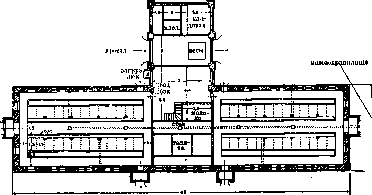
Figure 2. Typical plan of a cattle yard for 52 head (dimensions in meters). Giant dairy farms with 2,000 to 5,000 head of cattle are being established (Klementyevo, Faustovo near Moscow). Such a farm consists of a series of separate cattle yards for 200-250 head each. A large cattle yard presents greater conveniences for its operation than a small one, but from a sanitary and hygienic standpoint, the advantage lies with the small cattle yard; this is of particular importance upon the appearance of an epizootic such as foot-and-mouth disease or anthrax. Therefore, sanitary and veterinary supervision must be exemplarily organized on large dairy farms. When designing new farms, the availability of good-quality water and sufficient territory for walking the cattle must be taken into account in the first place. The most important functions of sanitary supervision in the cattle yard are expressed as follows: 1) Constant provision of all cattle with veterinary supervision. 2) Mandatory tuberculin testing of all cattle 1 time per year, and for cattle from which milk for children is obtained—2 times per year. 3) Equipping a special room for ailing animals as an infirmary and quarantine. 4) Careful medical examination of the personnel directly servicing the cattle yard (milkers, barn workers). Under no circumstances may persons suffering from venereal diseases or active tuberculosis be allowed to work in the cattle yard; persons suffering from skin diseases of the hands (scabies, eczema), as well as carriers of typhoid bacilli, are temporarily suspended from work (until recovery). 5) In the absence of refrigerating machines, it is necessary to equip an ice storage facility with a sufficient supply of ice (at the rate of 250-300 kg of ice per 1,000 kg of milk). 6) Systematic control of flies, which can be transmitters of epizootics. 7) Maintaining cleanliness in both the cattle yard and, in particular, the milk storage room. 8) All milk from sick and suspected animals must be subjected to disinfection (boiling, pasteurization) and must not be mixed with the rest. 9) Proper functioning of ventilation devices. 10) Timely cleaning and maintenance in order of sewage cesspools and manure storage facilities. Among the most frequently occurring diseases of cattle in cattle yards that cause losses for farms and are to one degree or another dangerous for humans, the following should be noted: a) Foot-and-mouth disease, after illness with which milk yields drop sharply. Milk yields are restored only after a new calving. Milk from cows with foot-and-mouth disease must be heated to 70° for 30 minutes; under these conditions the virus is destroyed. b) Tuberculosis; the main reasons for the spread of tuberculosis are the following: crowding of cattle in barns, stall keeping with a lack of exercise yards, arrangement of cows head-to-head, insufficient ventilation, common troughs for watering and common feed troughs. Therefore, on farms in stalls, individual feed troughs and automatic waterers should be arranged. Sanitary supervision has the right to demand timely Figure 4.

Figure 5.
Figure 6.
Figure 3. Plan of a cattle yard. Cattle are arranged with their heads toward the windows. A - wall; B - feed alley; C - mangers; D - stalls; E - drainage gutter; F - manure alley. Figure 4. Plan of a cattle yard. Cattle are arranged with their heads toward the middle. A - wall; B - manure alley; C - drainage gutter; D - stalls; E - mangers; F - feed alley. Figures 5 and 6. Scheme of ventilation devices in a cattle yard (Fig. 5 - lower fresh air supply, Fig. 6 - upper fresh air supply). culling of tuberculous cattle for meat, b) Infectious abortion, which appears on farms that replenish their herds with imported cattle, brings double damage: a drop in milk yield and the loss of offspring, which is especially sensitive for pedigree herds. The disease of milk lasts for years, c) Inflammation of the udder (mastitis) causes losses due to a drop in milk yield. Of the details of the internal equipment of cattle yards, great attention should be paid to ventilation. For ventilating the stall in warm weather, windows and doors serve. For ventilation in winter, special devices are necessary so that, on the one hand, accumulations of warm gases, moisture, and dust located in the upper part of the cattle yard are led outside, and on the other hand, heavy gases located in the lower part are removed. This is achieved by arranging double exhaust vents: air is taken at the top through the upper exhaust opening, and heavy stall gases - through an opening near the manure trench (Fig. 5). Another method (American) has an upper supply of clean air, while the exhaust is arranged at the bottom (Fig. 6). However, for the most part, ventilation is done by simple exhaust pipes. The temperature in the cattle yard in winter should be 10-12°. The windows of the cattle yards are made square (0.8x0.80 m) or rectangular (horizontal, measuring 1.0x0.8 m). In general, the light area should be at least 1/12 of the stall area. The windowsill should not be lower than 1.5 m. Fig. 2 shows a plan of a cattle yard for 52 heads, compiled by Strakhov. In Strakhov's plan (compiled in 1928), there is no silo tower provided, which when designing cattle yards for state farms and collective farms must be provided. The system of control over milk supplied by farms is best developed in the USA. It breaks down into two aspects: regular inspection of farm operations from the production and sanitary-hygienic standpoint, and regular control over milk delivered from the farm to the city. The first measure is carried out in the form of barn inspection. Control of milk in the city laboratory is carried out in accordance with the requirements of sanitary legislation (see below on milk legislation). In the production of certified milk intended for consumption in raw form, regular laboratory control over the milk of each cow individually must also be carried out on the farm in order to catch any disturbance in the milk secretion of the given animal. Such a study should be carried out 2 times a month from each teat separately. The results of the study are entered into a logbook, so that it is easy to establish any deviations in the composition of milk for each quarter of the udder. As an example, below is the setup of the business on one of the farms near Geneva according to the report of Dr. Schrantz at the Paris Dairy Congress in 1927. The farm releases milk only from those cows whose state of health is completely satisfactory and all four quarters of the udder are free from any infection. Control over each quarter of the udder is conducted regularly, at least once a month. The determinations made each time are as follows: 1) specific gravity, 2) fat, 3) dry matter, 4) defatted dry matter, 5) refraction number, 6) milk sugar, 7) sugar-free and defatted dry matter, 8) catalase number, 9) acidity, 10) sediment from centrifugation. In addition, the milk yield from each quarter of the udder is determined. - On model farms, electrical milking is sometimes used. This measure is quite rational since man is removed as a source of contamination, but often the use of electrical milking results in an increase in bacterial counts in milk. This is explained by the imperfection of apparatus sterilization. Steam sterilization cannot be applied to the rubber parts of the apparatus to avoid their damage. Rinsing with antiseptics (e.g., bleaching powder) is used. Central dairies. The milk supply to the population of large centers of the USSR, and in Western Europe and the USA also of smaller cities, is carried out by central dairies. Such dairies represent milk factories where a huge amount of milk, arriving from distant points (for example, Moscow's milk supply covers a radius of up to 300 km), is delivered daily. At these dairies, milk processing is carried out - straining or centrifuging to remove dirt, cooling, as well as pasteurization with cooling and bottling. At such dairies, there are always laboratories conducting both bacteriological and chemical control of milk. In the USA, milk inspection carries out regular control of city dairies, and the evaluation of the business is carried out using a standard card on a 100-point system. Milk legislation. Milk legislation in Western Europe and America is very motley in character. The most progressive in this area are the USA, where in 1926 a detailed and broadly drafted milk law, the Standard Milk Ordinance, was adopted. A number of epidemics caused by milk consumption prompted the speedy enactment of the law. The first part of the law gives a definition of all types of milk and dairy products, and the amount of defatted dry matter in whole milk must be at least 8.5%, and fat at least 3.25%. Here, the concept of pasteurization is also defined as heating to at least 63° for 30 minutes in apparatus approved by sanitary supervision; temperature and time are automatically registered. A qualification period is established during which all milk and cream consumed in the city must be qualified, i.e., assigned to one grade or another. Its duration must be no more than 6 months. During this time, sanitary supervision is obliged to examine at least 4 samples of each milk. Samples of milk from restaurants and other similar institutions may be examined at any time by sanitary supervision. Bacteriological control is carried out by plate counting. At least once every 6 months, sanitary supervision must publish the grades of milk and cream consumed in the city. Each milk supplier may demand requalification of their product, and sanitary supervision in this case is obliged to re-examine it no later than 3 weeks later. The competence of sanitary supervision also includes the issuance of permits for the sale of milk, registration and inspection of dairy farms and institutions. Protocols on violations of the rules by sanitary supervision must be posted in institutions in a prominent place. Two violations of the rules during the qualification period result in a downgrade (degradation of milk) of the given firm. The representative of sanitary supervision has the right to make milk that does not meet quality standards unfit for sale by curdling it with rennet or adding some harmless dye. All milk bottles and vessels must have a label indicating the grade of milk. The sale of milk in restaurants, hotels, etc., is permitted only in original packaging. Depending on the conditions of production and processing of milk, guaranteeing a reduced microorganism content in it, the law establishes the following grades of milk: raw certified milk A (Certified milk), raw milk B, raw milk C, raw milk D, pasteurized milk A, pasteurized milk B, pasteurized milk C. - Raw certified milk A. The number of bacteria must not exceed 50,000 per 1 cm3. Annual tuberculinization of cows and periodic examination by veterinary supervision. Cows with a positive reaction to the tuberculin test are removed from the herd, branded with the letters T or T and V, and sent to the slaughterhouse. Housing for cows must be arranged according to all rules of hygiene with good ventilation and sufficient lighting (per 1 stall 0.3 m2 of window surface and 14.2 m3 of air). Walls and ceilings must be whitewashed from time to time, floors and drains made of impermeable material that is easily cleaned must be washed regularly. The dairy must have a special room, isolated from living quarters, for processing milk, washing and sterilizing utensils, satisfying all sanitary requirements regarding the arrangement of the floor, walls, ventilation, and lighting, with special attention paid to the fight against flies (one of the measures is nets on windows and doors) and to strict cleanliness (daily washing). Mandatory sterilization of utensils with steam or chlorine solution is introduced, and utensils must be made of a material convenient for washing. Each farm must be sufficiently supplied with water and must have a latrine isolated from the room intended for milk processing and arranged according to all sanitary requirements. The udder and teats are cleanly washed and wiped dry before milking, as are the hands of the milkers. Milkers are provided with clean work clothes.
Milk is cooled within an hour after milking to 10° or lower and must be kept at a similar temperature until delivery. Bottle capping is performed by machine. Personnel undergo medical examination at least once a year. In case of illness, a doctor is immediately notified. - Raw Milk B must not contain more than 200,000 bacteria in 1 cm3 or, in the reductase test, satisfy the requirements of the 1st class, i.e., decolorize methylene blue no earlier than after 51/2 hours. In obtaining this milk, compliance with all the rules established for milk A is mandatory, but sanitary requirements regarding the dairy barn are somewhat lowered, and cooling of the milk to 15.5° is permitted. - Raw Milk C must not contain more than 1,000,000 bacteria in 1 cm3 or, in the reductase test, belong to the 2nd class. The tuberculin test is not performed. In all other respects, all rules mandatory for milk B must be observed, except that detailed regulations concerning utensils, bottling, and medical examination are replaced by general requirements of maintaining complete cleanliness. - Raw Milk D. Bacterial count not exceeding 5,000,000 in 1 cm3, or 3rd class in the reductase test. In obtaining this milk, the requirements imposed on milk C are not mandatory. - Pasteurized Milk A is raw milk of grade A or B, pasteurized according to law, cooled, and bottled in dairy establishments satisfying all requirements imposed for obtaining milk A or B. The bacterial count after pasteurization and before delivery must not be more than 50,000 in 1 cm3. If the milk is not subjected to pasteurization within 2 hours after delivery to the dairy, it is immediately cooled to 10°. It is cooled to the same temperature after pasteurization and delivered to the consumer no later than 36 hours after pasteurization. Special attention is paid to the sanitary condition of dairies, and all operations in milk processing must be carried out in separate rooms. The washing room must be supplied with running hot water and soap. The use of common towels is prohibited. Mandatory sterilization of apparatus, instruments, and vessels is prescribed, which after sterilization must be stored in a separate room. - Pasteurized Milk B is raw milk of grade A, B, C, obtained in compliance with all rules that are mandatory for milk A, except that the requirements imposed on the dairy barn correspond to the rules mandatory for milk B. The total bacterial count after pasteurization and before release must not be more than 100,000. - Pasteurized Milk C is milk that does not satisfy the requirements mandatory for pasteurized milk B. The bacterial count must not be higher than 500,000 in 1 cm3. - Each city is granted the right to introduce mandatory pasteurization of all milk; cities that do not have the opportunity due to local conditions to pasteurize all milk are permitted to allow the sale of raw milk of one grade or another, but this is regarded only as a transitional measure toward the introduction of mandatory pasteurization. Milk that does not correspond to any of the above classes may not be allowed for sale in cities. Any person or institution violating any of the rules may be subjected to a fine not exceeding 100 dollars. In the English Milk Act, adopted in 1923, 4 categories of milk are established: 1st category, certified milk. Cows are subjected to tuberculin testing every 6 months, and the entire herd is periodically inspected by a veterinary surgeon. Milk is obtained with strict compliance with the rules developed by the Ministry of Health. Milk is bottled on farms, and each bottle must have a label with the supplier's address and the date of bottling. Milk is not subjected to heating. The bacterial count must not exceed 30,000 in 1 cm3, and the coli titer must not be lower than 1/10 cm3. - 2nd category - milk A. Cows are subjected to tuberculin testing. Milk is dispatched in sealed cans and bottled on the spot in the dairy. The bacterial count must not exceed 200,000 in 1 cm3. - 3rd category - milk A "without special designation". Cows are not subjected to tuberculin testing, but are inspected by a veterinary surgeon once every 3 months. The herd is kept without contact with animals of other herds to avoid infection. Milk is sent by farmers in sealed cans to places of sale, where it may be bottled; the bottles must have a label with the address of the establishment and the date of bottling. The bacterial count must not be higher than 200,000 in 1 cm3 and the coli titer not lower than 1/100 cm3. Pasteurization of milk of this category is permitted. In such a case, the bacterial count must not be higher than 30,000 in 1 cm3. - 4th category - pasteurized milk. Pasteurization is carried out at 63-65° for 30 minutes. Milk is sold in bottles with labels indicating its pasteurization. The bacterial count must not exceed 100,000 in 1 cm3. The law does not concern sanitary measures in relation to farms and dairies, and there are no instructions on control over pasteurization. - In Germany, there is still no all-republican milk legislation. A draft milk law was submitted for approval to the Reichstag in 1930. It provides for mandatory tuberculin testing of all cows, regular veterinary inspection, compliance with cleanliness and hygiene rules in the dairy barn and in dairies, as well as regular medical examination of personnel. Norms for fat, acidity, and bacterial content are established. Violation of the law is punishable by imprisonment for a term of up to 6 months or a monetary fine. For violation of the paragraph on the non-admission of sick personnel, imprisonment may be increased to up to 2 years. Milk legislation in the USSR until recently had a rather accidental character, expressed mainly in various kinds of local decrees, and only in 1927 was a law issued of all-Union significance, regulating the conditions for obtaining and storing milk and establishing various punitive measures for violation of the issued rules. Although this law does not introduce bacteriological control, which is now mandatory in most legislations of the USA and Western Europe, it is a significant step forward compared to the previous chaotic state. According to this law, mandatory registration of all dairy establishments in health departments and veterinary departments is necessary. The latter inspect all premises serving these establishments, as well as livestock inspection. Inspections must be carried out periodically. Peasant individual households engaged in the sale of milk are not subject to registration. Persons working in dairy establishments are subject to a monthly medical examination. Premises for livestock must satisfy all rules developed by the veterinary department, which must provide for the size of premises, lighting, etc. During milking, all hygiene rules must be observed—the udder must be thoroughly washed, the first portions of milk milked into a special vessel, and the hands of milkmaids thoroughly washed. A washbasin with a towel and soap must be placed in the milking room. For straining and storing milk, special rooms must be available in which it is forbidden to store items not directly related to production. Milk vessels must be made of glass, tinned white iron, or tinned copper. In case of an epidemic or epizootic, sanitary and veterinary supervision may prohibit the sale of raw milk or carry out its preliminary disinfection. All workers must be provided with gowns and head coverings. The trade in milk and dairy products must be carried out in special premises, and at bazaars in specially designated places, on tables at least 3/4 m high. Personnel must be subject to a monthly examination. Supervision is entrusted to the bodies of sanitary and veterinary supervision. Violators of the rules are subject to administrative penalties on the basis of mandatory decrees of executive committees. Persons falsifying milk for mercenary purposes are subject to liability. This law concerns only large dairy enterprises, without extending to the mass of individual peasants, and only collective farms, state farms, and the cooperation of individual suppliers will make it possible to apply this law on a wide scale. - There are also a number of decrees issued by individual cities aimed at controlling market milk and improving its quality. The All-Union Congress of Epidemiologists and Sanitary Doctors in 1928 issued the following resolutions: 1) Take measures to strengthen sanitary and veterinary supervision over the production of milk in state farms, collective farms, dairy farms, as well as in control and dairy associations and other cooperative agricultural associations, paying attention to the arrangement of premises for livestock and for milk and to the condition of dairy vessels, as well as to the state of health of animals and persons tending them.
In individual uncooperative farms, carry out sanitary and educational work among the population on a wide scale. 2) Organize systematic sanitary supervision over all milk-collecting stations, as well as butter-making and cheese-making plants, and strengthen such supervision over the distribution points of milk and dairy products. 3) On the basis of existing legislation, demand from economic bodies the obligatory decontamination of milk coming from farms unfavorable for tuberculosis; perform the decontamination according to the instructions of a sanitary and veterinary doctor, and such milk must be specially registered before decontamination and not mixed with milk from tuberculosis-free farms. The Congress spoke in favor of streamlining milk transport by rail, providing isothermal cars and special cars for persons delivering milk by hand, as well as the need to improve horse-drawn transport. The Congress spoke in favor of issuing a special law on milk and special instructions establishing a standard for milk, and for the unification of research methods with special attention to the study of the microflora of milk, as well as the pasteurization of milk by methods agreed upon with the sanitary supervision. The question of milk standardization was also put on the agenda in the USSR. At the end of 1929, a standard of this kind was developed by the standardization commission under the People's Commissariat of Trade, with the American standard taken as a model. In the near future, it is thought that this standard will be finally approved and enter into force. When standardizing milk in the USSR, large difficulties are caused by the standardization of "certified" or "infant" milk. Such standardization naturally cannot be torn from the real soil and must take into account existing possibilities. In order to allow certified milk for sale, it is not enough to fix a certain amount of bacteria in it, e.g., 30,000 bacteria per 1 cm3; a further guarantee is needed that such milk is obtained from completely healthy animals and that the personnel working on the farm and having contact with the production of this milk do not present a danger in terms of milk infection. For this, tuberculinization of the herd and regular veterinary control of the farm herd and sanitary supervision of the personnel are necessary. In addition, in view of the easy susceptibility of dairy cows to udder inflammations, it is necessary during the production of such milk to periodically (at least once a month) subject the milk of each cow individually to laboratory investigation. Only with such an organization of the matter can there be talk of a genuine guarantee for such milk.
Methods of milk research. Sampling for analysis. Before taking a milk sample, it is thoroughly mixed from top to bottom. In the cold season, the milk is preheated to 10-15°. If the milk is in several vessels, samples proportional to the amount of milk in them are taken from each after mixing, and then an average sample is compiled. For milk research, a sample in the amount of 300-500 cm3 is taken. Samples must be delivered to the laboratory in the shortest possible time. If this is impossible, the addition of a preservative—potassium dichromate in an amount of 1 g or 10 drops of formalin (40%) per 1 liter of milk—is recommended. In this case, the determination of acidity can no longer be performed in the preserved milk. Frozen milk is heated in warm water at a temperature not exceeding 40° until completely thawed. Methods of sanitary research of milk fall into 2 groups: the study of pooled (market) milk and the study of fresh milk from individual cows. The first group should first of all include the counting of the quantity of bacteria in milk, which is still little used by us. This count is carried out both by the direct method and by counting colonies grown as a result of seeding on a solid nutrient medium. The count by the direct method is carried out either according to Breed, by applying 0.01 cm3 of milk to a specific area of a glass slide, or according to Dreyer-Korolev—by mixing a certain amount of the milk under study with a certain amount of a standard suspension of some microorganisms [e.g., African yeast (Schizosaccharomyces pombe) in Korolev]. The methodology of both methods is detailed in the publication of the Moscow Sanitary Institute "Standard Methods of Sanitary Research of Milk" (1929). Simple and rapid methods of chemical research. Simple and rapid methods of milk research include the determination of acidity, the alcohol test, and the reductase test. Acidity is determined by titrating milk with n/10 or n/4 normal alkali with phenolphthalein as an indicator. Acidity is expressed in the first case in Turner degrees, in the second—in Soxhlet-Henkel degrees (see Degree). The alcohol test is carried out by mixing equal amounts of milk and alcohol of a certain strength (68 or 70°). Fresh milk should not curdle in this process. The alcohol test has the advantage over the acidity test of being an indicator not only of the increase in acidity in milk, but also of changes caused in milk as a result of the development of other, e.g., putrefactive bacteria. Its weak side is low sensitivity. The reductase test is based on the reduction of methylene blue (see above, milk enzymes). There is a classification by Barthel and Orla-Jensen, according to which the time of reduction of methylene blue (i.e., discoloration of milk) is used to judge approximately the amount of bacteria in milk. The boiling test is also to a certain extent an indicator of milk freshness, but it is of low sensitivity. It can be applied with the preliminary addition of a certain amount of n/10 sulfuric acid solution, as a result of which the sensitivity of this test increases significantly (acid-boiling test). From the second group of methods, the catalase test, Tromsdorf's leukocyte test, and the bromothymol test should be noted. The catalase test—see above. The leukocyte test comes down to centrifuging milk in cylinders with a drawn-out and graduated capillary. After centrifugation, the amount of sediment is noted, and a microscopic preparation is made in which the number of bacteria and especially leukocytes is noted. The bromothymol test comes down to adding a certain amount of bromothymol solution to milk and observing the resulting coloration. This method essentially comes down to determining the concentration of hydrogen ions in milk. With abnormal secretion, the reaction of milk changes toward the alkaline side, and this test yields a greenish-bluish color instead of the yellow-green for normal milk. The test is used mainly in the study of milk from individual cows, especially in the barnyard when examining a herd. An indicator of normal secretion is also the chlorine-lactose number introduced by Koestler (1927). It comes down to determining the ratio between the content of chlorine and milk sugar in milk: chlorine % / milk sugar %.
should be no more than two. The increase in the chlorine-sugar ratio is explained by the fact that in abnormal milk secretion there is a decrease in sugar content, and since as a result of this the osmotic pressure decreases, its equalization occurs through the diffusion of NaCl from the blood (the Cl content increases). Among other methods for examining milk, we note the determination of specific gravity and fat. The first is done with an aerometer (lactodensimeter). The determination of fat is usually carried out according to Gerber (1892) (see Acid-butyrometry and Lacto-butyrometer). The determination of dirt is done by half-hour sedimentation of milk in a cylinder or by filtering milk through cotton filters in special apparatuses. - The test to distinguish raw milk from that which has undergone heating is carried out according to Rothenfusser (paraphenylenediamine-guaiacol test) or according to Storch with paraphenylenediamine. In both tests, hydrogen peroxide is also added. - Barn test. In cases where the results of milk analysis are for some reason doubtful, a milk sample is taken in the barn directly from the cow and the necessary examination is carried out right there. - Detection of impurities in milk. The detection of soda is carried out by adding a few drops of rosolic acid solution. Milk with soda turns pink in this process. To detect boric acid according to Jenkins, a few drops of strong hydrochloric acid are added to the milk and the filtrate is tested with turmeric paper (a cherry-red coloration is obtained). - The detection of formalin is carried out according to Riegel: upon cautious pouring of a mixture of sulfuric and nitric acids into milk in the presence of formalin, a violet ring is obtained. - The detection of hydrogen peroxide is carried out according to Arnold and Menzel. A few drops of vanadic acid are added to the milk. In the presence of hydrogen peroxide, a red coloration is obtained. To detect salicylic acid, milk is mixed with a few drops of strong acetic acid, filtered, and the filtrate is extracted with ether. The ethereal extract is evaporated, the residue is dissolved in a small amount of alcohol, and 2 drops of 1% ferric chloride are added. In the presence of salicylic acid, a violet coloration is obtained. Dairy products. Cream represents milk with a very high fat content. This is achieved by setting or centrifuging the milk. The setting method has a significant drawback in that it requires a long period of time during which bacterial processes develop, causing defects in the cream and devaluing it. Cream obtained by centrifugation, i.e., using a separator, is superior in keeping quality, and furthermore, a greater yield is obtained since no more than 0.1% of fat remains in the skimmed milk, whereas by the setting method it is impossible to separate all the fat. Commercial cream is divided into ordinary with a fat content of up to 17% and thick with a higher fat content. Commercial cream can be raw, pasteurized, and sterilized. - Sour cream is a product obtained by souring cream. Souring is carried out both by natural self-souring and by using special starters. Starters are obtained by using laboratory pure cultures of lactic acid bacteria (Streptococcus lacticus). Souring is carried out at a temperature of 20-22°. The best product is obtained when the starter is introduced into pre-pasteurized cream. Pasteurization of cream is usually carried out at a temperature somewhat higher than during milk pasteurization. Commercial sour cream is divided into low-fat with a fat content of less than 20% and full-fat with a fat content of 20-40%. - Cottage cheese represents casein precipitated from milk and pressed free from whey. It is obtained a) by spontaneous coagulation of milk from its gradual souring; b) by souring milk with lactic acid cultures; c) by coagulation of milk with rennet, whereby casein changes into paracasein. In the first two cases, acid cottage cheese is obtained, in the latter - sweet, going mainly for the production of casein. Depending on what kind of milk is used to obtain cottage cheese, whole or skimmed, its fatty and lean varieties are distinguished. Lean cottage cheese contains less than 1% fat, fatty - up to 7% and more. - Cottage cheese curds are prepared from a fresh curd mass obtained from whole cow's milk by souring it with self-souring or with the use of a bacterial starter. The curd mass can also be obtained by coagulation of milk with rennet, as well as as a result of the combined action of a bacterial starter and rennet. Curds go on sale in fresh form and without being aged for ripening. Depending on the method of preparation, curds are divided into salted and sweet. According to the All-Union standard, they must meet the requirements given in Table 18. The addition of coloring agents, saccharin, and artificial sweetening substances is not allowed in curds. A weak point in the technique of curd manufacture is that for Table 18. Constituents Salted curd Sweet curd Milk fat not less than . Water not more than....... Total amount of sugar . 18% 65% 1-2% 16% 52% 16-25% Acidity according to Turner not 210° 190°* their production mostly milk with a high bacterial count is used, recognized as unsuitable for direct consumption. Such milk is usually characterized by increased acidity. As a result of this, sanitary practice registers frequent cases of poisoning in cities upon consumption of such curds. The way out of the situation is the creation of a special variety of curds from pasteurized milk soured with the use of a bacterial starter. Such curds will be absolutely harmless upon consumption. In this case, the variety of the curd should be indicated on the label. - Sterilized milk is released for sale in hermetically sealed glass bottles or in soldered tin cans. It can be preserved without changing its properties for a very long time. The color of sterilized milk is slightly brownish, the aftertaste is that of boiled milk. There should be no separated layer of fat in it (see above - sterilization of milk). Condensed milk is prepared in two varieties - with the addition of sugar and without addition. In the first case, milk to which about 12% of ordinary (cane) sugar has been added is evaporated in a vacuum at a temperature not exceeding 50° to one-third or a quarter of the initial volume. Due to the high sugar content (up to 60% of milk and cane sugar combined), such milk acquires a very thick consistency. It is stored in soldered tin cans, and is not subjected to sterilization in them, because due to the high osmotic pressure caused by the high concentration of sugar, bacterial processes should not occur in it. Due to the absence of sterilization, it contains vitamin C in a rather significant amount. Cases of spoilage of such milk under the influence of yeasts (Torula lactis condensi and others) have been described, however. Another variety of condensed milk is prepared without the addition of sugar. Such milk is obtained by evaporating the milk 2-3 times, after which it is poured into tin cans, which are soldered and then subjected to sterilization. Sometimes such milk turns out to be in a curdled form. To avoid this, it is required that only very fresh milk be subjected to condensation and that such milk be tested beforehand for resistance to heating. - Dried milk is dehydrated fresh milk. It is prepared from whole, semi-skimmed, and skimmed milk. The manufacture of dried milk is carried out by three methods: 1) the mass method reduces to concentrating milk by heating in a vacuum with constant stirring; 2) the film method; in this method, milk falls in a thin layer onto the heated surface of a rotating drum, on which a thin film is formed as a result of drying; the film is removed and then subjected to grinding; 3) the spray method reduces to spraying milk in a vacuum with heated air or, better, neutral gas to avoid oxidation of milk fat (see also Bulgarian bacillus, Gartner's milk, Globulins, Casein, Kefir, Kumys, Lactobacillin, Lacto-butyrometer, Lactodensimeter, Lactase, Lactoscope, Lactotherapy, Butter, Milk epidemics, Soxhlet apparatus, Cheese).
A. Voytkevich. Milk in infant feeding. By infant milk is understood milk that is not only unadulterated and uncontaminated, but also fresh, i.e., obtained from recent milking of healthy cows and containing a large amount of vitamins. Cow's milk is the main raw material for making food for young children during artificial feeding. Furthermore, it enters as a major component into the composition of children's food for older children as well. This alone suggests that the milk used for feeding children must meet the strictest sanitary requirements. Ordinary market milk, which represents a very contaminated product, is one of the main causes of severe acute and chronic digestive and nutritional disorders in children. Bacterial contamination of milk (see above) is of even greater importance for the child. The question of the transmission of a number of diseases through milk has long been resolved in the affirmative; the most dangerous, apart from the mentioned acute diseases, is infection with tuberculosis specifically at a juvenile age. The production of infant milk in exemplary institutions is subject to extraordinarily strict requirements (see Feeding of infants), guaranteeing both the flawless health of the cow (see above) and a minimal number of microbes in freshly milked milk. This is achieved by: 1) keeping cows in appropriate hygienic premises, in normal stalls, 2) appropriate feed and care of the cow between milkings, 3) thorough toilet (washing with warm, not cold water before milking) of the cow and its udder, 4) milking in a separate room away from the stall, 5) thorough washing of the milker's hands both before the operation, 6) milking into sterilized utensils, with the first portions of milk being milked out separately, 7) straining through special sterilized cotton filters, and finally 8) rapid cooling of milk to 5°. The latter procedure is highly important. Admittedly, it does not kill those few microbes that nevertheless get into milk even under the mentioned milking conditions, but their vital activity, and consequently the production of toxins and endotoxins by them, is paralyzed as long as a temperature no higher than 10° is maintained in the milk. Obtaining such infant milk involves great expense and can hardly be applied on a wide scale; in any case, for feeding children, milk obtained from farms with the best management practices is required, from which it is received by the consumer in a strongly cooled form. To prepare food for a child from milk, it is nevertheless necessary to subject it to sterilization, pasteurization, or at least boiling. Of these three methods, the latter is the most common and advantageous, as many years of experience show, since sterilization is unsuitable as a method that strongly denatures milk, pasteurization by no means guarantees the destruction of all pathogenic microbes and their spores, and brief boiling of milk, for no longer than 10 minutes, in a saucepan or in vials in a water bath (Soxhlet apparatus) does not cause denaturation of milk, while microbes are almost all killed by it. True, enzymes and immune bodies of the milk are destroyed in the process, but the former are not needed by the child, since the digestion of milk in him occurs not by means of those enzymes that he receives with the milk, but with the help of his own. Antibodies contained in cow's milk, on the other hand, are in most cases useless for the child, since they are created for the most part by those antigens that are not harmful to humans. As for the damage to the colloidal properties of milk, with rapid brief heating it does not manage to manifest itself significantly. As far as can be judged by clinical experience, the changes to which milk is subjected during brief boiling (coagulation of albumin, precipitation of calcium salts, etc.) are of little importance. There are even observations by individual authors that raw milk passes from the stomach into the intestine more slowly and is digested worse by the child. As for vitamins, which are partially destroyed by boiling, when feeding with boiled milk it is necessary to replenish vitamins by giving raw fruit and vegetable juices and cod liver oil.
G. Speransky. Milk as a nutrient medium suitable for cultivating most bacteria is widely used in bacteriological practice and serves as a differential medium for detecting the enzymatic properties of a particular microbe. By the change or absence of changes in milk, one can judge the chemical processes that accompany the growth of the studied bacterial species. For example, the coagulation of milk proves the ability of bacteria to produce acids, and the peptonization of milk proves the ability to produce a proteolytic enzyme. Skim milk is used for the nutrient medium, mostly without any additives. Fresh milk with a neutral reaction to litmus is centrifuged, cream is removed, it is filtered through sterile cloth, poured in amounts of 6–8 cm3 into test tubes, and sterilized at 100° for 20 minutes for three consecutive days, keeping the medium between sterilizations at room temperature. Longer sterilization and at a higher temperature alter the composition of milk, causing caramelization of milk sugar and peptonization of casein. To observe the change in the reaction of the medium during bacterial growth, litmus milk is used, which is prepared in the manner described above, except that a litmus tincture is added to the milk before sterilization until a purple tint appears. According to Sterling's method, milk can be disinfected with chloroform; chloroform, after a 14-day effect on milk, is evaporated by heating. This method, however, has not become widespread. The peptonizing properties of bacteria are clearly revealed on milk agar or gelatin. Sterile milk is mixed in equal volumes with sterile weakly alkaline agar or gelatin, poured in a thin layer into Petri dishes or test tubes. On the cloudy medium thus prepared, colonies of peptonizing bacteria are surrounded by a transparent rim due to the dissolution of the casein contained in the medium. In addition to milk, whey (Lackmusmolke) by Petruschky is used as a nutrient medium. This medium is an extremely valuable method for the subtle differentiation of bacteria of the intestinal group. To fresh skimmed, slightly warmed milk is added enough weak hydrochloric acid solution for casein precipitation to occur. It is filtered through paper, neutralized with soda or a normal solution of caustic soda to a strictly neutral reaction. Excess alkali makes the whey unusable for application. Next, the whey is boiled in a Koch apparatus for 1–2 hours until complete precipitation of casein, then filtered several times through a paper filter. The whey must have a neutral reaction, be completely transparent, and have a slight greenish-yellow tint. To the whey thus prepared, 5% aqueous litmus tincture is added, and the liquid turns a reddish-purple color; it is poured in amounts of 5 cm3 into sterile test tubes and sterilized for 10 minutes at 100°. When comparatively studying various cultures, equal and not too small amounts of inoculum should be used during seeding. Calmette, Negre, and Boquet propose a slightly different method for preparing Petruschky's medium. Instead of hydrochloric acid, rennet is used to curdle the milk; after the first filtration through sterile cloth, 2 g of crystalline calcium chloride is added; it is sterilized for 15 minutes in an autoclave at 115°; 2% litmus tincture is added to the filtered transparent whey, and finally the medium is sterilized by filtration through a candle.
A. Korzhinokaya. Human milk. By human milk is understood the secretion of the mammary gland of a nursing woman. Lactation is normally regulated thanks to sufficient emptying of the breast in such a way that any significant reabsorption of the constituent parts of human milk does not take place in the gland itself (Czerny). The first 12-14 days after birth the mother's breast contains colostrum (see) and only after this period can the secretion of the mammary gland be considered mature human milk. The method of obtaining material for research is a very important moment for studying the properties, characteristics, and chemical composition of human milk. The experience of a number of studies shows that the composition of human milk varies depending on whether samples for research are taken at the beginning or at the end of nursing the child. Analyses of morning milk do not coincide with analyses of evening milk. Even milk taken simultaneously from both breasts can differ quite sharply in its composition. It is also known that the quality of human milk changes throughout lactation; the composition of human milk depends to a certain extent also on the mother's nutrition; there is also no doubt that both physical and psychological experiences of the mother can affect the properties of human milk (see Lactation). The most correct judgment about the properties and chemical composition of human milk can be obtained only by examining 24-hour samples of human milk. Satisfactory results are also given by examining human milk according to the following method: before and after each nursing of the child, the mother expresses a definite (equal) amount of milk (at least 5 cm3); these samples are mixed and subjected to analysis. Properties of human milk. Human milk is an opaque white liquid, which compared to cow's milk has a more yellowish tint; the odor of human milk does not present any characteristic features, its taste is cloying and sweetish. When standing for a few hours, a layer of fat forms on the surface of human milk. Skimmed human milk is much more transparent than skimmed cow's milk; it opalesces strongly; its color is whitish-bluish. - The reaction of human milk in the presence of phenolphthalein turns out to be acidic, and litmus paper gives an alkaline reaction. The reason for this double reaction lies in the simultaneous content of mono- and diphosphatides. The first of these give a weakly acidic, the second an alkaline reaction. Upon titration of human milk with n/10 alkali in the presence of phenolphthalein and n/10 acid in the presence of lacmoid, the following data are obtained for 10 cm3 of human milk (Courant): 0.20-0.55 7u-alkali, 0.90-1.25 7u-acid. Measurement of ion concentration (active acidity) of human milk gives on average [H+]=1.1x10⁻⁷; correspondingly pH=6.97 (Davidsohn); the pH of human milk fluctuates between 6.80 and 7.46. Human milk is somewhat more acidic than blood and more alkaline than cow's milk, the pH of which is 6.57. - Specific gravity of human milk on average = 1.032. - Other physical and chemical features of human milk (according to Engel): surface tension σ=4.74; internal friction at 15°=1.71-2.53; electrical conductivity - within 15-57x10-4; resistance at 18°=175-666; freezing point from -0.5° to -0.63°. Chemical composition of human milk. The main constituent parts of human milk are protein, fat, milk sugar, salts, vitamins, and water. In addition, human milk contains an insignificant amount of citric acid and some other not yet fully studied substances (aromatic, coloring, etc.). The totality of all these substances excluding water forms the so-called dry residue, which is determined by evaporating a certain amount of milk in a drying cabinet at 98°. The amount of dry residue depends on fluctuations in the content of the main constituent parts of human milk. I. Nitrogenous substances. 1. Total nitrogen. Camerer and Söldner consider that the total N content fluctuates between 0.13% and 0.30%, Schloss obtained 0.15-0.26%, other authors cite similar figures. Systematic determinations of N on a large amount of material were performed by Schlossmann, who noted that the N content in human milk gradually drops throughout lactation. Between the 9th and 30th day after birth the total N content is 0.30%, between the 31st and 70th day - 0.25%, between the 71st and 140th day - 0.20%, after the 140th day - 0.21%. These figures of Schlossmann are basically confirmed by all subsequent researchers. The total N content in human milk fluctuates within quite significant limits even throughout the day. Having examined 18,700 g of milk from 8 nursing mothers, Engel calculated that the average N content in their milk equaled 0.183%. 2. Residual nitrogen. Camerer and Söldner established that the amount of residual N constitutes approximately about 17% of total N (fluctuations between 13.3% and 19.1%). Rietschel also obtained 15-20%. Thus, it can be considered established that approximately 1/6 (about 17%) of total N falls to the share of residual. As for the nature of this residual N, it has long been known that this N fraction of human milk consists mainly of urea and certain amino acids. According to Rietschel's data, 80% of all residual nitrogen must be attributed to urea. The amount of amino acids according to Giaume's data fluctuates between 3 and 9 mg% and averages 5.5 mg%. Human milk contains only negligible amounts of ammonia. - 3. Total protein content and individual protein bodies. According to the data of Munk, as well as Camerer and Söldner, the average protein content in human milk equals 1.04%. Engel cites the figure of 0.94%. Practically, it can be considered that mature human milk contains on average 1% protein. The protein of human milk consists mainly of casein, albumin, and globulin. Casein nitrogen constitutes approximately 40% of total N (Schlossmann, Engel, et al.). The casein content in human milk fluctuates in approximately the same limits as the total amount of nitrogen. If one compares the casein of human milk with the casein of cow's milk, it will turn out that the casein of human milk contains very little sulfur and phosphorus; otherwise, elementary chemical analysis does not find sharp differences; in addition, the casein of human milk also contains a somewhat smaller amount of amino acids. These ratios are best illustrated by tables 19 and 20. Along with casein, human milk also contains albumin and globulin; the nitrogen of albumin and globulin taken together constitutes approximately about 40% of total N (Schlossmann, Engel, et al.). Since human milk contains a very insignificant amount of globulin, practically it can be considered that the protein of human milk consists of equal parts of casein and albumin. It is curious to note that despite the absence of glycocoll, the biological value of casein and lactalbumin is very Table 19. Constituent parts of casein... Carbon Hydrogen Sulfur Phosphorus Nitrogen... 52.7 7.10 0.33 0.242 14.04 52.7 6.81 0.83 0.88 15.65... Table 20. Constituent parts of casein of human...
Related articles
Cite this page
“Milk (Milk, the product of secretion of the mammary).” Soviet Medical Encyclopedia. English translation of Bolshaya Meditsinskaya Entsiklopediya, 1st ed. (Moscow, 1928–1936), ed. N. A. Semashko. https://sovietmedicalencyclopedia.pages.dev/article/milk-2/