Nechaev
Historical document, translated for reference. It reflects medical knowledge of the 1920s–30s and is not medical advice.
Summary
This article covers two prominent figures named Nechaev: Alexander Afanasevich Nechaev (1845-1922), a distinguished physician and organizer of hospital care in St. Petersburg, and Alexander Petrovich Nechaev (1870-), a notable Russian psychologist who founded experimental pedagogy in Russia.
Encyclopedia article (1928–1936)
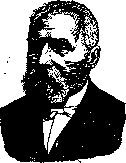
NECHAEV Alexander Afanasevich (1845-1922), chief doctor of the Obukhovskaya Hospital, distinguished therapist, organizer of hospital care, founder of the Obukhovskaya school of physicians, one of the most capable students of S. P. Botkin. In 1870 he graduated from the Mediko-Chirurgical Academy. After graduating, he worked in the clinic of S. P. Botkin as an ordinatory. In 1883-1885 he was senior ordinatory of the Aleksandrovskaya, now S. P. Botkin, Barracks Hospital. In 1885-90 he was chief doctor of the women's and in 1890-1922 chief doctor of the men's Obukhovskaya Hospital. The activity of N. was devoted to the organization of hospital care in St. Petersburg and in the Obukhovskaya Hospital in particular. Having headed the Obukhovskaya Hospital for 37 years, N. turned it into a scientific institution from which more than 30 professors emerged. Nechaev encouraged the work of externs in the hospital, and from all corners of Russia physicians came to the 'Obukhovka' for improvement. N. introduced assistant positions in hospitals. After the revolution, N. was one of the founders of the Leningrad Therapeutic Society named after Botkin (1921) and its first chairman. In 1922 Nechaev was chairman of the organizational bureau for convening the congress of therapists, the first after the revolution. Nechaev was a major public figure. On January 9, 1905, thanks to Nechaev, the Obukhovskaya Hospital accepted and treated a large number of wounded during 'Bloody Sunday'. A detachment of doctors and sisters from the hospital went to the Narva Gates and provided assistance on the spot. After the 1917 revolution, N. actively participated in commissions of the health department. N.'s scientific works are devoted mainly to the border area between therapy and surgery and to infectious diseases with lesions of the intestinal tract. Among N.'s works should be noted his dissertation from Botkin's clinic: 'On the depressing effect of atropine, morphine, and chloral hydrate on the secretion of gastric juice and the irritation of sensory nerves' (SPB, 1882), where for the first time (before Riegel) N. experimentally showed the depressing effect of atropine on gastric secretion. The first case in Russia of surgical treatment of typhoid perforative peritonitis with a recovery outcome belongs to Nechaev and A. A. Troyanov (Botkin's Hospital Gazette, 1894, No. 23). For his medical-scientific activity on its 50th anniversary, Nechaev received the title of honorary professor (from the State Institute of Medical Knowledge). Issue No. 46 of the 'Russian Physician' for 1910 was dedicated to Nechaev, as well as a separate 'Collection of Scientific Works in Honor of the 50th Anniversary of Prof. A. A. Nechaev' (P., 1922; bibliography of works of the Obukhovskaya Hospital).
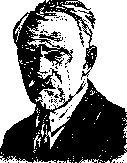
NECHAEV Alexander Petrovich (born in 1870), known Russian psychologist. Graduated from the historical-philological faculty of St. Petersburg University. Then he worked abroad at the medical and philosophical faculties. In 1897 he received the title of privat-docent, in 1906 the degree of Master of Philosophy (for a study on association by similarity). In 1901 N. organized the first laboratory of experimental-pedagogical psychology in Russia, in 1904 the first pedagogical courses and then a number of congresses on these disciplines; he participated in the founding of the Society of Experimental Pedagogy (1910), the Pedagogical Academy of the Education League (1907), where he served as president from 1909 to 1914 and as professor of psychology; at the same time he was director of the Higher Pedagogical Courses and experimental school at the Society of Experimental Pedagogy. In 1917 he organized the Pedagogical Institute in Samara and when this institute was transformed into a state university he was its rector (1918-21). From 1922 to 1925 he was director of the Moscow State Psycho-neurological Institute. He is a member of many scientific societies, both Russian and foreign. N. has more than 200 works to his credit on general questions of psychology, pedagogical psychology, physiological psychology, psychotechnics, as well as a number of textbooks. Under the editorship of N. a number of journals and books were also published. While little touching in his works on the fundamental theoretical problems of his discipline, Nechaev nevertheless actually adheres to the positions of traditional subjective psychology, which combines an idealistic view of the psyche with an individualistic approach to man as an abstract ahistorical being. For N.'s works on psychotechnical and pedagogical topics, a narrow empirical and mechanical application of the same test material to persons with the most diverse social, professional, etc. characteristics is characteristic. Among N.'s larger works of recent years should be mentioned: 'Guide to Experimental-Psychological Investigation of Children' (M., 1925); 'Psychology of the School Collective' (M., 1928); 'Character of Man' (M.-L., 1929); 'Mental Fatigue' (collection, edited by A. P. Nechaev, M.-L., 1929).
Related articles
Mentioned in
Cite this page
“Nechaev.” Soviet Medical Encyclopedia. English translation of Bolshaya Meditsinskaya Entsiklopediya, 1st ed. (Moscow, 1928–1936), ed. N. A. Semashko. https://sovietmedicalencyclopedia.pages.dev/article/nechaev/