Polothebnov
Historical document, translated for reference. It reflects medical knowledge of the 1920s–30s and is not medical advice.
Summary
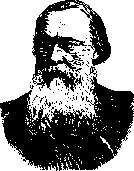
Alexei Gerasimovich Polothebnov (1839–1907) was the first Russian professor of dermatology and venereal diseases, often called the 'grandfather' of Russian dermatology. He studied under S. P. Botkin and later traveled to Vienna and Paris to learn from leading dermatologists of the time.
Encyclopedia article (1928–1936)
POLOTEBNov Alexei Gerasimovich (1839–1907), the first Russian professor in the chair of skin and venereal diseases ('the grandfather' of Russian dermatology). In 1864 he completed the course at the Medical-Surgical Academy, where he was retained for further improvement. After working for 3 years under Prof. S. P. Botkin, P. in 1867 was sent by the academy abroad to study dermatology. There, over 3½ years, P. worked in Vienna and Paris with outstanding dermatologists of the time (F. Hebra, A. Fournier, etc.). From 1871 P. was privat-docent, and then professor at the Medical-Surgical Academy. In the skin department of the hospital, which was assigned for lectures on dermatology, he 'found not a single of the most common scientific aids for the study of patients'. In his 1882 article on the present state of dermatology in Russia, P. was the first to defend dermatology—an ignored branch of science at the time (chairs of skin and venereal diseases in universities did not yet exist). This article contributed to the change of the university charter, according to which from 1884 chairs of skin and venereal diseases were established in all universities. Educated in the school of S. P. Botkin, P. critically related to the Vienna dermatological school, which viewed skin diseases as exclusively local processes; in contrast to it, P. strove to study not the diseases of the patient. Also critically related to the vague hypothesis of 'dischromia' of the French school, setting as his goal the collection of factual data to clarify the connection of skin diseases with disorders of other organs of the body, and introduced in his clinic a comprehensive study of the skin patient, raising clinical observations to the level of modern research accepted in other special clinics. Thus, thanks to P., Russian dermatology from its first steps took a firm and sure path of clinical research. P. first precisely studied the infectious forms of erythema, and a whole group of diseases, differing from each other in appearance and essence (psoriasis, pemphigus, lichen ruber, ichthyosis, prurigo and sclerodermia), erroneously united into one nosological unit. P. collected a large material to clarify the dependence of psoriasis, lichen ruber, etc. on changes in the nervous system. The works of P. on erythema have been translated into German. P. first in Petersburg diagnosed lichen ruber, elephantiasis osseum, the first case of leprosy in Petersburg.
In the skin department of the hospital, which was assigned for lectures on dermatology, he 'found not a single of the most common scientific aids for the study of patients'. In his 1882 article on the present state of dermatology in Russia, P. was the first to defend dermatology—an ignored branch of science at the time (chairs of skin and venereal diseases in universities did not yet exist). This article contributed to the change of the university charter, according to which from 1884 chairs of skin and venereal diseases were established in all universities. Educated in the school of S. P. Botkin, P. critically related to the Vienna dermatological school, which viewed skin diseases as exclusively local processes; in contrast to it, P. strove to study not the diseases of the patient. Also critically related to the vague hypothesis of 'dischromia' of the French school, setting as his goal the collection of factual data to clarify the connection of skin diseases with disorders of other organs of the body, and introduced in his clinic a comprehensive study of the skin patient, raising clinical observations to the level of modern research accepted in other special clinics. Thus, thanks to P., Russian dermatology from its first steps took a firm and sure path of clinical research. P. first precisely studied the infectious forms of erythema, and a whole group of diseases, differing from each other in appearance and essence (psoriasis, pemphigus, lichen ruber, ichthyosis, prurigo and sclerodermia), erroneously united into one nosological unit. P. collected a large material to clarify the dependence of psoriasis, lichen ruber, etc. on changes in the nervous system. The works of P. on erythema have been translated into German. P. first in Petersburg diagnosed lichen ruber, elephantiasis osseum, the first case of leprosy in Petersburg.
Related articles
Cite this page
“Polothebnov.” Soviet Medical Encyclopedia. English translation of Bolshaya Meditsinskaya Entsiklopediya, 1st ed. (Moscow, 1928–1936), ed. N. A. Semashko. https://sovietmedicalencyclopedia.pages.dev/article/polothebnov/