Proprioceptive Elements
Historical document, translated for reference. It reflects medical knowledge of the 1920s–30s and is not medical advice.
Summary
This article from the 1928–1936 Soviet Great Medical Encyclopedia discusses proprioceptive elements, or organs of muscular sensitivity, located in muscles and tendons. It covers their discovery and definition by Sherrington, their physiological role in reflex coordination of movements, reciprocal innervation, and cortical representation based on Pavlov's school.
Encyclopedia article (1928–1936)
PROPRIOCEPTIVE ELEMENTS, organs of muscular sensitivity (sensitive nerve endings) embedded in muscles and tendons. The term proprioceptive elements (or proprioceptive endings) was proposed by Sherrington to distinguish muscle receptors into a special group from skin receptors and higher sense organs (exteroreceptors) and receptors located in internal organs (interoreceptors). According to Sherrington, from 30% to 50% of the nerve fibers making up the nerves innervating muscles are sensory (afferent), originating from proprioceptive elements. These fibers do not degenerate after sectioning of the anterior roots of the spinal cord. While for exteroreceptors the specific stimuli are agents of the external world, the stimuli for proprioceptive elements are changes occurring within the organism itself, in its motor system. This division, however, is conventional, since exteroreceptors of the skin can be excited due to its tension or relaxation during muscular movements, and proprioceptive elements apparently can be excited by energetic pressure on the skin integuments. For the histological structure of proprioceptive elements, see Nerve endings.—The specific stimulus for proprioceptive elements is the change in tension of the muscle (tendon) in which these proprioceptive elements are embedded. This was proved in the most convincing form by Forbes and Adrian, who recorded the appearance of action currents in sensory (as well as mixed) nerves upon stretching a muscle or during its contraction. At the same time, the greater the load stretching the muscle, the higher the frequency of impulses traveling from the proprioceptive elements to the nerve centers. The functional significance of proprioceptive elements is determined by the fact that their excitation reflexively affects both the state of the muscle in which the excited proprioceptive elements are embedded at a given moment, and the state of the nerve centers innervating other muscles. Hence the importance of proprioceptive elements in the implementation of movement coordination. This role of proprioceptive elements is most vividly manifested in the fact that muscular paralyses can occur not only upon sectioning of the motor nerve fibers innervating the musculature, but also upon sectioning of the corresponding sensory nerves. Thus, after sectioning of the sensory infraorbital nerve in a horse, paralysis of the lower lip occurs (Bell). After unilateral sectioning of the superior laryngeal nerve, paralysis occurs on the corresponding side of the larynx (Exner). In a number of other cases, after sectioning of the sensory roots of the spinal cord, the ability to move, although not disappearing, was sharply disordered: in monkeys, for example, the sectioning of the posterior roots (from C1 to Sii) deprived the animal of the ability to perform grasping movements (Hering); in a dog, the sectioning of the sensory roots corresponding to the hind limbs made walking extremely difficult and "clumsy" (Bickel). All these observations indicate the importance of muscular sensitivity for the execution of normal movement. A special singling out of the role of proprioceptive elements and an analysis of their significance is given in the studies of Sherrington, who proved that during the contraction of a certain muscle group, other muscles acting as antagonists to the former relax. Thus, for example, during the contraction of the knee flexors (semitendinosus muscle, semimembranosus muscle), the extensors relax (quadriceps muscle). This phenomenon of reciprocal innervation of antagonists is entirely caused by impulses coming from the proprioceptive elements of the contracting muscles. Upon sectioning of the posterior roots or cocainization of the contracting muscles, reciprocal innervation completely disappears. Reciprocal innervation is due to the fact that impulses traveling to the nerve centers from the proprioceptive elements of the contracting muscles bring the centers of antagonistic muscles into a state of inhibition. The reciprocal innervation of antagonistic muscles (and the associated increased excitability of nerve apparatuses after the cessation of the proprioceptive impulses that caused inhibition) undoubtedly plays a significant role in the entire coordination of movements. The latter is unthinkable without central regulation of the distribution of tension in various muscle groups, and Sherrington's experiments teach that centripetal impulses from proprioceptive elements lie at the basis of this regulation. Undoubtedly, under normal living conditions, all these relationships are infinitely more complex than in spinal (with removed cerebrum and medulla oblongata) animals, which were the main object of Sherrington's research. However, it seems probable that in the process of training, the role of higher nerve centers in the execution of movements decreases, the latter "automate"; in this case, phylogenetically older mechanisms of reciprocal innervation come to the fore, which can already occur within a single spinal cord. In any case, uncoordinated movements during the learning period have much in common in their external character with movement disorders occurring upon damage to muscular sensitivity. Along with this, it must be pointed out that in the normal organism, simple spinal mechanisms change significantly due to the activity of subcortical apparatuses (striate body, red nucleus, optic thalamus), the cerebellum, and the cerebral cortex. Sherrington regarded, for example, the cerebellum as the "main ganglion of proprioceptive innervations." The exact picture of the participation of all these centers in the coordination of movement and the conditions of their interaction cannot yet be given. Damage to each of them entails a violation of movement coordination, and the importance of impulses coming to these apparatuses from proprioceptive elements (through the spinal cord) cannot be minimized. For the cerebral cortex, the school of Academician I. P. Pavlov (Krasnogorsky) proved that the area of the cortex receiving impulses caused by the irritation of proprioceptive elements and the areas of the cortex receiving skin irritations are topologically separated. After removal of the coronal gyrus and ectosylvian gyrus (in dogs), conditioned reflexes formed to mechanical stimulation of the skin disappeared while conditioned reflexes to the flexion of the ankle joint were preserved. After removal of the sigmoid gyri, conditioned reflexes to joint flexion disappeared while reflexes to skin stimulation were preserved (according to Academician Pavlov's indications, repeated experiments are required for the final confirmation of this conclusion about the localization of the skin and motor analyzer). Along with the influence of impulses coming from proprioceptive elements on the distribution of tension in all the musculature participating in a given movement, their importance in the contractile reactions of the very same muscle in which the excited proprioceptive elements are embedded must be noted. A typical example of such an influence is given in Fig. 1, showing the change in tension in the extensor of a decerebrate cat during its stretching. This reflex increase in tension in the extensors occurring in response to stretching was named by Liddell and Sherrington the myostatic reflex. Stretching a muscle by 1% of its length is sufficient to increase its tension by 2,000 g (Liddell and Forbes).
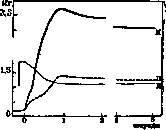
These reflexes play a considerable role in supporting and moving loads; when holding a load, only such a number of myofibrils is simultaneously encompassed by excitation, the tension of which is sufficient to counterbalance the load. When lifting a load, however, myofibrils not excited by this mechanism also contract. Myostatic reflexes are observed during prolonged stretching of muscles. Hoffmann singled out into a special group of " propioceptive reflexes" (Eigenreflexe) those which are caused by the instantaneous stretching of a muscle and consist in a single twitch of the muscle in response to its stretch. Hoffmann refers all tendon reflexes to this group of phenomena, believing that a blow to the tendon acts only as a stretch of the muscle. At the same time, the intensity of tendon reflexes varies—it is highest in the extensors of the lower limbs and on the tendons of the finger muscles and pronators of the arm (contracture occurs most easily in these same muscles in the form of hemiplegia described by Wernicke). The intensity of tendon reflexes is influenced by the most diverse factors, both normal (fatigue, hyperventilation) and pathological (for example, tabes dorsalis). For the diagnostic significance of tendon reflexes, see Reflexes. According to Hoffmann, "proprioceptive reflexes" play a role in the processes of normal innervation of musculature, acting as a "regulator" of the intensity of muscle contractions: they enhance muscle contraction when holding a load and moderate the intensity of contraction during muscle unloading. It has been shown that the rhythm of voluntary innervation (the rhythm of muscle action currents) is disrupted when "proprioceptive reflexes" are lost. However, drawing final conclusions about their significance is premature. It should also be noted that Foerster objects to the view of tendon reflexes as the result of only a single muscle stretch, and does not rule out the participation of periosteal sensitivity. He likewise separates tendon reflexes from "stretch reflexes" (Dehnungsreflexes)—the resistance reflexively exerted by a muscle to its non-instantaneous stretch. Sherrington's myostatic reflexes are included in this latter group of phenomena. Elimination of proprioceptive innervation by cocaine-treating a muscle completely eliminates "stretch reflexes" (Magnus, Liljestrand). Along with the participation of impulses from proprioceptive elements in the coordination of movements, these impulses play no less, and sometimes a determining, role in muscle tone. Sherrington proved that muscle tone completely disappears after the transection of their sensory nerve. Stimuli from the skin and joints can enhance or weaken tone; Figure 1. Change in tension of m. quadricipitis upon stretching by 8 mm. The solid line (M) shows the change in tension in a normal muscle; the dashed line (P)—in the muscle after transection of the nerve going to it; the dotted line (D)—change in muscle length (change in length within 0–8 mm). they are not able to ensure its maintenance when proprioceptive elements are excluded. Further studies by Magnus and his school (de Kleijn, Rademaker) confirmed the importance of proprioceptive elements in maintaining posture and in regulating muscle tone (see Tone). It must also be pointed out that the proprioceptive elements of the neck muscles play a special role in tone regulation (see Magnus-de Kleijn reflexes). Until now, we have been speaking of certain forms of activity caused by the excitation of proprioceptive elements. In the living organism, the described reactions are unquestionably in constant interaction; for example, at a certain average degree of tonic muscle tension, tendon reflexes in them are expressed most sharply; myostatic reflexes are of great importance in maintaining tone (but do not exhaust it, since tone is observed not only in stretched muscles); in the process of reciprocal innervation caused by excitation of proprioceptive elements, muscle tone changes, and so on. It must also be remembered that the result of stimulation of proprioceptive elements can change sharply with a change in the state and current work of nervous centers. Thus, for example, stimulation of the peroneal nerve inhibits the myostatic reflex; the reciprocal innervation of antagonists can change completely upon the appearance of new intercentral relations [for example, in dominance—see Dominance (in physiology)] or simply upon a change in the type of movement and the load falling on the muscles. It is not yet possible to give a complete picture of the role of proprioceptive elements in the coordination of various movements, just as it is impossible to give precise data on the nature of the processes occurring in proprioceptive elements and corresponding nerve centers. However, there is no doubt that proprioceptive impulses play a huge role in the coordination of posture (sitting, standing) and movement. Every posture is maintained only with a regular distribution of tonic excitations in the corresponding muscle groups. Of course, in normal activity, impulses coming from proprioceptive elements act in a complex with impulses coming from skin receptors and higher sense organs (primarily vision). It is probable, however, that in the reflex regulation of muscle tension, in the coordination of automated movements, the role of proprioceptive elements comes to the fore. An isolated pathological lesion of only the proprioceptive elements themselves apparently does not occur, but a whole series of pathological symptoms is unquestionably associated with damage to the sensory elements of the central nervous system that perceive the stimulation of proprioceptive elements. The simplest case is the almost complete disappearance of the "stretch reflex" and tone after damage to the posterior roots of the spinal cord (tabes dorsalis). In this case, ataxia is also observed, which is however also observed in a number of other lesions of the nerve centers (for example, cerebellar lesions—Luciani, Goldstein, Foerster). We must imagine the matter in such a way that within the spinal cord alone, the basic mechanisms of those reflex changes in musculature that are caused by the stimulation of proprioceptive elements are already laid down. The higher sections of the brainstem can variously alter the result of these stimulations. A complete analysis of these interactions of various parts of the central nervous system in movement coordination disorders cannot yet be given.
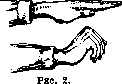
The dependencies for the special case of proprioceptive reflexes—stretch reflexes, i.e., the aforementioned muscle contraction upon their stretch caused, for example, by passive extension of a limb—are somewhat simpler; upon subjective assessment, the ensuing contraction is registered as resistance exerted by the muscles; when recording action currents, distinct electrical phenomena are observed in the muscle. The stretch reflex (Dehnungsreflex) is observed when only the spinal cord with normal sensory innervation is preserved. Cerebellar lesions cause a sharp weakening or loss of this reflex. In contrast, damage to the red nuclei leads to an exceptionally sharp enhancement of stretch reflexes. The resistance of muscles to stretching in this case is so great that considerable effort is required to bend an extended limb (after the bending is achieved, the limb "freezes" in the new position given to it). This extreme increase in tone encompasses mainly the extensor muscles. It is observed in all cases where the red nuclei are separated from the underlying sections, among which, however, the presence of the medulla oblongata is mandatory: a transection of the cerebrospinal axis below the calamus scriptorius does not cause this sharp enhancement of extensor tone, and every transection above this place up to the level of red nuclei leads to the above-described phenomenon. The point is that the red nuclei send some impulses to the underlying sections that prevent the development of enhanced extensor tone ("decerebrate rigidity" of Sherrington). Cases of tumors in the region of the red nuclei have been described in the clinic, as if cutting them off from the underlying centers; in this case, a picture was observed very close to that found in experimental transection of the brain below the red nuclei; most likely, the red nuclei in some way inhibit proprioceptive reflexes occurring in response to muscle stretching. As for the cerebral cortex, its damage or damage to the pyramidal tracts leads only to a temporary drop in the intensity of stretch reflexes. As stated, the detailed role of cortical innervation in the course and regulation of proprioceptive reflexes remains unknown. The example of "stretch reflexes" shows the diversity of innervation factors regulating even a relatively simple form of proprioceptive reflex. However, a complete picture of the regulation of proprioceptive innervation cannot be given, although we have every reason to consider the latter as playing a primary role in the entire coordination of motor acts. Their sharp disorder upon damage to proprioceptive innervation is well demonstrated by the accompanying figure (Fig. 2). A patient with complete loss of proprioceptive sensitivity of the right hand cannot, with closed eyes, give both hands the same level and position.
Along with the significance of proprioceptive elements as organs reflexively regulating muscular activity, one must point to their significance as an organ of perception of the sense of heaviness and body position. Loads acting on the muscles (through the skin and osteoligamentous apparatus) tend to stretch them, which causes the above-described processes in the proprioceptive elements. At the same time, the accuracy of estimating a load during dynamic muscle contraction is higher than during their static tension to hold the load. It must be recognized that proprioceptive impulses reach the cerebral cortex and are perceived by consciousness. During ordinary movements, proprioceptive impulses apparently reach the cerebral cortex to a lesser extent, since they are directed to other nerve mechanisms. When attention is fixed (for example, when estimating a load) on stimuli from proprioceptive elements, as well as when the magnitude of the load exceeds a certain individual limit, the irritation of proprioceptive elements is perceived with complete distinctness. It is probable that some forms of muscular fatigue are based on changes in the perceptive apparatus of the brain under the influence of excessively frequent (or strong) proprioceptive impulses. It is also indisputable that the sensitivity of the cortical sections (and the entire central nervous system) to proprioceptive excitations depends on the state of the nerve centers.
Related articles
Mentioned in
Cite this page
“Proprioceptive Elements.” Soviet Medical Encyclopedia. English translation of Bolshaya Meditsinskaya Entsiklopediya, 1st ed. (Moscow, 1928–1936), ed. N. A. Semashko. https://sovietmedicalencyclopedia.pages.dev/article/proprioceptive-elements/