Recurrent Paralysis
Historical document, translated for reference. It reflects medical knowledge of the 1920s–30s and is not medical advice.
Summary
A distinctive syndrome characterized by periodic paralysis, most commonly affecting the oculomotor nerve. The article describes various forms affecting cranial nerves and limbs, with symptoms, progression, and possible underlying causes.
Encyclopedia article (1928–1936)
Recurrent Paralysis, a distinctive syndrome in which the main feature is periodically occurring paralysis. It is most frequently observed as recurrent paralysis of the oculomotor nerve. As a rule, it begins in childhood or adolescence. The onset of paralysis is preceded, within hours or 1-2 days, by migraine-like headache, often with nausea and vomiting. The paralysis of the oculomotor nerve itself occurs on the same side as the headache. It affects all the muscles innervated by this nerve, but not to the same degree. The internal pupillary muscle is affected less frequently and less intensely than the external. The pupil changes in size, its reaction to light weakens, and sometimes disappears. Among the external muscles, the muscle that raises the upper eyelid and the superior rectus muscle are most paralyzed, followed by the medial and then the inferior rectus.
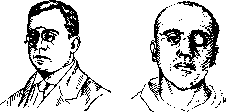
Figure 1.
Figure 2.
Figure \. Condition between attacks. Fig. 2. Same during attack. (Observation of Neyding.) I rectus. Depending on the degree of involvement of one or another muscle, the nature of diplopia also changes. An attack of recurrent paralysis usually begins with paresis, which develops into paralysis within 6-24 hours. Having reached its greatest development, the paralysis lasts 5-7 days, and then gradually regresses over 2-3 weeks. One attack is separated from another by long intervals of time, 3-6 years or more. The basis of the process, judging by the scarce patho-anatomical data, consists of organic inflammatory diseases at the base of the brain or neoplasms. Predisposing factors for the appearance of an attack are sometimes severe emotional experiences or changes in meteorological conditions. The first attacks of recurrent paralysis usually do not leave behind persistent changes, but later after an attack, complete recovery does not occur, and some paresis of one or another muscle remains, most often the muscle that raises the upper eyelid or the superior rectus (fig. 1 and 2). Sometimes after an attack, changes in pupil size occur for several days in the form of pupil constriction or dilation or alternation of these. Sometimes at the height of recurrent paralysis of the oculomotor nerve, mild pareses of the abducens, trochlear, or facial nerve occur on the same side. These same nerves, but much less frequently than the oculomotor nerve, also undergo recurrent paralysis. Their general symptomatology is similar to that in recurrent paralysis of the third pair, with the difference only in the selective involvement of muscles. Recurrent paralysis of the facial nerve sometimes occurs on the opposite side of the headache. Its duration is longer than in recurrent paralysis of the oculomotor nerve and equals 1 to 3-5 months. The basis of recurrent paralysis of these cranial nerves is the same anatomical changes at the base of the brain as in recurrent paralysis of the oculomotor nerve. Thus, recurrent paralysis of cranial nerves represents clinical varieties of essentially uniform gross anatomical processes with different localization at the base of the brain. Another category includes recurrent paralysis of the extremities (syn. periodic familial paralysis, paroxysmal paralysis of the extremities). Recurrent paralysis of the extremities is a rare disease, sometimes of a familial nature. It usually begins at the age of 10-15 years, although it has been observed in both the elderly and children. The main symptom is recurring paralysis, affecting the trunk and all four extremities and rarely limited to one half of the body. On the extremities, paralysis more proximal than distal joint muscles. The facial muscles and diaphragm are usually not involved in the affliction, sometimes the muscles of mastication and swallowing are paralyzed. The paralysis is flaccid, accompanied by areflexia, atony, and disappearance of electrical excitability of muscles and nerves (so-called cadaveric reaction). There is also a myasthenic reaction. Mechanical excitability of muscles also disappears. Against the background of general atony, dystonia in the form of freezing with passive lifting of the paralyzed limb is sometimes observed in a single muscle. During an attack, a number of autonomic disorders appear. The temperature of the extremity falls, causing a sensation of cold. In other cases, increased blood flow to the head, on the contrary, causes a sensation of heat. The pupils are sometimes constricted, more often dilated, and react sluggishly. Sweating and salivation are increased. Blood pressure changes more often in the direction of increase than decrease. The heart enlarges, the pulse becomes arrhythmic. In the blood - mild leukocytosis. Sometimes there is hyperglycemia, glycosuria, and albuminuria^. An attack of recurrent paralysis usually begins at night and its development is rapid. The duration varies from several hours to 4-5 days. Attacks occur every 1-6 weeks. In some, attacks are more frequent in summer, in others in winter. Abundant carbohydrate predisposes to the onset of attacks. After the cessation of the attack, no changes usually remain from the nervous system. Only for some time immediately after the cessation of paralysis, the muscle tone may sometimes be elevated. The anatomical substrate of recurrent paralysis of the extremities is unknown. Possibly, this disease represents a syndrome of damage to the autonomic nervous system. The rapid onset of recurrent paralysis and the symmetry of the lesion give reason to localize the disease in one of the central apparatuses of the autonomic nervous system in the brain. There is no causal therapy for recurrent paralysis. Symptomatic therapy consists of rest, calcium salts, and stimulants in case of difficulty in cardiac-respiratory function.
Related articles
Mentioned in
Cite this page
“Recurrent Paralysis.” Soviet Medical Encyclopedia. English translation of Bolshaya Meditsinskaya Entsiklopediya, 1st ed. (Moscow, 1928–1936), ed. N. A. Semashko. https://sovietmedicalencyclopedia.pages.dev/article/recurrent-paralysis/