Rosaniline
Historical document, translated for reference. It reflects medical knowledge of the 1920s–30s and is not medical advice.
Summary
Rosaniline is a chemical compound that forms the basis for several dyes used in medicine, including fuchsin and pararosaniline. The article also contains biographical information about Soviet medical professionals including V.N. Rozanov and L.M. Rosenstein.
Encyclopedia article (1928–1936)
ROSANILINE, triamidotriphenylmethane, colorless plates, difficult to dissolve in water, easily soluble in alcohol (pararosaniline-triamidotriphenylcarbinol). Both give with acids water-soluble coloring salts: rosaniline hydrochloride (fuchsin), pararosaniline hydrochloride (rubine), nitric acid R. (azalein) and others. Chemically pure products are called diamantfuchsin, brilliantrubine; impure ones - magenta, Grenat and others. When hydrogen of the nucleus is replaced by SO3Na, acid fuchsin or acid rubin is obtained; by replacing H of the amide group with CH3, violet R.-methyl violet, dahlia and others are obtained. Fuchsin and rubin in mixture with picric and sulfuric acids give solutions that simultaneously fix and stain.
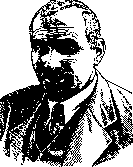
Organizes warehouses and manages their supply with medical equipment for all of Moscow and for the Union of cities. Serving as a consultant in a number of hospitals, he organizes prosthetic work (Prosthetic Institute, Prosthetic Plant) and the matter of special assistance for jaw injuries. In 1918-20 he managed the medical department of the ROKK. From 1919 a member of the professorial consultation at the Sanitary Administration of the Kremlin and from 1929 he managed the surgical department of the Kremlin Hospital. From 1927 he introduced advanced courses for physicians at the Botkin Hospital. From 1931 he headed the surgical department at the State Central Institute for Advanced Medical Training. In 1929 and 30 he was a member of the Moscow Soviet and the Moscow Oblast Executive Committee. For the 25th anniversary of R., the Moscow Health Department named the X building of the Botkin Hospital after Dr. V.N. Rozanov. In 1930, by decree of the SYC, he was confirmed as a member of the collegium of the People's Commissariat of Health. He was the founder and one of the editors of the 'Journal of Modern Surgery' (1926-31). He is a member of the editorial board of 'Soviet Surgery', co-editor of the 'Bulletin of Surgery and Border Regions' and the 'Great Medical Encyclopedia'. In 1933 he was awarded the Order of Lenin. Among his works and reports (about 60), the most important are those devoted to diseases and the structure of the large intestine, appendicitis, skull injuries and plastic closures of its defects, epilepsy, organization of assistance to the disabled, and the fight against cancer.
ROSENSTEIN Lev Markovich (1884-1934), psychiatrist, one of the founders of Soviet psychogenic hygiene and a leading figure in the international psychogenic hygiene movement. Son of a physician. Graduated from Moscow University in 1908. For participation in student revolutionary circles in 1905, he was subjected to 7 months of imprisonment. Received psychiatric education from Prof. Serbsky, in whose clinic he was an intern in 1909-11 and together with whom he left it during the 'Kassov' events. 1911-13 - assistant to Prof. Bazhenov (psychiatric clinic of Higher Women's Medical Courses), 1914-17 - on the front. 1919-29 - senior assistant at the psychiatric clinic of 2nd Moscow State University. From 1921 - private docent at 1st Moscow State University. From 1924 he headed the Moscow State Neuro-Psychiatric Dispensary, which was transformed in 1928 into the State Scientific Institute of Neuro-Psychiatric Prevention, of which he was director from its foundation until his death. As early as 1914, R. published an article on anti-alcohol dispensaries, thus becoming the herald of new forms of psychiatric assistance. Starting from 1923, he actively worked on creating the Soviet psychogenic hygiene movement and reconstructing neuro-psychiatric assistance. At all the congresses on psychoneurology held during these years, R. was a constant speaker on program issues of psychogenic hygiene. A number of R.'s and his colleagues' studies on occupational pathology problems first attracted the attention of psychiatrists to these problems. R. paid much attention to psychopathology problems, initially being greatly influenced by Jaspers ('Psychopathology of Delirious States', 'Psychopathology of Thinking in Manic-Depressive Psychosis' and others). As a clinician, Rosenstein represented the socio-preventive direction in clinic and did much in studying mild forms of processes. In 1930 - representative of the USSR at the I International Psychogenic Hygiene Congress in Washington; served as vice-president of the International Committee on Psychogenic Hygiene. From 1931 - professor at the Central Institute for Advanced Medical Training. In the same year he joined the ranks of the VKP(b). R. left about 100 works.
Related articles
Mentioned in
Cite this page
“Rosaniline.” Soviet Medical Encyclopedia. English translation of Bolshaya Meditsinskaya Entsiklopediya, 1st ed. (Moscow, 1928–1936), ed. N. A. Semashko. https://sovietmedicalencyclopedia.pages.dev/article/rosaniline/