Razumovsky, Vasily Ivanovich
Historical document, translated for reference. It reflects medical knowledge of the 1920s–30s and is not medical advice.
Summary
Vasily Ivanovich Razumovsky (1857–1935) was a prominent Russian surgeon and academic who pioneered aseptic surgery and conservative surgical techniques in Russia. He founded the medical faculties at Saratov, Tbilisi, and Baku universities and was a leading figure in the development of Russian surgical education and practice.
Encyclopedia article (1928–1936)
RAZUMOVSKY, Vasily Ivanovich (born 1857), an outstanding Russian surgeon. Upon completing his course in 1880, R. received a position as an intern in the surgical clinic of Levshin in Kazan. After finishing his internship, he received a professorial scholarship and furthered his training in Moscow and St. Petersburg, working under Sklifosovsky, Reyer, and Botkin. In 1884, he defended his dissertation for the degree of Doctor of Medicine ("On the Question of Atrophic Processes in Bones After Nerve Transection, Experimental and Histological Research," St. Petersburg, 1884). In 1885, he was appointed prosector of operative surgery at Kazan University. In 1886, he received the title of privat-docent. In 1887, he was appointed professor of operative surgery, in 1891 of hospital surgery, and in 1896 of the faculty clinic. During this time, he made 4 trips abroad. R.'s activity in Kazan coincided with the flourishing of surgery, and he was a proponent of asepsis, which did not yet exist at that time in a number of Moscow and St. Petersburg clinics. As the creator of Russian aseptic surgery, R. was on par with Western Europe in this regard, and sometimes even ahead. He was the first after Horsley to perform brain surgery for cortical epilepsy, and in 1909 he was the first to propose the physiological extirpation of the Gasserian ganglion by transecting the posterior root. He was among the first in the surgery of the limbs, bladder, stomach, and intestines. R.'s surgical achievements have been included in many Western textbooks. R.'s greatest merit should be considered the consistent implementation of conservative surgery (osteoplastic amputation of the foot, aseptic sutures of hernia and bladder, organopexy, Gasserian ganglion operation, and finally the doctrine of alcoholization of nerves and the brain, which replaces difficult, disfiguring operations). R. is the initiator and author of a number of chapters of the first collective manual on surgery
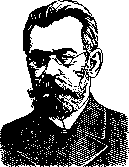
"Russian Surgery" (vols. I-VI, St. Petersburg, 1902-16), the sole editor of which he remained after the deaths of Dyakonov, Levshin, and Subbotin. He created an independent surgical school (Bogolyubov, Opokin, Tikhov). From 1909, he was the rector and organizer of Saratov University. His refusal to carry out the reactionary policy of the ministry led to the fact that in 1913, Minister Kasso removed Razumovsky from the position of rector (of the university he had created) and deprived him of his (tenured) professorial chair. During the imperialist war, R. headed the organization for aid to the wounded in Saratov. After the February Revolution, R. was elected by the Caucasian Medical Council as a surgeon of the Caucasian Army. His appearance there left a deep mark. He was called upon by the government of Georgia, and later Azerbaijan, and created national universities in Tiflis and Baku. In 1920, R. returned to Saratov and resumed clinical activity, and upon reaching the age limit of 65, he was invited for an additional five-year term, having been awarded the title of Hero of Labor in 1923. Only in 1930 did R. retire from teaching, but he continued his organizational and medical activity as a consultant on resort affairs at the Caucasian Mineral Waters. R. is an honorary member of the Leningrad, Moscow, and a number of other surgical societies. An ideological follower, since his student days, of Pisarev, Dobrolyubov, and Chernyshevsky, R. was a passionate social activist throughout his entire scientific and teaching career, which more than once caused dissatisfaction on the part of the tsarist government, up to his removal from the position of rector in 1913. R. was a very active member of the Pirogov Society of Physicians, the author of many popular scientific brochures on the most diverse areas of scientific medicine (surgery, physical culture, etc.), and a popular lecturer. R. is the author of about 150 scientific works.
Related articles
Cite this page
“Razumovsky, Vasily Ivanovich.” Soviet Medical Encyclopedia. English translation of Bolshaya Meditsinskaya Entsiklopediya, 1st ed. (Moscow, 1928–1936), ed. N. A. Semashko. https://sovietmedicalencyclopedia.pages.dev/article/razumovsky-vasily-ivanovich/