Caucasian Mineral Waters
Historical document, translated for reference. It reflects medical knowledge of the 1920s–30s and is not medical advice.
Summary
This article provides a historical and geological overview of the Caucasian Mineral Waters region, comprising the four major spa groups of Pyatigorsk, Yessentuki, Kislovodsk, and Zheleznovodsk. It details the region's geological formation, the chemical composition of its springs, and the history of its development as a resort area from the 18th century through the early 20th century.
Encyclopedia article (1928–1936)
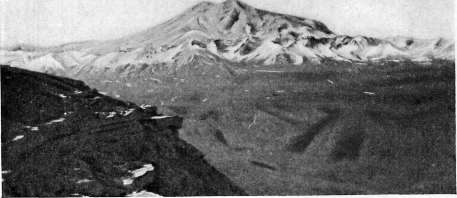
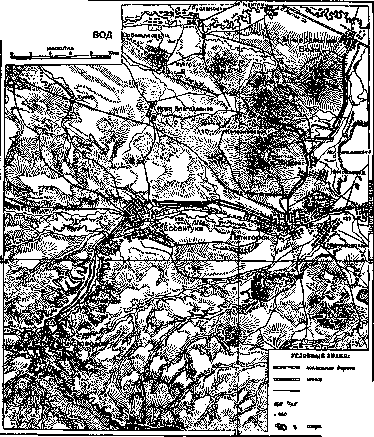
CAUCASIAN MINERAL WATERS, 4 groups of mineral waters—Pyatigorsk, Yessentuki, Kislovodsk, and Zheleznovodsk (see), which have formed a resort association (see separate tables). The region of the Caucasian Mineral Waters is located on the territory of the Terek District at 44° N latitude and 60°30' E longitude and is about 60 km long and about 27 km wide. This strip of land constitutes part of an extensive plateau, beginning from the valley of the Kuma River at an altitude of 400 m and ending near Bermamyt at an altitude of about 2,500 m above sea level. The region of the Caucasian Mineral Waters is divided into two unequal parts: the larger—the plain, and the smaller—the mountainous. Among the plain rise 17 dome-shaped isolated mountains (the highest of them is Beshtau), which Abich aptly called a "rocky archipelago." Various hypotheses have been expressed about the origin of these mountains. Dubois de Montpéreux considered them the remains of a once-existing huge crater of elevation; Abich allowed for their aquatic (marine) origin. At the present time, the generally accepted explanation is that the mountains and springs of the Caucasian Mineral Waters region were formed not under the direct action of volcanic forces, but as a result of general dislocation caused by the contraction of the earth's crust. Fiery-liquid magma, having risen along widened cracks into the thickness of sedimentary rocks, could not break through to the outside, but solidified under the sedimentary rocks, turning into a crystalline rock—trachyte.
The mineral springs of the Caucasian Mineral Waters are distinguished by a very significant content of CO2, as well as the content of traces of rare elements (boron, fluorine, phosphorus, arsenic, nickel, etc.), which can usually be detected in volcanic eruptions. This gives the right to conclude that the mineral springs of the Caucasian Mineral Waters belong to the mixed, juvenile-vadose type. The hydrogeological conditions common to the region of the Caucasian Mineral Waters and observations of the regime of the springs suggest some influence on them by waters circulating in Senonian limestones and in Lower Cretaceous dolomites. The first waters are weakly mineralized and only contribute to a general decrease in the concentration of the mineral water; the second, on the contrary, are strongly mineralized due to sulfates and enrich the mineral water with them. The main waters for all springs of the Caucasian Mineral Waters are chloride-carbonate waters, rich in alkalis and containing a very insignificant amount of earths. The chloride-carbonate coefficient has the greatest value for Pyatigorsk, the smallest for Zheleznovodsk. According to their chemical composition, the Caucasian Mineral Waters belong to four groups: 1) carbonated alkaline-Glauber's salt earthy therms (Zheleznovodsk); 2) carbonated earthy-saline-Glauber's salt therms with a small content of hydrogen sulfide (Pyatigorsk); 3) carbonated saline-alkaline springs (Yessentuki); and 4) a carbonated earthy spring (Narzan in Kislovodsk).
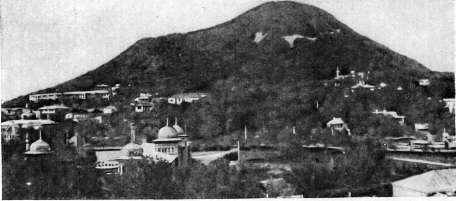
The beginning of the history of the Caucasian Mineral Waters dates back to the very distant past. The first reliable information about these springs dates back to 1717 and belongs to the physician Schober, who was commissioned by Peter I to investigate the Bragun waters. Schober mentions the Caucasian Mineral Waters only from hearsay, as he could not reach them. The first detailed description of the Caucasian Mineral Waters was made by Güldenstädt in 1773, the second by the famous traveler Pallas in 1793. The use of the springs for medicinal purposes by the Russian population began in 1780, from the time of the founding of the Konstantinogorsk fortress; the garrison of the fortress first bathed in a pool dug near a hot sulfur spring for the purpose of washing, but gradually the conviction of the usefulness of sulfur water for various diseases formed among the bathers. At the end of the 18th century, the medical administration paid attention to these empirical observations. In 1801, the chemist Simeon was instructed to perform a chemical analysis of the spring, and in 1802 the Medical Collegium sent staff physicians Gordinsky and Krushnevich and the pharmacist Schwenson to the waters with instructions "so that they, having performed experiments in the chemical and medical parts and being guided by what is found upon testing in reality, and by their own observations, give their opinion on how those waters should be used for the benefit of the sick and what establishments will need to be made there for that purpose."
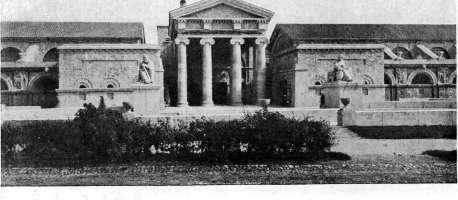
In view of the favorable conclusion of the commission, by the decree of Alexander I of April 24, 1803, the Regulation on the Caucasian Mineral Waters was approved, and from this time their official existence as a resort began. In the first decades, the Caucasian Mineral Waters attracted a very limited number of patients, almost exclusively from the military and high-ranking nobility. There was no definite plan for the development of the waters; the care of their management was entrusted to persons completely unprepared for this responsible business, such as military administrators; some of them still showed interest in the Caucasian Mineral Waters. Thus, under Yermolov, 550,000 rubles were allocated for the first time for the needs of the improvement of the Caucasian Mineral Waters, and the architects, the Bernadazzi brothers, were invited from abroad.
In 1847, the Directorate of the Caucasian Mineral Waters was established, and a Medical Committee was attached to it, but these institutions were also left in direct subordination to the local authorities. It is natural that under such conditions, the Caucasian Mineral Waters not only did not develop but also fell into decay. In 1861, the Caucasian Mineral Waters were leased by the Caucasian Viceroy to a private individual—the capitalist Novoselsky. Novoselsky transferred all management of the Caucasian Mineral Waters to the director he invited—the enlightened and energetic physician Smirnov, who founded the first Russian Balneological Society in Pyatigorsk in 1863. To Smirnov belongs the idea of inviting foreign hydrogeologists (Jules François, later Léon Dru), whose research played a large role in the use of the mineral springs of the Caucasian Mineral Waters. During Smirnov's 10 years of activity, the Caucasian Mineral Waters moved significantly forward.
From 1870 to 1884, the Caucasian Mineral Waters were leased by the capitalist Baikov and gradually fell into complete decay again. From 1884, the Caucasian Mineral Waters passed again to state management and until 1905 were under the administration of the Ministry of Agriculture and State Property. After a short period of subordination to the Ministry of Finance, the Caucasian Mineral Waters passed to the jurisdiction of the Ministry of Trade and Industry (under the Mining Department), where they remained until the revolution (1917).
The number of patients coming for treatment at the Caucasian Mineral Waters gradually increased, which was facilitated among other reasons by the connection of the Caucasian Mineral Waters to the general railway network; but due to the high cost, treatment remained accessible only to the wealthy classes of the population. Poor patients were provided in limited quantities with the right to free and discounted use of baths, but it was difficult to exercise this right due to the general high cost of living at the Caucasian Mineral Waters. Sanatoriums accessible for poor patients were almost nonexistent, and if they began to appear at the beginning of the 20th century, they were established either on the principle of charity or were created by separate departments and institutions. Thus, the Caucasian Mineral Waters primarily served the wealthy class of the population. During the period of the world war, the arrival of private patients at the Caucasian Mineral Waters significantly decreased, and it can be said that during these years the Caucasian Mineral Waters were transformed into a large hospital for accommodating wounded and disabled war veterans with almost no consideration of indications for resort treatment. The years of the civil war for the Caucasian Mineral Waters are a period of destruction, which began to be quickly eliminated after the establishment of Soviet power in the Caucasus (1920). With the help of the military-sanitary organization of the Red Army and the revolutionary committee of the North Caucasus, it was possible to collect the scattered and plundered resort property and launch the first sanatoriums for patients and wounded Red Army soldiers. In 1921, through the hospital-sanatoriums of the Caucasian Mineral Waters, it was possible to treat about 13,500 Red Army soldiers, and in this year there was no arrival of civilian patients at all. In 1922, partial restoration of the destroyed resort economy began, and a decision was made to improve the organization of medical treatment by reducing the number of patients. In this year, a total of 7,000 patients were treated at the Caucasian Mineral Waters, but among them there were already more workers and Soviet employees and fewer Red Army soldiers. The growth in the arrival of patients at the Caucasian Mineral Waters in absolute numbers and in percentage terms compared to the arrival in 1913—the last year before the world war—is evident from the following table. Ground roads fir groves in meters % to the number of Years Number of patients patients in 1813 1923 ....;. 62.9 37.3Б1 100.8 118.6 198.1 224.3 88.828 . 238.9 In implementation of the main slogan of Soviet health policy—'Resorts for the working people'—immediate steps were taken at the Caucasian Mineral Waters to organize sanatoriums for treating workers; but in 1920-22, heavy objective conditions hindered the proper development of sanatorium affairs. Its strengthening begins only in 1923, when along with the sanatoriums of the Caucasian Mineral Waters, sanatoriums of individual organizations and departments also begin to appear. In 1924, by order of the government, part of the sanatoriums of the Caucasian Mineral Waters was transferred to the Resort Administration of the Social Insurance for the treatment of insured persons. The development of sanatorium affairs at the Caucasian Mineral Waters from 1923 to 1929 is evident from the following table. Sanatoriums of the Caucasian Mineral Waters Number of sanatoriums Number of beds . . . . Sanatoriums of departments Number of sanatoriums . . Number of rest homes Number of beds in sanatoriums and rest homes ........ 1823 g. 1924 g. 1925 G. 1923 g. 1927 g. 1928 g. 1929 g. 29 3.047 31 3.U3 31 3.509 31 3.819 32 4.512 20 6 18 6 .25 11 25 11 !?} no information no information » The medical-sanitary organization of the Caucasian Mineral Waters is based on the general principles of construction of Soviet resorts (see). A comparison of the dynamics of patients arriving at the Caucasian Mineral Waters with the growth in the number of sanatorium beds shows that the number of outpatients increases noticeably every year. In the matter of serving outpatients, a fundamental feature is the state character of treatment conducted through polyclinics at the resorts. As measures taken to improve the conditions for treating outpatients, one can note the introduction of course-based (subscription) treatment for workers, the establishment of resort hostels, dining rooms, and so on. In the general chain of measures necessary to raise the status of the Caucasian Mineral Waters as a resort, one should also note the improvement of the qualifications of doctors working in sanatoriums and polyclinics, the organization of courses for middle medical personnel: medical sisters, housekeeping sisters, cooks, etc. In recent years, construction has begun at the Caucasian Mineral Waters, with both new bath buildings and sanatoriums being constructed. The housing stock is not increasing as quickly as necessary in connection with the progressively increasing arrival of patients. Despite the significant balneological and sanitary-technical works of recent years, the improvement and sanitary condition of the Caucasian Mineral Waters still leave much to be desired; in the five-year development plan for the Caucasian Mineral Waters, these issues have been given proper attention.-As for the therapeutic value of the Caucasian Mineral Waters, it consists of the therapeutic value of individual groups (see separate resorts - Essentuki, Zheleznovodsk, Pyatigorsk and Kislovodsk). Currently, out of 60 mineral sources, about 40 are being exploited. The former division of the Caucasian Mineral Waters groups into purely drinking and balneological resorts has now been abandoned, since all 4 groups of the Caucasian Mineral Waters must be recognized as resorts of a mixed type. A characteristic feature of the Caucasian Mineral Waters is the significant (and in the opinion of the latter—unique) diversity of mineral sources emerging on the earth's surface on such a small area of land, noted already at the beginning of the 19th century by Tsee and subsequently confirmed by the famous French hydrologist Jules François. From this, a natural conclusion can be drawn that the indications for treatment at the Caucasian Mineral Waters must also be diverse, and that by modifying the treatment methods and individualizing prescriptions, one can benefit patients at the Caucasian Mineral Waters for a very many diseases. However, it should be added here that both modern scientific trends in balneology and Soviet resort policy require specialization of our resorts, i.e., reduction of indications and adaptation of the entire therapeutic and domestic environment of each resort for the most successful treatment of those diseases that are specifically indicated for a given resort. The entry of the Caucasian Mineral Waters on the path of reducing and deepening indications and clarifying the specialization of individual groups should also be recognized as one of the achievements of the Soviet period of resort management.
Related articles
Mentioned in
Cite this page
“Caucasian Mineral Waters.” Soviet Medical Encyclopedia. English translation of Bolshaya Meditsinskaya Entsiklopediya, 1st ed. (Moscow, 1928–1936), ed. N. A. Semashko. https://sovietmedicalencyclopedia.pages.dev/article/caucasian-mineral-waters/