Mountain-Sanitary Protection
Historical document, translated for reference. It reflects medical knowledge of the 1920s–30s and is not medical advice.
Summary
Mountain-sanitary protection refers to measures for preserving the therapeutic properties of natural factors in health resorts and preventing their deterioration. The Soviet system established three zones of protection with different restrictions based on the importance of each area.
Encyclopedia article (1928–1936)
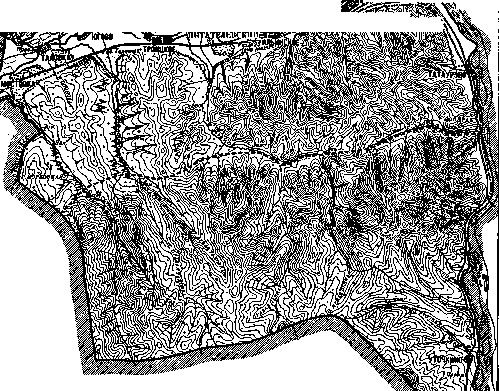
Mountain-Sanitary Protection of localities of therapeutic significance and health resorts aims to preserve in their original state the therapeutic properties of their natural factors and to protect these factors from deterioration and depletion. Questions concerning the protection of natural therapeutic factors began to arise in the USSR relatively recently. In 1886, a law was issued concerning the protection of the sources of Caucasian mineral waters and mandatory rules which had to be observed within specially established protection districts (Collection of Laws, 1887, art. 737). Later, a law "On the sanitary and mountain protection of therapeutic localities" was issued (Collection of Laws, 1914, art. 1212), which aimed to protect the therapeutic means of nature and to carry out general sanitary measures in the given locality. At present in the USSR, the "Regulations on the mountain-sanitary protection of mineral and fresh waters, salt and mud lakes, lagoons and therapeutic localities" is in effect, issued by the People's Commissariat of Health by agreement with the Supreme Council of National Economy on March 20, 1924. For each therapeutic locality and health resort, districts of M.-s. p. are established with their division into three zones in accordance with the degree of importance of protection (see maps). The first zone should cover a small area including the outcrops to the earth's surface of underground waters with all their derivatives, a strip along water mains, and areas including basins, ponds, reservoirs and other natural as well as artificial storage facilities for mineral and fresh waters and therapeutic muds. This zone constitutes the actual territory of the health resorts with all their service and therapeutic institutions, as well as the populated areas adjacent to them, with all springs and sources. Salt lakes and sea beaches with the adjacent strip of shore are also included in this zone. The second zone of M.-s. p. should coincide with the natural boundaries of the hydrographic basin from the surface of which the runoff of rain and other surface waters occurs naturally. All populated areas having economic-domestic connections with the settlement of the first zone are also included in this zone. The third zone of M.-s. p. covers the entire area of water source feeding (mineral and fresh) supplying the health resort; its boundaries are established on the basis of hydro-geological study of the conditions of feeding and circulation of underground waters in the given area. The third zone of steppe districts, water supply of which is carried out by artesian wells, should cover the underground basins of water-bearing horizons feeding the wells. The entire area adjacent to the health resort should be included in the third zone, including all localities that may in any way affect the sanitary conditions of the health resort. The districts of mountain-sanitary protection of therapeutic localities or health resorts are established by decrees of the respective people's commissariats of health of the union republics. The boundaries of the districts with division into three zones according to the degrees of importance of protection are also established by decrees of the people's commissariats of health by agreement with the Supreme Council of National Economy. Within the districts of mountain-sanitary protection, there are restrictions and prohibitions regarding the carrying out of a whole series of works. The main types of work the carrying out of which is prohibited without special permission each time are established by the "Regulations on mountain-sanitary protection". These include: earth works, drilling of wells, stone breaking, felling of forests and generally of tree plantings, plowing of fields, erection of buildings requiring excavation of pits for foundations, slaughterhouses, construction of dams, basins for various purposes on rivers, streams, springs, lagoons and lakes, fishing; installation on water areas of landings for boats, simple and motor-powered, steamships and rafts, construction of bathhouses, laundries, log washhouses, bathing facilities, laying of new roads, railway tracks and generally everything that may affect the state of the physical properties and chemical composition of the therapeutic means of the locality. In the first zone, the most stringent requirements and elevated sanitary standards should be implemented. The protective measures in the second zone are reduced to preserving in pristine condition the natural forest and grass covers; however, if this cannot be fully implemented, strict restrictions on their exploitation are carried out. The protective measures in the third zone are: preservation of forests, regulation of the runoff of snow, flood waters, supervision of the carrying out of hydro- and technical works. Mandatory decrees on mountain-sanitary protection are developed in furtherance of the basic measures and are issued by the people's commissariats of health of the union republics by agreement with local executive committees. For the implementation of protection in health resorts, commissions on mountain-sanitary protection are established by the people's commissariat of health. When a number of health resorts are united in a single management body, a central commission is also established, consisting of representatives: of the health resort administration (authorized representative of the People's Commissariat of Health - chairman of the commission, engineer and sanitary doctor), of mountain supervision, of the local executive committee, of land and forest departments, as well as of representatives of interested departments and institutions. The commissions are allocated from the state budget funds for the maintenance of an inspector (secretary) of mountain-sanitary protection, who supervises the regime of natural factors, and for carrying out laboratory research. The commissions are responsible for issuing permits for the carrying out of various works and for all questions connected with the preservation of mineral sources and muds. At present, protection districts have been established for all MINERAL SPRING "PITATELEVSKY"
75Э
health resorts of all-union importance and for part of the health resorts of local importance.
Related articles
Mentioned in
Cite this page
“Mountain-Sanitary Protection.” Soviet Medical Encyclopedia. English translation of Bolshaya Meditsinskaya Entsiklopediya, 1st ed. (Moscow, 1928–1936), ed. N. A. Semashko. https://sovietmedicalencyclopedia.pages.dev/article/mountain-sanitary-protection/