Spas
Historical document, translated for reference. It reflects medical knowledge of the 1920s–30s and is not medical advice.
Summary
This article provides a comprehensive overview of Soviet and international spas, their classification, historical development, and organizational requirements. It details the various types of therapeutic locations based on their natural healing factors and administrative structures.
Encyclopedia article (1928–1936)
Spas. Contents: Classification.................144 History.....................145 ' Spas of the USSR..................151 List of spas of the USSR with brief characteristics .................177 Foreign spas..............212 Spas for treating children..........212 K U R ° R t y (German Kurort-therapeutic place), therapeutic localities, the natural therapeutic forces of which (mineral springs, lagoons, therapeutic mud, curative climate, sea bathing, kumys) are applied for therapeutic purposes for certain diseases on scientific bases and under hygienic conditions corresponding to the requirements of treatment. Modern spas represent complex administrative-economic associations consisting of special therapeutic, sanitary, and technical devices and auxiliary institutions. They are built in accordance with the understanding of spa treatment as a complex effect on the patient of various factors. The effectiveness of the complex "spa therapy complex" depends not only on the therapeutic properties of mineral water or therapeutic mud used at a given spa, but also on climatic conditions, beauty and improvement of the locality, therapeutic regimen and nutrition, availability of life conveniences and reasonable entertainments. Hence arise those basic requirements that should be presented to a well-organized spa. 1. Presence of natural therapeutic factors studied from the side of their effect on the organism. 2. Presence of special technical devices and institutions for the rational therapeutic application of spa factors (capturings, bath houses, mud baths, solaria, aeraria, beaches, etc.). 3. Presence of specially adapted premises for treatment and housing: sanatoriums, hotels and boarding houses. 4. Institutions under medical supervision for public use (spas, restaurants, diet canteens, etc.). 5. Improvement corresponding to the level of modern technology to all requirements of hygienic lifestyle (water supply, sewerage, electric lighting, maintenance of cleanliness of streets and premises, abundance of parks and green plantings, aesthetic planning, etc.). 6. Cultural-educational institutions (theaters, cinema, orchestras), sports and other healthy entertainments, the use of which is regulated by medical supervision. 7. Convenient paths and means of communication. | 8. Special organization ensuring for patients a spa regimen and regulating the entire way of life at the spa. In addition to the above general requirements, new principles of planned construction of Soviet spas have put forward a number of special conditions for their organization and establishment of therapeutic work (see below-spas of the USSR). Classification. According to modern classification, spas are divided into the following types. A. By therapeutic properties: 1. Balneological spas with the use of mineral waters: a) drinking, for example, Essentuki, Karlsbad; b) with the use of mineral baths, for example, Matsesta, Nauheim; c) mixed type-the overwhelming majority, for example, Kislovodsk, Marienbad. 2. Mud spas with the use of silt or peat mud baths of steam (Odessa, Franzensbad) or solar heating (Saki, Anapa), in some places with combined treatment with brine baths. The latter are used independently in some cases (see Mud therapy).3. Climatic-see Climatic stations, Mountain-climatic stations, Climatotherapy, Kumys. - In recent years, the type of suburban forest spa has been developing (see "Green city"). At the end of the 19th century, N. Golubov put forward in Russia the idea of floating spas--river and steamships, which found support in the decisions of balneological congresses. In 1916, the charter of the joint-stock company "Steamship-spa" was approved. B. By organizational features. In the practice of spa business in the USSR, spas are divided into spas of all-Union and spas of local significance. Spas of all-Union significance include those which, possessing to a large extent rare therapeutic properties (by the nature and quantity of their climatic and balneological factors), have the necessary balneo-physiotherapeutic devices and institutions for serving patients and are adapted to providing therapeutic assistance to patients directed according to established medical indications from all ends of the USSR.- Among the all-Union spas at the present time are: 1) Caucasian mineral waters (Pyatigorsk, Essentuki, Kislovodsk and Zheleznovodsk); 2) Sochi-Matsesta; 3) Southern coast of Crimea (Yalta, Livadia, Mishor, Alupka, Simeiz); 4) Evpatoria-Saki; 5) Staraya Russa; 6) Sergievsky mineral waters; 7) Borovoye; 8) Orenburg kumys therapeutic area; 9) Shafranovsky kumys therapeutic area (in 1930 the Orenburg and Shafranovsky areas were united into one kumys therapeutic spa trust). In the union republics, among the state spas are: in Ukraine- Odessa lagoons, Slavyansk and Berdyansk, in Georgia- Borjomi, Abastumani, Tskhaltubo, in Abkhazia- Sukhumi, Gagra, in Dagestan- Talgi, in Azerbaijan- Istisu (Kurdistan) and Beyuk-Shor (Apsheron Peninsula), in Turkmenistan - Bajram-Ali. Some of the spas of the union republics have all-Union significance by their attendance. Such are- Odessa, Borjomi, Sukhumi and others. Spas of all-Union significance are independent spa trusts and are managed on the basis of the Regulation on spa trusts approved 25/VI 1929. General guidance, planning and control are concentrated in the spa administrations of the People's Commissariats of Health of the respective republics. Spas of local significance include those therapeutic localities which, having studied spa-therapeutic factors, by the totality of their data can be used for treating patients of the nearest area to this spa. According to the resolution of the Council of People's Commissars of the RSFSR of 23/VI 1928, 48 spas of this type were included in the RSFSR. Spas of local significance are managed locally by a directorate, subordinate in their operational activities to local health departments, and in matters of general guidance-to the spa administrations of the People's Commissariats of Health of the republics. The spa legislation of the Union also establishes the term "localities of therapeutic significance", relating to those localities which are sufficiently studied from the side of their therapeutic properties and are recognized as suitable for the application of their beneficial natural properties. In European countries, where spa business is not united in the hands of the state, spas are divided into state, municipal and those in lease of joint-stock companies and private individuals. German legislation also provides for the division of spas by their capacity, establishing for the latter norms of the so-called sanitary minimum. 1. Small spas with capacity up to 1,000 people. 2. Medium spas with capacity from 1,000 to 4,000 people. 3. Large (grossere)-from 4,000 to 8,000 people. 4. Large (grosse)-from 8,000 and above (see below-foreign spas).-In the organization of spas, special attention deserves the questions of mountain-sanitary protection, planning and construction, sanitary organization, spa and sanatorium regimen, therapeutic assistance and scientific study. History of spa business goes back to ancient times. It has not yet been subjected to thorough systematic study. There are fragmentary data from some historians of culture and medicine, based on the meager literary sources that have come down to us, monuments of antiquity and works of art of the ancient world. Throughout the thousand-year history of spas, judging by these data, spas arose and developed in different epochs depending on the demand of the upper strata of the ruling classes: priests, military aristocracy, service nobility, merchants and industrialists, which they mainly served. The desire of spas to be at the height of the increased requirements made to them by their clientele contributed to their development as oases of advanced culture and technology in all epochs of their existence. Along with this, spa life carried an indelible imprint of moral looseness, which was introduced into them by crowned and notable clients who sought in spas not only treatment but also entertainment. The healing forces of nature-waters, air and light, which constituted the subject of sacred worship of primitive man, were the basis of the healing mysteries of temple medicine and from ancient times were exploited by the priestly caste. The sacred books of ancient Indians-rigvedas-mention sacred pools at Indian temples. The therapeutic action of springs is built into the legends of the old and new testaments (about the pool of Siloam, the springs of Gadara, the pool of Bethesda near Jerusalem, etc.). - Homer left us evidence of the use of the healing forces of nature in heroic Hellas. In the description of many temples of Aesculapius there are indications that they were built in places which, with their healing springs, clean air and rich vegetation of "sacred groves" contributed to the restoration of health. These places were carefully protected from pollution and the introduction of infections: it was forbidden for seriously ill patients and women before childbirth to visit not only the temples, but also their nearest surroundings.
Plausible assumptions are expressed that the foundations of sanitary protection of health resorts were laid in the sacred cult—Aristotle and Hippocrates (5th century B.C.) with their teaching on the genesis of mineral sources («Tales sunt aquae, quales terrae, per quas fluunt»—Aristotle) and substantiation of the practice and methodology for applying the healing powers of nature («Sola natura medix»—Hippocrates) contributed to the development of spa treatment. According to Plutarch, in their era some health resorts gained great fame (e.g., the hot springs in Aedepsus on the island of Euboea) and attracted patients from all of Greece. Here the custom arose «to build dwellings for the purpose of renting to arriving guests». In the era of the Roman Empire, spas reached great prosperity. This was facilitated by the concern of the Caesars for strengthening the physical power of commanders and legionnaires, which in turn led to great development in balneology. In the treatises of Antonius Musa, Aulus Cornelius Celsus, and especially Pliny the Younger (1st and early 2nd century A.D.), we find the first examples of classification of mineral waters, the methodology for treating with mud from mineral sources (Coenum fontium), heliotherapy, indications for treatment, in particular for use by «patients with a tendency to ulceration of the lungs» in a mountain climate (Galen). The number of known health resorts reached a considerable size in this era. Many of them became favorite residences of the Caesars and Roman nobility, achieving a high degree of prosperity. The greatest popularity was enjoyed in Italy by the bay of Baiae, celebrated by Horace, with its eponymous spa, the entire coast of which was built up with thermae and luxurious villas of the Caesars and patricians. «Nullus in orbe sinus Bajis praelucet amoenis» (no bay in the world surpasses the beauty of lovely Baiae)—the poet wrote about this spa. In the era of Rome's decline, orgies flourished in the spas. Seneca points out that «Bajae diversiorum vitiorum locum esse coeperunt» (Baiae becomes a place of various vices). The Middle Ages have preserved for us even more meager information about the development of the spa business. Roman legions in their conquest campaigns found new health resorts in conquered territories and some of them they developed with all the magnificence and luxury of the metropolitan culture. Thus arose spas Aix-les-Bains—Aquae Gratianae, Aachen—Aquae Grani, Wiesbaden—Aquae Mattiacae, Baden-Baden—Aquae Aureliae, etc. According to Renz, in the era of the Crusades some of these spas were functioning. Charlemagne, according to Augilbert, contributed to the development and embellishment of Aachen. He also introduced rules for patients in the spas. So many patients came to Baden-Baden, Pyrmont, and Karlovy Vary that in order to obtain funds for construction and adaptation of the spas, the so-called Kurtaxe was introduced—in 1507 in Baden-Baden and in 1531 in Karlovy Vary, which greatly contributed to the development of these spas. The new flourishing of spas in the 17th century is particularly evident in France (fig. 1). The development of spas leads to
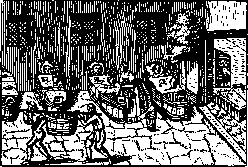
Figure 1.
Bathing in mineral water baths (17th century). the establishment by Henry IV of a spa inspectorate (1603). According to descriptions by historians of this era, courtly manners were transferred to the spas, and the lively spa life gave rise to saying about the spas that they were «more famous than salubrious» («plus celebres que salubres»). The modern and recent history of spas and their flourishing belongs to the second half of the 18th century and the beginning of the 19th century, to the era of the development of the commercial and industrial bourgeoisie (fig 2) Indl striliza
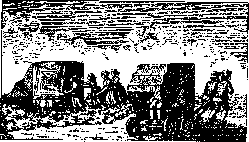
Figure 2. Sea bathing on the island of Norderney (18th century).
Urbanization and technical successes served as a powerful impetus to the growth of Western spas. In this regard, the development of railway movement played a special role. Organizing capitalist economy, building industry and cities, the bourgeoisie invested capital in the development of spas; most spas in Germany, France and other Western countries fell into the hands of bourgeois entrepreneurs; the 19th century and especially its second half give, on the basis of competition and advertising, rapid growth of spas and their adaptation to the tastes of the most solvent demand. The social order, which determined the general development of medicine in the 19th century, also led to the development of balneology as a science. The interest of states, municipalities and private capital in attracting funds from sick people and numerous tourists contributed to the prosperity of spas in the West. Bacherer brings statistics for three German spas from 1800 (total attendance). Years Baden-Baden Wiesbaden Carlsbad 1860....... - 1860....... 1870* ...... 1880 . . .-. ,. . . 1890 . . . .-. . . * Franco-Prussian War For the development of the spa business, it is also characteristic of the increase in the number of spas in Prussia; balneological spas in 1870 were 122, in 1900 - 146; seaside spas in 1870 - 58, in 1900 - 98. According to the same data, attendance at all spas in Prussia was expressed in the following final figures: in 1870 - 112,267 people, in 1880 - 237,794 people, in 1890 - 243,782 people, in 1900 - 404,773 people. The history of Russian spas is still awaiting its scientific researcher. The existing literary sources date the beginning of the spa business to a closer era to us - the beginning of the 18th century. Its foundations in Russia were laid by Peter I. Together with other reformist ideas, brought from his foreign travels and trips for treatment in Spa and Pyrmont, Peter also implemented the idea of organizing spas. In his decree of April 24, 1717, he gave the Senate the instruction 'to entrust Dr. Schober to search in our state for key waters, which can be used for various diseases, for example, those used in these regions as Pyrmont, Schwass and others.' Under Peter, the first 'bathing baths' were laid by the scholar 'bather' Christopher Paulsen (Lipetsk). The study of Russian spas we owe to Guldenschtedt (1773), Pallas (1793) and others. The development of the spa business in Russia is further connected with the aggressive policy of tsarism. The Caucasian wars and the conquest of Central Asia were accompanied by the discovery of healing localities and their use for treating military units that fell into unfavorable climatic conditions and suffered from syphilis, malaria and wounds. Such is the history of the Caucasian mineral waters, spas of the Turkmen Republic, which in the second half of the 19th century became places of camp stops with their transformation into military sanitary-hygienic stations (e.g. Khairabad). The management of spas was initially entrusted to military command (Caucasian mineral waters were under the control of military commanders of the border strip for about 50 years). Of the numerous healing localities of the tsarist government, six were in state management: Caucasian, Starorussky, Lipetsk, Sergievsky, Kemmern (Latvia) and Busky (Poland) mineral waters. The others were under the control of cities, zemstvos and individuals. As in the West, the Russian bourgeoisie participated in the construction of spas. According to a report from the Ministry of Trade and Industry to the State Duma on April 29, 1910, it is evident that the role of Russian capital in this matter was by no means progressive. Thus, the Lipetsk waters (until 1823 were in state management, and then transferred to the city) were taken away due to unsuccessful management from the city and transferred to a joint-stock company, which was liquidated due to unprofitability. The spa 'Sergievsky mineral waters' was in long-term lease and returned to state management completely ruined. Even large spas of Caucasian mineral waters did not escape the general fate and were in lease to capitalists Novoselsky and Baykov from 1861 to 1883, who, in the words of a contemporary, 'conducted commerce on the waters: to lure, to fleece, to grab.' While in state management, spas passed from one department to another, but never awaited their improvement in the broad sense of the word, since tsarism created for spas legal, economic and all sorts of other brakes that hindered their development. The Minister of Agriculture and State Property, Yermolov, who was in charge of the spa business and author of a monograph on Western spas, wrote that 'on the basis of existing laws and regulations, it is impossible to satisfy all the requirements of spa life.' A series of conferences on the arrangement of waters (1909, 1912) and three congresses of Russian balneologists (1898, 1903, 1915) dealt with the issues of improvement and development of the spa business. The palliatives outlined in their decisions, possible under the conditions of tsarism, were not implemented. The conditions of the prerevolutionary Russian reality left their special mark on the development of the spa business. It was characterized mainly by the following features. - 1. Anarchic, unplanned growth, based not on the accounting of the needs of the broad masses of the population, but on the demands of the propertied classes and the interests of private owners. Hence the lush growth of elite climate stations (example - Gagra), while mud spas with their exceptional significance for the diseases of the working population (Odessa limans, Lipetsk, Tynaki and others) languished, koumisses were kept in a state of complete disrepair, insanitation, etc. Even in the most well-equipped spas (Caucasian mineral waters, Yalta), alongside magnificent kurhals, palaces and structures, which in their richness can still serve as an ornament to any European 'spa', there was at every step the legal coexistence of housing disrepair, technical backwardness and outrageous sanitary disorders, etc. - 2. The interests of private capital delayed the implementation of the most vital measures for spas. A classic example of this kind is the passage of laws on mountain-sanitary protection. The draft law was proposed in 1898 by Yermolov, set for development as a legislative draft in 1909, submitted to the State Duma in 1914 and became law only in 1915, i.e. 17 years later. In this case, the play of private interests, to which the essence of the matter ultimately came down, was hidden behind the unprecedented bureaucratic red tape of the tsarist regime. - 3. In spas, the state owned only the sources, balneological institutions and parks. The medical organization was reduced to sanitary inspection. The treatment of patients was entirely in the hands of private practicing physicians and was carried out on an outpatient basis. There were almost no sanatoriums in spas. According to Shrange's data in 1915, only 1.5% of patients were treated in sanatoriums in spas. There were no medical norms for selecting patients for spas. They were determined mainly by the advertising of spas, which generated extensive specialized literature. According to Lozinsky, the authors of spa monographs, 'drawing inspiration from the administration of spas, sought to prove that each spa cures all diseases in all stages of the disease.' - 4. The methodology and technique of spa treatment, treatment periods, methods of application of spa-therapeutic factors for various diseases, questions of regimen, nutrition, etc. were established according to the prevailing empirical template in a given spa and had no scientific basis. The prerevolutionary era did not create a single scientific-spa institution (see Spaology). The disrepair of spas and the associated inconveniences for patients led to the fact that over 100,000 people went abroad to foreign spas annually, spending up to 150 million rubles on them and contributing to their prosperity. The dynamics of the development of Russian spas is illustrated by the following data (according to Novoselsky). Number of patients ---------------------------------------.....----------------------------------------------------- waters Staraya Russa Lipetsk ) 1,620 ) 2,000 ) 1913 I
37.137 According to data presented by Nosel'sky to the III Balneological Congress (1915) concerning 36 spas of European Russia and the Caucasus, in 1913 approximately 200,000 people were treated there. By five-year periods, the total attendance at these spas was 367,344 people for 1905-09 and 497,638 people for 1909-13. For individual spas, attendance by five-year periods was expressed (according to Nosel'sky) in the following figures (see table 151). "The number of springs and mud baths in Russia that are exploited or were exploited, or that are not properly exploited but are visited by local residents and are in any way known, exceeds 500; of these, the largest number (about 120) belongs to sulfur springs, about 100 to iron springs, about 80 to mud spas, about 60 to salt springs, about 50 to indifferent springs, about 40 to alkaline springs, about 20 to bitter springs, and about 15 to lime springs" (Nosel'sky, 1915). Stange, citing figures for health resorts, points to 65 known sea bathing sites and 165 kumis treatment centers. Spa names 1903-08 1909-13 Pyatigorsk........ Essentuki........ Zheleznovodsk....... Kislovodsk....... Odessa limans . . . . Staraya Russa...... Borzhom......... Slavyansk ........ Saki........... Mainaki......... Sergievsky mineral waters . Abas-Tuman....... Berdyansk......... Tinaki.......... 4,135 43,586 12,167 Spas of the USSR. History of Soviet spas. The October Revolution brought spa affairs in the USSR out of the capitalist rut onto the broad road of planned socialist construction. Together with the Mountain Department of the Ministry of Trade and Industry, spas came after the revolution under the jurisdiction of the VSNKh. In September 1918, by a resolution of the presidium of the VSNKh, they were transferred to the People's Commissariat of Health of the RSFSR. The gigantic scale of revolutionary creativity is already reflected in the first basic decrees on spa construction. From the very first steps, legislation on spas decisively breaks all previous legal fetters and puts spas in unprecedented favorable conditions for their development. By a resolution of the SNK of April 4, 1919, "all health resorts and spas, wherever they may be located on the territory of Russia, with all lands, forests, water areas, structures and real estate, constitute the national property, pass into the ownership of the republic and are used for treatment purposes."-All spa affairs are united under the jurisdiction of the People's Commissariat of Health, and their management is transferred to the department of health resorts. According to the slogan "spas for the working people," extensive constructive work is launched to establish the legal, medical and economic foundations of Soviet spa construction, and an appropriate regime is established to preserve in their original state springs, lakes and other spa-treatment factors.-In 1920, regulations on the management of spas are published, based on collegial principles with broad involvement of the public (trade unions, medical organizations, scientific societies) in the work of local spa councils and special commissions for mountain-sanitary protection. The regulations on the selection of patients for spas establish the first norms of medical and social selection as a method of planning spa-treatment assistance. A network of selection commissions is created, which manage selection at the local level. In Moscow, a selection and distribution hospital is established (organized by V. A. Aleksandrov), which was reorganized into a spa clinic, and in 1926 into the Central Institute of Balneology. Gradually, as Soviet territory was freed from White Guards, the entire spa economy was determined. In 1918, there were three functioning spas of national importance: Starorussky, Lipetsky and Sergievsky mineral waters. In 1919, the spas of Elton and Kashin began to function. In 1920, the main mass of spas was included in the state network: Caucasian mineral waters, spas of Kuban and the Black Sea coast, Odessa limans, Slavyansk, Tinaki, spas of Siberia (Borovoye, Shira, Karachi). In the same year, three kumis treatment districts were reopened: Orenburgsky, Novouzensky and Shafranovsky. At the end of 1920, Crimea was widely opened for the treatment of workers, declared by a special SNK decree the "All-Russian health resort." In this year, the total number of unfolded beds reached 21,000, and 48,500 patients were treated. In 1921, it was possible to deploy 30,000 beds, and the total number of patients for the season reached 67,000. In 1922, spas of Abkhazia (Sukhumi, Gagra) began to function, and in 1923, the last spas of the Far Eastern Republic were added: Odentuy, Darasun and others. This concludes the period of collecting state spas. Summarizing the stages passed, it is possible to schematically distinguish three main periods in the development of Soviet spa construction. The first period covers 1918-20 and is characterized by the beginning of the collection of spas, as well as the first identification of organizational forms and basic elements of the spa economy. From the organizational and economic prerequisites, spas of this period are characterized by the following distinctive features: a) an unprecedented program in scale is launched, designed to use all spa institutions, military hospitals and any suitable buildings; b) spas are entirely on state natural supply; c) spas consume the remaining material reserves from previous times; d) the main and most important task of the day-to put a patient in some bed and somehow feed him-pushes to the background the questions of spa treatment and regime as such. In this period, spas keep pace with the gigantic scale of revolutionary construction. They represent less a tool for "repairing the labor force" than a means of strengthening the class self-awareness of the victorious proletarian and Red Army man. Despite all difficulties and many defects, spas fulfill this political task of the first years of the revolution. The second period (1921-22) is a transitional stage. It coincides with the proclamation of the NEP slogans in general policy. Quickly penetrating into the economy of the entire country, the new economic policy slowly gains positions in spa affairs, as in other areas of cultural construction. In 1922, the first directives for reducing the program and substantiating it realistically are given. In this period, the embryonic forms of medical organization emerge and the first stones are laid for restoring the spa economy destroyed during the imperialist and civil wars. From the period of consumer communism, spas move to the path of restoration and construction. The third period opens with a decree of the SNK of March 13, 1923, prepared by prolonged work of the Council of Labor and Defense commission under the chairmanship of N. A. Semashko. This decree provides for the preparation of conditions for transferring spas to the basis of economic accounting. The decree recognizes the right of the People's Commissariat of Health to receive a) the necessary amounts for basic hydro-geological, mining-technical and water supply and sanitation works at spas; b) assistance for the urgent needs of spas for restoring the main housing stock and balneological installations; c) long-term loans on favorable terms for restoration and construction works, for equipping the operational fund and for managing various types of spa economies. At the same time, the decree grants spas the right to specialize in incomes and equates spas and their income-generating enterprises for 3 years in terms of tax assessment to state institutions financed on a budgetary basis. The said decree established a solid economic base for further planned spa construction, unleashed the economic forces of spas and served as a decisive stimulus for establishing for a long time and seriously new principles of management, which by this time had already won the rights of citizenship in the entire economy of the country. In this period of the history of Soviet spas, on the basis of the strengthening economy of the country, the scale of the spa economy becomes increasingly clear, the forms of management evolve in the direction of decentralization, the foundations of the modern organization of treatment assistance (sanatoriumization, specialization of spas, state outpatient assistance) are crystallizing, the state-economic principles for selecting patients for spas are increasingly clearly formulated, and a new problem of scientific accounting of the results of spa treatment as a method of planning and rationalizing the social construction of spas is raised. On the basis of directives of all-union spa congresses and under the leadership of the Scientific-Spa Conference under the Main Spa Administration of the People's Commissariat of Health (Chairman Prof. Konchalovsky), a network of research spa institutes is developed, and young Soviet balneology strengthens, reaching an unprecedented development in the history of spas, liberated by October and from the first days of spa construction called upon to become its ideological backbone. In 1923, the central organ of scientific-spa thought was established - the journal "Spa Affairs" (renamed in 1929 to "Spa-Sanatorium Affairs"). Under the conditions of extremely insufficient funding for spas, enormous work is carried out to restore the spa economy destroyed by the imperialist war and suffering from "the costs of the revolution." In the first 3 years of the restoration period, the sanatorium housing fund was restored for 6,200 beds, and spa hotels with a capacity of 1,120 rooms.
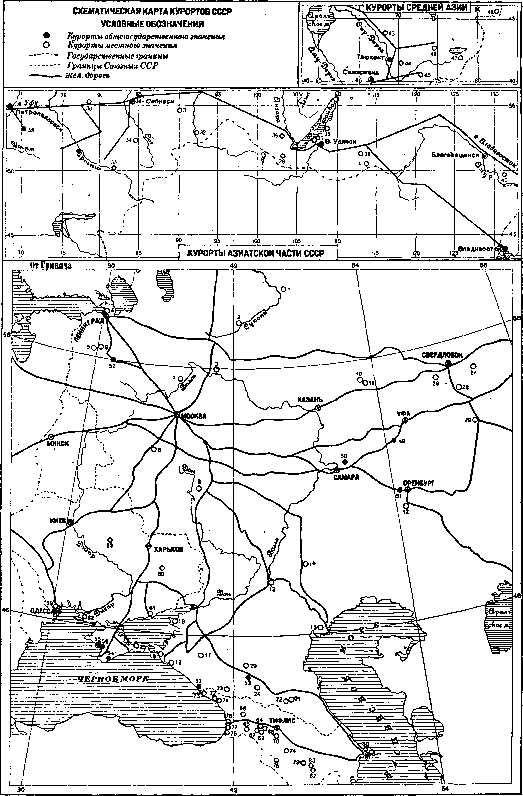
The Essentuki mud-bath clinic, the Sabaneev baths, the building in Pyatigorsk, the two bath buildings of the Sergievsk mineral waters, the old narzan baths in Kislovodsk, the Yermolov mud-bath clinic in Staraya Russa, the bath building in Novy Matsyest, etc., were put into operation after restoration. New intakes were set up for a number of mineral springs: the Batalino-Sabanevsky, Yermolovsky, hot and cold narzan, and radioactive hot-sulfur springs in Pyatigorsk, springs No. 17 and No. 4 in Essentuki. The water supply was expanded and 15 km of sewerage network was built on the Caucasian mineral waters, water supplies were restored in Mishor, Alupka, Simeiz, etc. Major restoration work was carried out on the spas of Ukraine and the ZSFSR. The destroyed Odessa lagoons (Kuyalnitsky, Khadzhibey, Kholodnaya Balka) were restored and significantly improved; the seaside spas of Odessa-Arkadiya, Lyustdorf, and the Lermontovsky Spa, which was turned into a clinical base for the All-Ukrainian Balneo-Physiotherapy Institute, were rebuilt; major reconstruction work was carried out in Slavyansk, new construction was done in Berdyansk, Mirgorod, and Gopri. Extensive work on the construction and improvement of Georgian spas significantly increased the capacity of Borjomi and Abas-Tumana and brought new spas into operation: Tskhaltubo, Tsagveri, Shovi, etc. The movement of patients in Borjomi and Abas-Tumana for 1922-29. Years Borjomi Abas-Tuman 1928......! 1929......! 2.000 5.900 6.900 7.500 1.200 2.700 3.400 3.500 Tskhaltubo Spa with its huge debit of thermo-radioactive waters (up to 2 million buckets per day), approaching the properties of famous Western spas—Wildbad, Gastein—increased attendance to 16,229 people in 1929. The following table shows the expenditure on construction and improvement for state spas. Years Received 1923, 800,000 1,000,000 1,150,000 Spent on construction 790,491 982,301 991,313 mountain-technical and water supply works 129,883", "920,374 369,448 1 1,351,749 355,393 1,346,706 2,764,105! 854,724 For comparison, we note that from 1898 to 1910, for the Caucasian mineral waters, Staraya Russa, Lipetsk, and the Sergievsk mineral waters, the total state subsidy for operational needs and construction needs was 7,276,000 rubles, and in 1912-14, under the energetic director of the waters, Khvoshchinsky, about 2 million rubles were allocated for the Caucasian mineral waters. By 1926, Soviet spas had surpassed pre-war quantitative indicators, which is shown by the development of the Caucasian mineral waters (visitors in 1913—37,137, in 1926a—73,621).- Period of recovery and beginning (map explanation) Solpichegodsk Totma Bolynesolsk Sestroretsk Khilovo Soltsy Kashin Krainskie mineral waters Lipetsk mineral waters Varzi-Yatchi Izhevsky source Iletsk Stalingrad kumis clinic Elton Tinaki Yeisk Psekup mineral waters Anapa Gelendzhik Kumagorsk Goryachevodsk Sernovodsk Teberda Nalchok Chokrak Nizhne-Sergievsky Kur'ya Ozero Gor'koe Troitskaya kumis clinic Ozero Karachi Ozero Shira Ozero Tagarskoye Lebyazhe Belokuriha Usol'e Arshan Central kumis clinic Goryachinsky and Turkinsk! spa Darasun Kul'dur Olentuy Sadgorod Yany-Kurgan Chimgan Dzhalal-Abadsky source Issygata Dzheti-Oguz Barlyk-Arasan Shafranovsky kumis clinic i rort Sergievskie mineral waters Orenburg kumis clinic pai Staraya Russa Kavkazskie mineral waters Crimea-southern coast Evpatoria Saki Sochi-Matsya Borovoye Odessa Slavyanok Berdyansk Gopri-Golaya pristan Mirgorod Georgia Borshom Abas-Tumana Tskhaltubo Patsara-Tsemi Tsagveri Bakuriani Akhtala Abkhazia New Afon Sukhumi Gagry Armenia Delijan Arzni Adjara Batumi Makhindzhauri Kobuleti Azerbaijan Isti-Su Bovuzny Beyuk-Shor Shusha Stepanakert
According to N. E. Khrisanfov
rationalization contains within itself, in those deeply fundamental shifts in the entire organization that characterize the new quality of spa work in the Union, elements of that period of fundamental socialist reconstruction into which it is entering. The quantitative dynamics for the past years for spas of the RSFSR are presented in the provided diagrams (fig.3-8). According to reporting data for 1928, a total of 242,000 people were treated in state and local spas of the RSFSR, of which 18,000 people arrived from other union republics. In the total number of insured patients, 154,000 (68.9%) [including 38,400 production workers (25%)] and 70,000 (31.1%) family members of insured persons, peasants, students, and invalids were actively treated. According to approximate calculations for 1929, all spas of the USSR, including both state and local spas (in sanatoriums of the NKZdr., insurance funds and departments), served more than 300,000 people. The last 3 years give the following picture of development in percentage terms of the main indicators for 9 state spas of the RSFSR (without departmental sanatoriums). industrialization of some regions (Siberia, Urals, Far Eastern Krai, Northern Krai) and autonomous republics, the growth of the general cultural level and on this basis—an enormous increase in demand for spa treatment, which can and must, on the principle of zoning of spa-therapeutic assistance, be brought closer to the consumer. The dynamics of local spas give for 1923 (for 36 spas) 10,209 patients, for 1928—59,000 patients with 8,713 beds. Thus, the proportion of patients treated in local spas was about 11% for 1923, and more than 26% for 1928 of the total number of patients in spas of the RSFSR. The question of the population's need for spa-therapeutic assistance is insufficiently studied and represents the most important problem in connection with the growth of the industrial proletariat and the collectivization of agriculture. According to data from the Spa Administration of the NKZdr., satisfaction of insured persons in 1927 was 17 people per 1,000 with an estimated need of 25 people per 1,000 (according to Shlange's data for 1925, the service of the population by spas was 2.5 per 1,000). Analysis of quantitative shifts in the area of spa development allows one to come to the following conclusions. 1. Significant exceeding (for some spas twice, three times and even more) of capacity compared to pre-war data and the rapid growth of local spas. 2. Despite the high rates, unprecedented in prerevolutionary history and Western spa work, spas are clearly lagging in their development from the even faster growing needs of the population. This especially applies to local spas located in industrialization areas (Urals, Siberia, Far Eastern Krai). The qualitative features of the organization of spa work in the USSR follow from its new concept, which considers spa-therapeutic assistance not in isolation, but in connection with the general tasks facing the country of building socialism, and especially with the tasks of healthcare. 1. Spas constitute a sector of the construction of the socialist economy as "repair workshops" that restore, with the most powerful treatment methods, the working force worn out in the process of labor—the main energy resources of the country. 2. As a sector of general socialist construction, spa work must be based on a single plan derived from the general state-economic tasks and strictly scientifically substantiated. 3. Being one of the links in Soviet medicine as an instrument of prevention, treatment, and school of hygiene skills, spas must be built in the closest connection with the entire system of Soviet healthcare. From these basic premises follow the characteristic features of the organization of spas in the USSR. These features are basically as follows. a) The state character of spa
Figure 3. Number of sanatorium and outpatient
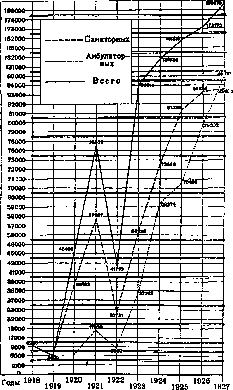
the number of patients on state spas of the RSFSR for 1918-1927. The management of the affairs in terms of administration, planning, control and organization of medical assistance at spas; the unity of the plan for spa-medical assistance, which is based on accounting for the needs of the working population of the city and countryside and scientific accounting of the results of spa treatment. b) Priority and preferential treatment for workers, peasants, Red Army soldiers, students, and invalids on the basis of state norms of social selection at the expense of special allocations from state, insurance, professional and other organizations. c) Accessibility and high qualification of treatment, based on the widely implemented principle of sanatoriumization. The number of sanatoriumized patients at spas of the RSFSR amounts to over 50% in 1930 (compared to 1.5% according to 1915 data), including state and local spas. d) The state expediency of patient selection at spas, carried out through regulation of medical norms (so-called indications and contraindications for treatment at spas). e) Adaptation of the entire organization of affairs at spas (treatment, regimen, nutrition, cultural and educational work, etc.) to their main task: to give the patient 'maximum stable restoration of working capacity in the shortest possible time and at minimal cost compared to all other methods of treatment on site'. A fundamental review from this point of view of the entire methodology and technique of spa treatment. f) Training of new cadres of scientific workers, consultants, attending physicians, dietitians, and qualified middle and junior personnel. As the initial task - training of highly qualified spa specialists - clinicians, thinking in a Marxist manner and socially active. g) Scientific substantiation of the new construction of spas and spa treatment, completely linked to the position of spas in the general economy of the country and in the system of Soviet healthcare. -Such are the main features in which the new essence and fundamental difference of our spas from spas of prerevolutionary Russia and modern capitalist Europe are contained. In this new essence, despite all their current shortcomings, lie the unprecedented possibilities for the further prosperity of spas in the USSR. The current state of Soviet spas. General guidance, planning and control in all spa affairs belong to the spa administrations of the People's Commissariats of Health of the union republics; their management is concentrated locally. The spa administrations also have the right to control the departmental spa-medical assistance. Questions of spa policy and unity of plan are coordinated at periodically convened interdepartmental spa conferences under the People's Commissariat of Health of the RSFSR. In this way, a planned approach is introduced and, to some extent, the shortcomings caused by the existence of departmental spas and sanatoriums on the resorts are eliminated. The fundamental issue of the class spa policy in the USSR is the social selection of patients for spas. The social composition is determined by directives of government and professional organizations that establish the percentage of free places at spas for various categories of workers. Trade unions, state institutions, insurance, cooperative and public organizations rent sanatorium places in a centralized manner through the Center, the spa bureau at the People's Commissariat of Health of the RSFSR, which, by agreement with the spa trusts, manages the distribution of their 'products'. Places rented by organizations at the expense of special allocations are distributed free of charge among corresponding groups of the population. In connection with directives to increase the percentage of workers, farm laborers and the poor at spas, the predominant number of places is provided for their treatment, and accordingly the number of places rented by trade unions, insurance organizations, and cooperatives increases (by trade unions from 25.5% of all spa places in 1927 to 50% in 1930, by cooperatives - from 1.7% to 9.2% for the same years). In 1930, 80% of the places rented by trade unions were provided for distribution exclusively among workers and their families, primarily in the main industries of production (engineering and technical personnel of industrial enterprises are equated with workers). In the distribution of places, the professional vulnerability of certain professional groups and the degree of their need for spa treatment are taken into account. The class principle is the basis for tariffs for spa treatment and provides for minimum prices for
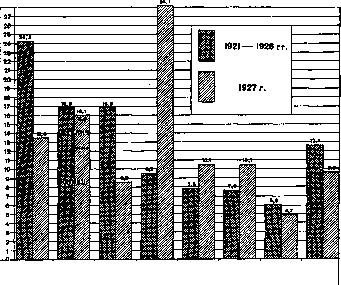
Tuberculosis
Nervous diseases Diseases Diseases Diseases of the cardiovascular system of the organs of movement of metabolic substances of the digestive system Gynecological diseases Other diseases Figure 4. Composition of patients at spas of the RSFSR by type of disease for 5 years (1921-26) and for 1927 (after limiting indications for treatment at spas). workers; at the same time, workers who pay for their own places at spas are given discounts on payment for the place and travel. Workers receive treatment both in sanatoriums of the People's Commissariat of Health and in sanatoriums of insurance organizations, which since 1923 have widely developed sanatorium-spa assistance. Tsusstra-khu has a large number of sanatorium beds, mainly in the Caucasian mineral waters, the southern coast of Crimea and Sochi-Matsesta; in its management on the basis of long-term lease are spas of the Far Eastern Krai (Sadgorod, Darasun, Kul'dur), as well as Maynaki, Khilovo and some other spas. At the Caucasian mineral waters and Sochi-Matsesta, the number of beds deployed by insurance organizations is very significant. Number of patients in sanatoriums of Tsustrakh a. Spas 1927 I 1928 I 1929 I 1930 Caucasian mineral waters Sochi-Matsesta 15,038 2,678 18,330 3,231 20,255 5,500 The military-sanitary department has its own spa stations in Kislovodsk, Pyatigorsk, Gurzuf, Saki. Despite all the adjustments provided by the right of control and sanitary supervision from the People's Commissariat of Health, the work of general spa congresses and interdepartmental conferences, the lack of unity in leadership and management raises the issue of complete unification of spa affairs on an all-union scale. According to their tasks in the USSR and economic structure, spa affairs cannot be a source of material profit and justifies its existence both by the general role of spas in the country's economy and by its significance as the most important factor in raising the economic well-being of the population of adjacent areas. The history of the development of spas in the USSR and the West indicates the great assistance to spas from the state, although the beginnings of unlimited commercial calculation on spas in Europe to a much greater extent ensure the stability of the spa budget. At present, spa affairs are financed from the following sources: a) hydro-technical and water supply and sewerage works - from the state budget; b) state subsidies for the new construction of the most important spa buildings (for example, in Matsesta); c) long-term bank loans for new construction; d) from operational income and amortization funds - restoration work and partly new structures; e) income from Caucasian mineral water exports, in the Transcaucasian Soviet Federated Socialist Republic - from Borjomi exports (economic trusts for bottling and exporting mineral waters) - for various needs in the order of annual allocation from profits. In recent years, some expenses of local importance for spas are subsidized from the fund of medical assistance to the insured. According to the legislation, in the improvement of spas, funds received from the spa fee from patients should be used. However, these funds are extremely insufficient due to the large concessions for the main categories of patients provided by the Regulation on the spa fee. - The sanatorium-medical organization at spas, as indicated above, is built on the principle of sanatoriumization, ensuring conditions for the maximum restoration of the patient's working capacity. Modern sanatoriums at spas are built according to the specialization type, corresponding to the contingent of patients by type of disease. Thus, at the Caucasian mineral waters, there are sanatoriums specially for gastroenterological patients, for metabolic diseases (Essentuki), cardiological (Kislovodsk), gynecological (Pyatigorsk), renal (Zheleznovodsk), for syphilitics (Pyatigorsk), for neurotics (Kislovodsk), for 'rheumatics' (Pyatigorsk). It should be noted the extremely small number of sanatoriums for childhood diseases. In terms of the number of beds, sanatoriums with 100-150 patients predominate. In recent years, enlargement of sanatoriums to 350 and 400 beds has been carried out (example; the 'Tallas' sanatorium in Yevpatoria), which is determined by both organizational advantages and economic benefits, as well as the possibility to provide broader consulting assistance, one's own laboratories, physiotherapy equipment, etc., in large sanatoriums. (In small-sized sanatoriums, the latter are not economically justified.) The management of sanatoriums is entrusted to chief physicians, selected from among administrators who have practical medical experience. Chief physicians are responsible for the entire organization of medical affairs and are chairmen of the so-called sanatorium medical consultation, which includes
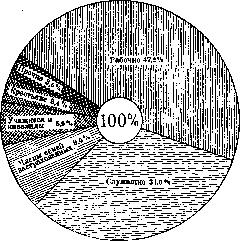
Figure 5. Distribution of patients by social composition for 1921-26.
doctors of the sanatorium. Corresponding to the specialization, the staff, the sanatorium regimen, therapeutic nutrition, and the entire methodology of treatment are built. To ensure high qualifications, the staff is staffed with specialists in balneology (climate therapists at health resorts) with at least 6 years of general clinical and 3 years of balneo-climatological experience. The attending physician is responsible for the patient's treatment. Complex cases are discussed at the sanatorium consultation; if necessary, patients are referred to polyclinics to consultants in related disciplines (surgeon, gynecologist, otologist, ophthalmologist) or the latter are invited to the sanatorium. Patient histories are kept; special balneo-physiatric prescriptions are noted in the patient's sanatorium booklet, and recently, diet-regimen sheets have been introduced for each patient on some health resorts. Sanatoriums are equipped with laboratories (on some health resorts, one for several sanatoriums—"cluster" laboratories), X-ray and diagnostic cabinets. The system of therapeutic methodology is built (for the convenience of treatment and greater medical supervision) on bringing therapeutic assistance to the patient, rational administration of procedures under medical supervision, the use of therapeutic nutrition, therapeutic physical education (physical education instructors are on the staff of sanatoriums), and sanitary education. The duration of treatment at different health resorts ranges from 4-6 weeks. For bone-tuberculous patients, longer periods are established (up to 3 or more months). The basis of treatment is the use of resort-therapeutic factors. Physiatric methods are used only as auxiliary in combination with the main ones to enhance the effect of the latter. Drug therapy is permitted as an exception in special cases (on the Caucasian mineral waters, the expenditure on medicines amounts to 2.5 kopecks per patient per day). The sanatorium regimen covers the entire daily routine of the patient. It should be built in accordance with the nature of a given health resort (different on drinking, mud, climatic health resorts), with the peculiarities of the diseases used at the health resort, and with the living habits of patients. The necessary individualization has not yet been carried out. On most balneological health resorts of the Union, the resort regimen is built according to the following scheme: 61/2 a.m.-physical exercise; 71/2 a.m.-drinking mineral water; 81/2 a.m.-first breakfast; 9-12 a.m.-procedures; 12-1 p.m.-drinking mineral water; 11/2-2 p.m.-lunch; 3-41/2 p.m.-rest; 41/2 p.m.-tea; 5-7 p.m.-walks, drinking mineral water; 71/2 p.m.-dinner; 8-10 p.m.-walks, lectures, concerts; 101/2-11 p.m.-going to sleep. This scheme is also common on many health resorts in the West. It needs a fundamental revision, since a) it is not designed for the features associated with the conditions of the working life for the main contingent of workers and peasants; b) it does not take into account the necessary coordination between tiring procedures (mud therapy) and the main meals; c) on drinking health resorts, it does not leave sufficient intervals between meals and mineral water (mineral water is taken at hours when
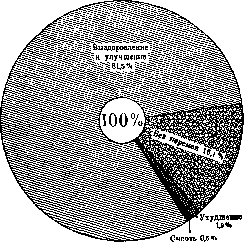
Figure 6. Results of treatment at state health resorts of the RSFSR for 1921-26 (The table is compiled according to the medical statistics of health resorts and, due to the imperfection of the evaluation methodology, has a roughly approximate character.)
(incomplete digestion of the previous meal, which contradicts the rules of balneotherapy). The universal mandatory nature of the dead hour requires a decisive revision in the direction of individualization. Methods of labor therapy are insufficiently developed. - Recently, a new health-resort regime has been proposed, *b* partially eliminating the shortcomings of the ordinary one: 7-8 AM - a substantial breakfast, at 12 PM - a second breakfast, also quite substantial, 4-5 PM - lunch, 8-9 PM - tea with a light dish. Elimination of the extra (5th) meal frees up time for treatment procedures and lengthens the intervals between taking mineral water or other procedures and food. Moreover, with such a schedule, lunch is taken only after all tiring procedures, which is less tiring for the patient. - In further development of the regime, it is necessary to proceed from the following positions: 1) it should be built not on the basis of narrowly understood 'hygienic lifestyle' in general, but on the principles of socio-etiological approach, 2) it should contribute to the maximum effectiveness of resort treatment and 3) for each main type of resorts, a special scheme should be established, within which necessary individualization is permitted. Dietetics at Spas from the very first years of the organization of Soviet resort affairs received serious development and acquired new forms both in its scientific foundations and in organizational terms. In sanatoriums, nutrition schemes developed by the dietary department of the Central Institute of Resortology (M. I. Pevzner) have been introduced almost everywhere. These schemes are built on the principle of group nutrition according to disease groups (increased acidity of the stomach, decreased acidity, stomach ulcer, constipation and diarrhea, hepatic, gouty, renal, diabetic, and other tables). A large number of separate standard diets not only does not complicate the food preparation process, but even simplifies it, as it makes the prescription of individual diets unnecessary. Each dietary table is strictly characterized with a list of permitted and prohibited dishes. The menu is developed a week in advance, and the issue of products is carried out according to special card files, in which the products included in each dish are listed in the appropriate quantities. Thus, it is possible to carry out strictly dosed feeding of patients. Food distribution is simplified by the introduction of N.O.T. with distribution boards, on which the housekeeper marks individual dishes for each day according to the number of patients for each dietary table. All tables in the dining room are renumbered and grouped according to the corresponding diets. The total amount of food in recent years has been sought to be limited on average to 3,500-4,000 calories per day. For outpatients of clinics and hostels, dietary canteens are built according to different types: the most perfect type is that of closed canteens serving a certain contingent of patient-subscribers. Under this condition, it is possible to organize nutrition in canteens with the same strictness and accuracy as in sanatoriums. A dietitian doctor is at the head of the canteens; his closest assistants are the housekeeper and the head chef. The entire matter of therapeutic nutrition at resorts is united and directed by special nutrition councils, established in recent years at resort administrations. The Nutrition Council develops norms and schemes for a given resort, introduces corrections into the work of treatment institutions, etc. Sanitary-educational and cultural-educational work plays a very important role at Spas (health school). Their plan includes the organization of lectures, conversations, and question-and-answer evenings for the patients of a given sanatorium, as well as special meetings for all patients of Spas on the issues most interesting to them regarding regime, treatment, and nutrition. Sanitary-educational work is within the scope of duties of sanatorium doctors. Separate topics for lectures and conversations serve as questions about the application of resort factors (mud, mineral waters, baths, sun, etc.), nutrition at Spas and at home, work regime, prevention in the field of labor, questions of Soviet construction at Spas, etc. Posters with slogans on the rationalization of habits, labor, and daily life assist in sanitary-educational work. To help lecturers, the Institute of Resortology has specially published a 'Vademecum' for sanitary education with detailed outlines on each topic. The general guidance of cultural-educational work lies with the resort cultural missions, which include doctors of resort sanatoriums and polyclinics and special cultural workers. The latter conduct 4-6 lectures during one treatment course on general educational topics. The scope of work of cultural commissions also includes the organization of concerts, theatrical performances, and amateur evenings among patients. Physical education was introduced in 1925 at all Spas of the Union as one of the methods of resort treatment. Sites have been organized at sanatoriums, where morning lessons (usually from 6 to 7 AM) and games in the after-lunch hours are conducted. Classes are led by instructors who have taken a special course. Selection of patients for physical education is done by treating physicians; classes are conducted in three groups depending on the condition of the disease, allowing greater or lesser physical load on the patient. Attendance at classes averages 20-30% of sanatorium patients and more, increasing each year. In 1928-29, a number of new sanatoriums were built at Spas: in New Matsesta-2, at Caucasian mineral waters-2 (Zheleznovodsk and Kislovodsk), in Saki and Borovoye. The Five-Year Plan provides for the construction of new sanatoriums and resort hostels. Special attention is paid to both general and special medical equipment of sanatoriums (in 1929, 445,273 rubles were allocated, in 1930-1,040,000). The norm of area per sanatorium bed varies in state Spas of the RSFSR from 8.0 m2 (southern coast of Crimea) to 6.0 m3 (Borovoye). Maintenance of staff in sanatoriums amounts to about 27% of the budget expenditure. - 'N.ESSVNTUKi', 'other diseases 2.2'

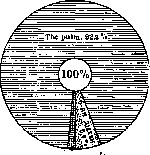
Figure 8. Specialization of spas in relation to the main groups of diseases (according to 1927 data). Despite a number of measures taken to reduce the cost of a sanatorium bed (reduction of administrative expenses for 9 all-union resort trusts of the RSFSR by 46% in 1930 compared to 1926, significant reduction in procedures, etc.), it remains very high. According to 1930 data, it is higher than the vacation prices. Standard staffing in sanatoriums (according to 1930 data). Number of patients per 1 staff member In balneological. In sanatoriums and climatic health resorts for elderly patients 1 doctor ........ 1 nurse . . . . 1 person of junior care staff 1 waitress ....', 1 cook.......I 45-50 25-30 16-18 -40 -20 10-12 20-25 40-50 in Sochi-Matsesta by 13.5%, on the southern coast of Crimea by 4.7%, in Staraya Russa by 4.4%. In view of the high proportion of sanatorium maintenance in the general resort budget (49.9% in expenses for 1930), the stated ratio of selling price and cost creates instability in the general resort budget. Outpatient treatment of patients at spas in recent years has been based on the principles of organized state administration (private practice is prohibited on most spas since 1928) of full service with housing, treatment, nutrition, and regulation by special medical indications. Care for outpatients lies with resort polyclinics. An example of the most perfect scheme of a polyclinic (despite all the practical shortcomings in its implementation) exists at the Caucasian Mineral Waters. Basically it comes down to the following. 1. Central registration offices at each spa, where the patient acquires the right to all types of outpatient treatment. 2. The outpatient clinic is divided into departments by specialty. The patient is treated by one of the doctors of the department, being attached to him and appearing for examination no less than once a week. The norm for receiving patients is no more than 3 new or 4 follow-up per hour. If necessary, the treating physician consults the patient with the head of the department. A consultation office functions daily, in which the heads of departments take turns participating in consultation in particularly complex cases. 3. Clinical diagnostic laboratory, X-ray office, office for accounting for the results of resort treatment. 4. Balneophysiotherapy facilities - bath houses, mud baths, Zander's office, etc.; are supervised by doctors, under whose control procedures are issued (exclusively on the prescriptions of polyclinic doctors). 5. Diet canteens headed by a dietitian of special qualification (see above). 6. Polyclinic hostels (dormitories). 7. Assistance to patients at home in case of acute diseases or complications during the course of treatment. A significant feature of this system is the transfer of outpatient treatment to subscription-based course treatment with the advance sale of subscriptions through the resort bureau. This order makes it possible to regulate the arrival of patients and alleviate the huge inconveniences caused by overload in months of high attendance. Subscription-based course treatment at spas (as a percentage of the total number of outpatients) increased in Pyatigorsk, Kislovodsk, Zheleznovodsk, and Essentuki from 20-30% in 1929 to 50-80% in 1930. According to the five-year plan of the Caucasian Mineral Waters, it is planned to cover 100% of outpatients by 1932. On other spas of the RSFSR, especially climatic ones, this system is implemented much more slowly, which is caused by various local reasons. The selection of patients for spas is the main lever for planning resort affairs and linking it with state-economic tasks at this stage. This applies to both medical and social selection. Since 1920, selection has been carried out by a branched network of selection commissions throughout the USSR, attached to health departments. From 1927 to 1930, the functions of selection were transferred to medical control commissions (VKK) of insurance bodies. Since 1930, a new regulation on sanatorium-resort commissions has been implemented, according to which the functions of selection have been transferred to treatment and prevention institutions of health authorities. The primary task of medical selection is to link resort treatment, which, being a powerful factor in activating the body's protective forces, is only a brief "episode" in the treatment of a patient with his previous and subsequent treatment. The prevailing and still purely therapeutic approach, taking the patient "on the bed" and not in the context of his entire working life, must be rejected as not corresponding to the new essence of resort affairs. The main task is the closest connection of the organization of selection at places with the entire system of treatment and preventive medicine (dispensaries, sanatoriums, diet canteens, etc.). Hence the importance of preliminary thorough study (laboratory, X-ray, hospital examination) in each individual case of absolute indication for the patient for resort treatment, which should follow from long-term observation of how all treatment methods available at his place of residence act on this patient (physiotherapy, extra-resort mud therapy, diet therapy, etc.). The V All-Union Resort Congress believes that "only those patients who, from the point of view of the current state of knowledge, give the greatest probability of stable restoration of working capacity compared to all treatment methods at their place of residence" are indicated for treatment at spas. In this restrictive tendency lies the fundamental feature of indications for treatment at our spas. The second distinctive feature is the focus not on the factors of a given spa in general, but on the role determined by the place of this spa in the general system of resort affairs (specialization of spas). Thus, Kislovodsk (see) may be indicated for certain diseases as a climatic station, but given the abundance of climatic stations in the Union and the best suitability of Kislovodsk for treating patients with cardiovascular diseases, it is a cardiological spa in the general plan and has corresponding indications. Thirdly, indications must be differentiated by seasons of resort treatment, which is especially important for certain categories of patients (pulmonary, cardiac) and in relation to certain spas (e.g., spas of Crimea, Abkhazia, Matsesta, etc.). This differentiation takes on special importance in connection with the extension of the operating period of spas being carried out. (Currently some spas of Crimea operate year-round, Kislovodsk - with a break from 1/IV to 15/V, Matsesta - from 1/II to 1/IV. The question of extending the operating period of a number of other spas has been resolved in principle in a positive way.) Fourthly, indications for treatment at spas must be linked to the principle of zoning resort treatment, i.e. bringing it closer to the patient's place of residence. This follows from economic considerations, is dictated by the interests of the patient, who often suffers double trauma from long-distance trips (from travel and unfamiliar climatic conditions), and is necessary in order to use extremely overloaded popular spas only for the most indicated patients. Hence the need for the development of spas of local importance. From the same point of view, the methods of using resort treatment factors in an extra-resort environment are of increasing importance. Great experience and a number of special studies have established that these methods, especially extra-resort mud therapy (imported silt mud), give good results for a number of diseases and can be used year-round. In these features of medical selection, its significance as a planning method is manifested. The practical results of medical selection in this regard are visible from the diagram (Fig. 4). The clearly visible shifts in the medical contingent are explained by the fact that the narrowing of indications led to the elimination of those patients who can be treated with sufficient effect at their place of residence (e.g. tuberculosis), and increased the influx of those most in need of resort "repair" as such (diseases of the motor organs in the first place). The diagram provided (Fig. 8) illustrates the implementation of spa specialization. Despite the undoubted achievements of resort selection, there are still a large number of shortcomings. The main ones are insufficient preliminary examination of the patient, lack of long-term observation of the dynamics of the disease process, the body's reaction to physical irritants, etc. The principle of preliminary use of all methods of physio-dietotherapy is not implemented. Insufficient differentiation in assignment to spas in case of combined diseases in different stages of the disease, in relation to seasons, indications for sanatorium or outpatient treatment; little account is taken of spas of local importance. Of particular importance is the isolation, separation of resort treatment from treatment at places. Most patients come to spas without data from treatment institutions characterizing the previous course of the disease, as a result of which the expensive time of a short stay at the spa is spent on establishing the diagnosis and studying the peculiarities of this case. On the other hand, patients leave the spas often with insufficient data on the course of treatment at the spa, on the course of general and local reactions, etc.
Returning from spas with an incomplete general reaction (after mud therapy, heat treatment), the patient needs proper regimen and medical guidance. Meanwhile, due to the lack of necessary continuity, even the realistically achievable gradualness in the transition of the patient to the conditions of labor life, which plays a huge role in consolidating the results of spa treatment, is not achieved. In this sense, careful dispensarization of spa patients should eliminate these shortcomings. The difficulties experienced in the practice of selection, even in large university centers, increase on the periphery and are especially great in rural areas. Therefore, with the progressive year-by-year decrease in the number of contraindicated patients at spas, there still remains a large number of patients for whom spa treatment is of little indication, whose state of health does not require expensive spa treatment. The main measures, aside from general organizational ones, which are currently being taken to improve medical selection, are aimed at raising the level of knowledge of physicians in the field of balneology in general and the principles of selection in particular (publication of guides on balneology, guides and handbooks on selection; organization of courses for physicians of selection commissions in centers and locally, etc.). Along with this, there is systematic clarification of indications and contraindications to spa treatment. Social-professional selection represents yet a little-developed chapter. Its importance grows into a problem of enormous importance during the period of socialist reconstruction of the national economy, which, in the course of industrialization of new areas, mass collectivization and growth of agro-industrial enterprises (sovkhozes, combines), causes giant shifts in terms of involving new masses in industrial production, changes in pathological dynamics on a general scale and in individual districts, and consequently shifts in the demand for different types of spa 'repair'. To what extent the social-professional factor influences the development of spas is shown by the following comparison. I Percentage ratio of patients I ! at spas of different purposes j spas ;--------------------,-------------------' According to data { According to data \ 11915 (Stange)! 1923 i Climatic . .'
50.0
!
25.0 Balneological .
18.8
i
26.0
|
32.0 Kumisolechenie . . \
5.2
2 ,0 (According to Tsustrakh data, the number of patients at balneol. spas reached 66% in 1928.) With all the caution with which data from 1915 must be handled (registration methods!), the shifts in the medical contingent towards increased attendance at balneological and mud spas, which serve the predominant diseases of the industrial proletariat and working population, are absolutely obvious. The data on need according to social-professional criteria play a primary role in planning spa-therapeutic assistance, which must be built for individual districts on the comparison of these data with figures of development of industries and growth of corresponding professional groups of the industrial proletariat or batrak-bednyatsk groups in sovkhozes and kolkhozes. Exact figures of need can be obtained only by the method of complete examination during dispensarization of individual typical population groups in terms of production and daily life, and the establishment of correct indicators requires conducting the survey on a large number of homogeneous collectives. The planning of spas in the USSR has not been based so far on exact indicators of need and, lacking them, used data obtained by studying statistical spa cards of patients sent to spas (Kishkin), which characterize not need but only the degree of provision of spa-therapeutic assistance ('serviceability') of individual social-class groups of the population... In recent years, work has been carried out to obtain more exact figures of need by studying materials of spa selection commissions regarding patients designated for dispatch to spas. Since these data are also insufficient, to identify the true need, spa dispensarization has begun in large enterprises, which, before obtaining exhaustive exact indicators, allows establishing for individual groups of workers correction coefficients to the data of selection commission materials.-According to preliminary data (for Moscow), the need for industrial groups of insured persons per 1,000 people is 21.6, for non-industrial groups - 16.6. For individual professional groups per 1,000, metalworkers give 27.7; chemists - 36.9; textile workers - 28.7; printers - 36.1; tailors - 27.5; leather workers - 33.3; food industry workers - 23.3; woodworkers - 21.0. By type of spa treatment, the need for mud therapy leads (about 30%), for drinking spas - 22.3%, for carbonic - 21.7, for hydrogen sulfide, of the Matsesta type - 19.5%. In last place is the need for climatic treatment (excluding pulmonary-tuberculosis patients). The need for mud therapy predominates among metalworkers, tailors and textile workers; in the first group - due to diseases of the motor organs, in the latter two - due to gynecological conditions. High figures for Matsesta and Pyatigorsk are given by printers and chemists due to professional intoxications. The preliminary nature of the presented data is determined by both the above-mentioned methodological considerations for determining need and the unclear indications and contraindications for treatment at spas of individual occupational diseases. The development of indications for occupational diseases is carried out by taking into account the results of spa treatment and in a number of special research scientific institutes (see Balneology). The problem of personnel is one of the most important and most difficult questions of spa affairs. The prerevolutionary past of spas did not leave a personnel of spa workers. Meanwhile, a whole army of qualified administrative, medical, middle medical, junior and cooking personnel was required. The seasonality of spa work and the remoteness of spas from large centers present extraordinary difficulties in the question of personnel. According to NKZdr. data, in 1929, 1,050 physicians worked at spas of the RSFSR, of which 666 in sanatoriums, the rest in polyclinics and medical institutions of spas (mud therapy institutions, bath houses, physical therapy offices, etc.). In 1929, at spas of the RSFSR worked: Personnel Total In sanatoriums In outpatient clinics (seasonal) In balneol. and physiotherapy institutions (season.) seasonal annual Medical personnel . . Middle medical personnel . . 1,058 1,551 287 143 105 210 Due to the seasonality of work at most spas, only 30% of physicians are enrolled in permanent annual service (annual cadre). In 1929, the chief physicians of sanatoriums and other medical institutions and one physician from the ordinators per sanatorium were in the cadre. The administrative personnel (except for the heads of individual institutions of spas), middle medical and junior personnel are not enrolled in the cadre and are recruited annually before the season, which causes great turnover of the serving staff and all its negative consequences. A radical solution to the problem of spa personnel is possible only by extending the operating periods of spas. This measure has been implemented in relation to some spas (Matsesta, Staraya Russa) and should cover the larger part of spas of the RSFSR. The tasks of the reconstruction period and the rapid growth of spas in the USSR pose the problem of personnel with special sharpness, mainly in relation to spa administrators, treating physicians and dietitians. The extreme shortage of the latter extremely hinders the correct development of rational therapeutic nutrition at spas. The training of dietetic nurses and dietetic cooks is also very timely. In recent years, a great shortage has been revealed in hydrogeologists, physical chemists, engineers and other specialists in various branches of spa affairs. In recent years, very great work has been done in preparing new personnel, especially medical personnel (see Balneology). Improvement and sanitation at spas cover both hygiene of air, water supply, nutrition, transportation, streets, roads, housing, and questions of cultural and educational nature. The above-described condition of spas under tsarism in terms of their sanitation and improvement was at such a low level, and subsequently suffered so much during the years of imperialist and civil wars, that no radical improvement of even spas of all-state importance could be considered in the past decade. This determines the unfavorable condition of spas in the USSR in terms of sanitary engineering and general improvement. Strictly speaking, not a single spa meets the sanitary minimum established at spas in Germany (see below - Foreign spas). Name of Spa Pyatigorsk Yessentuki Zheleznovodsk Kislovodsk Yalta Livadia .Miskhor Alupka Novy Simeiz Massandra Gurzuf Sevastopol List of spas of the USSR with a brief characterization.* I
Location
Character of the spas—main treatment methods. SPAS OF ALL-UNION SIGNIFICANCE Caucasian Mineral Waters North Caucasus Territory, 27 km from Mineralnye Vody station, at 44° 3' N. lat. and 60° 3' E. long., at an altitude of 510 m above sea level. North Caucasus Territory, 17 km from Pyatigorsk, at 44° 22' N. lat. and 60° 31' E. long., at an altitude of 603 m above sea level. North Caucasus Territory, 17 km from Pyatigorsk and 6 km from Beshtau station via a special railway branch, at 41°8' N. lat. and 60°4' E. long., at an altitude of 610 m above sea level. North Caucasus Territory, 39 km S.W. of Pyatigorsk and 68 km from Mineralnye Vody station, at 43° 54' N. lat. and 64° 22' E. long., at an altitude of 813-940 m above sea level. Balneological spa, mainly for thermal treatment (mud and sulfur baths) and for treatment with radioactive baths. Drinking sulfur-free carbonic earthy saline Glauber's sources. Warm and cold narzan. Batalinsky laxative bitter saline source, 15 km away. Tambukan mud lake, 11 km from Pyatigorsk. Balneological spa, mainly drinking, in a flat area. Native drinking carbonic saline alkaline sources of deep origin (Nos. 4, 17, 18). Glauber's earthy source No. 20 for drinking and baths. Gaaz-Ponamarev sulfur-alkaline source for baths. Large mud treatment facility named after N. A. Semashko (mud from Tambukan lake), diet, mechanotherapy, and physiotherapy. Balneological spa, mainly drinking, in an uneven mountainous area. Carbonic alkaline Glauber's earthy sources, temperature from 15° to 54°, used internally and in the form of baths. Local mud treatment (mud from Tambukan lake), diet and physiotherapy, treatment by ascending mountains according to Ertel (terrain cure). Balneological spa and mountain subalpine climate, station for cardiac and nervous patients. Carbonic Glauber's narzan with a high CO2 content, used in baths and internally. Dolomitic narzan named after Ogilvy with a higher temperature (17°) and higher mineralization (3.7 g per 1 liter of water) as a drinking source. Aero-, helio- and thalassotherapy, diet and physiotherapy, inhalation, terrain cure. Crimea 85 km from Sevastopol and 95 km from Simferopol by highway, at 44° 30' N. lat. and 34° 11' E. long. from Greenwich 3.5 km west of Yalta 12 km west of Yalta 15 km west of Yalta, at 44° 25' N. lat. and 51° 51' E. long. from Ferro 22 km west of Yalta, at 44° 3' N. lat. and 51° 52' E. long. 1 1/4 km east of Yalta (Yalta tuberculosis institute) 16 km east of Yalta, at 44° 31' N. lat. and 51° 56' E. long. from Ferro On the S.W. shore of the Crimean Peninsula, at 44°37' N. lat. and 33° 29' E. long. from Greenwich Southern coast of Crimea—seaside climate, station bordered by mountains, with a mild, even, moderately humid climate, with an average annual temperature +13.6°, spring +11.4°, summer +23.3°, autumn +14.0°, winter +5.0°. Aero-, helio- and thalassotherapy, grape cure, sanatorium regime, physical culture, physiotherapy (Physiotherapeutic Institute named after N. A. Semashko in Yalta) Seaside climate. Spa (Institute of Physical Methods of Treatment named after Sechenov) Period of operation Year-round with a break from April 1 to May 12 Year-round with a break from April 1 to May 10 July 7 to October 31 Year-round with a break from April 1 to May 1 Year-round. Sea bathing from May 15 to October 15. Grape cure from August 15 to October 15 Year-round * The present list includes spas declared by the People's Commissariats of Health of the respective republics to have all-union and local significance (see also the map—pp. 155-158). Indications and contraindications for these spas are given in the description of individual spas in the corresponding volumes. Name of Spa Location Character of Spa and Main Treatment Methods Period of Operation Yevpatoria Saki Chokraki Sochi Matsefa Shafranovsky Spa Orenburg-Buzuluk Spa Borovoye Staraya Russa On the W. shore of the Black Sea, at 45° 12' N. lat. and 33° 23' E. long. from Greenwich On the N. shore of Saki mud lake, 5 km from the sea, 20 km from Yevpatoria and 46 km from Simferopol, at 44° 36' N. lat. and 33° 44' E. long. from Greenwich On the shore of Chokrak lake, 2 1/2 km from the Sea of Azov and 17 km from Kerch, at 45° 28' N. lat. and 56° 29' E. long. from Greenwich (since 1930 under the management of the southern Crimea kurtrust) Seaside climate, station, children's and mud spa in a flat area. Climate Mild, even, moderately humid, with an admixture of steppe. Fine sandy 'golden beach'. Mainak mud lake. Helio-, aero- and thalassotherapy, physical methods of treatment Mud spa in a flat open area with a dry, hot seaside-steppe climate. Mud baths of solar heating (medallions) and artificial heating, brine baths, sun treatment, bathing in the lake, mechanotherapy, physical methods of treatment Mud spa with a hot, dry climate. Mud baths of solar and artificial heating. Brine baths. Sulfur and bitter-alkaline sources Black Sea Coast of the Caucasus On the E. shore of the Black Sea, midway between Novorossiysk to the north and Batumi to the south, at 43° 34' N. lat. and 57°28' E. long. 12 km south of Sochi and 8 km from the shore of the Black Sea, at 43° 34' N. lat. and 57° 28' E. long. Seaside climate, station with a warm humid climate. Helio- and aero-therapy. Sea bathing (from mid-April to mid-November). 15 km north of Sochi, clinical tuberculosis sanatorium 'Uch-Dere'; 80 km south of Sochi, mountain-climate station 'Krasnaya Polyana' (500 m above sea level); 12 km south—Matsefa Seaside balneological spa. Sulfur saline mineral sources with a high content of free H2S (up to 260 mg per 1 liter) and temperature 27°. Used in the form of baths, for inhalations, douches, enemas Kumis treatment spas In Bashkir Republic, 128 km from Ufa at Shafranovo station, Samara-Zlatoust railway. 10-12 km from junction No. 9 (Novosergievka) of the Tashkent railway and 107 km from Orenburg In Kirghiz ASSR, 265 km from Petropavlovsk and 350 km from Omsk, 25 km from K.-Borovoye station of the Kokchetav branch of the Omsk railway For helio- and aerotherapy year-round (bone tuberculosis and iron tuberculosis). For mud treatment from May 21 to September 30. Sea bathing from May 1 to September 30. For san.-phys. methods of treatment from May 16 to November 1 May 26 to September 25 May 26 to September 25 Kumis treatment station in feather-grass steppe, in a hilly area alternating with forests, with a dry climate, with a large number of sunny days. Kumis treatment. Helio- and aero-therapy, sanatorium regime, physical culture; Kumis treatment centers 'Stepnoy mayak' and 'Krasnaya Polyana' in dry steppe area, with a hot climate. Methods of treatment the same as in Shafranov Climate, station and kumis treatment spa in the most picturesque area among the Kokchetav mountains, surrounded by the treeless Kirghiz steppe with numerous lakes: 'May-Balyk'—saline-alkaline, group of muddy saline and bitter saline lakes 15-20 km north of the spa and B. Chebachevo lake, group of muddy lakes with a high content of Glauber's salts (Lake Oraz-Ulkun-Sor and Mal. Oraz-Dzety-Sor). Mineral sources, ferruginous, radioactive, etc. Kumis treatment, helio- and aero-therapy, bathing in lakes, mud treatment, sanatorium regime, physical culture Leningrad Region In Leningrad Region, 302 km from Leningrad and 503 km from Moscow, at an altitude of 264 m above sea level, at 57° 59' N. lat. and 49° 39' E. long. Balneological and mud spa in a flat area with a moderately humid climate. Saline-alkaline-earthy sources for external use and one with weaker mineralization (No. 5) for internal use. Mud treatment (also in winter) and physical methods of treatment Year-round with a break from February 1 to April 1 Year-round with a break from February 1 to April 1 May 16 to September 30 May 16 to September 30. From October 1931, year-round Year-round Name of Spa Location Character of Spa and Main Treatment Methods Period of Operation Middle Volga Region Sergiev Mineral Waters (Sernovodsk Samarsky) In Middle Volga Region, 1 1/4 pm from Sernovody station of Samara-Zlatoust railway, at 54° N. lat. and 21° E. long. from Pulkovo Balneological thermal spa in a steppe area with a dry, hot climate. Sulfur-earthy cold sources with a high content of free H2S (0.08 g per 1 liter), used in the form of baths. Mud baths from sulfur lake, physical methods of treatment Year-round with a break from May 15 to May 31 Solvychegodsk Tot'ma Sestroretsk Khilovo Sol'tsy Kashin Krylinsky mineral waters Bolshiye Soli, or Bolshiye Sol'sk Lipetsk LARGE SPAS OF LOCAL SIGNIFICANCE Northern Territory 22 km from Kotlas station of Perm-Kotlas railway, at 61° 21' N. lat. and 46° 51' E. long. from Greenwich 14.2 km from Tot'ma and 233 pm from Vologda on the Sukhona River, at an altitude of 136 m above sea level, at 50° 58' N. lat. and 42° 46' E. long. Balneological and mud spa with a cool, humid climate. Mineral waters of table salt of moderate concentration. Salty mud lake Balneological spa with a cool humid climate. Strong waters of table salt, used in the form of baths Leningrad Region On the shore of the Gulf of Finland, 33 km from Leningrad, at an altitude of 15 m above sea level, at 60° 07' N. lat. and 29° 57' E. long. 70 km east of Pskov and 2 1/4 pm from Sosonje station of Moscow-Vindava-Riga railway, at an altitude of 47 m above sea level, at 57° 46' N. lat. and 29° 33' E. long. 200 km from Leningrad, 4 1/4 pm from Sol'tsy station of N.-W. railway, at an altitude of 47 m above sea level, at 58° 07' N. lat. and 30° 24' E. long.
Northern seaside spa with a cool, moderately humid climate. Sandy beach, sea bathing, helio- and aero-therapy, physical methods of treatment, mud therapy, mechanotherapy, sanatorium regime, winter sports. Balneological spa with a moderately humid climate. Sulfur mineral waters, used in the form of baths. 2 km from Khilovo Lake, Khudichevo with peat-silt muds. Balneological and mud spa with a moderately humid climate. Weak salt waters, used for baths and internally. Mud is delivered from the Mshag Lakes. Physical methods of treatment Moscow region 196 km from Moscow along the Savelovskaya railway, at 57° 22' N. lat. and 37° 36' E. long. 60 km from Kaluga, 298 km from Moscow and 1.5 km from the station Cherepet of the Tula-Likhvinskaya railway, at an altitude of 158 m above sea level, at 54° 06' N. lat. and 35° 17' E. long. Balneological and mud spa with a moderately humid climate, in a hilly and partly mountainous area. Iron-cold springs for external and internal use. Peat muds (Kumanishkina Pustosh), 20 km from Kashin. Physical methods of treatment Balneological spa in a dry elevated area with a pine forest. Cold sulfur-gypsum and lime mineral springs, used for baths and internally (No. 3). Mud therapy and physical methods of treatment Ivanovo industrial region 25 km from Kostroma and 3 km from the bank of the Volga (steamboat landing Babayki), at an altitude of 70 m above sea level, at 57° 40' N. lat. and 40° 23' E. long. 2 km from the station Lipetsk, South-Eastern railway, at an altitude of 127 m above sea level, at 52° 37' N. lat. and 39° 35' E. long. Balneological spa (department of the Kostroma physiotherapy institute) with a moderately humid climate. Mineral springs of the type of weak salt waters, used for baths. Physical methods of treatment Balneological and mud spa with a moderately mild climate, surrounded by pine forests protecting from dry steppe south-east winds. Iron springs for external and internal use (Albini) and peat muds, lying along the northern and northwestern shores of Petrovsky Pond. Physical methods of treatment, especially hydrotherapy 15/VI-15/IX 1/VI-15/IX Year-round with a break from 16/IV to 1/V 1/VI-15/IX Year-round Year-round Year-round 1/VI-1/IX 20/V-20/IX Name of spa Location Character of spa and main therapeutic means Period of operation Nizhny Novgorod region Varzi-Yachi
In the Votsk Autonomous Oblast, 90 km from Izhevsk, 55 km from Agryz station of the Kazan Railroad, and 20 km from the river landing Ik mouth on the Kama, a Mud Spa with warm, humid summers. Peat muds lying at the bottom of a peat bog fed by water from sulfur springs (Doctor's, Hemp, and Ravine ones). 15/V-15/IX Ural Region Nizhny-Serginsky resort Kurii Lake Gor'koe Troitsk kumis sanatorium 102 km from Sverdlovsk, near the village of Nizhnyaya Serga of the Perm Railroad, at an altitude of 199 m above sea level, at 56° 42' N latitude and 59° 18' E longitude. 105 km from Sverdlovsk and 4 km from Kunara station of the Perm Railroad, at an altitude of 189 m above sea level, at 55° 55' N latitude and 62° 07' E longitude. 70 km from Chelyabinsk and 7 km from Alakul junction of the Omsk Railroad. In the Troitsk district, at distances from 3 to 9 km, at 54° 05' N latitude and 61° 33' E longitude. Balneological Spa with moderately humid climate and cool summers. Alkaline-sulfur-salt springs. Mineral water is taken internally and for baths. Physical therapy methods Climate, station and balneological Spa on a high rocky bank of the Pyshma River, with warm continental climate, in a dry picturesque area surrounded by pine forests. Weakly mineralized iron spring, used internally and for baths. Aero-, helio- and physiotherapy Mud Spa in a steppe area with continental climate and hot summers. Rapy and mud baths, bathing in the lake, drinking lake water, physical therapy methods Six kumis sanatoriums in a dry steppe area with hot summers. Kumis therapy, aero- and heliotherapy, sanatorium regimen and physical culture 1/VI-15/IX 1/VI-15/IX 1/VI-15/IX 15/V-15/IX Iletsk, or Sol'-Iletsk Middle Volga Region 75 km from Orenburg, near Iletsk station of the Tashkent Railroad, at 51° 09' N latitude and 55° 01' E longitude. Mud Spa in a steppe area with hot, dry summers. Mud and raya from Lake Tuzluchnoye 15/V-15/IX Izhevsk source Tatar ASSR In the Yelabuga canton of the TASSR, 52 km from Yelabuga and 8 km from the river landing Ik mouth on the Kama. Mineral water of a salt-sulfate-calcium-magnesium spring. Sanatorium in a picturesque area with warm, humid climate. Mineral water drinking, aero- and heliotherapy, mud therapy (Varziyachinsk mud), sanatorium regimen 1/VI-15/IX Lower Volga Region Nikolaevsk kumis sanatorium Elton Tinaki 45 km from Nikolaevsk on the left bank of the Volga opposite Kamyshin, at 48° 42' N latitude and 44° 31' E longitude. Near Elton station of the Astrakhan line of the Ryazan-Ural Railroad, 342 km from Saratov, at 49° 06' N latitude and 46° 50' E longitude. In the Kalmyk Autonomous Oblast, 13 km from Astrakhan and 4 km from Kalmyk Bazar station, near the river landing, on the right bank of the Volga, at 46° 21' N latitude and 47° 59' E longitude. Kumis therapy sanatorium in a steppe area with very hot and dry summers. Kumis therapy, aero- and heliotherapy, physical culture, sanatorium regimen Mud Spa in a steppe solonchak area with very hot, dry summers. One of the greatest self-salt lakes with an area of about 228 km2. The mud therapy establishment is located right on the lake on an earthen dam, extending 1 km into the lake. Mud and raya baths. Mineral springs are scattered around the lake. Internally, a salt-iron water with significant content of bitter sulfuric salts, magnesium and sodium from a mineral spring at the mouth of the Smorogda River is used. Heliotherapy, kumis therapy, physical therapy methods Mud Spa in a steppe area with very hot, dry summers. A salty mud lake with large mud reserves. Mud and raya baths, heliotherapy, physical therapy methods 15/V-30/IX 1/VI-15/IX 25/V-15/IX Name of Spa. Location. Character of Spa and main therapeutic means. Period of operation Eysk North Caucasus Region Psekupe mineral waters (Hot Key) Anapa Gelendzhik Kumagorsk Goryachevodsk (Lenin-spa) Sernovodsk Teberda Nalchik Talgi Yani-Kurgan Chimgan Dzhalal-Abad On the eastern shore of the Sea of Azov, 195 km from Rostov, at an altitude of 18 m above sea level, at 46° 41' N latitude and 38° 16' E longitude. 58 km from Krasnodar, on the bank of the Psekupe River, a tributary of the Kuban, at an altitude of 80 m above sea level, at 44° 13' N latitude and 39° 18' E longitude. On the northeastern shore of the Black Sea, 60 km from Novorossiysk and 30 km from Tonnelnaya station of the North Caucasus Railroad, at 44° 54' N latitude and 37° 19' E longitude. At Gelendzhik Bay on the eastern shore of the Black Sea, at 44° 33' N latitude and 38° 04' E longitude. 12 km from Mineralnye Vody station and 5 km from Kumagorsk junction of the North Caucasus Railroad, at an altitude of 403 m above sea level, at 47° 17' N latitude and 43° 04' E longitude. In the Chechen Autonomous Oblast, 14 km from Grozny, at an altitude of 180 m above sea level, at 43° 26' N latitude and 45° 46' E longitude. In the Chechen Autonomous Oblast, near Sernovodsk station of the North Caucasus Railroad, 44 km from Grozny, at an altitude of 254 m above sea level, at 43° 20' N latitude and 45° 10' E longitude. In the Karachay Autonomous Oblast, 105 km from Batalpashinsk along the Military-Sukhum highway, at an altitude of 380 m above sea level, at 43° 26' N latitude and 41° 44' E longitude. In the Kabardino-Balkar Autonomous Oblast, near Nalchik station of the North Caucasus Railroad (3 km - Dolinskoye), at an altitude of 500 m above sea level, at 43° 35' N latitude and 43° 27' E longitude. In the Dagestan ASSR, 18 km from the city of Makhachkala, at an altitude of 265 m above sea level. Balneological Spa and a seaside climatic station of moderate humidity with hot summers. Sulfur-hydrogen-salt mineral spring, therapeutic mud of Khan's Lake, sea bathing, aero- and heliotherapy, physical therapy methods Balneological Spa in a picturesque area with soft, moderately humid climate. Hot sulfur-alkali-salt, salt-iodine-bromine-arsenic, iron and other springs, used for baths and internal use Seaside climatic station with even, dry and warm climate. Fine sandy beach, aero-, helio- and thalassotherapy, mud of Chumbur Lake, grape therapy, physical therapy methods, sanatorium regimen Seaside climatic station, bordered by mountains, with warm, soft climate of moderate humidity. Helio-, aero- and thalassotherapy, grape therapy, physical therapy methods, sanatorium regimen Balneological Spa with climate of moderate humidity and hot summers. Sulfur-alkali spring for baths, mud therapy, sun therapy, inhalation, physical therapy methods Balneological Spa with hot summers. Hot (77-88°) sulfur-alkali-Glauber springs, used in the form of baths and feeding pools for bathing. Alkaline drinking spring, moist-sand baths, mud therapy, sun baths, physical therapy methods Balneological Spa with hot summers. Sulfur, sulfur-salt, sulfur-alkali-Glauber thermal springs and others, used in the form of baths and for drinking (alkali-Glauber). Pool-ponds for bathing, sun baths, physical therapy methods Mountain-climatic station Foothill climatic Spa with warm, soft climate of moderate humidity Mineral spring with high content of H2S, used in the form of baths, bathing in a pool, mud therapy, sanatorium Kazan ASSR 2 km from Yani-Kurgan station of the Tashkent Railroad and 356 km from Tashkent, at 43° 52' N latitude and 67° 16' E longitude. 90 km from Tashkent, at an altitude of 1,370 m above sea level, at 41° 32' N latitude and 70° 01' E longitude. Mud spa with sharply continental climate, with hot and very dry summers. Mud and raya from Lake Teresken Mountain-climatic Spa and kumis therapy station with dry and clear summer 16/V-30/IX 16/V-30/IX 1/VI-30/IX 21/V-30/IX. For bone tuberculosis year-round 1/V-30/IX Kirgiz ASSR 5 km from Dzhalal-Abad station of the Central Asian Railroad, at an altitude of 981 m above sea level, at 40° 53' N latitude and 72° 68' E longitude. Balneological Spa with hot, dry summer. Warm calcium springs, used in the form of baths and for drinking; pool for bathing, solarium Year-round 1/V-30/IX 1/VI-30/IX 16/V-1/XI 16/V-30/IX 1/VI-1/X 15/VI-15/IX 1/VI-1/X Name of Spa. Location. Character of Spa and main therapeutic means. Period of operation Kirgiz ASSR Issyk-Ata (Ara-san) Dzheti-Oguz Barlyk-Arasan 49 km from Frunze, 33 km from Alma-Ata, at an altitude of 1,829 m above sea level, at 42° 36' N latitude and 75° 54' E longitude. 28 km from Karakol, in the northern part of the Tien Shan mountains, 26 km from Lake Issyk-Kul, at an altitude of 2,400 m above sea level. 79 km from Vakhta and 9 km from Lake Alakul, at an altitude of 300 m above sea level, at 46° 30' N latitude and 82° 35' E longitude. Balneological Spa in one of the gorges of the Alexandrovsky ridge, with mountain climate, cool; moderately humid summer. Akratotherms (from 31.1° to 47.5°) are used for baths and pools for bathing Balneological Spa in the picturesque forested Dzheti-Oguz gorge, with mountain climate and cool, moderately humid summer. Five hot mineral springs (from 39.5° to 43°) of the type of weak table salt water, used in the form of baths Balneological Spa in the Barlyk mountains, with hot and dry summer. Sulfur thermal springs (from 36.25° to 45.22°), used for baths 15/VI-15/IX 10/VI-10/IX 15/V-15/IX Siberian Region Lake Karachi Lake Shira Lake Tagarskoye Lebyazheye Belokurikha Usol'e 233 km from Omsk and 1 km from Lake Karachi junction of the Omsk Railroad, at an altitude of 110 m above sea level, at 55° 21' N latitude and 48° 21' E longitude. 12 km from Shira station of the Achinsk-Minusinsk Railroad, at an altitude of 360 m above sea level, at 54° 30' N latitude and 90° 09' E longitude. 15 km south of Minusinsk, at an altitude of 290 m above sea level, at 53° 37' N latitude and 91° 43' E longitude. 35 km from Rubtsovka station of the Omsk Railroad, at an altitude of 830 m above sea level.
70 km south of Biysk, at the beginning of the Altai Mountains, at an altitude of 225 m above sea level, at 51° 59' N. lat. and 85° E. long. 75 km from Irkutsk and 4 km from the Angara station of the Transbaikal Railway, at an altitude of 403 m above sea level, at 52° 45' N. lat. and 103° 42' E. long. Mud spa on the southern shore of the lake on the hills among the steppe, with sharp fluctuations in air temperature and humidity. Brine of the chloride-sulfate-sodium-magnesium type of waters; sun baths. Physical therapy methods. Balneological spa with a continental climate. Mineral water of the lake of the sulfate-chloride-carbonate type is used in the form of baths, swimming and internally. Aero- and heliotherapy. Treatment with mud from Lake Shunet. Mud spa in a dry healthy area with warm moderately humid summer. Mud and brine, classified as the chloride-sulfate-hydrocarbonate type of waters. Heliotherapy and swimming in the lake. Climatic-balneological-mud spa in a pine forest. Mineral water and mud of Lake Gor'koye. Mineral water of the chloride-carbonate-sulfate type, used for baths, swimming and internally. Kymys therapy. Balneological spa with warm, dry summer. Radioactive thermal springs (up to 36.75 Mach units). Kymys therapy, helio- and aero-therapy. Balneological spa with a continental climate. Chloride-sulfate water of the mineral source, used for baths 1/VI-1/IX 10/VI-10/1X 1/VI-1/IX 1/VI-1/IX 1/VI-1/IX 1/VI-1/IX Buryat-Mongolian Autonomous Area Arshan Central kymys therapy resort Gorachinsk, or Turyugaskip spa. 117 km southeast of Irkutsk, 117 km west of the Kultuk station of the Transbaikal Railway, at an altitude of 893 m above sea level, at 51° 52' N. lat. and 102° 35' E. long. 6 km from Verkneudinsk, at an altitude of 551 m above sea level, at 51° 52' N. lat. and 107° 35' E. long. On the eastern shore of Lake Baikal, 110 km from the Baikal station of the Transbaikal Railway and 146 km from the Tataurovo station (near Verkneudinsk), at an altitude of 463 m above sea level, at 52° 59' N. lat. and 108° 18' E. long. Mountain-climatic station and balneological spa with dry, cool summer. Two mineral sources of the hydro-carbonate-sulfate-calcium type for internal and external use. Kymys therapy station with warm, dry summer. Kymys therapy, helio- and aero-therapy. Balneological spa, surrounded by Siberian taiga of mixed forest and mountain ranges. Water of the mineral source of the sulfuric acratotherm type (t° 55°), used for baths 1/VI-30/VIII 1/VI-1/IX 16/VI-15/1X Name of the spa. Location. Character of the spa and main therapeutic means. Period of operation Far Eastern edge Darasun
65 km from the Darasun junction of the Transbaikal Railway, at an altitude of 640 m above sea level, at 51° 13' N. lat. and 113° 28' E. long. Kuldur
34 km north of the Birikan station of the Ussuri Railway, at an altitude of 383 m above sea level, at 49° 15' N. lat. and 131° 31' E. long. Olentu
14 km from the Karimskaya station and 18 km from the Andrianovka station of the Transbaikal Railway, at an altitude of 731 m above sea level, at 51° 29' N. lat. and 114° 04' E. long. Sadgorod
28 km from Vladivostok, in a dacha area, 2.5 km from the "27 kilometer" junction of the Ussuri Railway, on the southeastern shore of Uglovaya Bay of the Amur Gulf. Balneological spa with a dry mountain climate. Seven weakly mineralized carbonic sources emerging from under the permafrost layer (t° from 0.5° to 7.0°), helio- and aero-therapy; physical therapy methods. Balneological spa with a flat mild climate, in a valley surrounded by mountains covered with coniferous and deciduous forests. Hot sulfur-alkaline sources (70°), used for baths. Mountain-climatic station, protected from winds by hills, and a balneological station. Carbonic alkaline-earth source, used in the form of baths and for drinking. Aero- and heliotherapy. Mud spa. Warm humid climate. Mud from Uglovaya Bay and sea water are used. Physical therapy methods 26/V-8/IX Year-round with a break from 1/X to 15/XI 1/VI-1/IX Climate, treatment-year-round 1/VI-1/IX
Odessa spas: 1. Kuialnytsky spa 2. "Proletarskoye zdorov'ye"-Khadzhibey 3. "Im. Oktyabr'skoy revolyutsii"-Kholodnaya Balka 4. Spa named after Semashko (Arkadiya) 5. Lyustdorf 6. Lermontovsky spa
Slavyansk Berdyansk Myrhorod
On the northern shore of the Black Sea in the Odessa region, at 46° 29' N. lat. and 30° 45' E. long. from Greenwich On the shore of Kuialnytsky Liman, 4 m below sea level, 11 km from Odessa On the shore of Khadzhibeysky Liman, 3 m below sea level, 7 km from Odessa On the shore of Khadzhibeysky Liman, 21 km from Odessa and 4 km from the Dachnaya station On the shore of the Black Sea, between Sredny and Maly Fontan, 5 km from Odessa On the shore of the Black Sea, 19 km from Odessa On the outskirts of Odessa, on a high plateau above the sea, between the dacha area of Langeron and Otradovka
In the Artemovsky district, 11/2 km from the Slavyansk-kurort station of the North-Donetsk Railway, 6 hours by train from Kharkov, at 48° 51' N. lat. and 55° 16' E. long. On the northwestern shore of the Sea of Azov, at an altitude of 2 m above sea level. Mud and seaside resorts with warm, moderately hot climate. Mud therapy, limanotherapy, sun baths, swimming in the sea and limans, physical therapy methods, sanatorium regime. Mud therapy department with up to 3,000 mud procedures per day, swimming pools, areas for sun and sun-mud baths. Mineral drinking source "Kuialnik No. 2" of the weak table salt water type. Mud therapy department with up to 1,000 procedures per day. Large shady park. Winter mud therapy. Climatic station. Grape therapy from August 15 to November 1. Mud therapy department with up to 600 procedures per day. Seaside climatic station, sandy beach, sea bathing, sun baths, physical therapy methods, sanatorium regime. Children's seaside climatic station, sandy beach, sun therapy, sea bathing, physical education, sanatorium regime. Balneo-physiotherapeutic institute with a hospital for 450 beds. Mud spa with hot continental climate. Salt mud lakes: Slepnoye, Repnoye and Veysovo. Mud therapy, brine baths, swimming in the lake, aero- and heliotherapy, physical therapy methods, sanatorium regime. Pine forest. Mud spa and seaside climatic station with a flat, moderately humid climate and hot summer. Salt mud lakes, sea beach, sun therapy, sea bathing, grape therapy, institute of physical therapy methods
In the Lubensky district, 3 hours by rail from Poltava. Balneological spa. Mineral source of the weak table salt water type, used internally and for baths, peat muds, physical therapy methods 16/V-1/IX Year-round 16/V-1/XI 16/V-1/X 16/V-1/X Year-round with a break from 15/IV to 15/V 16/V-30/1X. Winter mud therapy 16/V-30/1X Winter season from 1/XI to 1/IV 16/V-30/1X Name of the spa. Location. Character of the spa and main therapeutic means. Period of operation Gopri (Golaya pristan) Skadovsk Kirillovna Berezovskie mineral waters
On the left bank of the Dnieper, 18 km from the city of Kherson, at 47° N. lat. and 34° 40' E. long. from Greenwich On the shore of the Black Sea in the Kherson district, 68 km from spa Gopri, at 46° 8' N. lat. and 27° 31' E. long. from Greenwich On the shore of the Sea of Azov, 59 km from Melitopol 19 km from Kharkov, 3/4 km from the "Kurortnaya" platform of the Donetsk Railway. Mud spa with a mild, warm, moderately humid climate. Salt-alkaline mud lake. Mud and
16/V-30/IX brine baths. Sun therapy, physical therapy methods. Seaside climatic station, mainly for children, with a flat, mild, moderately humid, warm climate. Sandy beach, sun therapy, sea bathing
Mud spa and seaside climatic station. Wide fine-sandy beach. Sun therapy, sea bathing. Mud, brine and sea baths
Balneological spa. Mineral source of the earthy-iron-calcium type, used internally and in the form of baths, aero- and heliotherapy, diet therapy, physical therapy methods
seine, physical methods of treatment At 149 km from Tiflis, at an altitude of 805 m above sea level, under 41° 51' N. lat. and 61° 50' E. long. At 11 km from Borzhomi along the Borzhomi-Bakurian branch, at an altitude of 1,368 m above sea level. At 15 km from Borzhomi along the Bakurian branch, at an altitude of 1,022 m above sea level. At 20 km from Borzhomi along the Borzhomi-Bakurian branch, at an altitude of 1,370 m above sea level. At 30 km from Borzhomi, at an altitude of 1,650 m above sea level. At 12 km from Kutais, at an altitude of 244 m above sea level. At 130 km from Tiflis, near the railway station Gurdzhaani of the Kakhetian railway. Balneological spa and mountain-climatic station in a picturesque area between the Georgian-Imeretin and Trialetin mountain ranges. Carbonate-alkaline mineral springs, used for drinking and baths. Balneo-physiotherapy institute Mountain-climatic station and ferruginous rheumatic springs Mountain-climatic station and balneological spa. Cold drinking spring of the carbonate-ferruginous-alkaline-earth water type Mountain-climatic station. Children's sanatorium Mountain-climatic station Balneological spa with a warm, soft, moderately humid climate. Radioactive mineral springs (46.38 Mach units, temperature from 31° to 35°). Bathhouse building Mud spa in a small basin, representing as it were a collapse in the Alazan valley (mud of volcanic origin). Mud baths and bathing in pools At 146 km from Kutais near the Mamison pass. Mountain-climatic station and balneological spa. 16 mineral springs: ferruginous, carbonic, alkaline, and radioactive Mountain-climatic station at 15 km from Bakharo; alkaline and ferruginous springs All year round 16/VI-30/IX All year round (sanatoriums for tuberculosis patients) 16/VI-15/IX 16/VI-15/IX 16/VI-15/IX All year round 15/VI-1/X 1/VII-30/IX 1/VII-30/IX Name of spa Location Character of spa and main therapeutic means Operating period Sukhumi Gagri Novy Afon On the Black Sea coast of the Caucasus, under 43° 1' N. lat. and 41° 1' E. long. On the Black Sea coast of the Caucasus, 75 km by highway from Sochi, under 43° 19' N. lat. and 50° 53' E. long. On the Black Sea coast of the Caucasus at the foot of the Iverian mountain, 17 km from Gudaut and 25 km from Sukhumi Abkhazia Primorskaya, mainly a winter climatic station, protected by mountains, with a mild, warm, moderately humid climate. At 10-12 km from Sukhumi, the best on the Black Sea coast of the Caucasus
All year round tuberculosis sanatorium in Gulripsh, at an altitude of 100 m above sea level, operating only from 1/X to 1/VI. Sea bathing from April to November Primorskaya climatic station, bordered by mountains, with a mild, warm climate. Beach, sea bathing, aero- and heliotherapy, physical methods of treatment Primorskaya climatic station in the large cultural estate of the former Novo-Afon monastery. Sea bathing, aero- and heliotherapy Adjaraistakh Makhindzhauri At 20 km from Batumi, at the southern foot of the Adjaro-Akhaltsikhsk ridge, under 41° 48' N. lat. and 41° 53' E. long. At 5 km from Batumi, between the capes Karadere and Zeleny Primorskaya climatic station with a mild, warm, humid climate, All year round Sea bathing until November. Aero- and heliotherapy. Sanatorium regime |-Primorskaya climatic station and a warm sulfur-alkaline spring of weak mineralization, in the form of two communicating between themselves pools. Bathhouse building
\ At 39 km from the station Kiraklis, (through the Delijan gorge via the Voskresensky pass, at 77 km from the station Akstafa and 112 km from Erivan via the Semenovsky pass, along the shore of Lake Sevan, at an altitude of 1,260 m above sea level. Arzni
! At 24 km north of Erivan | in the gorge of the Zanga Armenia Mountain-climatic station in a picturesque | gorge of the Akstafa river, among coniferous | and deciduous forest. Aero- and heliotherapy, hydrotherapy Balneological spa. Carbonic glau-ber-earth-salt spring, used internally All year round 1/V-1/XI Turkmenian SSR Malla-Kara
5 km from the station of Dzhebel of the Middle Asian Railroad, 134 km from Krasnovodsk and 555 km from Ashkhabad, a Mud Spa with a sharply continental dry climate and very hot summers. A salty muddy lake. Mud baths of solar heating. Brine baths 15/V-15/IX. Archan, Firuza, Kheyirabad, Bayram-Ali. 8 km southeast of the station of Archan of the Middle Asian Railroad and 120 km from Ashkhabad. 37 km from Ashkhabad, in the mountains on the Persian border, at an altitude of 600 m above sea level. 75 km southwest of Ashkhabad and 35 km from Firuza, at an altitude of 1,950 m above sea level. At the station of Bayram-Ali of the Middle Asian Railroad (direct communication with Moscow), 370 km from Ashkhabad (former tsarist Murgab estate). Balneological Spa with a sharply continental climate and very hot summers (45° in the shade). Mineral springs of the sulfur-sulfate-calcium type, forming a lake-natural basin - for bathing. Mountain-climatic Spa in the most picturesque locality with a soft moderately warm climate. High-altitude climatic station. (In 1929 the spa suffered greatly from an earthquake). Climatic station in the southern plain (desert) part of Turkmenistan with a dry, warm climate. Future kidney spa (a special sanatorium is being built). 15/V-15/IX. 1/IV-1/XI. 15/V-15/IX. L. Goldfayl. The water supply even in the best-equipped spas is in an extremely unsatisfactory state (in 1928 per capita per day came to Pyatigorsk 50 l, to Kislovodsk-20, to Essentuki-18, and to Zheleznovodsk-9 l). Sewerage facilities exist at almost none of the spas. There are cesspools, absorption wells and settling tanks Shampo, in most cases extremely overloaded. The sewerage of the first phase begun on the Caucasian mineral waters is planned for 106.5 km, requires 7 million rubles, is 33% complete and is hampered by the lack of proper water supply. The funds spent on this need are extremely insignificant (in 1928 1,047,000 rubles were spent on state spas of the RSFSR, in 1929-1,216,000 rubles), and despite their relative growth, despite the enormous efforts on the spot to maintain all facilities, the sanitary condition in some respects has even worsened, and in 1929 the number of infectious patients at the spas exceeded the number in previous years. The spas experience enormous needs in terms of improving roads, streets, electrification, rationalization of the power-heat economy. They are rapidly falling behind the growth rate of balneo-physiatry institutions despite new construction. The housing question is acute, extremely unfavorable at a number of spas. The sanitary improvement of spas and their development constitute a primary task requiring huge capital investments (one water supply construction on the Caucasian mineral waters requires up to 20 million rubles, construction of water supply, sewerage and central power plant and network serving a group of spas of the Southern coast of Crimea-10 million rubles, for the development of Sochi-Matsesta-over 6.5 million rubles, etc.). The hydro-mineral economy of spas is at an extremely low level. Before a significant part of spas with mineral springs stands the task of bringing their cap devices into order either for the purpose of their capital restoration or for the purpose of their radical technical reconstruction. Works to increase the yield of sources are extremely important, in some cases fallen due to violation of the rules of mountain-sanitary protection (Goryachevodsk), in others-insufficient for the rapidly growing demand of spas (Matsesta, Narzan and others). Urgent tasks face spas in terms of rationalization of the mud economy: establishing the regime of salt lakes and deposits of muds, questions of extraction, storage and use of mud, regeneration of used mud, etc. At some spas (Staraya Russa, Saki, Slavyanok, Sergievskie mineral waters) great works have been carried out on the protection of therapeutic muds and technical improvement of their use. Planning and construction. Planning of spas in accordance with the type of their therapeutic factors, location, terrain, expected throughput and other conditions determined by the plans represents a little developed chapter in the construction of Soviet spas. The experience of Western Europe gives as a scheme for balneological, drinking spas the following planning: a central park at the site of the emergence of mineral springs, in which the main building, drinking pavilions, covered galleries (Trinkhalle), bath buildings and medical institutions are concentrated; the adjacent zone of hotels, sanatoriums, boarding houses and public institutions; the zone of economic structures and buildings, usually associated with the residential buildings of the local population, forming the zone of urban settlement. The main idea of such a scheme: the closure of the territory and the concentric arrangement of the entire complex of resort enterprises, determined by the requirements of treatment and rest of patients, domestic conveniences and sanitary-hygienic considerations. Therefore, in the planning special attention is paid to the abundance of green plantings, air reservoirs, light, routes for long therapeutic walks, beautiful panoramas, etc. Marienbad (Czechoslovakia) and Naugheim (Germany) approach this type of planning more than others. Many famous foreign spas, especially Carlsbad, due to their congestion, irrational development, the intrusion into the resort center of a noisy trading city and auxiliary industrial enterprises, represent a vivid example of unplanned spontaneous development. Soviet spas usually give the same picture, which is determined by the anarchic character of their construction in the pre-revolutionary era. The creation of a type of planning and development of a new socialist spa, which in terms of culture, hygiene and technology is on a par with the construction of socialist cities and the transformation of everyday life, constitutes the next urgent problem of Soviet balneology. In terms of types of bath buildings, mud baths, sanatoriums, hotels, solariums, aerariums, as well as balneo-technical devices for rational preservation, delivery and exploitation of mineral waters and therapeutic muds, the experience of our construction is also extremely small and qualitatively insufficient, although there are samples of old and new construction at some spas. These are: the mud bath in Essentuki, the new narzan bath building in Kislovodsk, the sanatorium-hotel in Matsesta, the rational mud economy in Staraya Russa, etc. The richest balneo-sanitary-technical experience of the West is still insufficiently known to us and almost not used. Foreign spas. 1.Distinctive features common to all spas of Western Europe - the absence of state-wide organization of spa management. Although most of the balneological wealth belongs to government agencies, the state itself does not directly exploit them or manage its spas, but leases them to municipalities, joint-stock companies and private individuals. Thus, the basis of the entire spa business is essentially capitalist, and its character is commercial. The main force determining the development of spas and the direction of their activity - private owners and tenants, united in powerful unions (Baderverein in Germany and similar unions in France and Italy). Along with these organizations, tourism has played an enormous role in the spa business of Western Europe for a long time, aimed at attracting an influx of foreign, mainly American capital. During the world war, most spa stations were adapted for war victims, as a result of which a certain number of spa institutions were preserved after the war for the needs of the military department (mainly for the wounded, tuberculous and rheumatics). In the post-war period, in connection with the general political and economic crisis in the countries of Western Europe, a significant decrease in the influx of patients to spas is noted. This circumstance forces spa authorities and scientific societies to raise the question of reducing the cost of spa treatment for low-income groups of the population and to conduct a major campaign in favor of the continuous operation of spas throughout the year. At the same time, it is envisaged to provide spas for cheap treatment during the off-season. In the post-war period, the work of insurance agencies in providing spa assistance to the insured has noticeably increased, especially in countries where there are strong trade unions and where workers' organizations manage to win for themselves the right to qualified treatment (e.g. Germany and England). Various charitable organizations play a certain, although not very noticeable role, mainly of a clerical nature. The private ownership character of Western European spas has led to the absence of a general plan for their construction, scientifically substantiated and meeting the needs of the broad masses of the population, and has left its mark on their entire medical organization. Hence follows the absence of wide sanatoriumization at spas. Most patients live in hotels, boarding houses privately.
Sanatoriums existing at all the main spas belong to private physicians or entrepreneurs and, due to their high cost, are accessible only to the wealthy classes (with the exception of sanatoriums of insurance funds, mainly for tuberculosis patients).-The selection of patients for spas is also not regulated by legally established norms and therefore has a random character, being determined primarily by the advertising propaganda of the spas themselves and the prescriptions of private physicians. The lack of systematic patient selection is also determined by the fact that most spas strive, for purely commercial purposes, to provide patients with all possible types of spa treatment, organizing not only the primary but also subsequent treatment at the same spa, in order not to lose their client and to retain him for as long as possible during his treatment. Such a policy is dictated by narrowly commercial considerations and the intense competition between spas. Maximum comfort, all kinds of entertainment and festivities (such as world competitions in beauty, attire, and dancing), exclusive theatrical and musical festivities, club entertainment in casinos with gambling games and roulette-all this transforms the world's European spas from healing places into first-class entertainment establishments.-The sanitary condition of Western European spas and their sanitary-balneo-technical installations are at a high level and meet the demand for luxury and the refinement of the consumer's taste; this especially concerns the main spas of Germany, France, and more recently Italy and Hungary.-The attendance of spas is presented in the following table (Bacherer). Name of spas Davos...... Abbazia ..... Meran...... Baden near Vienna Karlsbad .... 1913 1920 16,000 13,480 23,879 49,471 31,632 49,752 40,110 33,266 65,600 26,317 42,723 73,982 43,638 58,120 National peculiarities of the spa business in some individual countries. Germany has long been considered a model, classic country of spa construction. Germany has up to 550 spas. Climatic spas are located in forested, mountainous areas of the Harz, Silesia, Bavaria, Saxon Switzerland, at various altitudes-from 400 to 1,000 m. Seaside resorts are partly located on the islands of the Baltic and North Seas, partly on the coast. The North Sea has a harsher climate and stronger winds. The number of mineral sources reaches 275, of all possible compositions, with temperatures up to 73°.-The most famous among the balneological spas are Wiesbaden, Baden-Baden, Aachen, and others, among the seaside resorts-Swinemünde, Norderney and others. The administration of spas is concentrated in the individual republics of the German union. Spas are under the jurisdiction of various departments: in Bavaria-the Ministry of Finance, in Baden-the Ministry of the Interior, etc. The state thus owns part of Germany's spas, but the state itself (Prussia) directly manages a small part of them (15%); the rest are under the jurisdiction of municipalities (15%) and leased to joint-stock companies (24%) and private individuals (46%). The state is mainly engaged in regulating the general spa legislation. State expenditures on spas are very significant. Thus, Prussia from 1902 to 1908 spent about 3 million marks on its 5 spas, and in 1927 8 million marks were allocated to 6 spas. All expenses for the improvement of spas are covered by the revenues from the spa tax. The collected taxes are spent only for spa needs. In addition to the spa taxes, the state allocates special sums for hydrogeological work, the construction of public buildings, bathhouses, basic sanitary-hygienic facilities (water supply, sewerage, etc.).-The administration of spas is carried out on state spas by a government commissioner subordinate directly to the district administration in the finance department (an example of such administration is Baden-Baden). On municipal or leased spas, the administration is mixed. Sanitation in German spas is very well organized and is determined by the sanitary minimum developed by a special commission (1905-08) for creating hygienic conditions in spas, composed of leading hygienists under the chairmanship of Professor Dietrich.-for all types of procedures, which is dictated by economic considerations (great cheapness). Heating and cooling of water for baths are technically at a very high level. Heating of mineral water for baths is done in the baths themselves with the help of metal steam coils. Material for baths consists of Mettlach tiles, faience, nickel-plated copper, and for mud baths
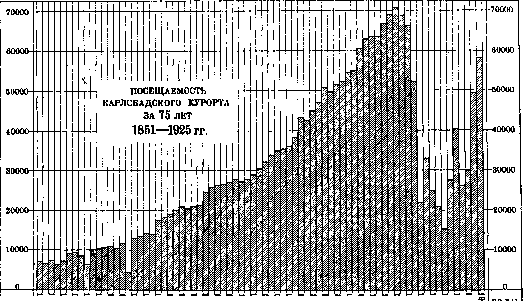
OOOOOOOTOOOOOOOOO0OOOOOOOOOOOOOOOOOOOEOOOOOOOOOOOSX> 00 . SO OSSSSOYFOOYOOSCH r~, W Ie", i4 *&, h*. *-*, P1. |*ch <° r*I and P* 1*4 "o, r*, ,*-*: .o» M 1°, !-, fi-' fr! ~1 № к i05, P^ 1*4 5°. i-*, ,й-', РУ г-1! ,i r*, W P1 Sanitary technology is also extremely high and is the strongest point of German spas. At balneological spas, mineral baths are installed in all major hotels and sanatoriums. The water supply is arranged according to a dual system: one for household purposes, the other-for drinking from springs. Sewerage is also separate: for household and for atmospheric waters; on some spas there is also a third-for spent mineral waters. Pavement of streets provides for the elimination of noise and dust (asphalt or compacted highways). Garbage is removed and used for leveling the terrain and for construction purposes. On spas, trams are usually replaced by quieter buses or carriages. Bottling of mineral sources is almost everywhere mechanized, which leads to improved sealing and preservation of water and excludes any possibility of its contamination. Captures are made either in the form of drilling wells of various depths, making it possible to obtain water of different temperatures, which eliminates the need for heating for drinking or cooling for baths, or in the form of wells. Water piping is done with iron pipes, and sulfur water (Aachen)-with lead. Drinking halls are arranged depending on the height of the emergence of mineral water. Heating of drinking water (where required) is done with the help of a closed vessel with circulating hot water. Balneological institutions are usually 2- and 3-story wooden buildings. To reduce costs, mud is preserved for the same patient for 3-5 procedures. Supply of mineral water to upper floors is done with pumps. On some spas, the thermal economy is served by electric heat and power plants. At balneological institutions, there are usually no doctors; all procedures are dispensed according to prescriptions, as in pharmacies.-The medical part at spas, despite its great practical level, is not organized according to a general plan and system and is not regulated by any scientific bodies. All treatment of patients is concentrated in the hands of private practicing physicians. On many spas, procedures are dispensed without medical prescription, which is not allowed only in the case of potent procedures (mud, carbonic baths). Dietetics in spas consists in establishing individual diets in boarding houses and sanatoriums. On almost all spas where patients with gastrointestinal and metabolic diseases are treated, there is a systematic therapeutic diet in all restaurants. The latter are united by a general regulation and have numbered diets corresponding to types of diseases, strictly mandatory for patients. On German spas, there is an established regimen for patients (in contrast to French spas). The duration of treatment varies at different spas. At the favorite spas of the aristocracy and bourgeoisie (like Baden-Baden or Wiesbaden), the length of stay of visitors, coming for rest and entertainment, is limited to 1-2 weeks. Advertising is concentrated at spas in special advertising services (Verkehrsbureau) and is carried out in the form of various publications in newspapers and magazines, issuing brochures, printing feuilletons in illustrated magazines, printing guidebooks, posters and written communications in travel bureaus, clubs. private individuals and specialist physicians. For advertising and commercial purposes, individual spas unite into powerful unions. In American cinemas, films from German spas are shown. A significant role in advertising is played by periodically published spa almanacs for physicians and spa calendars. The social composition of spa visitors is evident from the following table (Bacherer) on Baden-Baden for 1911-13. Members of ruling circles . . 47.5%
Architects, in- dented circles . . 47,5%
Lawyers, notaries- dlees, pensio
Without profession . . .6.0% Landowners, forest
Clerks.....3.5%, merchants.... 6.0% Income from foreigners constitutes a significant part of the budget of spas in Germany, although considerably less than in Italy or Switzerland. Income from visitors in Baden-Baden for 1907 amounted to 37.5 million marks. Of this sum, at least 10 million went to improving agriculture. The influx of foreigners also influences the increase in profitability of transportation and postal institutions.-After the world war, the spas of Germany experienced the consequences of economic and social upheavals. In connection with the strengthening of the influence of trade unions, spas began to pay more attention to the treatment of insured persons, for whom a large number of spa resorts have been allocated. In recent years, insurance funds have included spa treatment in the range of methods for treating insured persons, recognizing that despite the high cost, spa treatment has its economic advantages. The duration of spa treatment for insured persons is usually longer than for private individuals (30-35 days instead of 20). For tuberculosis and surgical patients, the duration is even longer. Insured persons are treated in special sanatoriums of insurance funds or in private sanatoriums in rented beds. The number of persons sent annually to spas amounts to 60,000. At present, spas are being used by insurance organizations to combat rheumatism at the initiative of the German section of the international league. Insurance funds have a total of 345 treatment institutions with 20,029 beds. For war victims, there are 8 treatment institutions with 708 beds and 563 places in private institutions. . France.- In total, 140 spas are registered in France; of these, 68 are balneological and 5 are mud baths. The state owns only a small part of the spa wealth, some belong to municipalities, and the larger part is leased to private joint-stock companies. Of the few state-owned spas, only Aix-les-Bains is directly managed by the state. At the head of the spa administrations is a director (usually not a doctor, but an engineer or businessman). The central state apparatus for French spas is a small bureau of 2-3 employees in the ministry of labor and hygiene. The state is concerned only with general regulation and the issuance of permits for the operation of spas. The main legislative acts of recent times are the laws of 1919 and 1923, which establish the procedure for declaring a locality a balneological or climatic station and issuing permits for the operation of mineral springs, bottling of mineral waters, the rate of the spa tax and the procedure for its expenditure. On each spa, by decree of the government, a bureau of balneological and climatic industry (Chambre d' Industrie thermale et climatique) is established, discussing issues of improvement, budgets, rules regarding the spa tax, etc. Members of the chamber include doctors, pharmacists, owners of hotels, boarding houses, restaurants, as well as heads of balneological institutions and representatives of corresponding public organizations. In addition, by appointment to the chamber come the prefect, the district mining engineer, the sanitary doctor, the mayor of the municipality and 5 members appointed by the prefect. At the ministry of hygiene, there works a special central permanent commission on balneological and climatic spas as a consultative body. The development of spas in France is closely connected with the development of tourism (up to 1 million foreign tourists per year), the work of which is united by several large organizations. State income from spas amounts to approximately 10 billion francs per year; the same is the income from tourism. On all spas, a spa tax and an additional special tax (taxe de sejour and taxe additionnelle) are levied from visitors.-Sanatoriums hardly exist; there are rest homes under medical supervision and 'regime houses' (maisons de regime), i.e. hotels with dietary food. Sanatoriums--almost exclusively on mountain spas, mainly for tuberculosis patients. In 1925, there were 75 sanatoriums in France with 6,600 beds, of which 18 were state-type sanatoriums with 2,600 beds, 14 sanatoriums equated to state ones with 1,470 beds, 24 popular private-type ones with 1,730 beds and 18 private sanatoriums with 750 beds. At the head of the sanatorium is a director-physician, in charge of both the therapeutic and administrative parts and not engaged in private practice. His main assistants are the manager of the household and the head supervisor. The director is responsible to the council of popular sanatoriums. In Bigny for 350 beds there is a staff of 106 people; of them 5 doctors, 22 nurses. Usually for 150 beds the staff consists of 33 people, not counting the staff for lighting and laundry. The patient's regime takes into account the individuality of patients: e.g. some patients spend the whole day in bed or in the room, others get up only at 12 o'clock in the day, etc. The normal regime is as follows: 71/2 a.m. rising, 8 a.m. breakfast, until 101/4 a.m. walk, 103/4-111/2 a.m. lying on the gallery, until 113/4 a.m. walk, until 12 p.m. rest on the gallery, 12 p.m. lunch, walk, 2-4 p.m. hours of silence (lying on the gallery), 4 p.m. tea, walk, 53/4-63/4 p.m. lying, 7 p.m. dinner, 8-9 p.m. rest, entertainment, 93/4 p.m. lights out. In France there are five famous mud spas (Dax, Saint-Amand, Balaruc, Barbotan and Préchac). All muds are of mixed origin. The temperature of the mud is often maintained by the natural temperature of the source waters. In Saint-Amand, mud procedures are taken for 2-3 hours with the patient immersed in mud up to the armpits in special boxes under the floor. During the procedure, the patient takes a light breakfast and drinks a large amount of mineral water to quench strong thirst. Italy possesses a large number of spas of climatic, drinking and mud types. The post-war powerful development of the spa business gives it the significance of an outstanding branch of the national economy. The economic development of spas is strongly stimulated by the enormous growth of tourism, closely connected with spa construction (see the general part). The state owns a small number of spas, the rest are under the jurisdiction of municipalities and private societies. However, the state subsidizes spa construction, collecting in repayment of subsidies deductions from the profits of spas. In sanitary-hygienic terms, all spas are subordinate to the health department of the ministry of the interior, in financial terms--to the ministry of finance. State spas, leasing out their wealth vhave a special supervisory committee. In addition, there are permanent medical inspectors. Directors of spas are appointed by entrepreneurs or concessionaires. Income from spas consists of a tax on stay (spa tax), income from balneological institutions, casinos, roulette and the sale of waters and salts. In case of deficit, it falls on the entrepreneur. Spa legislation regulates issues of opening new spas, their management, sanitary condition, export and spa taxes. It should be noted the measures to protect spas from infection with tuberculosis patients, whose stay in spas is prohibited. Treatment of workers is possible mainly at the expense of trade unions, which pay the corresponding fee for spa treatment directly to the spas (approximately 15 lire per day). In addition, there are state treatment institutions on spas (a hotel together with balneotherapy installations) for soldiers, officers and civil servants. These institutions are managed and maintained by the state itself. Only doctors receive free treatment.-Statistics of attendance at individual spas show a progressive growth since 1919, a very large provision of inhalations and aerosols, widespread use of mud procedures and a method not used by us of irrigations.--The sanitary condition of spas reaches a great height after the war. Sanitation is managed by city organizations, and on state spas, of which there are few [e.g. in Salsomaggiore], there is a sanitary council of 65 doctors, on other spas--special sanitary doctors. Where there is a special sanitary director of the spa, he manages all the technical personnel, implements treatment methods, trains junior and middle staff during the off-season. At all balneological institutions there is permanent duty of doctors (in contrast to German spas).-Balneological institutions usually combine all types of spa treatment in one building, and are often connected with the hotels themselves for convenience and to save the strength of the patient. Mud treatment is most often carried out in the form of local packs in separate cabins followed by washing with plain or mineral water. Due to the limited mud supplies, general mud treatment is almost never used; also the medical indications are significantly limited compared to ours. Used mud is regenerated for 2-3 years in lakes or special reservoirs under brine. On some spas, artificial mud is extracted from the soil near mineral springs or from clay by treating it with mineral water. The export of volcanic mud is widely developed, used in Western countries for so-called fangotherapy in many cities. A special type of treatment, unknown in other countries, is represented by natural grottoes converted into inhalation rooms (in Monsummano, Bormio). Treatment with warm vapors of mineral sources in these grottoes is used in diseases of metabolism, rheumatism, nephritis. The session lasts 1 hour, and its main purpose is mainly enhanced sweating.
In addition, there are also dry grottoes with radioactive emanation (e.g., in Agnano near Naples). Irrigation of internal cavities with mineral springs and iontophoresis through mud are also widely used. - The duration of treatment is from 2 to 4 weeks with repetition in the same year (spring and autumn). Procedures are prescribed very actively: baths daily, and sometimes even twice a day. The short duration of the course allows for increased capacity of spas. The export of mineral waters is mechanized; in addition to waters, various salts and cakes are exported. Czechoslovakia possesses a large number of spas (240), of which the main group - the Bohemian spas, enjoying world fame [Karlsbad (Karlovy Vary), Marienbad (Marianske Lazne) and Franzensbad (Frantiskovy Lazne)] - came into its possession under the Treaty of Versailles. These spas are partly managed by the state itself and partly owned by municipalities. Most spa institutions are leased. The aforementioned group of spas has a large number of mineral springs of almost all varieties: bitter, Glauber's salt, saline-alkaline, ferruginous, carbonic-earth with a variety of temperatures from 10° to 65°. Franzensbad has peat muds. Mud therapy is applied at all three spas. Among the baths in Marienbad, the natural carbonic baths are famous; in Karlsbad, artificial baths are famous, prepared by saturating fresh water with CO2, extracted from the Sprudel spring. Physiotherapy is represented in all its forms. In recent years, in Karlsbad, dry carbonic baths (exposure to the released gaseous CO2) have been used in a specially built bathhouse, with devices to protect the respiratory organs from the effects of the gas. Among other spas of Czechoslovakia, Joachimsthal (Jachymov) with strong radioactive sources and Teplitz-Schönau (Teplice Sanov), one of the oldest spas, known for its saline-alkaline hot springs of high radioactivity, should be noted. England has quite a large number of balneological and seaside resorts and climatic stations, in large part well-equipped and possessing excellent therapeutic factors, but nevertheless, according to the long-established tradition in England, most patients belonging to the wealthy classes are treated not on English spas, but on the continent. There are up to 22 balneological spas ('spas') in England. The main ones are as follows. 1. Bath (the famous Thermae Britannicae of ancient writers, also Aquae Calidae), the first spa hospital of which was built as early as the 6th century; it has three springs with a predominant content of calcium and sodium sulfate. Temperature from 40° to 45°. 2. Buxton, also known to the Romans (Aquae), has 9 springs of weak mineralization, but with a high gas content (nitrogen 59.8% and CO2 22.2%) and therapeutic mud. 3. Cheltenham has 4 springs of the saline-alkaline water type. 4. Droitwich has powerful brine baths (content of dry residue up to 29%, mainly NaCl), distinguished by significant radioactivity. 5. Harrogate, known as early as the 16th century and first described in detail in 1626. In 1925, a research department was established at the spa hospital. Of the 87 therapeutic springs of the resort, 16 are used as drinking waters. The springs are divided into saline-sulfur, saline-alkaline and ferruginous. 6. Leamington with 4 saline-sulfur springs, distinguished by their enormous flow and some radioactivity. 7. Llandrindod Wells with 12 springs belonging to three different types: weakly mineralized NaCl waters, weak saline-hydrogen sulfide and ferruginous-carbonic. 8. Strathpeffer, known since 1772, with cold springs containing a significant amount of hydrogen sulfide and calcium sulfate. It also has ferruginous-carbonic springs. 9. Woodhall with hypertonic bromo-iodide-saline waters. - Of the marine and climatic spas of England (there are over 100 of them), 20 are located on the northwestern coast of the islands, 30 on the southwestern, 13 on the southern, 10 on the southeastern, 20 on the eastern and about 10 inland. The spas of England are widely used for treating patients with rheumatism, which is widespread in Britain. Of particular interest is the rational system for selecting and treating insured patients, developed by the British Ministry of Health with the participation of trade unions. In large cities, selection points (Clearing Houses) have been established, where patients receive physiatric treatment on an outpatient or inpatient basis (in the so-called Physical Treatment Clinics) and, if necessary, are directed to spas - to spa hospitals (Spas Hospital), where their balneological treatment is connected with the preceding and subsequent treatment at their place of residence. Austria before the war had 294 spas, but after the Treaty of Versailles, very few remained (of which the most famous are the mountain-climatic spa Semmering and Baden with its weak hydrogen sulfide springs). The spa culture in Austria has a long history and high level, and the development of spas in many ways contributed to the general material prosperity of the country. Of the 294 spas of pre-war Austria (1912), 186 had their own water supply and only 43 used wells. Switzerland, thanks to its exceptional geographical conditions, possesses extraordinary wealth of climatic stations at various altitudes above sea level. The most famous are: Davos, Arosa, Leysin, Vevey, Territet, Saint-Moritz and many others. The main therapeutic factor is the climate with its exceptional conditions for natural helio- and aero-therapy. Thus, Davos - the world's tuberculosis station - in terms of its annual insolation occupies one of the first, if not the first, place among spas of the entire world. In addition to climatic spas, Switzerland has 74 balneological spas, of which 10 have warm springs with temperatures from 18° to 51°. In composition, these springs belong to the most diverse groups (cold, thermal, earthy, alkaline, saline-alkaline, sulfuric, saline, ferruginous, arsenical, iodide and bitter). The most famous are: Aigle, Bad Ragaz, Vals, Baden, and Tarasp. On 4 spas, mud and fango treatment is carried out (in Acquarossa, Andeer, Lave and Val Sinestra). In addition, Switzerland possesses world natural beauty, which attracts a huge number of foreign tourists to its spas. This factor to a large extent determines the economic well-being of the entire country. Spain has a small number of spas; among them are several drinking springs with saline and Glauber's hypertonic sources (Carabana, La Toya, Mediana, Rubinat, etc.). The spas belong to joint-stock companies and private individuals. - Hungary, which the world war cost a large part of its territory, has a limited number of spas within its present boundaries; of the 21, the following are known: the mud spa Balaton (Balaton) and Hunyadi-Janos (see) (Hunyadi-Janos) with its Glauber's mineral springs. Budapest possesses enormous natural healing powers, representing a rare combination of a well-equipped university city of exceptional beauty and centuries-old culture and a spa. Of the numerous springs of Budapest, the main group is on Margaret Island on the Danube, where bathhouses are built with the luxury of ancient Roman thermae. There is also the Budapest 'seaside' (Strand), representing a large flowing pond fed by the enormous flow of mineral springs and, in the design of its beach, resembling a seaside. Most of Hungary's spa wealth is exploited by joint-stock companies. The organization of the spa business is mainly aimed at the American demand. - Bulgaria is rich in therapeutic localities, of which there are 135 with various mineral springs. Some spas have many springs (in Kyustendil 40 springs, in Hisarya 19, etc.). Most of the springs are hot - up to 86°. The springs in Logodina are distinguished by high radioactivity (from 474x1010 to 568 x 1010 Curie). Among the seaside spas are known: Varna, Burgas, Anhialo, Mesembria. - The other countries of Europe do not present special interest from the point of view of the state and organization of the spa business, although some of them (Poland, Yugoslavia, Greece) possess great natural wealth. Science at the spas of Western Europe does not play a proper guiding role. There is no planned development of spa issues, and with the exception of France and Germany, the scientific basis of the spa business is extremely insufficient. As a result, scientific work, despite the participation of outstanding individual researchers, lacks the necessary effectiveness. Since western spas are accessible mainly to the wealthy classes, balneology has a pronounced class character and almost completely ignores the issues of spa assistance to the working population. A unique view of the scientific significance of balneology is vividly reflected in the words of the leading German balneologist, Prof.
Ditrikh: 'Our spas could not have withstood the war and the difficult post-war period to the extent that they did if, in contrast to other countries, they did not have a tremendous superiority in the scientific sphere.' Economic incentives for scientific activities and the influence of competition are characteristic of all other Western countries and determine the nature of scientific work at foreign spas. Scientific societies, despite their high level and great importance in the history of spa affairs, are detached from practical life. Among individual societies, the following should be noted: 1) International Society of Medical Hydrology, founded after the world war, unites balneologists from 35 countries, and has had representatives from the USSR since 1928. 2) German Balneological Society (Deutsche Balneologische Gesellschaft), in 1878 transformed from the spa section of the Berlin Medical Society. 3) German Thalassotherapy Society (since 1911). 4) German Society of People's Spas (Deutsche Gesellschaft fur Volksbader). 5) German Commission for Health Measures at Spas (Deutscher Ausschuss fur diegesundheitlichenEinrichtungen indenKur- und Badeorten). 6) Association for the Research and Observation of Mineral Springs (Vereinigung fur Heilquellenforschung und Beobachtung). In Italy - Associazio-ne medica italiana di Idrologia e di Climato-logia. The German Balneological Society has its own scientific center (Zen-tralstelle fur Balneologie), whose task is to unite all branches of medical knowledge, natural-historical sciences, and technical disciplines for general research work in the field of spa construction. This organization, in the view of its founders, should prepare the creation of a central balneological institute, which would reflect all aspects of spa affairs. International spa congresses have their beginning since 1886. The first congress on hydrology and balneology was held in Biarritz and was devoted to problems of hydrology (geology, physics, chemistry, balneotechnics, balneodynamics, balneotherapy) and general and medical climatology; the decision made in Biarritz to convene international congresses every 3 years was not fulfilled (the II congress was held in Liege in 1905, the III in Paris in 1910, the IV in Nice in 1913). The last congress, devoted mainly to questions of climatology, was held in 1927 in Lyon with the participation of representatives of Soviet balneology. The annual meetings of the International Society of Medical Hydrology (Annual Meeting) and the German balneological congresses, held annually at the main spas of the continent, play an outstanding role in the life of spas. Teaching of balneology is carried out systematically only in France, where in 1922 chairs of balneology were established in Bordeaux and Toulouse, and since 1927 they have been introduced in all universities (even in Algeria). Each chair serves scientifically the nearest spas. These chairs do not have their own clinics. In addition, in Paris at the College de France there exists an institute of balneology and climatology. The institute has 5 departments: chemical, physical, geological, climatological, and clinical. Theoretical laboratories are better represented than others. The institute annually organizes 3-month courses for physicians and has its own publication (Annals of the Institute). Questions of spa affairs are also dealt with by the Medical Academy through a special commission on mineral waters, which gives opinions on the use of new sources. Scientific reports by spa physicians are sent to the academy for appropriate evaluation. Excursions to spas are arranged for medical students in their last 2 years, organized by the balneological institute and medical faculties and subsidized by the National Federation and the spas themselves. In Germany, teaching of balneology in universities does not exist. Advanced courses in spa disciplines are held annually for physicians with the participation of leading scientists. The programs of courses are usually developed by the spa where the courses are held and play to some extent an advertising role for that spa. In recent years, a number of German balneologists (Dietrich, Beneke, Hirsch, etc.) have raised the question of organizing balneological academies on spas after the model of institutes in the USSR. In recent years, attention has been paid to the training of culinary personnel for spa sanatoriums. The main role in this matter belongs to the Lette-Verein in Berlin and the dietary department of Professor Brauer in Hamburg. In Italy, teaching of balneology is included in the course of pharmacology; in addition, regular advanced courses for physicians are held at various universities. Scientific institutes in the West are few in number, have a local character, and do not adequately cover the problems of modern balneology. Among them should be mentioned the Institut fur Balneologie und Stoffwechselkrankheiten in Wiesbaden, the scientific laboratories of Dr. Fresenius in Wiesbaden, Hertl in Kissingen, Professor Weber in Nauheim, and Professor Zerkendorfer in Marien-bad (with a branch department in Franzens-bade). A project is being developed for the organization of a state balneological institute in Prague with a clinic, outpatient department, laboratories, lecture hall, and dietary dining room, as well as a project for the organization of an international balneological academy, proposed in Franzensbade. Spas for the treatment of children. The treatment of children and adolescents at spas has not yet received the necessary development and represents a very little studied problem both in our country and in the West. The most studied area of children's spa therapy is climate-thalassotherapy, the beginning of which was laid (according to Haeberlin) by the English doctor Russel (Richard Russel), who received the name 'in-venteur de la mer'. At his initiative, the first children's seaside sanatorium was founded in England in Margate (1792) - 'The royal sea bathing Infirmary for the relief of the scrophulous'. Following that, children's seaside stations for the treatment of scrofula were founded in Italy (Giuseppe Barrelai), in France (Armaingaud) and in other countries. Since the end of the 19th century, the preventive and therapeutic value of seaside climate stations in the fight against children's tuberculosis has been increasing more and more. This is facilitated by the work of Ewald, Haeberlin, etc. in the West, and of Rauchfus, Vyalyaminov, Bobrov in our country. Before the war, the number of special children's institutions reached significant figures: in France - 52 with the number of beds operating year-round over 6,000, in Italy - 43 (20 on the Adriatic and 23 on the Mediterranean Sea), in Germany - 50 with the number of beds over 4,100, etc. Pre-war Russia had 14 seaside sanatoriums. The first seaside sanatoriums for children were established in Oranienbaum (1872), by Rauchfus in Gatchina (1883), by Vyalyaminov in Vindava (1900), and by Bobrov in Alupka (1902). In the pre-war period, in addition to the sanatoriums mentioned, there were children's summer sanatoriums mainly on the Riga coast (Assern, Bilderinghof, Neibad), near the Gulf of Finland (Sestroretsk, Gogsand). Balneological treatment (limanotherapy) was carried out in the children's sanatorium on the Khadzhibey estuary (Odessa) and in Zheleznovodsk. The question of spa assistance to children in the USSR was first raised at the V Spa Congress in 1925 in relation to spa treatment of children's tuberculosis. The congress recommended the following as the most suitable spas: Yevpatoria, Anapa, Gelendzhik, Kabardinka, and the Southern coast of Crimea. Yevpatoria gained the greatest popularity as a children's spa, possessing a combination of favorable climatic data, an extensive sandy beach, and a gentle sea bottom. Among individual forms of diseases, Yevpatoria is indicated above all for children suffering from chronic infectious diseases, mainly tuberculosis of various organs and tissues (in the stage of stable course of the process or somewhat disturbed), for children recovering from acute diseases, especially of the respiratory tract, and suffering from metabolic disorders - rickets, uric diathesis (Medovikov). Due to the presence of liman and mud therapy in Yevpatoria, neuralgia and chronic rheumatism are also indicated. In 1929, on the coast of the Black Sea, there were 14 children's sanatoriums and health resorts: in Yevpatoria - 6, in Yalta - 2, in Alupka - 1, in Gurzuf - 2, in Anapa - 1, in Gelendzhik - 2. Among them, the sanatorium named after Professor Bobrov in Alupka, operating year-round, represents a model institution for children from 3 to 12 years old suffering from tuberculosis of bones, joints, peritoneum, lymphatic and bronchial glands. A model summer-type sanatorium is the sanatorium named after Krupskaya in Yevpatoria for children with bone, joint, and glandular tuberculosis. At the sanatorium there is a specially equipped clinical beach for the daytime stay of outpatients (for 100 children - 2 doctors, 2 sisters, and 2 physical education instructors-educators) with pavilions for heliotherapy and 10 baths for treatment with sea baths of natural and artificial heating. A special type is represented by the camp-sanatorium 'Artek' named after Z. P. Solovyov for young pioneers, founded by ROKK for 200 people (near Gurzuf). Sanatoriums operate from May 1-15 to October 1-30. Operating year-round is the children's sanatorium in Buzovny on the shore of the Caspian Sea (northern part of the Apsheron Peninsula) for children suffering from bone and glandular tuberculosis.
With the still insufficiently developed network of sanatoriums for various forms of children's tuberculosis in the USSR spas, the organized use of mud therapy, mineral waters, carbonic and hydrogen sulfide baths, high-altitude climate has not yet been established, and there are no developed indications and contraindications. Based on clinical observations conducted in Zheleznovodsk in recent years (since 1926, over 800 children have been treated in Zheleznovodsk each summer), balneological treatment gives children very good results in diseases of the kidneys and renal pelvis, diatheses, and colitis. Despite the extremely insufficient clinical data, modern pediatrics persistently raises the question of the importance of balneotherapy for children with rheumatism, rickets, anemia, suffering from diseases of the gastrointestinal tract, exudative skin rashes, neuritis, etc. The task of providing children and adolescents with spa treatment constitutes one of the most pressing problems of spa affairs in the USSR.
Related articles
Cite this page
“Spas.” Soviet Medical Encyclopedia. English translation of Bolshaya Meditsinskaya Entsiklopediya, 1st ed. (Moscow, 1928–1936), ed. N. A. Semashko. https://sovietmedicalencyclopedia.pages.dev/article/spas/