Mud Therapy
Historical document, translated for reference. It reflects medical knowledge of the 1920s–30s and is not medical advice.
Summary
This article from the 1928–1936 Soviet Great Medical Encyclopedia details the historical, physiological, and clinical aspects of pelotherapy (mud therapy). It discusses the physical and chemical properties of therapeutic mud, the mechanisms of the "bathing reaction," and guidelines for patient selection in treating chronic inflammatory conditions.
Encyclopedia article (1928–1936)
MUD THERAPY, the use of therapeutic mud for the therapeutic effect on the organism, is one of the most potent balneotherapeutic methods. The use of mud for therapeutic purposes was known as a folk remedy back in antiquity. During the Middle Ages, mud therapy was quite widely used by doctors in Italy. By the 18th century, mud therapy began to spread in France, Germany, and other countries of Western Europe. In Russia, the first information about the use of mud therapy dates back to the time of the Tatar yoke. The first scientific works in the field of mud therapy, both in Russia and abroad, date back to the first half of the 19th century; more significant development of these issues began from the end of the 19th century. The physiological action of therapeutic mud is determined by its physical and chemical properties. Having a framework of the smallest insoluble substances—clay, sand, shells, and siliceous remains of diatom algae—and impregnated with salts, organic and inorganic acids, gases (H2S, NH3), amine bases, etc., therapeutic mud, when used in the form of heated baths, has an irritating effect on the skin and its nerve endings. The absorption of chemical products by intact skin is currently denied, but some speak of the possibility of gaseous products penetrating through the skin from a mud bath into the organism. Some researchers are also inclined to attribute physiological activity to the adsorption properties of mud and its osmotic pressure. The mechanical influence of mud baths comes down, firstly, to their massaging effect on the surface of the body and especially on the capillaries, and secondly, the resistance offered by a mud bath (which is 356 times greater than in a water bath) can cause the expenditure of large amounts of energy (during breathing), which is reflected in metabolic processes. Thermal properties of mud baths. The reduced heat capacity of mud, the reduced radiation of the heat imparted to it, and especially the reduced heat convection of mud baths, caused by the difficult movement of mud particles due to its high colloidality—all this, taken together, creates conditions for the extremely slow cooling of the heated mud mass and a prolonged effect on the patient's organism of a high temperature that changes little. Unlike water, in which new layers constantly come into contact with the skin, summing up and intensifying thermal irritations, therapeutic mud evenly imparts its temperature to the surface of the body and exerts a gradual thermal irritation on it, which is further facilitated by the relative constancy of the mud's temperature and the tight adherence of the latter to the skin surface, filling all its depressions and irregularities. Some are inclined to attribute the physiological action to the electromotive forces of the mud bath, which, however, are very insignificant. The radioactivity of most therapeutic muds is also insignificant, but some still attribute therapeutic significance to it. Proponents of solar heating of mud consider the very irradiation of mud by the sun as a factor that enhances its therapeutic value. Treatment with mud baths brings the organism out of a state of relative equilibrium and sharply affects the function of all its systems and tissues. Under the influence of mud therapy, changes occur in the patient's sensations and condition. Subjectively, the patient feels weakness, fatigue, malaise, and sometimes palpitations. Objectively, an increase in body temperature of 0.5–1.5° is noted, significant changes occur in the work of the cardiovascular system (dilation of skin vessels, increased pulse, change in blood pressure, etc.), breathing becomes more frequent, and sweating increases. Mud therapy causes a change in the tone of the autonomic nervous system, accompanied by changes in the morphology and biochemistry of the blood, similar to the same changes during parenteral protein therapy. An intensification of metabolism is also observed, expressed in increased excretion of nitrogenous metabolism products. An enhancing effect on the gas exchange of the blood and on the content of enzymes in it is noted. Significant changes also occur under the influence of a mud bath in the state of painful foci. The course of these changes can be traced when these foci are accessible to direct observation, for example, in bone-joint diseases with fistulas or in diseases of the female reproductive sphere. In the first case, hyperemia of the affected tissue is observed, an increase in the discharge from the fistulas, which initially has a clearly purulent character, and revitalization of granulations. Subsequently, the discharge from the fistulas takes on a serous character and gradually decreases, scarring of the fistula occurs, and the infiltrate in the surrounding tissue is resorbed. In the process of treatment with mud baths, the appearance of a so-called "bathing reaction" in the patient is often observed, which is clinically expressed in the form of general and local symptoms. The "general reaction" is expressed by the appearance of general weakness, fatigue, drowsiness or excitability, irritability, insomnia, along with symptoms from the cardiovascular system. The "local, or focal, reaction" is characterized by an intensification of pains that had previously subsided in the diseased organ, to which is often added its swelling, an increase in temperature, redness, and the associated impairment of function. An exacerbation of a long-dormant tuberculous focus in the lungs must also be considered as a focal reaction, the possibility of which must be kept in mind during mud therapy. Until recent years, the majority of authors considered the presence of a clearly expressed focal reaction a necessary condition for a favorable therapeutic effect of mud therapy. In recent years, a number of authoritative representatives of balneotherapy have expressed doubts or even directly denied the absolute necessity of a reaction in a clearly expressed clinical form to achieve a good therapeutic effect. At present, it is advised to avoid sharp reactions. The mechanism of the balneodynamics of a mud bath, as is generally believed recently, is to a large extent similar to the mechanism of nonspecific protein therapy, leading to a restructuring of the organism (Umstimmung). This similarity is motivated by the similarity of reactions to both types of treatment (general and local reaction), the presence of negative and positive phases, and hematological data. In 1912, the Kemmern school (Sadikov, Lozinsky) put forward a hypothesis explaining the mechanism of action of a mud bath by "balneological intoxication" of the organism through the formation of "kenotoxins" in it and subsequent "activation of protoplasm" in the sense of Weichardt. Due to the lack of proof of the existence of kenotoxins, a number of balneologists believe that the irritants causing the balneological reaction are protein products, either entering the blood from painful foci or arising in the skin from the breakdown of protein substances under the influence of a mud bath. In the very recent past, a hypothesis has been put forward that changes in the metabolism and hemodynamics of the organism are a consequence of a change in the tone of the autonomic nervous system under the influence of irritation of skin nerve endings in a mud bath. Some also attach importance to changes in the metabolic and endocrine functions of the skin during mud baths. All authors agree that the changes in metabolism caused in one way or another, especially in the painful focus, cause an exacerbation of sluggish chronic processes and their subsequent liquidation through the strengthening of the body's protective mechanisms. The improvement of blood and lymph circulation in the painful focus undoubtedly plays a significant role here. From the data and views set forth above, the following basic principles for the selection of patients for mud therapy follow. Mud therapy should be used in those cases of inflammatory diseases where it is possible, by increasing the body's protective forces and its sensitivity to the pathogenic agent, to prevent a subacute process from passing into a chronic state or, in the case of a chronic stage, to require it to be transferred back to a subacute form. As for the use of mud therapy in patients who have just recovered from acute diseases, one should not delay too long with therapeutic intervention here. A condition for the use of mud therapy in such cases is a drop in temperature and a good general condition of the patient. One should not wait until the proliferating connective tissue densifies and produces constricting fibrous scars. One cannot count on the resorption of persistent fibrous tissue and the restoration of specific parenchyma. Improvement of the process in such cases can only occur through the resorption of tissue elements still capable of regression and through the improvement of blood circulation and nutrition conditions in the painful focus. Persistent degenerative atrophic processes, bone ankyloses, accompanied by a loss of the reactive capacity of the tissue, are hopeless and therefore not subject to mud therapy. On the other hand, when referring a patient for mud therapy, it is necessary to take into account their strength from the point of view of those reactions of the organism that are associated with the use of this therapeutic method. First of all, general phenomena from the cardiovascular and nervous systems are of importance. The latter, associated with the development of a focal reaction of a certain intensity, often force one, in the presence of heart weakness and great excitability of the nervous system in the patient, to refuse to prescribe mud therapy.
However, a whole series of works devoted to the study of the focal reaction and revealing that the latter is not mandatory in a clearly expressed clinical form raises the question of sparing the patient's strength more and, in connection with this, conducting treatment at a milder pace (the "mitigated method"). Summarizing the general principles of indications and contraindications, they can be briefly formulated as follows. Diseases of the musculoskeletal system. Indications: afflictions of bones, joints, and muscles of a traumatic, toxic, and infectious nature (arthritis, contusions, distortions, bursitis, contractures, periostitis,
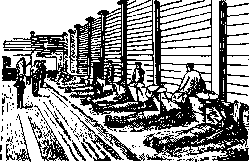
Figure 1. General mud baths.
bone callus). Contraindications: ankylosis of joints, deforming arthrosis, tuberculosis of bones and joints (IV Resort Congress). Afflictions of the female and male genital sphere. Indications: inflammation of the pelvic connective tissue, peritoneum, cicatricial displacement of the uterus, metritis, endometritis, oophoritis, salpingitis, and inflammation of the prostate and testicles. Contraindications: myomas, fibromyomas, infantile uterus, fibrous uterus, persistent cicatricial tissue changes. Afflictions of the nervous system. Indications: neuritis, perineuritis, plexitis, radiculitis, meningitis, meningomyelitis of a traumatic, toxic, and infectious nature, initial stages of tabes dorsalis, organic diseases of the brain and spinal cord after acute infections of no more than six months' duration (encephalitis and poliomyelitis). Contraindications: muscular dystrophies, myelitis with the character of softening, hemi-, mono-, and paraplegia of vascular origin, multiple, combined, and lateral sclerosis, progressive paralysis. Also indicated for Mud Therapy are the remnants of inflammatory processes in cavities: abdominal, thoracic—as a consequence of infection (except tuberculosis) and trauma, as well as operations; afflictions
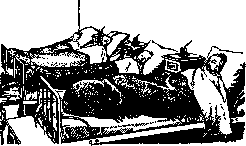
Figure 2. "Sweat room" in Saki.
of the eyes (parenchymatous inflammation of the cornea, iris, sclera, and choroid); afflictions of the ears (otosclerosis); metabolic diseases (uric acid diathesis). General contraindications: diseases in the acute period accompanied by elevated temperature, heart lesions (endocarditis, myocarditis) in the stage of decompensation, uncompensated chronic lung afflictions, especially with a tendency to hemoptysis, sharply expressed arteriosclerosis, sharply expressed neuroses (hysteria, neurasthenia, traumatic neurosis) on a degenerative basis, epilepsy, sharply expressed malnutrition, malignant neoplasms. Normal pregnancy up to six months and compensated heart defects are not contraindications for mud therapy. Methodology of Mud Therapy: mud baths are used with natural (solar) and artificial (water, steam) heating (see Mud Therapy Facilities). Mud baths of solar heating are used in Crimea (Saki, Maynaki, Chokrak) and Berdyansk. On wooden platforms (facing east, northeast), mud "medallions" 10-12 cm thick are laid out, which are subjected to insolation. The medallions are prepared to the height of a person for general baths and in correspondingly smaller sizes for local baths. When the mud of the medallion reaches the required temperature (47-50° in the upper layer), the "smearers" quickly smear the patient being placed in the medallion from all sides (see Figure 1) or a specific part of their body. Upon completion of the procedure (after 20-30 minutes), the patient is freed from the mud, washed under a shower or in a bath of lake water (brine), and sent to the sweat room, where they undergo a sweating procedure for 1/2-1 hour (see Figure 2). Mud procedures of artificial heating are used in the form of general or local mud baths. General mud baths are used at a temperature of 37-42° and usually alternate with brine baths or rest days. The course of treatment consists of 10-15 mud baths. At the beginning and end of the treatment, 2-3 "entry" and "exit" brine or mineral baths are given (bath temperature 35-37°). "Entry" and "exit" baths are also prescribed when treating with natural heating baths. The duration of the course, the number of baths, as well as the duration of an individual bath, vary at different resorts
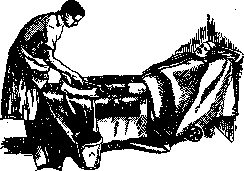
Figure 3. Local mud compresses.
depending on the empirically established scheme. Recently, the development of issues of "standardization" on an experimental basis has been underway (VI Scientific-Resort Congress). Local mud procedures of artificial heating are used either in special small baths or on a couch or table, where the diseased part of the body is smeared from all sides with mud and wrapped sequentially in a sheet, oilcloth, and wool blanket (see Figures 3 and 4). Sometimes, to maintain the temperature of the mud, the diseased part of the body, smeared with mud, is subjected to the action of a local electric light bath; sometimes, as for example in Staraya Russa, Mud Therapy is used in an apparatus, i.e., immersion of the diseased limb in a trough-shaped vessel filled with mud, in the walls of which hot water circulates. The temperature of the mud is 50-55°. Recently, in addition to external Mud Therapy, intravaginal and intrarectal Mud Therapy has been widely practiced, as well as mud ion therapy, carried out by passing a galvanic current through the mud applied to the diseased part of the body (see Figure 5). In some resorts, combined treatment with mud and protein- and auto-therapy has been used in recent years. This method is prompted by the desire to enhance the therapeutic effect with the combined use of these types of therapy. In connection with changes in the view on the significance of the bathing reaction, the aforementioned so-called "mitigated" method of Mud Therapy has begun to be used at some resorts, consisting of prescribing
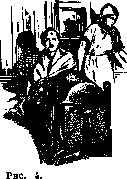
Local mud baths.
baths of a lower temperature than usual—35-36-37°. These baths produce a more gentle reactive effect. At the present time
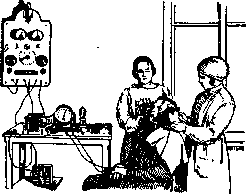
Figure 5. Mud therapy with ion therapy.
Mud Therapy is used not only at mud resorts (see Mud, Mud Therapy Facilities) but also in many non-resort physical therapy institutions. In a non-resort setting, imported silt mud is usually used, and Mud Therapy is carried out in the form of local procedures, the technique of application of which does not differ from that at resorts. Experience has shown that for a number of diseases, non-resort Mud Therapy in the form of mud applications yields positive results and is justified by economic and organizational considerations.
Related articles
Mentioned in
Cite this page
“Mud Therapy.” Soviet Medical Encyclopedia. English translation of Bolshaya Meditsinskaya Entsiklopediya, 1st ed. (Moscow, 1928–1936), ed. N. A. Semashko. https://sovietmedicalencyclopedia.pages.dev/article/mud-therapy/