Salpingitis
Historical document, translated for reference. It reflects medical knowledge of the 1920s–30s and is not medical advice.
Summary
This article from the 1928–1936 Soviet Great Medical Encyclopedia defines salpingitis as the inflammation of the Fallopian tubes, typically caused by bacterial infection, trauma, or chemical irritation. It details the etiology, pathology, clinical symptoms, and complications of the disease, noting its high prevalence among women of reproductive age.
Encyclopedia article (1928–1936)
SALPINGITIS (from the Greek salpinx—tube), inflammation of the Fallopian tube; the disease is most often of bacterial origin; causes can also be of a mechanical nature—trauma, vigorous coitus, etc., as well as chemical—the entry of medicinal substances into the tubes during their introduction into the uterus (zinc chloride, silver nitrate, and especially often iodine). Salpingitis can be caused by thermal factors: cooling—bathing, cold douching (especially during menstruation), as well as overheating—diathermy, mud therapy. Women in the period of sexual maturity fall ill most often. According to various authors, the frequency of salpingitis accounts for up to 30% of all forms of female diseases (Amann, Heynemann, and others), i.e., salpingitis is the most common disease in women, especially in cities. In rural areas, due to the lower prevalence of gonorrhea, salpingitis is naturally also less common. Bacteriology. Salpingitis is most often caused by gonococci, less often by staphylococci and streptococci, and even less often by the tubercle bacillus (Dondy believes that tuberculous salpingitis occurs significantly more often than is assumed, namely from 3% to 12%). Significantly less often, the causative agent of salpingitis is the colon bacillus, Fraenkel's diplococcus, the influenza bacillus, and exclusively rarely are the tubes affected by actinomycosis, syphilis, or Eberth's bacillus. Goldstine, in 323 cases of salpingitis observed by him, established a gonococcal origin in 197, a puerperal cause in 43, and various origins in 86. The frequency of various bacterial forms of salpingitis fluctuates sharply depending on local living conditions. Thus, in Freiburg, Pankow observed tubal inflammation depending on gonorrhea in 43%, on tuberculosis in 22%, and of a streptococcal nature in 35%, whereas in Düsseldorf, gonorrhea was observed by the same author in 90% of cases. The methods of infection penetration into the tubes are diverse: gonorrheal infection most often spreads by the ascending route, in other words, it enters the tubes from the uterine cavity (although, on the other hand, thorough anatomical investigations by N. Z. Ivanov show that gonorrheal infection does not penetrate into the tubes along the mucous membranes from the endometrium, but through the paravaginal space, from the plexus paragenitalis). Tuberculous infection most often reaches the tubes via the hematogenous route, however, it can also develop here by the so-called descending route, passing into the tubes from the abdominal cavity from the lymph nodes of the mesentery and intestine. Septic infection is most often a consequence of past childbirth or abortion, passing into the tubes from the uterus, however, it often uses both blood and lymph vessels for its penetration into the tubes. With a prolonged course of salpingitis, bacteria often die and are not detected bacteriologically, especially with purulent accumulations in the tubes (the pus is sterile). In other cases, a secondary infection may join the primary one (for example, streptococci or staphylococci). A factor contributing to the disease is often the postpartum period. In septic postpartum diseases or diseases after an abortion, the infection easily penetrates into the tubes and gives rise to acute salpingitis. Sometimes the menstrual process can serve as a trigger for the spread of infection into the tubes (especially with gonorrheal infection). Pathological anatomy. Salpingitis can be very diverse depending on the pathogen, its virulence, and the degree of resistance of the organism, with changes ranging from microscopic to the formation of large tumors involving neighboring organs in the process. Gonorrheal and tuberculous salpingitis are more often bilateral. By localization, the process can be limited to one mucous membrane (salpingitis catarrhalis, endosalpingitis) or, more often, the muscular wall of the tube and the visceral peritoneum are also involved in the process. By course, the process can proceed acutely or chronically. Macroscopically, in acute inflammation, the process reduces to hyperemia, edematous swelling of the tissue, and abundant secretion: purulent—in purulent (phlegmonous) inflammation, and mucous—in catarrhal; sometimes the exudate can also be hemorrhagic. Under the microscope, in addition, infiltration of the tissue with round cells or purulent infiltrate is noted. The process can begin as catarrhal and then gradually turn into purulent. Characteristic of gonorrheal processes is an abundance of plasma cells in the infiltrate, and for specific inflammations (tuberculosis, syphilis, actinomycosis)—the formation of typical granulomas. Hypertrophied folds of the mucous membrane often fuse with each other, forming, as it were, separate cystic cavities (Martin's salpingitis pseudofollicularis cystica). Inflammatory processes often lead to the occlusion of the fimbrial end of the tube, after which inflammatory products, accumulating in the cavity of the tube, lead to the formation of retention saccular tumors, which, according to their contents, bear the names: sactosalpinx (s. pyosalpinx) purulenta, sactosalpinx serosa (s. hydrosalpinx), and haematosalpinx. The mucosa in the interstitial part of the tube swells during this and prevents the outflow of fluid into the uterine cavity. Since, with the accumulation of serous fluid, the swelling of the mucosa in the uterine part of the tube is not as great as in purulent processes, serous saccular tumors of the tubes can often periodically, under the influence of tubal contraction, empty into the uterus—hydrops tubae profluens. The muscular wall of the tube in most cases hypertrophies and can reach the thickness of a finger (s. productiva vegetans, s. hypertrophica, pyosalpingitis productiva, pachysalpingitis) and often becomes convoluted. Sometimes such hypertrophy occupies only the isthmic part of the tube (salpingitis isthmica nodosa); in puerperal forms of salpingitis, purulent lymphangitis of the tube sometimes develops. In salpingitis, the visceral peritoneum is also very quickly involved in the process, which in acute cases appears edematous, reddened, and sometimes covered with a fibrinous coating. Such a tube quickly adheres to nearby organs: the ovary, uterus, omentum, and intestine, with the inflammatory process spreading to them per continuitatem. Adhesions with the ovary occur with particular constancy, so that these two organs together form one tumor—salpingo-oophoritis, adnexitis. In the presence of adhesions with neighboring organs, we will have perisalpingo-oophoritis, periadnexitis; with adhesion to the uterus—perimetrosalpingitis. Often, a tube filled with pus adheres to an abscess that has developed in the ovary, forming a so-called tubo-ovarian abscess, or a hydrosalpinx; merging into one common cavity with a small cyst of the ovary, it gives a tubo-ovarian cyst. Course and symptoms. Acute salpingitis usually begins with an increase in temperature, sometimes with chills and pain in the lower abdomen. The temperature can reach high figures (40° and above) and usually has a remitting character. The pulse usually corresponds to the temperature. In tuberculous salpingitis, the temperature is more often subfebrile. Pain is usually localized in the sacrum, in the inguinal regions, and along the inner surface of the thigh. Often there is pain during defecation and urination. Most often, salpingitis develops and proceeds chronically from the very beginning; this is the case in most gonorrheal diseases and sometimes with tuberculosis. In such cases, the first symptom is pain (often agonizing) with the same localization as indicated above; the pain intensifies during physical exertion and during sexual intercourse. In addition, menstrual function is also disturbed, usually in the direction of menorrhagia; sometimes, on the contrary, there are delays in menstruation. Purulent leukorrhea and pain during defecation are often observed. Such a chronically proceeding process often gives exacerbations in connection with menstruation, physical work, trauma, cooling, etc. In general, cyclic changes in the genital apparatus associated with menstruation always have an unfavorable effect on the course of the process, which is why in the climacteric period the disease usually subsides, goes into decline, and does not produce exacerbations. Complications. An almost constant companion of salpingitis, especially bilateral, is infertility, which is persistent, since the patency of the tubes in salpingitis is soon impaired. With incomplete closure of the lumen of the tube, an ectopic pregnancy can occur. Among the rarer complications, it is necessary to note hemorrhage into the cavity of the tube with the formation of a hematosalpinx. A prolonged, chronic course of salpingitis with frequent exacerbations often has an effect on the psyche of the patients, causing a whole series of hysterical and neurasthenic phenomena; the habitus of the patients also often changes (chloasma uterinum). The diagnosis of salpingitis generally does not present difficulties. Usually, to the side and behind the uterus, an immobile, painful tumor of dense, varied consistency is discovered; in acute cases, the consistency is more doughy. For the diagnosis of the different origins of salpingitis, the anamnesis is of great importance; thus, the presence of salpingitis in a virgin with a high degree of probability speaks for a tuberculous lesion of the tube, and salpingitis in a married woman who has never been pregnant speaks for a gonorrheal lesion (see Gonorrhea). Bacteriological examination of secretions from the uterus can help in resolving this question; some also attach importance to the biological reaction of the blood (Bordet-Gengou reaction). In the diagnosis of salpingitis, the presence of leukocytosis in the blood and the acceleration of the erythrocyte sedimentation reaction (Fåhraeus) are also of no small importance.
Salpingitis is usually distinguished from appendicitis by its deeper location in the pelvis, next to the uterus. It is often necessary to differentiate salpingitis from ectopic pregnancy (see Pregnancy). While the prognosis of salpingitis is favorable for life, it is equally unfavorable in terms of complete functional recovery. Fatal cases are very rare and occur either from peritonitis or from ileus. Complete functional recovery, in the sense of the patency of the tubes for the ovum and the possibility of pregnancy occurring, is observed relatively rarely. To determine the patency of the tubes, there are methods: 1) insufflation of the Fallopian tubes (Rubin); 2) metro-salpingographia (see). These methods require caution and should be applied only after complete clinical recovery. In acute and subacute salpingitis, the disease sometimes disables a working woman for a long time, and only with persistent and systematic treatment is it possible to restore working capacity. Treatment. In acute and subacute salpingitis, bed rest and complete quiet are necessary, ice or, at a low temperature, a warming compress on the abdomen and narcotics to soothe pain (morphine, pantopon, opium, belladonna) in suppositories or another form. For gonorrheal salpingitis, both acute and chronic, gonococcal vaccine is widely used, as well as various types of protein therapy. X-ray therapy provides very significant help in the treatment of acute and subacute salpingitis, especially in tuberculous processes, for which it is the method of choice. When the temperature drops, one can proceed to resorptive treatment. Heat in all forms is used for this: warming compresses, heating pads on the abdomen, hot douches, hot enemas, vaginal thermophores. Of the electro-light therapy procedures, diathermy, the Sol-lux or Spectrosol lamp, and electric light half-baths are used; for tuberculous salpingitis, sun baths and a quartz lamp are used. Of the medicinal agents, ichthyol or thigenol are used in the form of ointments on the abdomen, vaginal balls, tampons, or suppositories. Furthermore, general or local sitz baths are used with success: sea or other mineral or plain water baths. Particularly good results are obtained from mud therapy in the form of general or sitz mud baths, cakes, compresses, poultices, and vaginal mud tampons. The regimen for such patients consists of complete physical and sexual rest; cooling should be avoided. Diet is of particular importance in tuberculous salpingitis. With such procedures, it is possible in most cases to cure patients or improve their condition until they return to working capacity. In persistent cases that do not respond to treatment, surgical treatment is indicated. Two types of surgical interventions are distinguished for purulent salpingitis: conservative operations and radical operations. Radical operations include: complete removal of the uterus with both tubes and ovaries or, in other words, complete castration. Radical operations also include the removal of the tubes and ovaries with supravaginal excision of the uterine body. A conservative operation for purulent salpingitis consists of preserving the organs as much as possible. The uterus is usually left in place, and only those parts of the tubes and ovaries affected by the inflammatory process are removed. The choice of operation depends on the nature of the bacterial infection. In gonorrhea, radical operations are more often resorted to; however, tuberculosis and streptococci allow us to limit our operations to partial removal of the organs (see Salpingotomy; treatment of infertility - see Infertility). Prophylaxis of salpingitis consists, on the one hand, of medical examination of those entering into marriage (gonorrhea), and on the other, of the correct and aseptic conduct of childbirth and abortions; if a woman contracts gonorrhea, timely, correct, and persistent treatment can protect her from the further ascent of the process to the internal genital organs (see Gonorrhea).
B. Gogoberidze. SALPINGOSTOMY (salpingostomia), salpingostomatotomy, salpingostomatoplasty, salpingo-ovarosyndese according to Clado, an operation to open Fallopian tubes that have closed due to inflammatory diseases. It is used to eliminate infertility of tubal origin. It was simultaneously proposed in 1885 in Germany by A. Martin and Schroder, in America by Dudley, and in France by Pozzi. It was most thoroughly developed by Martin, who presented 65 cases of salpingostomy in 1895, with long-term results in 47 cases; in two of them, pregnancy occurred. At first, the operation met with great opposition, mainly from the largest German gynecologists (Zweifel, Landau, Veit, Hegar, and others); at the present time, it has gained acceptance, and many use it in various modifications. When successful, it is a brilliant and, until recently, the only advanced surgical intervention for eliminating infertility of tubal origin, providing services to a woman that are incomparable to anything else, and to the physician, greater satisfaction than from any other operation. The indications for it, according to Martin's original proposal, concerned cases of infertility due to tubal obstruction in which the contents were not suspicious of infection, i.e., mainly saccular formations of the tubes with serous contents - hydrosalpinx. According to Martin, after catarrhal salpingitis, the abdominal end of the tube closes, but the destruction of the mucosa is not so significant and permanent that the possibility of restoring the normal function of the abdominal end of the Fallopian tube is excluded after salpingostomy. Technique of salpingostomy according to Martin: the bulbously dilated abdominal end of the tube is incised with scissors; upon the release of non-suspicious liquid contents of the tube, and in the absence of significant swelling and redness of the mucosa, the tube is incised along its length for 3 cm; with four short, continuous, thin catgut sutures, the mucous membrane of the tube is sutured to its serous covering; this results in a gaping opening with eversion of the mucosa (Fig. 1); with one suture
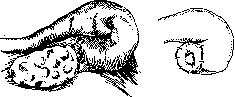
Figure 1.
the newly formed opening approaches the ovary. Gersuny and Döderlein, Küstner, Clado modified this operation and sutured the ovary to the formed opening in the tube. With the latter method, Gersuny observed the onset of pregnancy in one case. R. Morris recommends making a larger incision along the long axis of the tube. An analysis of a large number of salpingostomies shows that the elimination of infertility and the onset of pregnancy are noted in a small number of cases. Over the 47 years of this operation's existence, Kozinsky collected 102 cases of subsequent pregnancy after salpingostomy; of these, in 75 cases, births were observed, in 8 cases the resulting pregnancy ended in abortion, in 4 cases an ectopic pregnancy occurred, and in 15 cases it is unknown whether the pregnancy ended in birth or miscarriage. The small number of favorable cases has recently led to a significant narrowing of the indications for this operation. The question arises about the low effectiveness of this scientifically grounded, clinically tested method. It is known that the majority of inflammatory diseases of the tubes, despite treatment, lead to a complete disruption of their functional capacity; true, cases of complete cure with the onset of pregnancy after persistent purulent inflammation of the appendages are described in the literature, but these cases are exceptions, and only sometimes can one count on the restoration of the patency of tubes affected by inflammatory processes. In view of this, a very careful, justified selection of suitable cases is necessary. When indicating the operation, one must take into account the duration and nature of the disease, the presence of exacerbating processes accompanied by pain, elevated temperature; with purulent content, the operation is unacceptable; one must also take into account the presence of large tumors of the appendages, fused with the connective tissue and pelvic walls, which are not suitable for this operation; attach great and primary importance to clinical examinations, reactions [the erythrocyte sedimentation rate (Fåhraeus) should not be less than 1 1/2 hours, leukocytes more than 8,000]; it is necessary to examine the heart, kidneys, and especially to clarify whether the changes in the appendages are caused by a tuberculous process. Salpingography (with sodium bromide) according to Kennedy, proposed in 1923, and in 1924 by Geyser with Lipiodol, which determines the localization of the obstruction, is mandatory before the operation. Likewise, pertubation, proposed in 1919 by the American Rubin in the modifications of Sellheim, Mandelshtam, and others, must be considered an indispensable and reliable method for determining the patency of the tubes, although it does not establish the location of the tubal obstruction before the operation. If salpingography is impossible before the operation, any operation to eliminate infertility of tubal origin is a trial operation, and therefore, to improve the results of salpingostomy, it is necessary to perform tubal insufflation from the abdominal cavity side using an ordinary two- or five-gram Record syringe. It is clear that without this check, salpingostomy should not be performed, since according to Mandelshtam's data, isolated obstruction in the abdominal end occurs only in 23% of cases, and according to Kennedy's data, in cases of tubal obstruction, their occlusion in the interstitial part is determined in 38%. It is clear that this explains the insignificant percentage of successes after salpingostomy. Thus, salpingography before the operation, insufflation before and especially during the operation are a valuable acquisition in our clinical diagnostics, significantly improving the results obtained from salpingostomy; furthermore, it spares the woman from unnecessarily performed operations to eliminate infertility. The method of probing the tubes should not be used to determine patency, since even very careful probing with a thin probe traumatizes the delicate ciliated epithelium with the formation of parenchymal hemorrhages, leading to new adhesions. The cause of failures is also the insufficiently perfected technique of the operation. Repeated laparotomies have shown that in most cases, the newly formed opening of the tubes closes due to parenchymal hemorrhages, reactive processes in the tube and surrounding tissues—the influence of sutures, probing, insufficient hemostasis, etc. To achieve more favorable results, it is necessary to perform repeated insufflations shortly after the operation, which have both diagnostic and therapeutic significance, and then introduce some technical modifications to the operation. Recently, Kozinsky has proposed introducing into the newly formed opening, dilated with anatomical forceps (Figure 2), a catgut suture on a needle to a depth of 2-3 cm, piercing the wall of the tube from the inside out, fixing the thread by forming a double knot on its surface; thus, the free edge of the suture protruding from the tube by 3-4 cm

Figure 2. Salpingostomy with Kozinsky's modification.
prevents the closure of the tube until it is absorbed. For the same purpose, Sellheim proposes a method similar to the method of the American Tweedy—after suturing the newly formed opening with catgut sutures, a thick (knitting-type) needle with a double thick catgut suture is taken, inserted into the newly formed opening to a depth of 2 cm, the wall of the tube is pierced from the inside out, after which the double catgut suture is tied. To improve the results, it is also rational to prophylactically suspend the uterus by the round ligaments.
Related articles
Mentioned in
Cite this page
“Salpingitis.” Soviet Medical Encyclopedia. English translation of Bolshaya Meditsinskaya Entsiklopediya, 1st ed. (Moscow, 1928–1936), ed. N. A. Semashko. https://sovietmedicalencyclopedia.pages.dev/article/salpingitis/