Lebedev
Historical document, translated for reference. It reflects medical knowledge of the 1920s–30s and is not medical advice.
Summary
This article covers three notable individuals with the surname Lebedev: Alexei Ivanovich Lebedev (1850-1923), a prominent Russian gynecologist; Vasily Stepanovich Lebedev (1852-1919), a physician and revolutionary activist; and Vera Pavlovna Lebedeva (born 1881), a Soviet healthcare worker specializing in maternal and infant protection.
Encyclopedia article (1928–1936)
Lebedev Alexei Ivanovich (1850-1923), noted Russian gynecologist; graduated from the Medico-Surgical Academy in 1875; in 1878 defended his dissertation "On the doctrine of excessive accumulation of amniotic fluid" (St. Petersburg); from 1884-1911, Lebedev was professor of gynecology at the Military Medical Academy in St. Petersburg. During a foreign trip, Lebedev conducted a series of special studies in embryology (with His), in pathological anatomy (with Cohnheim), and others. In his later years, Lebedev lived and worked in Essentuki, where he died. A major researcher, clinician, and teacher, during his long professorship, Lebedev always attracted a large number of physicians to his clinic, many of whom became prominent specialists and professors of gynecology. An excellent operator, Lebedev was the first in Russia to expand the indications for cesarean section and greatly contributed to the development of operative gynecology. Alongside operative methods, Lebedev extensively developed conservative methods; in particular, he greatly contributed to the scientific study of mud therapy in female diseases. Lebedev authored approximately 50 printed works.
Lebedev Vasily Stepanovich (1852-1919), physician and public figure, prominent activist of the "People's Will" party. In 1872, he graduated from the Voronezh Spiritual Seminary and in 1877 from the physics and mathematics faculty of St. Petersburg University, after which he entered the medical faculty in Moscow. From the first years of his university studies, Lebedev participated in the revolutionary movement. In 1881-82, Lebedev was a member of the Executive Committee of the "People's Will" party, was a member of the editorial board of the party organ ("People's Will" and "Leaflet of People's Will"). In addition, Lebedev was in charge of all Russian and foreign correspondence of the executive committee. Under his editorship and with his closest cooperation, four issues of the party organ were published. The pen of Lebedev belonged to a number of responsible articles: "The New Reign", "The Union of Power with the Land", "The Position of the Party at the Present Moment", "The Basic Tasks of Revolutionary Activity in Russia" ("People's Will", 1881), as well as "Editor's Notes" to the "Preface" by K. Marx and F. Engels to the Russian translation of the "Communist Manifesto" (ibid., 1882). All articles by Lebedev were written with extraordinary enthusiasm, unusual persuasive power, with a passionate and inspiring call for further exploits of the party in the cause of liberating the people. In February 1882, Lebedev was arrested and by decision of a special meeting at the Ministry of Internal Affairs was exiled (in April 1883) administratively to Eastern Siberia for 5 years. He served his exile in Minusinsk, Yeniseisk, and the northern Yenisei taiga. In February 1889, he received the right to return to European Russia. In 1890, after passing examinations at Kazan University, he received a physician's diploma. 1890-95 - zemstvo service in various provinces. In 1896, Lebedev was invited as a sanitary physician of the Moscow provincial zemstvo; from 1905, he took a position in the provincial sanitary bureau. Here he took on editorial duties for the monthly organ of the bureau and other publications of the zemstvo on sanitary matters, as well as the closest participation in the statistical work of the bureau. The past experience of socio-political activity and fidelity to its precepts, critical mind, special foresight and insight, originality and independence, excellent scientific training - all this gave Lebedev's personality high authority among public workers. To the speeches of Lebedev, which were sometimes sharp and original in form, but always breathing with sincerity of conviction and often passionate, his colleagues at work listened attentively. In the field of sanitary statistics, Lebedev is the founder of the method for planning the network of rural clinics. His printed works concern school sanitation, the development of a plan for a network of universally accessible medical care, and methods for determining the territory and population of medical districts, conditions of accessibility of medical care and the utilization rate of the population depending on distances, communication routes, density and horse population. The most important works of Lebedev, relating to the zemstvo period of his activity: "Outline of the sanitary condition of zemstvo schools" (Moscow, 1903); "Territory and population of medical districts of the Moscow province" (Moscow, 1904); "Conditions of accessibility of medical care for the population of the Moscow province" (pt. 1-2, Moscow, 1908); "Utilization rate of the population in clinics under various conditions" (Information of the Zemstvo Sanitary Physician Organization of the Moscow Province, 1911, No. 3). In 1917, due to poor health, Lebedev left zemstvo service and spent the last 2 years on a pension near Moscow.
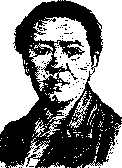
Lebedeva Vera Pavlovna (born in 1881), an active worker in Soviet healthcare. Member of the VKP(b) since 1907; in the working revolutionary movement since 1904. Graduated from the St. Petersburg Women's Medical Institute. Worked as a zemstvo district physician in the Vladimir province. Forced to leave Russia. Worked in Geneva in the university gynecological clinic of Professor Beutner as an intern. In 1917, Lebedeva returned to Russia, conducted party and cultural-educational work in Petrograd. In 1918, she was appointed a member of the board of the People's Commissariat of Social Welfare, where she was entrusted with the protection of motherhood and infancy. From 1920, Lebedeva headed the Department for the Protection of Motherhood and Infancy of the People's Commissariat of Health, to which she was transferred from the People's Commissariat of Social Welfare. She was the first to establish, develop and strengthen this work for 12 years, creating a theoretical, scientific, practical and material base. Lebedeva managed to unite broad strata of working women and specialists around her work, placing the protection of motherhood and infancy in a prominent position in party, public and scientific-practical terms. In Moscow, the Institute for the Protection of Motherhood and Infancy was organized, which is now a major scientific center. This institute, according to the decision of the Fourth All-Union Conference on the Protection of Motherhood and Infancy, was named after her. From 1930, Lebedeva holds the post of Deputy People's Commissar of Social Welfare of the RSFSR, continuing her scientific work at the State Scientific Institute for the Protection of Mother and Child, heading the department of social hygiene of mother and child. In 1929, she read a course on the protection of motherhood and infancy to foreign physicians in Moscow (the lectures were published in German, French and English). Lebedeva is co-editor of the departments of obstetrics, gynecology, pediatrics, protection of motherhood and infancy in the BME. Lebedeva is responsible editor of the journal "Protection of Mother and Infant", "Journal on the Study of Early Childhood", editor of the journal "Gynecology and Obstetrics". In addition to a large number of articles on scientific and organizational issues of the protection of motherhood and infancy, scattered in various journals and collections, Lebedeva published a number of books and brochures: "Protection of Motherhood and Infancy and Protection of Women's Labor" (Moscow, 1922); "Stages Passed" (Moscow, 1927); "Some Results" (Moscow, 1927; translated into German, French and English); "Protection of Mother and Infant in kolkhozes and sovkhozes" (Moscow-Leningrad, 1930).
Related articles
Mentioned in
Cite this page
“Lebedev.” Soviet Medical Encyclopedia. English translation of Bolshaya Meditsinskaya Entsiklopediya, 1st ed. (Moscow, 1928–1936), ed. N. A. Semashko. https://sovietmedicalencyclopedia.pages.dev/article/lebedev/