OTT
Historical document, translated for reference. It reflects medical knowledge of the 1920s–30s and is not medical advice.
Summary
Dmitrii Ott (1855-1929) was a renowned gynecologist who made significant contributions to obstetrics and gynecology, developing innovative surgical techniques and establishing important medical institutions in Russia.
Encyclopedia article (1928–1936)
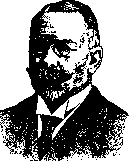
OTT Dmitrii Oskarovich (1855-1929), an outstanding, world-renowned gynecologist. Ott was born in the former Kaluga province, where his father had been exiled for participation in the Petrashevsky circle. In 1879 he graduated from the Medico-Surgical Academy, in 1880 he passed doctoral examinations and went abroad on a three-year scientific mission, where he worked not only in gynecology but also in surgery and physiology. In 1884 he defended his dissertation ('On the influence of various fluids used for transfusion on the anemic organism,' St. Petersburg) and in the same year, after delivering a trial lecture on the exchange of substances between mother and fetus, he was unanimously elected privat-docent. Soon he received an invitation from Professor Heidenhain of Breslau to the position of adjunct professor of physiology, but he declined and remained in Russia. Ott began his scientific-practical activity in the women's department of the clinic of Filekhin; soon at the invitation of Eikhvald he began to lecture on gynecology at the newly opened Elene Institute and in 1889 he received the title of honorary professor. In 1893 after the death of I. F. Balandin he took the position of director of the Obstetric Institute; in 1904 at his initiative and with active participation (as chairman of the construction commission) a new building for the institute was opened (designed by the famous architect L. Benois), which represents one of the best institutions even today not only in the USSR but in Europe. Ott was director of the institute for more than 35 years (in his last years as honorary director). Ott left more than 100 scientific works which enjoy worldwide fame. Ott began his scientific work while still a student--in his final year he was awarded a silver medal by the Academy conference for his experimental work 'On drainage after laparotomy' (Medical Herald, 1878, No. 51-52). In obstetrics Ott wrote about antiseptics, obstetrics, the expansion of obstetric care in rural areas, cesarean section, the importance of uterine suturing and many other topics. Ott was a principled advocate for prophylactic perineal incision during childbirth. His experimental work with clinical data on ectopic pregnancy deserves attention, in which he sought to clarify the origin of hemorrhages into the abdominal cavity. The larger part of Ott's work was devoted to gynecology. As early as 1879 while studying the physiological manifestations of the sexual life of peasant women in Kaluga province, he noted the influence of environment, material conditions, and physical labor on sexual development (journal 'Health,' 1879, No. 113, 117-119). Ott studied these questions later as well and this led him to establish the periodicity of physiological functions of the female organism (report at the X International Congress in Berlin, Nouv. arch. d'obst. et de gynecol., 1890, p. 502). Ott devoted much attention to operative gynecology (Ott was a brilliant surgeon, possessed exceptional technique and demonstrated his methods at world congresses of Western Europe and America); this includes works on preoperative preparation and postoperative care, technical details, proposals for new operations and above all the development of the vaginal method, which he mastered perfectly. Ott also addressed cancer--he attached importance to biopsy and was against extended abdominal operations. Ott dedicated a series of works to conservative therapy; Ott traveled to Stockholm to study massage with Thure-Brandt and repeatedly spoke against excessive enthusiasm and expansion of indications for operations. Ott was also a talented inventor: he proposed a number of inventions--a leg holder, an instrument for fixing a rubber tourniquet (during hysteromyotomy), and devices for illuminating the operative field during vaginal operations. He developed diagnostic methods and proposed his own method for determining tubal patency. Shortly before the imperialist war he wrote a major textbook 'Operative Gynecology' (St. Petersburg, 1914). Ott took an active part in scientific-societal life. He was repeatedly elected chairman of the Obstetrical-Gynecological Society in Leningrad and was an honorary member of many Russian and foreign scientific societies. In his later years he was elected an honorary member of the American Association of Gynecologists. Ott organized an international congress in St. Petersburg and initiated the All-Union Society of Obstetricians and Gynecologists, remaining its permanent chairman of the board until his death. Ott was a brilliant teacher, is the teacher of hundreds of physicians, created his own school, many representatives of which now hold university chairs. He has a number of articles on teaching issues (including: 'Tasks of organizing higher medical education and the significance of the State Clinical Obstetric-Gynecological Institute in the protection of motherhood and infancy,' L., 1925).
Related articles
Cite this page
“OTT.” Soviet Medical Encyclopedia. English translation of Bolshaya Meditsinskaya Entsiklopediya, 1st ed. (Moscow, 1928–1936), ed. N. A. Semashko. https://sovietmedicalencyclopedia.pages.dev/article/ott/