Otto Heubner
Historical document, translated for reference. It reflects medical knowledge of the 1920s–30s and is not medical advice.
Summary
Biography of Otto Heubner (1843-1926), a prominent German pediatrician and clinician who was one of the founders of modern pediatrics as an independent scientific discipline. The article outlines his academic career in Leipzig and Berlin, his creation of modern pediatric clinics, his major scientific contributions to infant nutrition, infectious diseases, and metabolism, and lists his notable students.
Encyclopedia article (1928–1936)
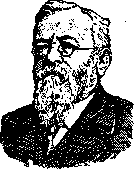
HEUBNER, Otto (Otto Heubner; 1843-1926), an eminent German pediatrician and classical clinician, one of the founders of modern pediatrics as an independent scientific discipline; co-editor of the "Jahrbuch f. Kinderheilkunde", author of a textbook on children's diseases (Lehrbuch d. Kinderheilkunde, B. I-II, Lpz., 1903-06). Heubner studied in Leipzig, where he was an assistant to Wunderlich for 5 years. In 1871-91, he headed the district polyclinic in Leipzig and at the age of 30 received the title of professor. In 1891, Heubner opened the first modern children's clinic with an infant ward in Leipzig. In 1894, Heubner assumed the chair of children's diseases in Berlin, vacated after Henoch, where, according to his designs, an exemplary children's clinic at the Charité was built, heading it until 1913, as well as the Mother and Child Home (mainly for illegitimate children and their mothers) and a large state institution for combating infant mortality (Kaiserin Auguste-Viktoria Haus). He also promoted the opening of children's clinics and independent departments of pediatrics at other universities. A brilliant constellation of his students (Finkelstein, Salge, Langstein, Stoeltzner, Noeggerath, Rietschel, and others) currently represents his school.
Among Heubner's enormous heritage, one should emphasize his works on dysentery (Handbuch d. spez. Pathologie u. Therapie, hrsg. v. H. Ziemssen, B. II, Lpz., 1874); a monograph on infant feeding in hospital institutions, on syphilis in childhood (Handbuch d. Kinderkrankheiten, hrsg. v. C. Gerhardt, Tübingen, 1896); on Barlow's disease, on chronic nephritis, on chorea, and pathological-anatomical studies of the central nervous system in children. A number of works (together with Rubner and Kamerer) concern the study of the physiology and pathology of metabolism in infancy; the clinical picture of digestive insufficiency described by Heubner simultaneously with Herter is generally called Heubner-Herter disease. In recent years, Heubner published a monograph on the mental development of the child ("Über die Zeitfolge in der psychischen Entwicklung des Säuglings u. jungen Kindes", Ergebnisse der inneren Medizin und Kinderheilkunde, B. XVI, 1919) and on balneotherapy in childhood ("Spezielle Balneo- u. Klimatotherapie der Erkrankungen des Kindesalters", published in Handbuch f. Balneologie, herausgegeben v. E. Dietrich u. S. Kaminer, Band V, Leipzig, 1926). Heubner's last work is "Studien über Oxyuriasis" (Jahrbuch für Kinderheilkunde, Band XCVIII, 1922).
Related articles
Cite this page
“Otto Heubner.” Soviet Medical Encyclopedia. English translation of Bolshaya Meditsinskaya Entsiklopediya, 1st ed. (Moscow, 1928–1936), ed. N. A. Semashko. https://sovietmedicalencyclopedia.pages.dev/article/otto-heubner/