Sternberg
Historical document, translated for reference. It reflects medical knowledge of the 1920s–30s and is not medical advice.
Summary
Carl Sternberg (born 1872) was an outstanding pathologist who made significant contributions to the study of blood diseases, hematopoietic organs, and the lymphatic system. He is particularly known for describing Hodgkin lymphoma and the characteristic Sternberg cells associated with it.
Encyclopedia article (1928–1936)
Sternberg Karl (Carl Sternberg; born 1872), one of the outstanding modern pathologists; graduated from the university in Vienna in 1896, and from 1898 to 1908 served as assistant to the famous professor Paltauf at the department of pathological anatomy of the University of Vienna. In 1908, he was elected professor of pathological anatomy and prosector in Brünn, and from 1920 he moved to the position of director of the Pathological Institute at the Vienna city hospital Wieden. Of more than 150 scientific works by S., the most important are his studies concerning diseases of the blood, hematopoietic organs and the lymphatic system.
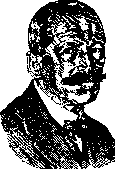
In particular, S. was the first to thoroughly study the disease isolated by Paltauf from the collective group of 'pseudoleukemias' and 'malignant lymphomas,' which he named 'lymphogranulomatosis' (synonym 'Paltauf-Sternberg disease'); his name is also borne by the cells characteristic of the histological picture of this disease (Sternberg giant cells). S. was the first to isolate a special leukemic disease, which he named 'leukosarcomatosis.' In addition, S. wrote a textbook on pathological anatomy (the 2nd edition was published in 1932).
Related articles
Mentioned in
Cite this page
“Sternberg.” Soviet Medical Encyclopedia. English translation of Bolshaya Meditsinskaya Entsiklopediya, 1st ed. (Moscow, 1928–1936), ed. N. A. Semashko. https://sovietmedicalencyclopedia.pages.dev/article/sternberg/