Angiostoma
Historical document, translated for reference. It reflects medical knowledge of the 1920s–30s and is not medical advice.
Summary
This 1930s encyclopedia article discusses the nematode worm Angiostoma (now Rhabdiasidae) and its relation to Strongyloides stercoralis, the causative agent of angiostomiasis or Cochin-China diarrhea.
Encyclopedia entry (1928–1936)
ANGIOSTOMA, a worm from the family Angiostomidae, now called Rhabdiasidae. The most dangerous parasite of man is
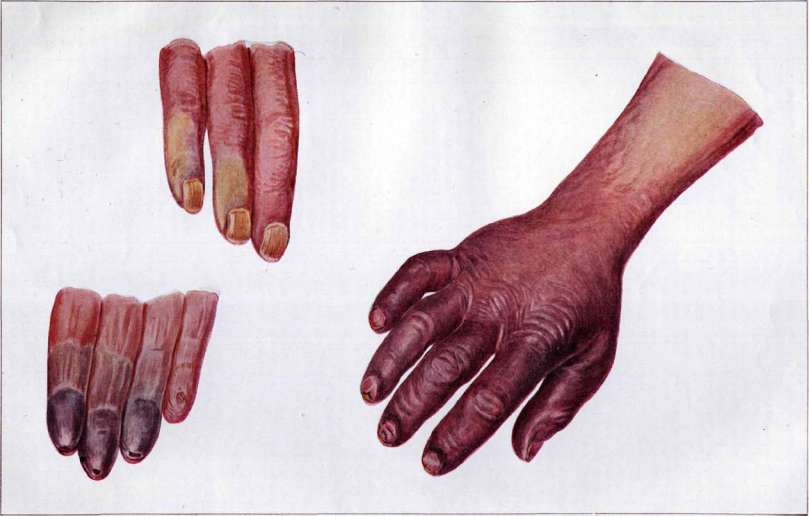
To the article Angiotrophoneurosis, Asphyxia localis symmetrica.
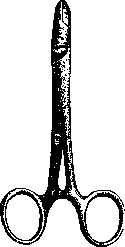
Hemostatic forceps (Doyen's angiotribe). Strongyloides stercoralis is the causative agent of angiostomiasis, or Cochin-China diarrhea (see Strongyloidiasis). Angiostomiasis is sometimes erroneously called anguillulosis.
Related articles
Cite this page
“Angiostoma.” Soviet Medical Encyclopedia. English translation of Bolshaya Meditsinskaya Entsiklopediya, 1st ed. (Moscow, 1928–1936), ed. N. A. Semashko. https://sovietmedicalencyclopedia.pages.dev/article/angiostoma/