Skryabin
Historical document, translated for reference. It reflects medical knowledge of the 1920s–30s and is not medical advice.
Summary
Konstantin Ivanovich Skryabin (1878–1971) was a prominent Soviet parasitologist and founder of the Soviet helminthology school. He established the first parasitology chair in Russia and founded the country's first veterinary and medical helminthological research institutions.
Encyclopedia article (1928–1936)
SKRYABIN Konstantin Ivanovich (born in 1878), an outstanding parasitologist, distinguished scientist, and creator of the Soviet helminthology school. After graduating from the Yuryev Veterinary Institute (1905), S. worked from 1911 to 1911 as a district and city veterinary doctor in Chimkent and Auliye-Ata (present-day Kazakhstan). From the very beginning of his activity, S. paid special attention to invasive, predominantly worm, diseases of animals. S. collected extensive helminthological material in Central Asia and processed it in 1911–1914 in Germany, France, and Switzerland, working in the laboratories of Max Braun, Lue, Rayer, and Furman—the leading helminthologists of Europe at that time. In 1917, S. was elected professor to the first parasitology chair in Russia, newly created at the Don Veterinary Institute (Novocherkassk). Since 1920, S. has worked in Moscow. Only after the October Revolution did S. receive the opportunity to fully unfold as a researcher, organizer, and teacher. S. is the founder of the first veterinary (1917) and medical (1921) scientific-research helminthological institutions in the USSR, the organizer and permanent chairman (since 1922) of the Permanent Commission for the Study of the Helminthofauna of the USSR at the Zoological Institute of the Academy of Sciences of the USSR. He also organized the parasitological laboratory at the Physics and Mathematics Faculty of Moscow State University (1923). Skryabin's activity, known far beyond the USSR and having placed Soviet helminthology among the first in the world, covers a wide range of purely scientific and scientific-practical questions of medical, veterinary, and general helminthology. In his major scientific works (the total number of S.'s works exceeds 300), S. mainly illuminates the distribution, morphology, systematics, and geography of individual forms and groups of parasitic worms from the standpoint of the evolutionary theory and ecological peculiarities. S. developed and for the first time applied on a large scale his 'Method of complete helminthological dissections of vertebrates, including man' (published by Moscow State University, Moscow, 1928). This method opens wide prospects in the study of a number of biological questions (phylogeny, animal communities, the relations of the parasite and the host); it allowed a very significant enrichment, refinement, and systematization of data on the helminthofauna of man and animals in the USSR. Under the guidance of S. and his closest students, since 1919, about 140 helminthological expeditions have been conducted throughout the USSR (including a number of specially medical ones), which played a great role in organizing the fight against worm invasions. The overwhelming majority of Soviet helminthologists scattered throughout the Union are students of Skryabin.
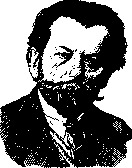
S. is currently the head of the Department for the Fight against Helminthoses of the State Tropical Institute of the People's Commissariat for Health of the RSFSR (Moscow), director of the All-Union Institute of Helminthology of the People's Commissariat for Health of the USSR (with the institute's largest Helminthological Museum, consisting mainly of expedition collections by S. and his staff), professor of the Moscow Veterinary Institute, member of the Scientific Veterinary Council under the People's Commissariat for Health of the USSR, representative of the USSR in the Permanent Commission for the Convening of International Veterinary Congresses, and co-editor of the Great Medical Encyclopedia. Together with Prof. E. I. Martsinovsky, S. founded the 'Russian Journal of Tropical Medicine' (1922), which has been published since 1932 under the title 'Medical Parasitology and Parasitic Diseases' (S. is deputy editor-in-chief). In 1932, he was elected an honorary doctor of the University of Tartu (formerly Yuryev-Dorpat) and an honorary member of the American Parasitological Society in Washington (USA). Among Soviet physicians, the fundamental manual compiled by S. together with R.-Ed. S. Schultz—'Human Helminthoses' (Parts 1–2, Moscow–Leningrad, 1929–1931)—enjoyed great popularity. Under his editorship and with his participation as an author, since 1928 a series of monographs on animal helminthoses, 'Library of Helminthology', has been published; to date, 15 books have appeared, including on worm invasions of sheep (2 editions), dogs and pigs, and on trichostrongyliidoses of ruminants.
S. is currently the head of the Department for the Fight against Helminthoses of the State Tropical Institute of the People's Commissariat for Health of the RSFSR (Moscow), director of the All-Union Institute of Helminthology of the People's Commissariat for Health of the USSR (with the institute's largest Helminthological Museum, consisting mainly of expedition collections by S. and his staff), professor of the Moscow Veterinary Institute, member of the Scientific Veterinary Council under the People's Commissariat for Health of the USSR, representative of the USSR in the Permanent Commission for the Convening of International Veterinary Congresses, and co-editor of the Great Medical Encyclopedia. Together with Prof. E. I. Martsinovsky, S. founded the 'Russian Journal of Tropical Medicine' (1922), which has been published since 1932 under the title 'Medical Parasitology and Parasitic Diseases' (S. is deputy editor-in-chief). In 1932, he was elected an honorary doctor of the University of Tartu (formerly Yuryev-Dorpat) and an honorary member of the American Parasitological Society in Washington (USA). Among Soviet physicians, the fundamental manual compiled by S. together with R.-Ed. S. Schultz—'Human Helminthoses' (Parts 1–2, Moscow–Leningrad, 1929–1931)—enjoyed great popularity. Under his editorship and with his participation as an author, since 1928 a series of monographs on animal helminthoses, 'Library of Helminthology', has been published; to date, 15 books have appeared, including on worm invasions of sheep (2 editions), dogs and pigs, and on trichostrongyliidoses of ruminants.
Related articles
Mentioned in
Cite this page
“Skryabin.” Soviet Medical Encyclopedia. English translation of Bolshaya Meditsinskaya Entsiklopediya, 1st ed. (Moscow, 1928–1936), ed. N. A. Semashko. https://sovietmedicalencyclopedia.pages.dev/article/skryabin/