Helminthoma
Historical document, translated for reference. It reflects medical knowledge of the 1920s–30s and is not medical advice.
Summary
Helminthoma refers to various, predominantly inflammatory (granulomatous), tissue proliferations caused by helminth parasites. The article distinguishes these from true tumors that can also be induced by parasitic worms.
Encyclopedia article (1928–1936)
HELMINTHOMA, a collective designation for various, predominantly inflammatory (granulomatous), tissue proliferations that occur under the influence of helminth parasitism (see Figure 1). In 1868, Eberth first pointed out the possibility of an etiological connection between tissue proliferation and the presence of parasitic worms in these tissues. Observations by many authors on animal pathology confirmed this, and at present veterinary helminthology knows forms of worms for which the formation of tumor-like proliferations is an essential condition for their existence (Spirocerca sanguinolenta in the esophagus of dogs, Habronema megastoma in the stomach of horses). Helminthomas of an inflammatory nature should be distinguished from true tumors, such as cancers, which are obtained under the influence of parasitic worms. This is evidenced by the experiments of Fibiger (J. Fibiger), who in 1913 succeeded in experimentally inducing carcinoma in rats by infecting them with the nematode Gongylonema neoplasticum, and cases of neoplasms in schistosomiasis of the urinary bladder, rectum (see Figure 2), liver (Schistosoma haematobium, Schistosoma japonicum), in opisthorchiasis (Opisthorchis felineus) and clonorchiasis (Clonorchis sinensis) in the liver (see Tumors). The term H. is not applied to analogous formations in the human body.
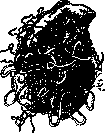
Figure 1. Macroscopic appearance of an inflammatory tumor formed under the influence of Onchocerca volvulus, cut in half.
by the nematode Gongylonema neoplasticum, and cases of neoplasms in schistosomiasis of the urinary bladder, rectum (see Figure 2), liver (Schistosoma haematobium, Schistosoma japonicum), in opisthorchiasis (Opisthorchis felineus) and clonorchiasis (Clonorchis sinensis) in the liver (see Tumors). With respect to analogous
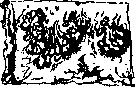
Figure 2. Section of the rectum of a deceased person from schistosomiasis. Polypoid neoplasms (after Neumann-Mayer).
formations in the human organism, the term H. is not applied.
Related articles
Cite this page
“Helminthoma.” Soviet Medical Encyclopedia. English translation of Bolshaya Meditsinskaya Entsiklopediya, 1st ed. (Moscow, 1928–1936), ed. N. A. Semashko. https://sovietmedicalencyclopedia.pages.dev/article/helminthoma/