Ascarids
Historical document, translated for reference. It reflects medical knowledge of the 1920s–30s and is not medical advice.
Summary
This article from the 1928–1936 Soviet medical encyclopedia describes the biology, morphology, and life cycle of Ascaris lumbricoides and related roundworms. It details the complex migratory path of the larvae through the host's body and discusses the toxic effects of ascaridotoxin.
Encyclopedia article (1928–1936)
Ascarids, Ascaridae, a family of the order Ascaridata, are roundworms parasitizing the digestive tract of vertebrates of all classes. The family Ascaridae consists of dozens of genera and hundreds of species. Representatives of three genera parasitize humans: Ascaris L. 1758, Toxocara Stiles 1905 (syn. Belascaris Leiper 1907), and Toxascaris Leiper 1907. Ascaris lumbricoides L. 1758 is the most frequent human parasite, localizing in the small intestines and reaching 150–250 mm in length. Figure 1. Ascaris lumbricoides L. (1/2 natural size): 1—female; 2—male; 3—reproductive system of the female (on the right, the reproductive tubes are unrolled; on the left, in the natural state). The body of the Ascarid forms a dermomuscular tube, inside which are located the digestive tract (esophagus and intestine) and a plexus of reproductive tubes (see Figure 1). On the head, there are three lips with sensory papillae (see Figure 2). Ascarids are dioecious: the male is smaller than the female and has a hook-like curved tail, the concave surface of which is equipped with numerous paired sensory papillae that orient the male when searching for the female's genital opening.
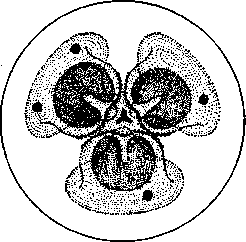
Figure 2. Lips of Ascaris lumbricoides (front view).
In the female, the tail is straight and conical; the genital opening is located in the anterior third of the body length. The eggs (important for diagnosis) are oval in shape, 0.05–0.075 mm in length and 0.04–0.05 mm in width. Externally, the egg is covered by a thick, three-contoured, tuberculate membrane, enclosing the internal granular mass—the fertilized embryo in the pre-segmentation stage (see Figure 3). The outer tuberculate membrane is usually stained brown by fecal pigments (during coprological analysis). Sometimes eggs are excreted without the outer membrane, and sometimes unfertilized ones are found, which are distinguished by their greater elongation (0.08–0.045 mm). The biology of A. lumbricoides has been clarified only within the last decade and amounts to the following. The female is extremely prolific, releasing 26–27 million eggs (according to data from Cram, 1925), and these eggs are excreted with the feces of the worm carrier into the external environment, where, within
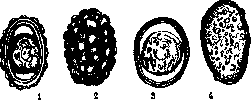
Figure 3. 1—normal egg in optical section; 2—structure of the protein membrane of a normal egg; 3—egg without protein membrane; 4—unfertilized egg. 4–6 weeks, they mature. When a matured egg enters the human intestine with food or drink, a larva hatches from the egg, which is incapable of turning into a sexually mature individual in the intestine and requires a preliminary "migration" in the body of its
host. Having freed itself from its membranes, the hatched Ascarid larva bores into the intestinal mucosa, penetrates the intestinal veins, reaches the liver via the portal vein, passes through the hepatic capillaries into the vena cava, from there into the right half of the heart, and is carried through the pulmonary artery into the lungs. From this moment, the larva must change its environment
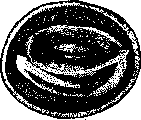
and enter from the bloodstream into the respiratory system; the larva leaves the pulmonary capillaries, penetrating into the alveoli; from here it penetrates through the bronchioles and bronchi into the trachea, and Figure 4. Toxascaris limbata. passes through the glottis into the oral cavity. Having completed such a complex migratory path, the larva is swallowed with saliva; having thus entered the host's digestive tract for the second time, it is retained in the small intestines and turns into a sexually mature Ascarid, for which it needs approx. 75 days. Individual Ascarid larvae during their migration period can bypass the pulmonary circulatory route and enter the left half of the heart; from here they can be carried into various organs and tissues, localizing in the brain, kidneys, muscles, subcutaneous tissue, etc. In a pregnant woman, ascarids can, during their migration period, penetrate through the placental circulation into the fetus's body. Among other human Ascarids, the following should be mentioned: Toxascaris mystax (Belascaris mystax)—a very frequent parasite of cats, rarely encountered in humans. The body reaches 30–100 mm in length. The eggshell is covered with small cellular depressions. Egg size: 0.065–0.075 mm in diameter. Toxascaris limbata—a frequent parasite of dogs, which can be found in cats and humans. Body length 40–100 mm. Eggs with a thick shell have a diameter of 0.075–0.085 mm (see Figure 4). Ascaris suilla—a parasite of pigs, morphologically identical to the human A. lumbricoides; according to the latest data (Koidzumi and Koino, 1927), they differ from each other in the number of chromosomes, which gives the right to consider them different species. The horse Ascarid—Parascaris equorum—with a body length of 150–370 mm, a cosmopolitan, is a parasite of the small intestines of the horse and donkey. The eggs are round, 0.09–0.10 mm in diameter; they are to some extent a "laboratory object," as they serve for the study of various questions of cytology and embryology. Ascaris vitulorum—a parasite of cattle—can be experimentally transferred to humans.
K. Skryabin. 5. Egg of Toxocara marginata. Ascaridotoxin is a concept uniting the active principles that cause the toxic effect of ascarids, which manifests not only in the hosts of these parasites but also in persons coming into contact with ascarids, for example, during their dissection. In the latter case, volatile aldehydes of fatty acids affect the mucous membranes, from which Flury isolated valeric, lactic, and other acids. The local effect of ascaridotoxin manifests as hyperemia, inflammation, and tissue necrosis; it depends on alcohols and esters of the ethyl, butyl, and amyl series. Under natural conditions, ascarids act as an irritant on the host's intestinal wall through the free acids they secrete. In general, the concept of ascaridotoxin is relative, since the toxic effect of ascarids depends on a number of different active principles (Flury).
E. Pavlovsky. Ascariasis, a helminthic disease of humans and animals caused by ascarids. Statistics: according to data from 1923, in Moscow
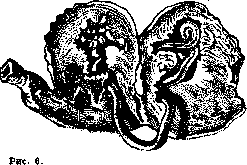
Ascaris lumbricoides in a woman's ovary (according to Kramer).
the child population was found to be infested with A. lumbricoides in 69.3% of cases, and in Armenia (1924) the adult population up to 90%. In Siberia (1927 data), ascariasis is quite rare (1.3%). Pathogenesis. The influence of ascarids on the host organism boils down, in general terms, to the following: 1) Ascarids secrete toxins that poison the host organism; 2) Ascarids can exert a harmful mechanical effect on the host by accumulating in masses in its small intestines (obstruction), crawling into the lumen of the bile ducts of the liver (see Figure 7), the pancreas, penetrating through the glottis (with vomiting) into the respiratory tract, etc.; 3) Ascarids, while performing their migratory path in the host's body, traumatize its intestines and lungs, and thereby twice create conditions favorable for inoculation with bacterial elements. The most significant role belongs to the toxic action of the parasite, which, by influencing the nervous system and the blood, causes a complex symptom complex of phenomena. The clinical picture of ascariasis is in direct dependence on three main factors: the number of parasites, the place of their localization, and the individual susceptibility of the patient. Naturally, the clinical manifestations will be completely different in ascariasis of the eye and trachea or in ascariasis of the liver or intestine. On the other hand, with the usual localization of parasites in the small intestine, the symptom complex can also vary depending on whether there is an infestation with single specimens of Ascarids or with dozens or hundreds of specimens. Different individuals react differently to ascarid infestation. Sometimes phenomena of anemia and disorders of the nervous system (intoxication) are in the first place, sometimes the mechanical effect of the worms prevails with symptoms of vomiting, intestinal bleeding, appendicitis; very often, vague, difficult-to-detect symptoms are observed without any specific manifestations (with a small number of worms). In some cases, very severe phenomena are observed from the nervous system—dizziness, fainting, epileptic or choreic convulsions, catalepsy, hemiplegia, visual impairment (even blindness), etc. The phenomena are especially severe when the parasites die in the human intestine, decompose, and release large amounts of toxin contained in their skin-muscle sac. Since there are generally no clinical manifestations that could not lead to the thought of ascariasis, it is necessary to resort to helmintho-coprological analysis as often as possible to detect or reject the presence of Ascarids. Diagnosis of ascariasis can and must be made exclusively based on the data of stool examination for the presence of ascarid eggs. Therapy of ascariasis. The best preparation for expelling A. lumbricoides and other ascarids is santonin: dose 0.1 (single), 0.3-0.4 per day for adults. It is very important to remember the need for timely administration of a laxative to avoid poisoning with toxins released from the bodies of dead ascarids (see Deworming). Prevention of ascariasis, based exclusively on ideas about the life cycle of ascarids, boils down mainly to the following: 1) rational construction of latrines so that human excrement (the direct and only source of A. lumbricoides infection) cannot contaminate the soil and water; 2) do not water vegetable crops with liquid manure, which includes human excrement; 3) do not eat poorly washed vegetables and other products of vegetable crops raw (according to Stive, 1921, lettuce bought at the market in Lausanne was found to be 22% contaminated with worm eggs); 4) beware of using contaminated water; 5) observe cleanliness (use paper in the toilet, wash hands before eating, do not bite nails and do not clean the subungual spaces with teeth); 6) destroy flies, which are passive carriers of worm eggs, including ascarids (according to Nicholl, out of 100 examined Limosina punctipennis flies, worm eggs, including ascarids, were found in 26). Ascariasis should be considered as a great social evil, against which it is necessary to wage a planned struggle, remembering that even if there are sometimes no acute symptoms in the ascarid carrier, the parasite still causes a number of disorders through chronic poisoning—fatigue, neurasthenia, a decrease in mental and physical performance, a delay in the physical and intellectual development of the child (not to mention the suppression of self-defense mechanisms in the fight against infections).
K. Skryabin. Ascarids in children are the most frequent intestinal parasites, especially at the age from 3 to 10 years, i.e., at the age when children play on the ground or in the sand and are not distinguished by cleanliness. The colossal number of eggs thrown out by one female ascarid and the great resistance of these eggs to external influences (drying in the sun, freezing) make it understandable why ascarids, not needing an intermediate host, are so widely distributed. Carriers of ascarids, scattering fecal masses containing eggs everywhere, infect the soil around human dwellings, in courtyards and vegetable gardens with these eggs, where, with access to solar heat, an abundant influx of air, and moistening with water, the development of embryos in them is significantly accelerated, which explains the particular prevalence of Ascarids among village children. Thus, Langer found Ascarids in 52% of village children in Bohemia, and in only 4% of city children in Prague. In recent years, numerous works by Soviet researchers have shown the enormous prevalence of Ascarids in children in the USSR. For example, according to 1926 data, in the Smolensk Governorate, 72% of children were infected with Ascarids, and 67% of adults; in Moscow, according to Zeiss (1924), 68.1% of boys and 67% of girls were infected with Ascarids; according to Charushin, 75.7% of boys and 69.7% of girls. A small number of Ascarids in children usually does not give any symptoms, but if there are many Ascarids, they cause the child the most diverse and severe disorders of a general and local nature. To the symptoms of the first order should be attributed poor appetite, ravenous hunger, salivation, a feeling of itching and tickling in the nose, grinding of teeth in sleep, quickly passing gastrointestinal pains, often with localization in the navel region, a tendency to vomit, especially on an empty stomach, diarrhea, sometimes even with elevated temperature and with an admixture of bloody mucus (Scholle's observation), and the gradual development of anemia. A whole range of nervous symptoms, such as: difference in pupils, arrhythmias, transient strabismus, various kinds of convulsions, urticaria, and related skin rashes are placed, and not without reason, in a causal connection with the presence of Ascarids in the intestines of children. The manifestation of all these symptoms, which usually disappear quickly from proper treatment, is explained both by purely mechanical irritation of the intestinal mucosa and by the undoubted influence of poisonous secretions produced by Ascarids and absorbed by the intestine. The organism reacts to the introduced ascarid poison by the formation of antibodies, and the hematopoietic system often responds with eosinophilia with simultaneous leukocytosis. To local symptoms should be attributed the possibility of the formation of large tangles from Ascarids, which can lead in children to complete obstruction of the intestines and to the development of intussusception. Often, especially during febrile illnesses, but sometimes without any apparent reason, Ascarids begin to wander and leave their host not only through the anus, but sometimes through the mouth and even through the nose (their tendency to crawl into narrow openings is known). Ascarids have been found trapped in the hole of accidentally swallowed beads or rings, in the vermiform appendix, and in the excretory ducts of the pancreas and liver (see Figure 7), where inflammatory phenomena and abscesses with a fatal outcome developed from the infection carried there. Cases have been described,
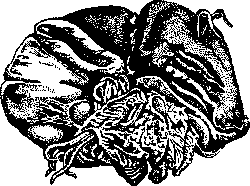
Figure 7. Ascariasis of the liver of a child (case of K. I. Skryabin and A. N. Patin).
when an Ascarid crawled into the larynx of a sleeping child and caused suffocation; it is known that Ascarids can serve as a nucleus for the formation of gallstones. The question of whether Ascarids can penetrate through a healthy intestinal wall is controversial, as they have been found lying freely in the abdominal cavity; but one cannot help but agree that in cases of typhoid, tuberculous, or other intestinal ulcers, Ascarids, with their boring movements, can contribute to the perforation of the intestines and the development of peritonitis. Finally, one must take into account the possibility of diseases of the respiratory tract or lungs from Ascarid infestations during mass infection, depending on the migration of larvae in the blood and their injury to lung tissue with the introduction of pathogenic microbes there. Therefore, a most decisive battle must be declared against the mass infestation of children with worms, and in particular with Ascarids. For prophylactic purposes, health education work should be conducted in this direction, and it should be impressed upon mothers, mainly, that the fight against worms is, first and foremost, a fight against dirt and that the most important and best remedy for worms is soap and water. As an anthelmintic against Ascarids, the flowers of the Turkestan plant Artemisia maritima, the so-called "wormseed," have been known everywhere since ancient times; it contains santonin (see) as an anthelmintic active ingredient, which specifically affects Ascarids. Santonin should never be given on an empty stomach or in a large dose, as symptoms of poisoning may occur—vomiting, dilation of the pupils, yellow coloration of the urine, xanthopsia, general weakness, and even convulsions. Commercially available santonin lozenges of 0.025–0.05 are given over 2–3 days, one lozenge 2–3 times a day, depending on age, but not more than 0.1 per day. In early childhood (under two years), correspondingly less is given. After santonin, a laxative is invariably given, G. Scholle.
Related articles
Mentioned in
Cite this page
“Ascarids.” Soviet Medical Encyclopedia. English translation of Bolshaya Meditsinskaya Entsiklopediya, 1st ed. (Moscow, 1928–1936), ed. N. A. Semashko. https://sovietmedicalencyclopedia.pages.dev/article/ascarids/