Bárány's Method of Investigation
Historical document, translated for reference. It reflects medical knowledge of the 1920s–30s and is not medical advice.
Summary
Bárány's method of investigation is a caloric test used to evaluate the excitability of the vestibular apparatus. By instilling cold or warm water into the external auditory canal, physicians induce nystagmus, vertigo, and involuntary motor reactions to diagnose labyrinthine disorders.
Encyclopedia article (1928–1936)
BÁRÁNY'S METHOD OF INVESTIGATION (Vágó, Budapest), a caloric method for examining the excitability of the vestibular apparatus. Methodology and symptoms: either cold (20-30°) or hot (42-45°) water is poured into the external auditory canal of the subject while the head is in a straight position; in a subject with normal labyrinthine excitability, nystagmus appears along with a series of subjective and objective symptoms of body balance disturbance. Nystagmus appears in approximately half a minute, lasts about 2 minutes, and consists of rapid jerks in one direction (the direction of nystagmus) and slowed jerks in the other. Reactive symptoms appear both in the form of subjective sensations (dizziness, illusory movements of objects, illusory circular rotation of one's own body) and in the form of objectively observed movements: falling to the side (most pronounced when the subject's eyes are closed); deviation to the side of the subject's arms extended forward parallel to one another; deviation to the side of the arm when the subject attempts to reach a specific point with the index finger in the sagittal plane, for example, the examiner's finger (the "past-pointing symptom"). Both the direction of the nystagmus and the direction of the motor symptoms are strictly subordinate to the temperature factor, namely: nystagmic twitching of the eyeballs is directed, during the instillation of cold water, in the direction opposite to the ear being cooled, whereas the reactive motor symptoms are directed in the direction corresponding to the ear being cooled. When hot water is instilled, all these indicated phenomena appear in the reverse directions, i.e., nystagmus is directed toward the warmed ear, while reactive involuntary movements are directed in the opposite direction. Nystagmus, as well as past-pointing, can be recorded graphically (Buys' nystagmography, Bárány's past-pointing recording device). Bárány attributes the appearance of nystagmus to movements of endolymph currents due to temperature changes, whereby the cooled particles sink while the heated ones rise, deflecting the sensory hairs in the direction of the length of the semicircular canal lumen. Thus, the vertical position of a particular semicircular canal is a necessary condition for its examination. By changing the position of the head, the corresponding semicircular canal can be brought into a vertical position and subjected to the caloric test.
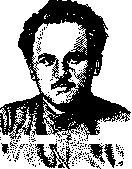
The diagnostic significance of Bárány's caloric method is enormous, since in all diseases of the labyrinth the caloric reaction disappears on the side of the diseased ear.
Related articles
Cite this page
“Bárány's Method of Investigation.” Soviet Medical Encyclopedia. English translation of Bolshaya Meditsinskaya Entsiklopediya, 1st ed. (Moscow, 1928–1936), ed. N. A. Semashko. https://sovietmedicalencyclopedia.pages.dev/article/barany-method-of-investigation/