Baumgarten
Historical document, translated for reference. It reflects medical knowledge of the 1920s–30s and is not medical advice.
Summary
Paul Baumgarten (1848-?) was a prominent German pathologist and bacterologist who independently discovered the tuberculosis bacillus simultaneously with Robert Koch in 1882. He was known for his research on tuberculosis histogenesis, thrombus organization, liver cirrhosis, and his criticism of Metchnikoff's phagocytosis theory.
Encyclopedia article (1928–1936)
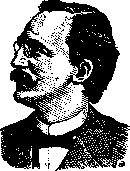
BAUMGARTEN, Paul, born in 1848; one of the outstanding German pathologists and bacteriologists, professor and director of the Pathological Institute in Tübingen from 1889 to 1919. Of Baumgarten's scientific works, his research on tuberculosis is most famous: in 1882 he, simultaneously with Robert Koch (independently of the latter), discovered the causative agent of tuberculosis; subsequently, B. published a series of works on the histogenesis of tubercles, on inflammatory changes in tuberculosis, on the routes of infection in tuberculosis, etc. B. was an advocate and propagandist of exclusively hereditary transmission of tuberculous infection. Baumgarten's research concerning the process of thrombus organization, the origin of liver cirrhosis, and inflammation are also of considerable importance. His textbook on pathogenic microorganisms, which went through several editions, his annual reviews (Jahresberichte) of the literature on pathogenic microorganisms, and the numerous volumes of 'Transactions of the Pathological-Anatomical Institute in Tübingen' edited by him are well known. On many scientific questions, B. expressed views that were in sharp contradiction to established opinions; this includes his 1888 criticism of Metchnikoff's theory of phagocytosis.
BAUR, Erwin (born in 1875), director of the Biological Institute for the Study of Heredity in Dahlem (Berlin). One of the greatest contemporary geneticists. His most famous works are on the genetics of Antirrhinum majus (snapdragon), on the heredity of plant hybrids, chimeras, etc. Author of the course 'Introduction to Experimental Heredity Theory', Berlin, 1922.
Related articles
Mentioned in
Cite this page
“Baumgarten.” Soviet Medical Encyclopedia. English translation of Bolshaya Meditsinskaya Entsiklopediya, 1st ed. (Moscow, 1928–1936), ed. N. A. Semashko. https://sovietmedicalencyclopedia.pages.dev/article/baumgarten/