Friedrich Trendelenburg
Historical document, translated for reference. It reflects medical knowledge of the 1920s–30s and is not medical advice.
Summary
Friedrich Trendelenburg (1844-1924) was a prominent German surgeon of the antiseptic and aseptic eras. He made significant contributions to surgical techniques, including eponymous symptoms, procedures such as saphenous vein ligation and the Trendelenburg position, and pioneering work on pulmonary embolism surgery.
Encyclopedia article (1928–1936)
TRENDELENBURG, Friedrich (Friedrich Trendelenburg, 1844–1924), a leading German surgeon of the antiseptic era and the period of the beginning and flowering of the aseptic era. He began his medical education in England, where he attended lectures by prominent scientists, including Lister, Spencer Wells, and others. Returning to Germany, he completed his medical education in a number of universities and remained as an assistant to Langenbeck. As a physician, he participated in the wars with Austria and France. Upon completing his assistantship under Langenbeck and a brief tenure heading a large surgical department in Berlin, Trendelenburg moved to a chair in Rostock, then to Bonn, and from there in 1895 to Leipzig, where in 1900 one of the largest surgical departments in Germany at that time, built according to his plan and under his leadership with 400 beds, was opened. As one of the leading surgeons of his era, Trendelenburg, in his works—much like many surgeons of this period of flourishing surgical technique—devoted almost all his papers to topics of a predominantly technical nature. Many of the methods, symptoms, signs, and the like proposed by him have firmly entered the arsenal of modern surgery: the Trendelenburg sign in varicose veins, the Trendelenburg sign in hip dislocations, the operation of ligating the great saphenous vein in its varicose dilation, the ligation of veins in septicopymic processes, the position of the patient with an elevated pelvis during operations on the pelvic organs, and many others. One of the most brilliant in conception was Trendelenburg's proposal to perform surgery for pulmonary artery embolism.
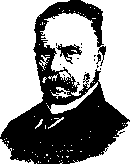
The surgical approach to the pulmonary artery, developed by him and his assistants on corpses and animals over many years, however, led to complete recovery for the first time only in 1924 in the hands of Kirschner, who reported this at a congress of surgeons shortly before Trendelenburg's death. Memoirs by a number of Trendelenburg's students, who also held leading positions among German surgeons (Perthes, Wilms, Löhr, and others), portray Trendelenburg as a brilliant teacher and an excellent organizer of scientific and practical work. As one of the most active members of the German Society of Surgeons, chairman of its congress in 1898, and an honorary member of the society, Trendelenburg in 1923 published very interesting memoirs dedicated to the 25th anniversary of this society ("Die ersten 25 Jahre der deutschen Gesellschaft für Chirurgie", Berlin, 1923).
Related articles
Cite this page
“Friedrich Trendelenburg.” Soviet Medical Encyclopedia. English translation of Bolshaya Meditsinskaya Entsiklopediya, 1st ed. (Moscow, 1928–1936), ed. N. A. Semashko. https://sovietmedicalencyclopedia.pages.dev/article/friedrich-trendelenburg/