Theodor Billroth
Historical document, translated for reference. It reflects medical knowledge of the 1920s–30s and is not medical advice.
Summary
A biographical overview of Theodor Billroth (1829–1895), a founder and major figure of scientific surgery in the 19th century known for pioneering numerous gastrointestinal and other surgical procedures, authored seminal textbooks, and mentored a generation of prominent European surgeons.
Encyclopedia article (1928–1936)
BILLROTH, Theodor (1829–95), professor, founder, and most prominent representative of scientific surgery in the 19th century. He received his medical education in Greifswald, Göttingen, and Berlin. Upon graduation in 1855, he made a scientific trip to Vienna and Paris; upon his return, he obtained the position of assistant to Professor Langenbeck in Berlin. From 1860, Billroth was a professor in Zurich, and from 1867 in Vienna, where he remained a professor of the clinic (at the Allgemeines Krankenhaus) until the end of his life. In 1863, he published Die allgemeine Chirurgie, a book that went through 15 editions during Billroth's lifetime and was translated into many foreign languages.
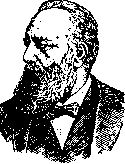
Billroth developed a number of operations: the goiter operation (together with Kocher), the first removal of the larynx, the first removal of the prostate, the first resection of the esophagus, which, in turn, led to the development of resections and operations on the gastrointestinal tract (the first resection of the stomach in 1880); Billroth developed operations on the tongue, the liver (the closed method of treating echinococcosis), on female genital organs (extirpation of the uterus per vaginam), and others. A number of professors who created modern surgery emerged from his students: Hochenegg (who replaced him in Vienna after Billroth's death), Czerny, Winiwarter, Hacker, Belfleur, Mikulicz, Eiselberg, and others.
Billroth authored up to 160 printed works; he edited two extensive multi-volume publications: Handbuch der Chirurgie and Deutsche Chirurgie; he was co-editor of the most solid surgical scientific organ, Archiv für klinische Chirurgie, from the day of its foundation until the end of his life; Billroth created surgical statistics indicating the long-term results of operations and all negative aspects (a report for which Pirogov wrote to Billroth: "Sie haben zuerst die Wahrheit gesagt"). After Billroth's death, his bust was erected at the University of Vienna (even during Billroth's lifetime, a monument was erected to him in his hometown of Bergen on the island of Rügen). In 1896, the book Briefe von Theodor Billroth was published, a correspondence with friends containing his famous address to Nikolai Pirogov (Billroth recognized Pirogov as his teacher). Billroth worked a lot on issues of medical and general university education and was heavily involved in music (the composer Brahms and the music critic Hanslick were his best friends); death itself (sudden, in Abbazia) overtook him while working on Italian folk motifs. Billroth also visited Russia (among other things, he operated on the poet Nekrasov); one of his assistants (Monastyrsky) was later a professor of surgery in Saint Petersburg; many Russian surgeons passed through Billroth's clinic.
Related articles
Cite this page
“Theodor Billroth.” Soviet Medical Encyclopedia. English translation of Bolshaya Meditsinskaya Entsiklopediya, 1st ed. (Moscow, 1928–1936), ed. N. A. Semashko. https://sovietmedicalencyclopedia.pages.dev/article/theodor-billroth/