Sklifosovsky, Nikolai Vasilyevich
Historical document, translated for reference. It reflects medical knowledge of the 1920s–30s and is not medical advice.
Summary
Nikolai Vasilyevich Sklifosovsky (1836–1904) was a prominent Russian surgeon and a pioneer in the introduction of antisepsis and asepsis in Russia. He was a distinguished military surgeon, a renowned educator, and a key figure in the development of Russian surgical schools and medical congresses.
Encyclopedia article (1928–1936)
SKLIFOSOVSKY, Nikolai Vasilyevich (1836–1904), one of the most prominent Russian surgeons. Upon graduating from the medical faculty of Moscow University in 1859, Sklifosovsky took the position of resident of the surgical department of the Odessa Hospital.
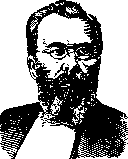
In 1863, he defended his dissertation for the degree of Doctor of Medicine on the topic of sanguineous perimetrial tumors. In 1866–1868, he worked in clinics, institutes, and hospitals in Germany, France, and England (under Langenbeck, Virchow, Nélaton, and Simpson). Upon returning from abroad, Sklifosovsky became the head of the surgical department of the Odessa City Hospital. Here, he successfully performed ovariotomies at the same time that Krassovsky began these operations in St. Petersburg. In 1870, Sklifosovsky was elected to the chair of surgical pathology in Kiev, but the outbreak of the Franco-Prussian War drew him to the theater of military operations, where he worked in the Prussian army. In 1871, Sklifosovsky was invited to the chair of surgical pathology with a clinic at the St. Petersburg Medico-Surgical Academy; in 1878, he was transferred to the chair of the academic surgical clinic. The Balkan War of 1876, and then the Russo-Turkish War of 1877–1878, again drew Sklifosovsky to the theater of military operations. He acted here both as an organizer and as a surgeon, providing operative assistance sometimes even under enemy fire. In 1880, Sklifosovsky was unanimously elected by the council of Moscow University to the chair of the faculty surgical clinic. Having received the clinic after the death of Professor Basov, Sklifosovsky completely changed its character, bringing it "to the level of the best European clinics." At that time in Moscow, antisepsis was recognized more theoretically than it was incorporated into everyday surgical practice, and the systematic implementation of antisepsis in Sklifosovsky's clinic marked an epoch in the development of Moscow surgery. Having been elected dean of the medical faculty of Moscow University, Sklifosovsky contributed much to the construction of new, extensive clinics on Devichye Pole, which replaced the cramped premises on Rozhdestvenka. In 1893, Sklifosovsky moved back to St. Petersburg to the position of director of the former Clinical Institute of Elena Pavlovna for physicians. He remained there until 1902, when he retired due to illness.
Sklifosovsky was a highly educated physician and surgeon. He was one of the first proponents of antisepsis, and later asepsis, in Russia. His fame as an excellent technician was considered indisputable. In addition to ovariotomies, Sklifosovsky performed a number of operations that were either just proposed or even first performed by him. He was famous as a lecturer and as an eloquent orator. Sklifosovsky was an initiator and one of the founders of the Pirogov Congresses. Twice he was elected honorary chairman of the congress (the 1st and 6th). No less important was Sklifosovsky's role as editor of "Khirurgicheskaya Letopis" (Surgical Chronicle) and "Letopis Russkoy Khirurgii" (Chronicle of Russian Surgery) and as the creator of a large school of surgeons (Tauber, Kuzmin, Spizharny, Sarychev, Levitsky, Lang, Yakovlev, Krasintsev, Sakharov, Dobrotvorsky, Zematsky, Aue, Yanovsky, and others). Frequently visiting clinics and congresses in Western Europe, Sklifosovsky served as a living link between Russian and Western surgery. Sklifosovsky left a significant number of printed works. In the biography of Sklifosovsky written by Spizharny, 87 titles are listed. Among Sklifosovsky's works, in addition to his dissertation, one can note 6 articles on ovariotomy (1865–1885), 2 articles on the removal of uterine tumors (1868–1869), several articles on the surgery of large joints, on arteriovenous aneurysms (1869), on goiter excision (1874), several works on military field surgery, on gastrostomy, on operations on the gallbladder, on jaw resection, on the ligation of the common carotid artery, cerebral hernias, suprapubic cystotomy and suturing of the bladder, on the antiseptic method, etc. In addition, one should mention the complete reports on the clinics he managed in St. Petersburg and Moscow.
Related articles
Cite this page
“Sklifosovsky, Nikolai Vasilyevich.” Soviet Medical Encyclopedia. English translation of Bolshaya Meditsinskaya Entsiklopediya, 1st ed. (Moscow, 1928–1936), ed. N. A. Semashko. https://sovietmedicalencyclopedia.pages.dev/article/sklifosovsky-nikolai-vasilyevich/