Gregarines
Historical document, translated for reference. It reflects medical knowledge of the 1920s–30s and is not medical advice.
Summary
Gregarines are a subclass of Sporozoa, parasitic protozoa found in various invertebrates, particularly in the intestine or body cavity of their hosts. They exhibit diverse body forms and reproduce both sexually and asexually, with characteristic spore-like stages for transmission.
Encyclopedia article (1928–1936)
GREGARINES, Gregarinina (from Latin grex - herd, crowd), a subclass of protozoa from the class Sporozoa, parasites of various invertebrates. They are found predominantly in the intestine or body cavity of hosts. The body of adult Gregarines has a very diverse form: from spherical to worm-like. The body is either entire (Acephalina) or divided by an ectoplasmic partition (Cephalina) into two parts: the anterior part, the protomerite, and the posterior part, the deuteromerite (see Fig. 1, a). The anterior end of the protomerite is usually provided with a special outgrowth, the epimerite, which serves for attachment to the walls of the intestine. For this purpose, the epimerite is often bordered by a crown of cuticular hooks or provided with needle-like appendages, etc. (see Figure 1, a). Upon reaching a certain age, usually before the beginning of sexual processes, the epimerite is shed. The body of Gregarines is covered with a thin cuticle, under which lies a layer of ectoplasm containing circular or longitudinal contractile fibrils, and according to recent data also supporting fibers. Often in the ectoplasm a special layer of jelly differentiates, capable of flowing out in thin streams through special small pores in the cuticle. The outflow of jelly streams serves for the characteristic gliding movement of Gregarines, similar to the movement of diatoms. The main mass of the body is occupied by endoplasm, filled with grains of reserve nutritional substance, paramylon. The endoplasm contains a round nucleus of the vesicular type with one or several intranuclear bodies. Mouth, pharynx, digestive and contractile vacuoles are absent. The processes of nutrition, respiration and excretion occur by the endosmotic method. The movement of Gregarines occurs either by the aforementioned gliding method or consists of sharp contractions of the body - the result of the action of muscle fibrils; many cavity-dwelling Gregarines are completely immobile. According to recent data, in the endoplasm of gregarines there are small inclusions that stain strongly with osmium - homologs of the Golgi apparatus. Many Gregarines in the adult state are connected in pairs, forming so-called syzygies (see Fig. 1, b). Usually the formation of syzygies is a precursor to sexual reproduction. Most gregarines (order Eugregarinida) reproduce only sexually, in some forms (order Schizogregarinida) sexual reproduction alternates with asexual. The sexual process consists of conjugation, i.e., the dense gluing together of two individuals, which then become surrounded by a common cyst (see Figure 2). The nucleus of each conjugant begins to divide, giving rise to an increasing number of daughter nuclei, the number of which reaches several hundred or more. These nuclei move to the periphery of each conjugant. Around each nucleus a small area of plasma separates off, and in this way special bodies - sporoblasts - are obtained. A significant part of the plasma of the conjugant, however, remains unused, forming a residual body. Each sporoblast turns into a sex cell, or gamete. Sometimes the gametes of both conjugants are the same, but often one of the conjugants produces immobile female gametes, and the other produces mobile, equipped with a flagellum male gametes (see Figure 3, a). Cases have been described where both conjugants, male and female, can be distinguished from the very beginning of conjugation by peculiarities in the structure of their plasma. The gametes of both conjugants copulate in pairs and by the fusion of their nuclei and plasma give zygotes, corresponding to fertilized eggs of multicellular organisms (see Figure 3, b). Each zygote is surrounded by a dense two-layer membrane and forms a sporocyst (see Figure 3, c). These are the resting stages of the cycle, serving for the spread of parasites to other individuals of the host. The contents of the sporocyst by successive division break down into a certain number (most often 8) worm-like separate entities, sporozoites (see Figure 3, c). The sporocysts of Gregarines have a very diverse form, may bear spines, hair-like appendages, etc. Due to the great constancy of form, sporocysts play an important role in the taxonomy of Gregarines (see Figure 4). Cysts with sporocysts leave the host's body. When swallowed by a new host individual, the cysts burst in its intestine, the sporocysts open and release the sporozoites. The latter penetrate with their anterior end into the epithelium of the intestine. The sporozoites of intestinal Gregarines remain attached to the epithelium, while the sporozoites of cavity-dwelling ones pierce the intestine and penetrate into the body cavity. The sporozoites gradually grow, differentiate into parts (in Cephalina) and reach the adult state, then again proceeding to sexual reproduction. In the order Schizogregarinida, asexual reproduction is inserted into the cycle. The grown sporozoites break down into a group of separate entities, merozoites, and only these latter, in turn, growing, proceed to the sexual processes. The reproduction of grown sporozoites contributes to the intensification of infection within the same host individual. Most Gregarines complete their entire cycle in one host, however, in some Schizogregarinida a change of hosts is observed. Thus, in Porospora asexual reproduction takes place in the intestine of crabs, and sexual reproduction inside the gills of mollusks. The chromosomal composition of the gregarine nucleus is very interesting. According to the data of Jameson and Dobell (1918), gregarines are haploid organisms most often with an odd number of chromosomes (3, 5, 7). Their gametes are also haploid. Only the zygotes of Gregarines have a diploid nucleus composition. The first division of the zygote nucleus is already reductional and gives two nuclei with a haploid set of chromosomes. According to other data (Mulsow, 1911; Calkins, 1927), Gregarines in the adult state are diploid, and the reduction of the number of chromosomes occurs only during the division of the nuclei of conjugants, immediately preceding the formation of sporoblasts. This means that only the gametes are haploid, while their copulation marks the return to the diploid state. Gregarines have no practical significance as pathogenic organisms. As a rule, they do not have a noticeable harmful effect on hosts, although sometimes under their influence partial castration of the host has been observed. The closest relatives of Gregarines among other Sporozoa are the coccidia.
Figure 1. a - adult gregarine; b - two gregarines in the state of syzygy.

Figure 2. Two gregarines, conjugating inside a cyst; the nucleus divides into many small nuclei.
Figure 3. a - copulation of male and female gametes; b - zygote with the first division of the nucleus; c - formed sporocyst with 8 sporozoites inside.

The main mass of the body is occupied by endoplasm, filled with grains of reserve nutritional substance, paramylon. The endoplasm contains a round nucleus of the vesicular type with one or several intranuclear bodies. Mouth, pharynx, digestive and contractile vacuoles are absent. The processes of nutrition, respiration and excretion occur by the endosmotic method. The movement of Gregarines occurs either by the aforementioned gliding method or consists of sharp contractions of the body - the result of the action of muscle fibrils; many cavity-dwelling Gregarines are completely immobile. According to recent data, in the endoplasm of gregarines there are small inclusions that stain strongly with osmium - homologs of the Golgi apparatus. Many Gregarines in the adult state are connected in pairs, forming so-called syzygies (see Fig. 1, b). Usually the formation of syzygies is a precursor to sexual reproduction. Most gregarines (order Eugregarinida) reproduce only sexually, in some forms (order Schizogregarinida) sexual reproduction alternates with asexual. The sexual process consists of conjugation, i.e., the dense gluing together of two individuals, which then become surrounded by a common cyst (see Figure 2). The nucleus of each conjugant begins to divide, giving rise to an increasing number of daughter nuclei, the number of which reaches several hundred or more. These nuclei move to the periphery of each conjugant. Around each nucleus a small area of plasma separates off, and in this way special bodies - sporoblasts - are obtained. A significant part of the plasma of the conjugant, however, remains unused, forming a residual body. Each sporoblast turns into a sex cell, or gamete. Sometimes the gametes of both conjugants are the same, but often one of the conjugants produces immobile female gametes, and the other produces mobile, equipped with a flagellum male gametes (see Figure 3, a). Cases have been described where both conjugants, male and female, can be distinguished from the very beginning of conjugation by peculiarities in the structure of their plasma. The gametes of both conjugants copulate in pairs and by the fusion of their nuclei and plasma give zygotes, corresponding to fertilized eggs of multicellular organisms (see Figure 3, b). Each zygote is surrounded by a dense two-layer membrane and forms a sporocyst (see Figure 3, c). These are the resting stages of the cycle, serving for the spread of parasites to other individuals of the host. The contents of the sporocyst by successive division break down into a certain number (most often 8) worm-like separate entities, sporozoites (see Figure 3, c). The sporocysts of Gregarines have a very diverse form, may bear spines, hair-like appendages, etc. Due to the great constancy of form, sporocysts play an important role in the taxonomy of Gregarines (see Figure 4). Cysts with sporocysts leave the host's body. When swallowed by a new host individual, the cysts burst in its intestine, the sporocysts open and release the sporozoites. The latter penetrate with their anterior end into the epithelium of the intestine. The sporozoites of intestinal Gregarines remain attached to the epithelium, while the sporozoites of cavity-dwelling ones pierce the intestine and penetrate into the body cavity. The sporozoites gradually grow, differentiate into parts (in Cephalina) and reach the adult state, then again proceeding to sexual reproduction. In the order Schizogregarinida, asexual reproduction is inserted into the cycle. The grown sporozoites break down into a group of separate entities, merozoites, and only these latter, in turn, growing, proceed to the sexual processes. The reproduction of grown sporozoites contributes to the intensification of infection within the same host individual. Most Gregarines complete their entire cycle in one host, however, in some Schizogregarinida a change of hosts is observed. Thus, in Porospora asexual reproduction takes place in the intestine of crabs, and sexual reproduction inside the gills of mollusks. The chromosomal composition of the gregarine nucleus is very interesting. According to the data of Jameson and Dobell (1918), gregarines are haploid organisms most often with an odd number of chromosomes (3, 5, 7). Their gametes are also haploid. Only the zygotes of Gregarines have a diploid nucleus composition. The first division of the zygote nucleus is already reductional and gives two nuclei with a haploid set of chromosomes. According to other data (Mulsow, 1911; Calkins, 1927), Gregarines in the adult state are diploid, and the reduction of the number of chromosomes occurs only during the division of the nuclei of conjugants, immediately preceding the formation of sporoblasts. This means that only the gametes are haploid, while their copulation marks the return to the diploid state. Gregarines have no practical significance as pathogenic organisms. As a rule, they do not have a noticeable harmful effect on hosts, although sometimes under their influence partial castration of the host has been observed. The closest relatives of Gregarines among other Sporozoa are the coccidia.
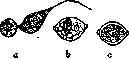
Figure 4. Various forms of gregarine sporocysts.
Cysts with sporocysts leave the host's body. When swallowed by a new host individual, the cysts burst in its intestine, the sporocysts open and release the sporozoites. The latter penetrate with their anterior end into the epithelium of the intestine. The sporozoites of intestinal Gregarines remain attached to the epithelium, while the sporozoites of cavity-dwelling ones pierce the intestine and penetrate into the body cavity. The sporozoites gradually grow, differentiate into parts (in Cephalina) and reach the adult state, then again proceeding to sexual reproduction. In the order Schizogregarinida, asexual reproduction is inserted into the cycle. The grown sporozoites break down into a group of separate entities, merozoites, and only these latter, in turn, growing, proceed to the sexual processes. The reproduction of grown sporozoites contributes to the intensification of infection within the same host individual. Most Gregarines complete their entire cycle in one host, however, in some Schizogregarinida a change of hosts is observed. Thus, in Porospora asexual reproduction takes place in the intestine of crabs, and sexual reproduction inside the gills of mollusks. The chromosomal composition of the gregarine nucleus is very interesting. According to the data of Jameson and Dobell (1918), gregarines are haploid organisms most often with an odd number of chromosomes (3, 5, 7). Their gametes are also haploid. Only the zygotes of Gregarines have a diploid nucleus composition. The first division of the zygote nucleus is already reductional and gives two nuclei with a haploid set of chromosomes. According to other data (Mulsow, 1911; Calkins, 1927), Gregarines in the adult state are diploid, and the reduction of the number of chromosomes occurs only during the division of the nuclei of conjugants, immediately preceding the formation of sporoblasts. This means that only the gametes are haploid, while their copulation marks the return to the diploid state. Gregarines have no practical significance as pathogenic organisms. As a rule, they do not have a noticeable harmful effect on hosts, although sometimes under their influence partial castration of the host has been observed. The closest relatives of Gregarines among other Sporozoa are the coccidia.
The sporozoites gradually grow, differentiate into parts (in Cephalina) and reach the adult state, then again proceeding to sexual reproduction. In the order Schizogregarinida, asexual reproduction is inserted into the cycle. The grown sporozoites break down into a group of separate entities, merozoites, and only these latter, in turn, growing, proceed to the sexual processes. The reproduction of grown sporozoites contributes to the intensification of infection within the same host individual. Most Gregarines complete their entire cycle in one host, however, in some Schizogregarinida a change of hosts is observed. Thus, in Porospora asexual reproduction takes place in the intestine of crabs, and sexual reproduction inside the gills of mollusks. The chromosomal composition of the gregarine nucleus is very interesting. According to the data of Jameson and Dobell (1918), gregarines are haploid organisms most often with an odd number of chromosomes (3, 5, 7). Their gametes are also haploid. Only the zygotes of Gregarines have a diploid nucleus composition. The first division of the zygote nucleus is already reductional and gives two nuclei with a haploid set of chromosomes. According to other data (Mulsow, 1911; Calkins, 1927), Gregarines in the adult state are diploid, and the reduction of the number of chromosomes occurs only during the division of the nuclei of conjugants, immediately preceding the formation of sporoblasts. This means that only the gametes are haploid, while their copulation marks the return to the diploid state. Gregarines have no practical significance as pathogenic organisms. As a rule, they do not have a noticeable harmful effect on hosts, although sometimes under their influence partial castration of the host has been observed. The closest relatives of Gregarines among other Sporozoa are the coccidia.
The chromosomal composition of the gregarine nucleus is very interesting. According to the data of Jameson and Dobell (1918), gregarines are haploid organisms most often with an odd number of chromosomes (3, 5, 7). Their gametes are also haploid. Only the zygotes of Gregarines have a diploid nucleus composition. The first division of the zygote nucleus is already reductional and gives two nuclei with a haploid set of chromosomes. According to other data (Mulsow, 1911; Calkins, 1927), Gregarines in the adult state are diploid, and the reduction of the number of chromosomes occurs only during the division of the nuclei of conjugants, immediately preceding the formation of sporoblasts. This means that only the gametes are haploid, while their copulation marks the return to the diploid state. Gregarines have no practical significance as pathogenic organisms. As a rule, they do not have a noticeable harmful effect on hosts, although sometimes under their influence partial castration of the host has been observed. The closest relatives of Gregarines among other Sporozoa are the coccidia.
Related articles
Mentioned in
Cite this page
“Gregarines.” Soviet Medical Encyclopedia. English translation of Bolshaya Meditsinskaya Entsiklopediya, 1st ed. (Moscow, 1928–1936), ed. N. A. Semashko. https://sovietmedicalencyclopedia.pages.dev/article/gregarines/