Lighting
Historical document, translated for reference. It reflects medical knowledge of the 1920s–30s and is not medical advice.
Summary
This article from the 1928-1936 Soviet Great Medical Encyclopedia discusses natural and artificial lighting, focusing on the composition of sunlight, atmospheric scattering and absorption, and the hygienic significance of natural light in urban planning and housing.
Encyclopedia article (1928–1936)
LIGHTING. A distinction is made between natural and artificial lighting. Natural lighting refers to illumination from natural sources, principally the sun, whereby the sun's rays may illuminate directly or by reflection from the moon, scattering in the atmosphere, on clouds, on surrounding objects, and so on. As a result of absorption in the Earth's atmosphere, the solar spectrum is practically limited to the range from 280-290 mµ to 2,800 mµ in wavelength; the infrared part corresponds to 2,800-760 mµ; the visible part from 760 to 400 mµ; and the ultraviolet from 400 to 290 mµ. The solar spectrum is continuous, corresponding to the spectrum of incandescent solid or liquid bodies covered by gases that produce absorption lines precisely characterizing the chemical composition of the sun. The primary source of the sun's energy remains unexplained to this day. Most of the sun's rays do not reach the solid surface of the Earth, partly being reflected by the atmosphere, but chiefly being absorbed by it, especially by the water vapor, dust, and smoke contained within it. The visible part of the solar rays is absorbed by 12-19%, the ultraviolet part by 56%, and the infrared rays by 60%. The optical part of the sun's rays undergoes light scattering in the atmosphere through refraction and reflection from suspended particles. This phenomenon causes the blue color of the sky; the higher we climb into the mountains, the darker and denser the color of the sky becomes, and finally at great altitudes (above 10 km) the color of the sky must approach black, against the background of which the sun and stars can be seen simultaneously. This is the result of a gradual decrease in light scattering due to the great rarefaction of the air and a decrease in the number of suspended particles. Consequently, besides the direct rays of the sun, the Earth is illuminated by scattered rays from the celestial vault and clouds, which create softer shadows and soften the contrasts of lighting, which are especially strong under a cloudless sky. Another reason for the attenuation of sunlight and the change in its color as it passes through the gaseous envelope is the absorption of a certain part of the spectrum by it. Oxygen and nitrogen in pure form absorb rays in a very small quantity. The admixture of carbon dioxide, NH3, ozone, and water vapor greatly increases absorption. According to Garibaldi's experiments, if air absorption is taken as 1, then at a pressure of 760 mm, CO2 absorbs 92, NH3 absorbs 546, and water absorbs 7,937. The amount of water vapor producing a pressure of 9-10 mm can absorb 100 times more rays than air. Of very great importance for changing the color of the sunlight reaching us is the scattering of rays in the atmosphere by molecules and suspended particles. According to Rayleigh's law, light scattering is inversely proportional to the fourth power of the wavelength of light; therefore, violet and blue rays are scattered predominantly (which determines the blue color of the sky). The passing rays are thus relatively enriched in red rays. The thicker the atmospheric layer through which the sun's rays must pass, and the more scattering particles there are in the atmosphere (for example, in foggy weather), the redder the sun must appear. This explains the "red" sun at sunrise and sunset, red dawns, and so on. Due to reduced absorption and scattering, sunlight in the mountains is richer in infrared and ultraviolet rays. Ultraviolet radiation in Davos is 4 times greater than usual. Daily fluctuations in sunlight depend on the time of day and the position of the sun. When at the zenith, the sun shines 1,300-1,400 times stronger than on the horizon. In middle latitudes, only in summer at noon does the sun approach the zenith and send nearly perpendicular rays. The closer to the equator, the more the difference in the duration of day and night decreases. As already mentioned, two types of natural lighting should be distinguished: by direct sunlight and by light scattered from air layers, clouds, and the Earth's surface. The first type of natural lighting is characterized by more or less sharp contrasts between places illuminated by direct and diffuse light, and shadows illuminated only by the latter. A direct relationship between them is not always observed: direct light can be very bright while scattered light is weak, and conversely, direct light is weakened by clouds while scattered light is strong, for example, due to a snow cover reflecting the rays. Illumination by scattered light depends on the height of the sun above the horizon, the transparency of the air, cloud cover, and the nature of the Earth's surface. Thus, according to Kalitin's research in Slutsk (formerly Pavlovsk) using a photocell, the change in diffuse radiation occurs as follows: Sun height (in thousand luxes) at 1° is 1.3; 3° is 2.2; 5° is 3.0; 10° is 5.0; 15° is 6.2; 20° is 6.6; 25° is 9.6; 30° is 11.1; 35° is 12.2; 40° is 13.6; 45° is 14.6; 60° is 16.3. At sunrise and sunset, scattered illumination is about 700 lux; an increase in height to 4° provides an increase of 500 lux, from 4 to 10° provides an increase of 400 lux, from 10 to 20° by 300, and further up to 55° almost uniformly by 250 lux. The greatest role in fluctuations of diffuse radiation belongs to clouds. They can rapidly change illumination in one direction or another depending on density, degree of sky coverage, and their shape. With a sun height of 15°, a cloudless sky provides an illumination of 6.1 thousand lux; with a cloud cover of "3" (i.e., when 0.3 of the sky is covered), the illumination is 6.8; with a cloud cover of "10", it is 7.6 thousand lux. With the sun rising 50° above the horizon, illumination under the same conditions is 13.8–15.2–26.3 thousand lux. Above most industrial centers, a mass of smoke and dust always hangs, almost imperceptible within cities and clearly visible from afar. Thus, in the center of Hamburg, the duration of sunshine provides only 28% of the possible hours of sunshine, whereas on its outskirts it is 35%. In the center of London (the City), sunshine provides 23%, and in its suburbs (Kew) up to 31%. In winter, this difference is even greater. Besides the direct blocking of sun rays by dust and smoke particles, the intensification of fogs due to the condensation of water vapor close to saturation on the surface of dust and smoke particles plays a major role here. The ultraviolet part of solar radiation suffers particularly. Determining the latter by the fading of a methylene blue solution in acetone in quartz capillaries, Owens found that in the center of London compared to the suburban garden of Hampstead, ultraviolet radiation is 2 times less, and compared to the Frodsham sanatorium, the ultraviolet radiation of central London is 30 times less. In view of the role of ultraviolet rays as the equivalent of vitamin D in the etiology of rickets, lymphatic tuberculosis, anemia, etc., it is quite natural that rickets is called the "English disease," that according to Schmorl, Lewi, and others, rickets in capitalist countries is a disease of industrial centers, that the number of rachitic children in them reaches 90%, and that the number of children with lymphatic tuberculosis increases to 50-60% (while, needless to say, the main role is played by the entire socio-economic complex of labor and living conditions of the proletariat and urban poor). Lighting by natural direct and scattered light is very unequal from the point of view of the hygiene of cities, dwellings, and enterprises. Direct sunlight possesses a much greater biological value compared to scattered light by virtue of greater bactericidal action and effect on cells. Sun rays, heating walls, contribute to the conservation of heat and the drying of premises. Dwellings not illuminated by the sun are always distinguished by a larger content of both bacteria and molds in the air and on the walls. Illumination by the sun is especially valuable in winter, when there is no opportunity to open windows and properly ventilate the premises. Very early morning rays and very late evening rays have a very weak effect in our middle latitudes when houses face south; therefore, it is more expedient to plan streets diagonally from northeast to southwest and from northwest to southeast. In the south (in the Crimea, Transcaucasia, Turkestan), with an excess of sunlight overheating dwellings, an orientation from west to east is preferable to irradiate the dwelling only with oblique rays of the sun. In the north of the USSR (above 60° N latitude), the arrangement of dwellings is essentially indifferent because the sun changes its height very little; nevertheless, a southern orientation is more advantageous. With cramped construction and the presence of darkening buildings, one has to solve the problems of determining the maximum height of the darkening building, the width of the streets, and the most advantageous direction of the streets for the purpose of the best illumination by the sun. The length of the shadow at noon depends on the height of the sun above the horizon, and consequently on the time of year and the geographical position of the location. When the sun is at the zenith, houses cast no shadows; when the sun is at an angle of 45° to the horizon, houses will cast a shadow whose length is equal to their height, because the length of the shadow and the height of the house in this case form the two legs of an isosceles right triangle. With a decrease in the angle of incidence of the rays to the horizon, the shadow length will be greater than the height of the house; it will be equal to the height of the house divided by the tangent of the angle of incidence of the rays. Usually, construction practice follows a compromise line, i.e., illumination of the facades of lower floors at the lowest position of the sun is not pursued, but only during the time while the sun is higher than 45° above the horizon (in this case, the width of the street is equal to the height of the houses).
In Central Europe, at its highest position, the sun rises in June only to an altitude of 62.4°, in May and July to 58.3°, and in April and August to 56.4°. Consequently, only in these months will the lower floors of southern facades be illuminated by the sun, while in the remaining 7 months (winter, part of autumn and spring) they will be deprived of solar lighting. According to the building statute of the USSR, the width of streets must not be less than 21 m, which generally corresponds to the adopted height of houses. The radial and concentric street system of new, healthy cities (according to data from the 1930 Dresden Hygienic Exhibition) is due not only to transport conveniences, but also to a greater uniformity in the distribution of sunlight for all quarters. To increase the access of sunlight to all floors, architects Sarazin and Sauvage even proposed building the facades of houses in the form of steps with terraces, such that the second floor receded from the facade of the first floor by the width of the terrace, the facade of the third receded from the second, and so on. Thanks to this, the width of the street between the roofs is significantly greater than at the base of the houses. Such an experiment was carried out in Paris (Rue Vavin). When deciding the question of the orientation of a building, it must be borne in mind that orientation towards the north gives lighting that is the weakest in intensity and greatest in uniformity; towards the south—the strongest in intensity and least in uniformity; orientation towards the east gives the greatest in the first half of the day and the least in the second, and towards the west—the reverse. It is mandatory to build with their facades facing the sun, given the possibility of their free placement, hospitals, children's homes, nurseries, sanatoriums, and rest homes. If schools operate in the first half of the day, it is better to arrange their windows facing southwest; if they operate in the second half—southeast. Among living rooms, those for prolonged daytime stay are planned with windows facing the sun. Premises having a household purpose (kitchens, pantries, toilets, lobbies, corridors) are located with windows facing the northern side. Bedrooms, as rooms for night stay, and dining rooms, for temporary stay, are more expediently located on the north as well. Taking into account all the hygienic significance of sunlight, one cannot fail to point out its shortcomings, which consist in its blinding intensity, which greatly fatigues the vision, and in the creation of lighting contrasts and the unevenness of this lighting in general. For concentrated work, a uniformity of the intensity and color of lighting is necessary, which is best achieved by a northern orientation. The thermal action of the sun's rays, which contributes to the overheating of the room and the people located in it, can also be harmful. The use of diffused daylight, due to its uniformity, softness, and the absence of harsh shadows in it, is the main source of ordinary lighting, especially for work of a more or less delicate nature, as well as for reading and writing. Diffused light for the normal eye will never be excessive, and for rooms, only its lower limit can be in question. Therefore, the standardization of natural lighting in dwellings has been worked out in much more detail. To assess the natural lighting of premises, the following data serve: 1) the orientation of windows by the cardinal points; 2) the presence in front of the windows at a greater or lesser distance of objects obscuring the light (trees, walls, buildings, fences) and their coloring; 3) the floor level of the premises; 4) the number of windows and frames, window shapes, their distance from the ceiling and floor; 5) the presence of curtains, flowers, etc., on the windows; 6) the ratio of the glass surface of the windows to the floor area and cubic capacity; 7) the state of the glass surface in terms of contamination; 8) the transparency of the glass in relation to different rays of the spectrum; 9) the coloring of the walls of the room, ceiling, and floors; 10) the determination of the angles of incidence, aperture, and spatial angles; 11) the determination of the so-called daylight factor; 12) the determination of the magnitude of illumination by photometers. The significance of the first three points is clear from the preceding. The shape of windows is usually in the form of a quadrangle, arranged with its long side vertically or horizontally. For high rooms, the first shape is better, for low ones—the second. Windows with a rounded top illuminate less than ordinary ones of the same height. The arrangement and coloring of window jambs and sills are of great importance; beveled and painted white—they improve illumination. The greater the width of the piers, the smaller the window area. Regarding the distance of windows from the floor and ceiling, it should be noted that the smaller these distances are, the better the lighting. With a high position of the window, parts of the room near it are illuminated 4-5 times more than at the distant wall. With a low position of the window, the illumination near it is 100 or more times stronger than at the wall (according to the diagrams of the Dresden Hygienic Exhibition), i.e., a high arrangement of windows ensures a much greater uniformity of natural lighting. With natural lighting, further importance is attached to the ratio of the sum of the glass areas to the floor area. The greater this ratio, expressed as a fraction, is, the better the lighting. For schools, hospitals, nurseries, and hearths, the ratio is recommended from dressing rooms—for operating rooms and pe-
These values—even from—vary depending on window orientation and the latitude of the location. Facing north, as well as increasing the latitude of the location, requires increasing this coefficient. However, the limit to which the window surface can be increased depends on heating economics, because due to the high thermal conductivity of windows (single windows 5.2 instead of 0.8 for a normal brick wall), heating with large windows entails excessively high expenses. Double frames reduce this expense by half (5.2-2.2), but on the other hand, light absorption is almost doubled. Thus, single glass on average transmits 85% of light rays, double glass 75%, and so on. The contamination of the glass surface can also greatly reduce the amount of rays penetrating into the room. The chemical composition of glass has recently become the subject of extensive study by both hygienists and technicians. It can be considered proven that ordinary glass transmits almost no biologically active rays of the "Dorno" group, i.e., shorter than 315 mμ. To ensure natural lighting of rooms with full-fledged sunlight, i.e., light including ultraviolet radiation, modern technology proposes glazing with so-called uviol glass. These glasses are now also produced in the USSR. A comparison of their transmission capacity in percentages at the same thickness of 2 mm is expressed by the following table: Transmission capacity (in %) | Wavelength (in mμ) | Ordinary German glass | Uviol English | Uviol German (Jena) | Uviol of the Proletar plant in the Donbas | Uviol No. 750 of the Svoboda plant at Novoselie station, North-Western | 350 | 340 | 330 | 300 | 290 || 87 | 86 | 81 | 69 | 50 | 28 | 9 || 91 | 90 | 87 | 82 | 74 | 60 | 41 || 88 | 83 | 76 | 63 | 45 | 22 | 10 || 73 | 62 | However, it should be noted that uviol glasses over time, under the influence of solarization, i.e., exposure to sunlight or a quartz-mercury lamp, more or less lose their ultraviolet light-transmitting property. Glazing with such glasses should find application first of all in hospitals, sanatoriums, orphanages, day nurseries, kindergartens, and schools. Observation in some schools in England showed, all other things being equal, a significant increase in weight and hemoglobin in children who studied in classrooms glazed with uviol glass. Recently, glasses capable of blocking the thermal rays of the sun have appeared on the market (according to data from the Dresden Hygiene Exhibition), which is advisable for glazing storage rooms for perishable products, kitchens, and rooms facing south and suffering from overheating in summer. These glasses are greenish in color and, unlike uviol glasses, contain iron. Regarding the significance of reflected lighting in rooms, it should be further noted the role of wall and ceiling contamination, which can reduce the degree of lighting by up to 30%. It has been established that the color of room walls also strongly participates in the overall illumination. Lundberg established that to obtain the same degree of illumination when upholstered with black cloth, 100 candles are required, with dark brown wallpaper—87 candles, with blue—72, light yellow—60, white wood—50, chalk whitewash—15. According to other data, if white paint reflects 92% of falling light, light spruce wood—60%, light green paint—46%, light yellow—40%, light blue—30%, dark yellow—20%, dark green—10%, dark brown—9%, dark blue—6%, black—1-2%. The color of facades on the opposite side of the street plays the same role. To assess the constant conditions of natural lighting, geometric methods are used to determine: the angle of incidence of rays, the angle of aperture at which the sky is visible from the window, and the visible area of the celestial vault (solid angle). The angle of incidence (or elevation) is understood as the angle formed on a vertical plane by the intersection of the line from the upper outer edge of the window with the horizontal line (Figure 1, ABC). The further from the window, the sharper this angle, the same beam of light from the window is distributed over a larger floor area, and the lighting weakens according to Newton's law inversely proportional to the squares of the distance. The minimum of sufficient lighting is obtained when this angle is equal to 27°, which occurs only when the distance of the working point from the window is twice as large compared to its height (since at an angle of 27° the cosine—distance from the window—is twice as large as the sine—height of the window). Consequently, if the room has a depth greater than twice the length of the window, then further points will be insufficiently lit, and the nearest ones satisfactorily. Thus, twice the length of the window, plotted horizontally, determines the angle of incidence of 27° and the boundary of sufficiency of natural lighting. If we determine the angle of incidence from any other point and find it to be greater than 27°, we can consider this place satisfactorily lit. However, one can also imagine a situation where there is a wall in front of the window; in this case, of course, the angle of incidence by itself will not determine the sufficiency of lighting. The specified norm of 27° for the angle of incidence is associated with another condition: the visibility
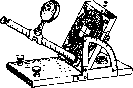
Figure 2. Weber's goniometer: 1—magnifying glass; 2—screen.
by the visibility of the minimum section of the sky. This condition is given by the definition of the so-called aperture angle (Foerster), i.e., that angle on the vertical plane at which the sky is visible from the working point. It is formed by the intersection of lines going to the working point: from the ridge of the roof of the opposite house and from the upper outer edge of the window (ABB in Fig. 1). For a more precise determination of the visible section of the sky, Weber's spatial goniometer is used (Fig. 2). In this case, a spatial, or solid, angle is called j
pyramid whose vertex lies at the working point, and whose base is the part of the vault of heaven bounded by the edges of the window and the upper edge of the roof of the opposite building or the edge of trees. The instrument is a magnifying glass with a focal length of 11.459 cm. The magnifying glass moves along a rod divided into millimeters. Opposite the magnifying glass on the rod, a screen with circles made of millimeter paper is fixed. Having placed the instrument in the place of the table whose lighting one wants to determine, with the magnifying glass facing the window, the rod is raised so that the image of the section of the sky is in the middle of the paper circle. If the magnifying glass is set at a focal length of 11.459 cm, a sharp image of the boundaries of the visible section of the vault of heaven may not be obtained; in this case, an exact adjustment is made, the image on the paper is outlined with a pencil, and the number of square millimeters is counted; dividing it by 4, the number of square degrees is obtained. Since the magnifying glass is not at 11.46 cm, a correction is introduced into the found number of square degrees by multiplying the found number of degrees by h2/11.462, where h is the actual distance in centimeters of the magnifying glass from the screen. Finally, a correction should be made for the angle of incidence (elevation) to which the magnifying glass had to be raised so that the rays fell on the screen vertically. According to Cohn's research, the illumination norm should be, with normal incidence of rays on the working surface, a minimum of 50°; with the incidence of rays at an acute angle, the spatial angle ω (the section of the visible sky) must be greater the sharper the elevation angle, since the illumination decreases in proportion to the sine of the angle of incidence; hence ω·sin α = 50 or ω = 50/sin α. Knowing the elevation angle α, by dividing 50° by the sine we will find the norm for the required section of the sky. With it, we must compare the actually already determined section with the correction for elevation. To assess the adequacy of daylighting in recent years, the determination of the so-called daylight factor has been recommended. If we denote by E the illumination created by the light from a section of the vault of heaven falling on the workplace inside the room, and by R the external horizontal illumination created by the entire vault of heaven, then the daylight factor e = (E/R)·100; direct sunlight and rays reflected from the walls and the ceiling are not taken into account here. This factor is expressed as a percentage. It can be determined photometrically or stereometrically by the formula e = (I·ω)/(3.14·2·100)·Σω, where π = 3.14, Σ is the sum of the values of I·ω; I is the product of the ratio of the glass area to the total area of the light opening by the light transmittance coefficient of ordinary glazing (0.85) or double glazing (0.75) (the light opening is bounded by the edges of the window opening along the outer surface of the wall); ω is the reduced spatial angle, or its horizontal projection (in square degrees) (the daylight factor can also be determined photometrically). All geometric methods can provide an assessment only for the constant lighting conditions of particular rooms, but they cannot provide an assessment of the lighting itself at any given moment. Conditions may be very favorable, but the lighting may be very weak due to cloud cover, dirty panes, soot-covered walls and ceiling, and finally the time of day and year. For hygienic evaluation at any moment, lighting engineering units are used that characterize the magnitude of the luminous flux, the illumination of a surface, the luminous emittance of a surface, the luminous intensity of a light source, and its brightness. These units were developed and refined by the International Commission on Illumination in 1921, 1924, and 1928, were adopted by the 2nd All-Union Lighting Engineering Conference, and were put into practice by a resolution of the Presidium of the Supreme Council of the National Economy of the USSR No. 815 of May 13, 1925, in the form of the "Rules for Light Measurements". The unit of luminous flux is the lumen; this is the flux emitted within a solid angle of one steradian by a point light source placed at its vertex, shining equally in all directions within this angle with a luminous intensity of one international candle. The steradian is the unit of solid angle; it is equal to a cone whose vertex lies at the center of a sphere, and whose base lies on the surface and is equal to the area corresponding to the square of the radius of this sphere. Lumen-second is the amount of light or light energy that is expended during the generation of a luminous flux of one lumen for one second. The magnitude of light energy is designated by the letter L. Depending on the size of the surface over which a luminous flux of one lumen is distributed, one or another degree of its density and illumination of this surface is obtained. If it is evenly distributed over a spherical surface of 1 m2, then this degree of illumination is called a lux (see); when the luminous flux is distributed over a spherical surface of 1 cm2 (i.e., ten thousand times smaller), the degree of illumination will be 10 thousand times greater, and this degree is called a phot. The thousandth fraction of this illumination is called a millifoot-candle [millifhot]; it is ten times greater than one lux. A thousand lux is called a kilolux; it is ten times weaker than a phot. If we designate illumination by the letter E, luminous flux by F, and surface by S, then illumination is determined by the ratio: E = F/S.
A phot-second is the amount of illumination received by a surface when its illuminance is one phot for one second. The rad-phot is a unit of luminous emittance or luminous flux density uniformly in all points of a luminous flat surface of 1 cm2, which emits a luminous flux of one lumen in one direction from itself. Denoting the luminous emittance by the letter R, we have R=F/S. The rad-phot is [garbled text]. A rad-phot-second is the amount of lighting emitted in one second by a surface of 1 cm2 in the form of a luminous flux of 1 lumen for 1 second. A very important concept in the study of lighting is the term luminous intensity. Let us assume that we have a point source of light uniformly emitting light rays in all directions of the surrounding space. Let us mentally limit this space by an infinitely small solid angle (ω), at the apex of which the point source of light is located. In this angle, an infinitely small amount of rays will be enclosed, constituting the luminous flux (F). The ratio of the flux to the angle (F/ω) is the angular density of the luminous flux, or luminous intensity in a given direction; it is designated by the letter I. Hence I=F/ω. The luminous intensity of lighting sources is measured in candles, of which the most widespread is the so-called international candle; it represents the unit of luminous intensity emitting a luminous flux of one lumen, uniformly distributed within a spatial angle of 1 steradian. To measure the intensity of various sources of artificial and natural lighting, light standards are used, which reproduce the unit of luminous intensity. In the USSR and the USA, such standards are incandescent electric lamps, precisely constructed and operating under certain conditions of voltage and amperage. In France, the platinum standard of Violle is used, i.e., the luminous intensity of 1 cm2 of melting platinum; 1/20 of a centimeter corresponds to the international candle and is called a «carcel». In England, the comparison standard is the Vernon-Harcourt pentane lamp. In Germany, it is the Hefner lamp (Alteneck), which is 9.91% weaker than the international one. It represents a metal lamp with a braided wick, in which amyl acetate burns with a flame 4 cm long and 0.8 cm wide. There is also the concept of the brightness of a lighting source. It depends, on the one hand, on the intensity of the light source, and on the other hand, on the direction of the rays. The same luminous surface, at the same intensity of the light source, will have different brightness for different directions. For each given direction, the brightness of the visible luminous surface can be characterized by the ratio of the luminous intensity in this direction to the projection of the surface onto a plane perpendicular to the given direction. If we designate the brightness for a given direction as Be, its angle with the normal to the luminous surface as θ, the luminous intensity in the given direction as Ie, and the luminous surface as S, then we will have Be = Ie : (S·cos θ). Brightness is measured by a unit called the «stilb», which represents a flat surface of 1 cm2, uniformly emitting light in the direction perpendicular to itself with a luminous intensity of one international candle. The stilb is equal to a candle : 1 cm2. The difference between the luminous emittance of a light source and brightness is that the former is characterized by luminous flux, while the latter is characterized by luminous intensity; the former does not indicate how the flux from the surface is distributed in various directions, which is indicated by the concept of brightness. Brightness is the only light quantity accessible to the eye; all others are not detected by vision. The most frequently used units are the lux, which characterizes illuminance, and the international candle, which is the unit of luminous intensity. Illuminance and luminous intensity are measured by instruments called photometers. Hygienic requirements for artificial lighting are expressed in the following: 1) it must be sufficient; 2) uniform in spatial distribution, i.e., not creating sharp contrasts of lighting in terms of light and shadows; 3) uniform in time, i.e., not producing fluctuations in the intensity of the light source (flickering); 4) not creating glare; 5) not spoiling the air with combustion products or changes in its chemical composition; 6) being close to daylight in color and spectrum; 7) not having an excess of thermal and ultraviolet rays; 8) being fire-safe; 9) safe with respect to electrical discharges and explosions; 10) allowing adjustment; 11) being simple to handle; 12) cheap in terms of operation. As the most primitive source of artificial lighting, candles and kerosene should be placed in first place. Gas lighting is obtained by burning a mixture of H2, CH4, CO, and heavy hydrocarbons in various combinations, bearing the general name of illuminating gas. The ratio between its constituent parts and impurities in connection with its origin changes, making one or another gas more or less suitable for lighting and changing its hygienic significance. Coal gas, due to its high H content, gives a high temperature; petroleum and wood gases are distinguished by the greatest brightness due to the abundance of heavy hydrocarbons; wood gas is the most dangerous due to its high CO content (up to 38%), and therefore its use in dwellings, especially in bedrooms, is not recommended. As impurities harmful to lighting, illuminating gas (coal gas) contains H2S, NH3, CO2, N, and HCN; these gases must be completely removed during purification, which is not always successful. An admixture of illuminating gas to the air in an amount of 0.1–0.2 cm3 per liter is already clearly felt by the sense of smell. Of particularly harmful significance, after CO, are the admixtures of nitrous and sulfurous acids. Upon the combustion of only 1 liter of illuminating gas, up to 0.4 mg of N2O3 and up to 0.55 mg of SO2 can be formed per 100 m3 of air; N2O3 is determined by absorption with water colorimetrically using Griess reagent, and SO2 by absorption with bromine water followed by precipitation of the formed H2SO4 with barium chloride after acidification with HCl. The maximum admixture of SO2 permitted in England is 57 mg per 100 m3 of air. Gas leakage from accidentally open taps or damaged gas pipes can create an explosion hazard, which is especially strong when the ratio of gas to air is in the proportion of 1:6–8 (15%). A mixture below 5% and above 30% does not explode. A leakage of 3% to 6% of gas relative to the total volume of production is considered normal. The underground network can produce very dangerous accumulations of gases in sewer pipes and tunnels, which produce explosions capable of destroying entire blocks, as proven by the 1928 cases in London. Burners used for gas lighting are of the open type with a flat flame and cylindrical with a closed flame (Argand burners). The latter are more hygienic, since they provide an even and strong flame due to a large air supply and its protection by glass. However, an excess of air leads to such strong and rapid combustion of carbon particles that the flame becomes non-luminous and has only thermal significance. A lack of air produces a smoky flame. The gas consumption in an Argand burner is 120–280 liters per hour at a luminous intensity of 100 normal candles. A major improvement in gas and kerosene lighting was the use of caps or mantles invented by Dr. Auer von Welsbach, consisting of metal oxides of thorium and cerium and heated to incandescence in a gas flame. Auer light at the same gas consumption is 8–10 times brighter than the light of ordinary gas burners; accordingly, the amount of heat, CO2, and water vapor produced per unit of light decreases. The use of Auer mantles for lighting with kerosene, gasoline, and alcohol vapors has also significantly improved the utilization of these materials for lighting. With an excess of kerosene or gasoline vapors, the burner begins to smoke and burns with an external poorly luminous flame. One must also note the tiresome noise in incandescent-kerosene lighting and the weaker hiss with gasoline and alcohol. When burning alcohol, less CO2 and H2O are developed than when burning kerosene; the light of the former is closer to daylight, since kerosene light contains more yellow and green rays. Alcohol burners do not smoke. Gasoline lighting is more dangerous than others in terms of fire hazard. Among the modifications of gas lighting, carbureted gas should be mentioned. Coal gas, as containing relatively few carbon particles compared to other types of gas, is enriched with them by passing it through a reservoir with benzene or gasoline. Due to this, the brightness of the flame increases. Carbureted water gas is obtained by the decomposition of water vapors upon contact with red-hot coke or anthracite according to the formula C + H2O = CO + H2, whereby equal volumes of H2 and CO are obtained; then this gas, as producing a non-luminous flame, is also saturated with carbon by passing it through heated benzene. The use of this gas in dwellings is not recommended due to its high CO content. In factories, it is used with an admixture of mercaptan so that gas leaks can be easily recognized by smell.
Among the new sources of gas in Germany and in the USA, gas obtained by methane fermentation in sewage treatment plants from household wastewater is coming into use for lighting (as well as for heating and heat engines). Such installations exist in Berlin (Stansdorf and Wasmansdorf stations), in Essen, Munich, Danzig, and others. The gas contains up to 60% CH4 and 30% H. According to calculations, each cubic meter of wastewater can yield up to 50 liters of gas, and each person excretes an amount of sewage per day from which up to 11 liters of illuminating gas is obtained. Acetylene lighting has calcium carbide as its power source. Acetylene in the same burners produces gas 20 times brighter than illuminating gas. With poor purification, acetylene contains impurities of SH2 and highly toxic hydrogen phosphide, as well as organic sulfur and phosphorus compounds and NH3. Chemically pure C2H2 is slightly toxic; only large admixtures to the air (20-30%) slowly kill with symptoms initially having a narcotic character, followed by vomiting, convulsions, and respiratory paralysis. Technical C2H2 is toxic already at a dose of 2‰. Of particular note is the danger of explosion when mixed with air in amounts from 3% to 80%. Most dangerous is a 13% mixture. Acetylene condensed into a liquid at a pressure of 21 atmospheres also explodes. Even at a pressure of 3 atmospheres and without air, C2H2 explodes when the temperature rises. It is completely safe only in the cold. Acetylene has found its greatest application for bicycle lamps, as well as in Germany on railways and in hotels. This lighting is more expensive than gas and especially electric lighting. Electric lighting originated with the invention of the so-called voltaic arc by Professor V. V. Petrov of the Military Medical Academy in St. Petersburg in 1802, i.e., 11 years before the experiment of Davy, to whom its discovery is attributed. The "voltaic arc" in the form of very diverse arc lamps and lanterns represents one of the most convenient and widespread sources of bright lighting. All such lanterns have regulators that automatically maintain the necessary distance between the carbons. To impart a specific color to the light or change its spectrum, certain metals are added to the pressed (so-called retort) carbons used in lamps with a voltaic arc. Mercury and iron give a significant increase in ultraviolet rays, reaching a degree dangerous to the eyes. In the history of electric lighting, the invention of airless incandescent lamps marked an epoch. An essential part of them is a spirally bent filament made of various materials, enclosed in a glass bulb devoid of air; this filament is included in the circuit, presenting significant resistance to it, it heats up and shines. Lodygin was the first to propose a platinum filament, Swan a cotton one treated with sulfuric acid, Edison a carbon one from bamboo fiber. Edison's bulbs consume a relatively large amount of current and give a slightly yellowish light; they are now being supplanted by more economical bulbs in which the filament is made of osmium, tungsten, tantalum, or alloys of the former. A bulb with a tantalum filament consumes half as much energy as one with a carbon filament; with an osmium and tungsten filament ("Osram") even less. Recently (since 1913), bulbs have begun to be filled with some inert gas (nitrogen, CO2) in a rarefied state. They consume even less energy and are called "half-watt" lamps. A carbon bulb takes 3.2 watts per candlepower, the "Osram" bulb 1.1 watts, the nitrogen bulb only 0.5 watts. In Nernst lamps, the light source is a rod fused from rare metals (thorium, yttrium, zirconium, etc.). The rod becomes a current conductor if it is preheated, which is achieved by placing it in a porcelain spiral, in turn wrapped with a thin platinum wire, which is heated white-hot by the current, thereby strongly heating the central rod; at the same time, the latter begins to pass current much more easily than the platinum wire, and it automatically turns off. The bulb needs neither a glass bulb nor a vacuum. It gives a light very close to acetylene and daylight. The light is very rich in ultraviolet rays; the extreme ray reaches a wavelength of up to 200 mµ, the consumption per candle is 1.7 watts. Among the newest achievements in the arrangement of electric lamps is the "Osram" daylight lamp ("Vita-Lux"). It gives a continuous spectrum, very similar to solar, with a wavelength from 3,000 mµ to 290 mµ, with a small number of rays up to 270 mµ. Its spectrum is continuous in the ultraviolet part, more uniform than the solar one, forming antinodes here, as is known. Ultraviolet radiation in the lamp reaches 0.043%, which is very close to the ultraviolet radiation of the July sun (0.04% according to Dorno's research in Davos). The tungsten filaments of the lamp are enclosed in a bulb made of quartz glass, frosted on the inner surface and colored throughout in a sky-blue color. Its color, according to Uglov's definition, is even whiter than solar. The lamp is capable, at a distance of 25 cm from the skin for an hour, of causing a noticeable erythema, which upon repeated action turns into a tan. Upon action on an agar culture of Bacillus coli for 10 minutes at a distance of 1 m, the lamp inhibits its growth, and after an hour kills it. The lamp is able to protect rats placed on an avitaminosis diet from rickets, and the phosphorus content in blood plasma increases significantly (up to 5.7% mg). There is an indication that the lamp also enhances the resistance of rats against tuberculin. Testing the lamp in initial degrees of lymphatic tuberculosis, rickets, and anemia gave very favorable results. Due to the absence of shorter ultraviolet rays and its mild action, the lamp is not dangerous to the eyes. The emission of heat, according to Rubner, per unit of light is greater the less light the given source produces; for example, for every 100 candles per 1 second per cm2 at a distance of 37.5 cm, stearin candles give 1.08 gram-calories, a kerosene lamp 1.44, a flat gas burner 0.78, an Argand burner 0.73, an electric incandescent lamp 0.26, an incandescent gas mantle 0.125, a voltaic arc 0.01. Emission occurs not only from the luminous part, but also from the burner itself: from the cylinder or glass bulb. A significant proportion of radiant heat can be eliminated by appropriate fittings and shades. Color of light plays an important role in thermal radiation. The greater the ratio of green rays to red, the less heat is emitted. According to Rubner, radiation is inversely proportional to (d/R), where "d" is the light intensity determined by a photometer with a green light filter, and "R" with a red one. This ratio for a stearin candle is 0.95, for the Hefner candle 1, for the electric incandescent lamp 1.12, for the flat gas burner 1.27, for the voltaic arc 2.0, for the Auer burner 2.2, for burning magnesium 2.9. This ratio generally characterizes the proximity of light sources in color to daylight. From all the above, it follows that electric lighting has major advantages. Combustion products can enter the air only from the arc lamp in the form of CO2 and even CO with improper carbon placement, voltage, etc. Other types of electric lighting in the form of glass bulbs do not produce combustion products, but their hot surface (over 70°) can cause scorching and dry sublimation of organic dust substances; therefore, in particularly dusty rooms, they should be enclosed in glass flasks. Ultraviolet rays of the voltaic arc, Nernst lamps, and especially mercury-quartz lamps are capable of changing the composition of the air, forming ozone and nitrogen oxides. Electric lighting installations sometimes tend to give fluctuating lighting due to voltage changes in the network, improper operation of the motor, dynamo, switching on of any machines, film projectors, etc. An increase or decrease in voltage even by 0.5% becomes noticeable. Fluctuations in light no more often than once every 3 minutes are usually unnoticeable to the eyes either physiologically or psychologically; fluctuations once a minute, even if they repeat regularly, are unpleasant to the eyes; flickering 10-15 times per second is very irritating and tiring to vision. The stronger the moments of intensification and attenuation of light, the worse. A change in the direction of the rays, for example due to the swinging of a lamp, also acts unpleasantly on the eyes; therefore, light sources must be stationary. Another important requirement is the elimination of direct glare from the light source or reflections from work objects. Glare is called the blinding effect of light sources, which depends on its strength and brightness in the direction of the eye. The luminous effect is expressed in the preservation of visual impressions for a longer or shorter time depending on the brightness of the light source and the duration of its action on the retina. The blinding effect is expressed in a decrease in the working capacity of the eye compared to the maximum that would be obtained in the absence of glare under other equal conditions.
The blinding action is initially functional in nature, but subsequently leads to pathoanatomical changes (to retinal pigmentation and retinitis). The blinding action depends on the glare of the source, the direction of its rays, the distance to the eye, the brightness of the adaptation field, and the adaptation of the eye (see Adaptation, ocular adaptation). The adaptation field is called the background surrounding the workplace. Eye adaptation is the property of the eye to adapt and change its sensitivity to brightness: the eye is more sensitive to it the longer it has remained before that in the dark, and vice versa. For example, at night the eye is more sensitive to brightness compared to daytime by more than 1,000 times; therefore, the light of automobile headlights blinds at night, whereas during the day it is barely noticeable. This is explained by the fact that the illumination of the daytime background reaches over tens of thousands of lux, and compared to it, the light of headlights can be 10-20 times weaker. A distinction is made between direct blinding action, if the workplace is brighter than the surrounding background, and indirect glare when their brightnesses are in the reverse relationship. The greatest visual performance, according to the experiments of Schjelderup, occurs when these brightnesses are equal (of course, with sufficient illumination). The property of the eye to distinguish pattern details and shades of brightness is taken as the criterion of performance. The weaker the lighting, the greater the difference in the degree of brightness of surfaces must be in order for it to be noticed (Aubert). In diffused daylight, we can notice unequal lighting of two surfaces if the difference in the degree of their lighting is only 1/100. The color of the compared surfaces at the same brightness plays a large role; for example, in yellow and green a difference is noticed in 1/286, in blue in 1/212, in violet in 1/106, in orange in 1/78, and in red in 1/70 (Lamansky). However, subjectivity has some significance here. To prevent blinding glare, it is necessary to equalize the illumination contrasts between the background (or adaptation field) and the working surface. This is possible either by weakening the illumination of the working surface (which is sometimes impracticable) or by strengthening the illumination of the background, which is more feasible, but uneconomical in terms of energy expenditure on lighting; however, work productivity as a result should increase and justify these costs. In addition, the following rules have been developed to eliminate glare: 1) light sources, if they are visible to the eye, should be placed as far as possible from the eye and as high as possible above the workplace; 2) the brightness of the visible parts of the lamp and lighting fixtures should be as low as possible; glowing filaments in lamps should be shielded from the eyes, consequently open lamps without shades must either not be used at all or only in very high rooms when the angle between the line of sight and the horizon is greater than 64°; 3) working surfaces should be sufficiently illuminated, as well as the walls and ceiling (background); 4) the mutual arrangement of working surfaces and workers must be such that there are no reflections of glare (the distance between lamps must not exceed their height above the floor). In order to save light energy and increase illumination, glare is allowed, but subject to the rules regarding the so-called protective angle and the suspension height of the lamp. The protective angle, as shown in Fig. 3, is the angle formed by the line going from the center of the glowing filaments to the edge of the shade (or reflector) and the horizontal line extending from the same center. Within this angle, the eye is protected from the glowing filaments. The smaller the angle, the higher the lamp must be raised, and vice versa. If the glowing filaments are protected by an opaque or milky shade within 64°, the suspension height above the floor in rooms for fine work must be at least 3.2 m, for other rooms at least 2.8 m, outside buildings at least 3.5 m. With a protective angle of 45° in the same cases, the corresponding figures are: 3.7 m, 3.3 m, and 3.5 m. With an angle of 27°: 4.3-3.8-3.5 m; at
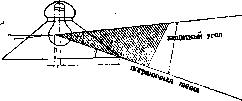
Figure 3. Protective angle of the fixture.
at an angle of 14°: 3.7-3.3-4 m. Regarding electric lighting, another drawback should be noted, which consists in the possibility, in case of improper wiring or improper handling of the installation, of so-called short circuits (which can cause fires and electrical injuries, and under certain conditions even fatal cases at a voltage of 220 V). Artificial lighting of premises by the nature of the distribution of rays is divided into: 1. Direct lighting, when the rays from a flame or incandescent Auer mantles or from the filaments of electric lamps are directed directly into the eye not protected by a shade, or the latter are too flat. Such lighting gives sharp shadows and is characterized by glare. 2. Lighting by reflected rays from the ceiling, if the lamps are hidden in upper cornices under a white ceiling and are completely invisible to the eye. It is recommended for brightly colored rooms, gives greater uniformity of lighting, without shadows, does not blind, and creates a calm mood. 3. Semi-direct lighting, when the lamps are hidden in a hemispherical bowl of opal glass facing upwards with the opening, sometimes with a reflector at the top; good lighting for brightly colored rooms, especially if both walls and ceilings are painted in a matte-white color; it gives greater uniformity, soft shadows, and does not blind. Its inconvenience is the ease of contamination by dust settling from above inside the shade, therefore it is better to use the VE-O lighting fixture, the so-called "Lucetta", for general lighting of residential premises, hospitals, schools, auditoriums, and stores. 4. Lighting with deep rays using lamps under opaque shades; recommended for brightly colored walls and ceilings; impractical for darkly colored walls and ceilings, since too sharp contrasts and deep shadows are obtained, which complicates spatial orientation. With this lighting, it is advisable to arrange an additional general, weaker lighting of at least 25% of the local one. For local lighting with deep rays, the State Electrotechnical Trust lighting fixture, the so-called "Alpha", is recommended. With local lighting with deep rays, glossy work objects should be avoided, e.g., books with a glossy surface, polished white tables, nickel-plated objects, etc. Single general lighting is permissible only for work not requiring the examination of details. For it, it is advisable to use the State Electrotechnical Trust lighting fixture called "Bilux", consisting of 2 shades: an upper opaque one and a lower one made of frosted glass. It is suitable for rooms whose height is less than 5 m. Lamps in this fixture are used with a capacity of no more than 500 watts. The maximum diameter of the fixture is 500 mm, the maximum height is 450 mm. The efficiency coefficient is 60%. School lighting, as is known, is the most important condition during the construction of classrooms, determining their dimensions in relation to length, depth (10x7 m) and the number of children (42-54). School orientation is recommended, as indicated above, away from the sun; otherwise, windows must be protected with light blinds, preferably rising from below rather than lowering from above. Piers should be smallest, windows as close to the ceiling as possible with the distance of the windowsill from the floor at 3/4 m (according to Erisman—4 windows of 1.2x3 m). On school desks, shadows from the writing hand are unacceptable, therefore lighting should be only lateral and from the left; simultaneously, lighting from the right is also permissible, but it should be about three times weaker than from the left. The glazed surface of the windows should be approximately 20% or at least 17% of the floor area. The daylight factor should be 1.25% for classrooms, drafting rooms, drawing halls, reading rooms, training workshops for fine work; 1% for adult auditoriums, laboratories, recreation and assembly rooms, and training workshops for work involving the discrimination of large details; 0.75% for gyms, swimming pools, and training workshops for rough work. The ceiling must be white and reflect at least 70% of the light, the walls painted in light matte tones and reflect at least 35% of the light, as well as the blinds and desks or tables. Black chalkboards must be matte and positioned for all eyes so as not to give a reflection. Artificial lighting must provide illumination: on students' desks at least 75 lux (in adult auditoriums on desks a minimum of 50), on chalkboards at least 75, in laboratories on desks at least 50, in libraries and reading rooms on desks at least 50, on bookshelves—30, in drafting rooms on boards—100, in gyms on the floor—30, in recreation rooms—20, in corridors and on stairs—15; in dressing rooms, vertical illumination at 11/2 m from the floor—15, in toilets on the floor—50, in school workshops—50 lux (everywhere as a minimum). In classrooms, the ratio of the lowest illumination to the highest must not be less than 0.5 of the illumination of neighboring illuminated places. If natural lighting gives illumination less than the specified norms, turning on artificial lighting is permitted on condition that multiple differently colored shadows and the brightness of any surface greater than 0.3 stilb are avoided. Therefore, the shades must necessarily be made of dense opal glass that does not allow the visibility of glowing filaments, and the light source must be close in color to daylight. The lighting of medical institutions with natural light must pursue the task of the greatest access of sun rays to the wards, which is achieved by orientation to the south, the ratio of the glass surface to the floor area of at least 1/7, uviose glazing, ward depth of no more than twice the window height, a daylight factor of at least 1.25%; the coloring of blinds, furniture, ceiling, and walls must be matte, light tones, yellowish, greenish, with light reflection from the ceiling of at least 60%, from walls of at least 40%. Lighting of operating rooms—see Operating room. Local illumination in wards for detailed examination of patients must be provided by portable lamps at 60 lux; in dressing rooms, general illumination 100 lux, local—600; in medical offices and doctors' offices, general illumination 100 lux, local—300; in admission wards, general—100 lux, local—600. In auxiliary rooms, the lowest illumination in laboratories and pharmacies: general—100, local—300; in medical warehouses, general—100; in anatomical rooms: general—60, local—600; in kitchens, general—60; in duty medical personnel rooms: general—25, local—75; in toilets, washrooms, shower rooms, and bathrooms on the floor, horizontal general illumination—50, in corridors, on stairs, in lobbies, passages, driveways (on the floor) general—20, in laundries—30, in linen warehouses—20, in the registry—50, in morgues—20 lux. The unevenness of illumination as the ratio of minimum illumination to maximum in rooms where general illumination is above 50 lux must not be less than 0.3; where general illumination is below 50, not less than 0.5; for all local illuminations, not less than 0.6. On operating tables or medical examination sites, illumination in the shadow must not be less than 0.6 of the illumination in the same place without shadow. In corridors, passages, stairs, shadows from people must have illumination not less than half of the illumination at the same place without shadow. Regarding the elimination of glare, the above-described requirements regarding suspension height, protective angle, covering of glowing filaments, and brightness of glowing surfaces must be observed (does not apply to the operating room). Finally, so-called safety lighting (in case of main power failure) from accumulators or another station with wiring of a different color must be provided in medical institutions; illumination from it is at least 0.3 lux. Artificial lighting of sanatoriums and rest homes must provide the possibility in wards: local reading lighting of at least 50 lux; general lighting in dining rooms of at least 25 lux, local for buffets—at least 50 lux. For other premises, data for medical institutions can be used. I. Station squares, streets, and driveways with particularly heavy automobile and tram traffic, markets, ascents, descents, and street stairs must have a minimum illumination in large cities (over 400,000 pop.) of 4 lux, in medium (100,000)—2, in small and factory settlements—1 lux. II. Streets, driveways, and roads with heavy traffic: squares near public buildings (factories, plants, theaters, cinemas, houses of culture) in large cities—2 lux, in small cities—1. III. Streets and driveways with moderate automobile and tram traffic must have a horizontal minimum illumination of 1 lux with light (IV)—0.3, moderate traffic (without tram) (V)—0.1. At intersections, illumination is increased by one category. The permissible unevenness for category I is not less than 0.1, for II and III—not less than 0.04, for IV and V categories—not less than 0.02; in addition, unilluminated shadows should not be allowed. Minimum illuminations according to English standards: main business streets 21.6 lux, most important commercial intersections—10.8, entrances to urban railway stops—5.4, less important streets—2.2, peripheral streets—1.1-0.1. According to data from the Dresden International Hygiene Exhibition of 1930, lighting of streets, squares, and bridges with nodal traffic is required at 40 lux, with heavy—20, with moderate—10, with weak—3 lux.
In recent years, abroad, very spectacular lighting of central commercial streets has become fashionable for advertising purposes using multicolored Geissler tubes arranged along the main architectural lines of facades. Inside shops, lighting with these tubes is also arranged, placed along the cornices. In display windows, depending on the color of the goods, lighting ranging from 200 to 400 lux is used for light-colored goods, and from 400 to 1,000 lux for dark ones.
V. Uglov. Industrial lighting. The lighting of enterprises represents a set of measures aimed at utilizing the light energy of the sun (natural lighting) and artificial light sources, mainly electric incandescent lamps (artificial lighting), to create conditions that ensure the most favorable environment for labor productivity and the prevention of industrial injuries. Under the conditions of the socialist economy of the USSR, the problems of natural and artificial lighting are inextricably linked, forming a single problem of the lighting economy. The expenses associated with the installation and operation of artificial lighting are in a definite dependence on the state of the natural lighting conditions of a given room; an increase in light openings reduces the expenses for artificial lighting, but increases both the initial expenditure for the construction of the building and the operating expenses (additional heating expenses). The interdependence of these two constituent elements of the single problem of the lighting economy also determines the approach to evaluating the lighting economy of each individual enterprise. Among the factors determining work productivity, lighting plays an outstanding role. The level of the main visual functions—contrast sensitivity, resolving power, speed of discrimination, stability of clear vision—depends to a large extent on the state of lighting. The primary condition for vision is the presence of contrast in color or brightness between the object subject to discrimination and the background onto which this object is projected. As a measure of contrast or contrast sensitivity (K), it is generally accepted to consider the ratio K = Bф - Bo / Bф, where Bф is the brightness of the background, and Bo is the brightness of the object. The smaller the value of K that the eye is able to perceive, the better, naturally, the conditions of visual work. According to Blanchard's studies, optimal conditions for contrast sensitivity are created at background brightnesses ranging from 0.01 to 0.065 stilb; with a decrease, as well as with an increase in brightness, contrast sensitivity drops. Translated into illumination, this means that with a background reflection coefficient equal to 40-50%, the maximum contrast sensitivity lies within the range of 4,000-5,000 lux. This does not take into account the sizes of the objects subject to discrimination, as the reduction of which makes discrimination heavily difficult. The limiting sizes of object forms that the eye is still able to perceive are determined by the resolving power of the eye. The conditional expression of the resolving power of the eye is visual acuity (see). Studies by a number of authors have clarified the relationship between resolving power and the level of lighting. Already at an illumination of approximately 1 lux, a unit of visual acuity is achieved, while the resolving power of the eye continues to grow and reaches a maximum only at an illumination on the order of 200 lux. Practically, it should be considered that the growth of the resolving power of the eye ends at an illumination of 50-75 lux, since further increase, although it takes place, is not so noticeable. However, one cannot conclude that under industrial conditions the illumination level of 50-75 lux can be considered optimal for fine and precision work. The conditions under which the determination of the resolving power of the eye is carried out (the presence of maximum contrast—black letters, numbers, symbols on a white background) do not correspond to visual work under production conditions, where the eye is presented with demands to distinguish small objects possessing significantly lesser contrast with the background than in experimental conditions (gray on white, etc.). In these cases, studies (Clark) have shown that practically the growth of resolving power does not end at 50-75 lux and higher degrees of illumination are needed to achieve the practical limit of resolving power. The curves of the relationship between illumination intensity and contrast sensitivity and visual acuity do not yet characterize the conditions for the proper functioning of the visual apparatus due to the fact that when studying these functions, the "time element" in visual perceptions is not taken into account, which is especially important from the standpoint of work productivity. Of particular importance from this point of view is the speed of visual perception and its stability. The course of functions is determined to an even greater extent by the level of illumination. Thus, an increase in the speed of discrimination (the reciprocal of the speed of perception) is observed with an increase in illumination up to 1,000 lux and more. The same is noted with respect to the stability of clear vision. The latter represents the ability of the visual apparatus to maintain for a long time in the field of vision the details fixed by it and thus determines the duration of active work (since work is performed with sufficient speed and accuracy only during intervals of absolutely clear vision). An increase in illumination entails a significant increase in the stability of clear vision, the growth of which does not end at an illumination of 400 lux. The proper functioning of the visual apparatus depends not only on the intensity of lighting, but also on quality, and first of all on this or that degree of glare, or more correctly, the blinding effect of the lighting installation. The blinding effect manifests itself in a decrease in the main visual functions: contrast sensitivity, visual acuity, speed of discrimination. In special experiments (Kühn), a decrease in labor productivity under the influence of glare by approximately 18% was established. Strongly pronounced degrees of blinding effect (the crater of an electric arc) can even cause severe retinal changes and burns with subsequent detachment. A distinction is made between absolute and relative glare, direct and reflected. Relative glare occurs with rapid changes in brightness in the field of vision, to which the eye gradually adapts. The limiting brightness is 15-16 stilbs (Nutting). In the case of absolute glare, we are talking about the effect on the eye of extraordinary brightnesses (e.g., the brightness of our modern incandescent lamps, which ranges within 500-1,000 stilbs), to which the eye is unable to adapt. By direct glare is meant the blinding caused by luminaires, and by reflected glare—that caused by reflected light from mirror surfaces (polished metals, etc.). Lighting and labor productivity. The improvement of the quantitative (intensity) and qualitative (uniformity, elimination of glare) aspects of lighting, by raising the level of visual functions, also causes an increase in labor productivity. The productivity gain upon the rationalization of lighting depends on the nature of the work process (mechanized or manual), on the share of visual moments in the overall balance of working time, and others. American studies, which should be treated with some caution, provide data on productivity gains of up to 35%. Soviet studies, conducted under conditions ensuring greater methodological clarity and complete objectivity of approach, yielded somewhat different results. According to the studies of A. A. Trukhanov, an increase in illumination during manual drawing-in (preparatory weaving department) from 45 to 900 lux yielded a productivity gain of 15-16%. In Smelyansky's experiments when working on a loom (high automation), the productivity gain with an increase in illumination from 10 to 50 lux was 1.5%, reaching up to 4.5% for individual worker groups. The duration of performing individual operations was reduced by 25-30%. A very important point established by the Institute for Occupational Safety in this latter study is that the rationalization of lighting creates a significantly greater stimulation for workers with little experience than for old ones; this fact acquires serious economic significance under the conditions of the wide involvement of new young personnel in the socialist industry of the USSR. Simultaneously with the increase in productivity during the rationalization of lighting, the quality of work also increases. Natural lighting. Hygienic requirements for the natural lighting of industrial enterprises boil down to ensuring such lighting conditions for workplaces both in terms of quantity (sufficiency) and quality (direction of light, glare) under which work could be performed with the greatest efficiency (quantity and quality of products). Methods of standardization. At the present time, the conditions of natural lighting of industrial enterprises are regulated by unified construction standards approved by the Council of Labor and Defense (STO). The geometrical principle is placed at the basis of standardization: the ratio of the glazing area or its projection to the floor area. For work rooms differing in the nature of the work performed in them, different ratios of the window light surface to the floor area have been established: in work rooms where rough work is performed—0.100, medium work—0.125-0.150, fine and precision work—0.175-0.200. Since in the presence of obstructions (opposing buildings) the lighting conditions in work rooms deteriorate, in these cases the above-mentioned norms of natural illumination must be increased by a coefficient n> where a is the angle of inclination to the horizon of the tangent drawn in the vertical plane normal to the facade side of the building from the center of gravity of the cross-section of the window opening to the contour of the obscuring building.
An increase in standards is also required when industrial buildings are oriented to the north and when frosted glass is used. In workrooms illuminated by top lighting, the ratio of the useful horizontal projection of the glazed surfaces to the illuminated floor area is regulated depending on the nature of the production process. The above-mentioned standards suffer from a number of shortcomings, among which the most fundamental is the very principle of rationing according to geometric principles. The rules operate mainly with the glazing area in lateral lighting, as well as the height of the window as elements of the light source. Neither the orientation of the windows with respect to the cardinal points, nor the nature of the device of light openings and glasses, nor—most importantly—the state of the vault of heaven is taken into account. Attempts to take into account some of these moments by introducing correction factors cannot improve the situation, since the main factor—the brightness of the lamp (the vault of heaven)—remains unaccounted for when rationing by the geometric principle. Considerably more well-founded is the regulation of natural lighting according to the daylight factor, the ratio of the illumination of a point inside the room to the illumination of a point in an open place. For a given workplace, the daylight factor does not remain strictly constant, but varies depending on the distribution of brightness over the vault of heaven and on the state of the earth's covers. However, the average value of the daylight factor for the year remains almost constant and characterizes the ratio of the amount of light energy falling on a unit
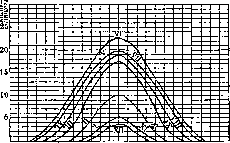
Figure 4. Curves of external illumination. area of a given surface inside the room, to that amount of light energy which falls on a unit area of the earth's cover in an open place (A. Gershun). When determining the daylight factor, the vault of heaven is taken as a hemisphere of uniform brightness. Only diffused light is taken into account here, and the illumination created by direct sunlight is not taken into account. An indispensable condition for regulation by the daylight factor is the knowledge of the light climate of a given place, i.e., the external horizontal illumination created by diffused daylight in an open space. At the present time in the USSR, we have data only on the light climate in Slutsk, collected by Kalitin (Fig. 4). These data can be attributed without much error to the entire Northwestern Region. The presented curves of external illumination are strongly smoothed, which is quite understandable, considering that natural lighting changes within very short intervals of time by tens and hundreds of times, but the average value of external illumination is reflected with sufficient accuracy. The wide development of industrial construction in the USSR urgently puts forward the necessity of studying the light climate of our industrial regions, which will make it possible to introduce calculations of natural lighting into the practice of industrial construction just as it takes place in the field of artificial lighting. Systems of natural lighting. Light openings for lighting industrial enterprises with natural light can be of three types: 1) light openings in the side outer walls of the building (windows); 2) openings in the inclined or vertical planes of the upper ceiling of the building (light lanterns, hatches); 3) a combination of the above two types. Lateral lighting without the addition of top lighting occurs only in multi-story industrial buildings. The arrangement of windows in modern industrial buildings is characterized by a significant magnitude of the light surface, which reaches 80 or more percent of the outer walls. Still, even with these colossal dimensions of glazed surfaces, the question of the uniformity of illumination with lateral lighting remains almost unresolved. One of the conditions ensuring greater uniformity of illumination in workrooms and, in particular, the illumination of workplaces remote from the window, is raising the upper edge of the window as close to the ceiling as possible, since the illumination of a point inside the room depends mainly on the direction of the upper ray of the light angle. As photometric studies (Frahling) have shown, when the upper edge of the window is raised right up to the ceiling, the maximum illumination decreases (it still remains sufficiently large), the minimum increases, and the uniformity of illumination improves. In addition, a number of measures must be carried out to ensure the maximum utilization of the luminous flux entering through the windows and its redistribution throughout the room. These include the use of special grades of glass with high reflectivity, the use of special reflectors, light coloring of walls, ceiling, and, if possible, in-plant equipment. In a number of industrial enterprises in which, due to the features of the equipment used (large dimensions of machines, e.g., self-actors, throstles in the textile industry), the required width of the rooms reaches 38-40 m, it is not possible to ensure sufficient illumination of the workplaces located farthest from the window during certain months of the year. In these cases, the resolution of the issue lies in supplementing natural lighting with artificial lighting, i.e., in allowing mixed lighting. Top lighting is the most widespread method of lighting industrial enterprises. Newly built in
the USSR giant industrial enterprises are supplied with top lighting. The number of types of lanterns is very large, and so far in construction practice and in industrial hygiene, the most rational type of light lantern from a hygienic and economic point of view has not been established. The following 4 types are the most common in industry: 1) gable lanterns (Fig. 5), 2) Boileau lanterns (Fig. 6), 3) shed lanterns with vertical glazing (Fig. 7), 4) shed lanterns with inclined glazing (Fig. 8). On the same figures (shaded part) the distribution of illumination when using these types of lanterns is plotted. As can be seen from these data (Yu. S. Rubinshtein), all these types of lanterns give more or less satisfactory results in terms of uniformity. In terms of the intensity of illumination, gable lanterns are in first place, which at the same time cause less heat loss than lanterns with vertical glazing. However, the use of these lanterns is associated with greater difficulties than with lanterns with vertical glazing due to the arrangement of casement and ventilation devices (deflectors). Artificial lighting of industrial enterprises. The norms of artificial lighting in force in the USSR were issued by the People's Commissariat of Labor of the USSR in the form of "Temporary Rules for Artificial Lighting of Factories, Plants, Workshops and Other Working and Office Premises and Workplaces" (dated September 17, 1928, No. 554). The norms provide for the minimum illumination of working surfaces. The level of illumination is set based on 1) the accuracy
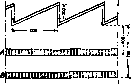
Figure 7. Shed lanterns with vertical glazing.
of work and the size of the parts being viewed, 2) the reflection coefficient of the working surfaces, 3) the contrast between the working surfaces and the parts to be viewed. Depending on these data, all work processes are divided into 4 categories (see table). Category V provides for illumination for dangerous and at the same time accessible parts of processed objects, machines, etc. For auxiliary premises, the following illumination values have been established: toilets (on the floor)—50 lux, dressing rooms (on the floor)—25, passages in workrooms—10, entrances, exits, stairs, passage rooms—8, yards, passages—2 lux. In addition to the level, the "Rules" contain a number of requirements that a rationally arranged factory and plant lighting must meet. The main ones are the following: 1. When using local lighting, general lighting must also be arranged, which should create on the working surface at least 25% of the minimum
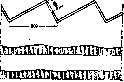
Shed lanterns with inclined glazing.
Color of the working surface. Working surfaces of dark color; reflection coefficient less than 20%. Working surfaces of lightish and light-gray colors; their reflection coefficient lies within the range of 20-50%. Working surfaces of light colors; reflection coefficient of not more than 50%, and the patterns, etc., viewed on them are also of light colors. Working surfaces of light colors; their reflection coefficient is more than 50%, and the details, patterns, spots, letters, etc., viewed on them are of lightish and dark colors. Category I. Precise work associated with the discrimination of details, objects, lines, letters, patterns, etc.; very small dimensions. The ratio of the smallest dimension of the part under view to the distance of the eye is not more than 1:1,000. Category II. Small and fine work, as in Category I, but associated with the discrimination of more noticeable details (the ratio of the smallest dimension of the part under view, line, dot, etc., to their distance to the eyes is more than 1:1,000). Category III. Category IV. Category V. Work not requiring the discrimination of small objects, parts thereof, patterns, lines, spots, or any other details. Other work not requiring the viewing of nearby surfaces (distance from the eye to the working surface is more than 1.5 m). Dangerous and at the same time accessible parts of processed objects, production machines, etc., such as: cutters, blades, drills, punches, rollers, gears, electrical current-conducting parts with dimensions of less than 5x5 cm, must have an illumination of not less than 100 lux. The same for dimensions of less than 5x5 cm, not less than 60 lux. Minimum illumination in lux. Notes: 1) If fog, dust, soot, smoke, etc., are observed in the room, then the numerical values of illuminance specified above must be doubled. 2) For precise work, the brightness of working surfaces having a reflection coefficient of 0.06 and less (e.g., black fabric or black paint) must be not less than 2.10-4 stilb.
of the lower illumination obtained on the working surface from the combined action of general and local lighting. 2. Throughout the working surface, the unevenness (i.e., the ratio of the minimum illumination to the maximum) must not be lower than 0.1-0.6 depending on the reflection coefficient, background, and details. 3. As a rule, shadows from workers or extraneous objects should not fall on the working surfaces. When shadows are unavoidable, the illumination in darkened areas must not be lower than 0.6 of the illumination of the adjacent unshaded place. 4. Along with working lighting, emergency lighting must be provided, powered independently of the main power sources. 5. In order to eliminate glare, a certain suspension height of lighting fixtures is regulated, established depending on the nature of the protective glasses used in the fittings (milky or frosted glass) and the magnitude of the protective angle of the fixture. Light sources and fittings. Artificial lighting is provided by light sources of two kinds: 1) sources operating on the principle of temperature radiation, which include electric incandescent lamps, and 2) sources of so-called "cold light," in which light emission occurs due to the luminescence of rarefied gases and vapors when an electric current passes through them. This group includes gas-discharge tubes (Moore neon lamps), mercury lamps, and glow lamps (neon). Sources of so-called "cold light" have become widespread abroad in advertising. In industry, they are used in production rooms where painting is performed (automobiles) and where color discrimination is important. The characteristics of the quality of incandescent lamps are the following data: luminous efficiency, i.e., the number of units of luminous flux (lumens) emitted by a lamp per unit of consumed power; specific consumption, i.e., the ratio of consumed power to the average physical luminous intensity; lamp life, calculated up to the moment when the lamp's luminous flux drops to 75% of its initial value (using such a lamp is economically unprofitable). All these characteristics are provided for in the USSR by the established standard for lamps.
Lighting fittings. The purpose of lighting fittings: 1) to redistribute the luminous flux of the lamp, 2) to protect the eyes of workers from the blinding action of lamp filaments; 3) to protect the lamp from contamination and mechanical damage; 4) to change the spectrum of the lamp for special cases of factory and plant lighting (daylight fittings). Lighting fittings together with the lamp enclosed in them are called a luminaire. According to their purpose, luminaires are of two kinds—general and local lighting. The former are intended for lighting as a whole, the latter for lighting only workplaces. In addition, depending on the nature of the direction of light, luminaires are divided into three groups: 1) direct light luminaires, directing the luminous flux predominantly into the lower hemisphere (ceiling and walls are illuminated very little); 2) reflected light luminaires, directing a significant part of the luminous flux into the upper hemisphere (ceiling and walls); the entire room is illuminated by light reflected from the ceiling and walls; 3) semi-reflected light luminaires, representing a combination of the first two types. The protective (anti-glare) properties of luminaires are determined by their protective angle (see above; Fig. 3). Within this angle, the eye is protected from the blinding action of the lamp. The larger the protective angle, the less danger of blinding this luminaire presents. Lighting systems. The properties of luminaires used for factory lighting purposes also determine the systems of industrial lighting. Three lighting systems are distinguished: direct, reflected, and semi-reflected light. With the first system, due to insufficient illumination of the ceiling and the upper part of the walls, rather sharp shadows are created. The second system is most expedient from a hygienic point of view, but in factory and plant conditions, where walls and ceilings cannot be used for light reflection due to their rapid contamination, the directed or direct light system is usually the most acceptable. Reflected and semi-reflected light systems can only be used in rooms with clean ceilings and walls.
Methods of lighting workrooms are of three kinds. 1. General lighting: the workroom is illuminated by a small number of powerful luminaires suspended high up, regardless of the arrangement of working surfaces. In this case, luminaires are placed symmetrically in rectangles or in a checkerboard pattern. The use of localized general lighting is recommended, in which luminaires are oriented toward working surfaces. 2. Local lighting: each workplace is illuminated by a single luminaire. Economically, this is the most advantageous lighting method; hygienically, the use of only local lighting is inadmissible due to the sharp unevenness of lighting created thereby.
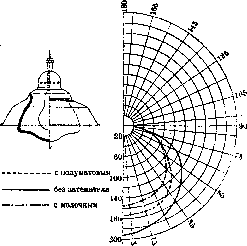
Figure 9. "Universal" fitting with a light distribution curve.
3. Combined lighting, in which general lighting is used alongside local lighting. The latter method is most recommended for factory and plant conditions and is the most widespread. For industrial lighting purposes, the following luminaires (manufactured in the USSR) are used in the USSR: 1) "Universal" (fig... The latter must be designed in such a way as to exclude the possibility of contact with live parts to eliminate the danger of electric shock (such a design was developed by the Institute of Occupational Safety). In special cases, when illuminating work processes associated with the discrimination of colors and their shades, it is advisable to use lamps or
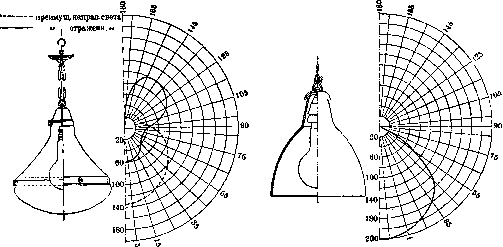
Figure 10. "Lucetta" fitting with a light distribution curve.
Figure 11. "Deep reflector" with a light distribution curve.
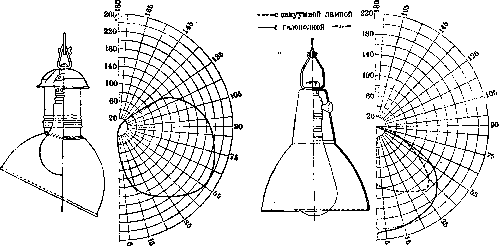
Figure 12. "Kososvet" fitting with a light distribution curve.
Figure 13. "Alpha" luminaire with a light distribution curve. 9) for general lighting with directed light; equipped with a frosted or milky dimmer for glare protection and 2) "Lucetta" (Fig. 10) for general lighting: a) for predominantly reflected light with upper frosted and lower milky glasses and b) for predominantly directed light with upper milky and lower frosted glasses. 3) "Deep reflector" (Fig. 11) for general lighting of high industrial premises. 4) "Kososvety" (Fig. 12) for lighting "inclined surfaces" (printing machines, etc.). 5) "Alpha" (Fig. 13) for lighting work places. For the inspection and repair of machines, so-called hand lamps and fixtures of so-called artificial daylight are used. The bulb of these lamps or the glass of the fixture is blue-colored, and thanks to this they filter out a significant part of the red rays and bring the spectrum of artificial light sources closer to daylight, under which color differentiation occurs most productively. The wide distribution of these lamps and fixtures is hindered by the fact that simultaneously with the change in the spectrum they absorb a significant part of the luminous flux (up to 50%), which makes their use economically disadvantageous. Mixed lighting. This term denotes the simultaneous action of artificial and natural light. In the old hygienic literature, the inadmissibility of such mixing was supposedly considered established, which allegedly adversely affects the activity of the visual apparatus. From this followed the requirement to use blinds to turn off daylight when turning on artificial light. No grounded evidence for this point of view is given in the hygienic literature, except for the a priori assertion that the mixing of light from two sources with different spectral compositions is unacceptable. In the very latest time, in proof of this provision, considerations are brought forward about the resulting colored shadows, which make it difficult to distinguish colors and shades under mixed lighting. Meanwhile, in practice, mixed lighting is very widespread in industry. Experiments conducted in England on the use of mixed lighting gave results that could in no way serve as a basis for its prohibition in production conditions. Moreover, thorough studies by Americans (Ferree, Rand) provide grounds for completely opposite conclusions regarding the possibility of using mixed light, namely—they indicate the necessity of turning on artificial light long before the complete extinction of daylight. Theoretically, this is completely understandable, since the decrease in the sensitivity of the eye, reaching a significant degree during the day, is restored very slowly, by virtue of which the eye cannot follow in its functional activity the rapid fall in daylight illumination. This destroys the rooted belief defended in Soviet literature by Levitsky and Koyransky that, as a result of centuries of evolution, the human eye has fully adapted to all kinds of illumination transitions during the day. The delayed restoration of the eye's sensitivity leads to a drop in the working capacity of the eye at the end of the second half of the day when daylight fades. The sudden switching on of the artificial light also has an unfavorable effect on visual functions for a certain period of time due to a sharp change in brightnesses. As a result, for a certain period of time, the eye works under conditions of reduced functional activity. In order to create conditions for the normal work of the eye, it is necessary not only to allow, but also to demand the switching on of artificial light not at the moment of the complete extinction of daylight, but long before it, approximately 1/2-1 hour before, to ensure a gradual transition from daylight to artificial light. In special cases, for the illumination of work associated with the differentiation of colors and their shades, artificial lighting must be arranged in an appropriate manner so that it can be used as an addition to natural lighting. Very appropriate for these cases is the use of a daylight lamp or fixture. Measurement and provision of proper illumination and control under production conditions. The lighting economy of the USSR is developing at a very rapid pace. In connection with this, the issues of operating industrial lighting installations, the cost of which is already calculated in many millions of rubles, have urgent economic and hygienic significance. A correctly executed lighting installation guarantees the creation of normal lighting conditions only with its correct operation (correct regime, maintenance). The latter should consist in cleaning the luminaires, which on average should be carried out at least 1 time per month, in the timely replacement of lamps, in whitewashing the ceiling and walls, which to a greater (in reflected and semi-reflected lighting systems) or lesser (in the directed light system) degree affect the lighting of work premises. Proper maintenance also assumes the possibility of systematically controlling lighting conditions, and first of all—measuring illumination. To measure illumination under production conditions, special portable photometers, so-called luxmeters, are used. The number of types of luxmeters is very large. In the USSR, the luxmeter designed by the State Optical Institute has become widespread. The design principle of any luxmeter, including the GOI luxmeter, is based on comparing the brightness of two screens, one of which is placed inside the device, and the other in the place where it is intended to measure illumination.
The GOI luxmeter is a closed tube (Fig. 14), inside of which a porcelain screen (1) is placed, which can rotate around a horizontal axis by means of an eccentric washer (2).
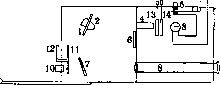
Figure 14. Luxmeter of the State Optical Institute (schematic drawing).
The internal screen (1) is illuminated by a standard lamp (3). When the standard lamp is turned on by means of a button (5) placed on the upper cover of the device, a certain illumination is created on the screen (1), which can be changed when turning the screen by means of a head located on the side cover of the device. Thanks to a system of mirrors (6 and 7), the illuminated screen enters the observer's field of view through an eyepiece (8). In the place where it is intended to measure the illumination, a second porcelain screen (9) is placed, fixed on a plate (4). This second screen is visible to the observer through a tube (10) and an eyepiece. Thus, when measuring illumination in the field of view of the observer, there are two semicircles, differently illuminated. Rotating the head (2) connected to the eccentric, it is possible to achieve the same brightness of both compared semicircles (when the brightness of the semicircles is the same, the boundary between them disappears). The arrow connected to the eccentric head indicates on the scale, on the side of the device, the measured illumination in lux. With an illumination of more than 60 lux, it is necessary to reduce the brightness of the screen (9), which is achieved by using gray (so-called neutral) filters (11), which reduce the brightness by 10, 100, and 1,000 times. These filters are turned on by means of a lever (12) on the end part of the device. The device can be used to measure daylight illumination. For this, a blue light filter (14) is turned on, thanks to which the spectrum of the artificial light source (standard lamp 3) approaches the spectrum of daylight. When measuring weak illuminations, a neutral gray light filter (13) is turned on, reducing the brightness of the standard lamp (3) by 10 times. In order for the measurement of illumination to be more or less reliable, the voltage in the device's network must be constant, and therefore the luxmeter has a voltmeter that allows monitoring the voltage, and a rheostat for voltage regulation. To power the lamp with current in the GOI luxmeter, accumulators are used. Using the luxmeter is extremely simple, and skills in working with it are acquired quickly. The accuracy of the device is ±10%. Greater accuracy is not required from devices of this type, because for the measured value itself (illumination in factories) a fluctuation within these limits is permissible due to voltage fluctuations in the network.
3. Smelyansky.
Related articles
Mentioned in
Cite this page
“Lighting.” Soviet Medical Encyclopedia. English translation of Bolshaya Meditsinskaya Entsiklopediya, 1st ed. (Moscow, 1928–1936), ed. N. A. Semashko. https://sovietmedicalencyclopedia.pages.dev/article/lighting/