Infrared Rays
Historical document, translated for reference. It reflects medical knowledge of the 1920s–30s and is not medical advice.
Summary
This article from the 1928–1936 Soviet medical encyclopedia defines infrared rays as the region of light radiation extending from the red end of the visible spectrum toward longer wavelengths. It details the physical properties of infrared radiation, methods for its detection and study, and its therapeutic applications in medicine, as well as occupational hazards such as glassblower's cataract.
Encyclopedia article (1928–1936)
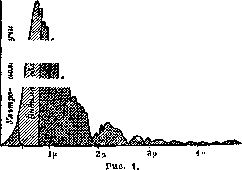
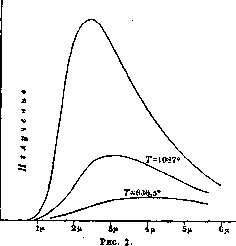
INFRARED RAYS, a region of light radiation extending from the red end of the visible spectrum toward longer wavelengths. Infrared rays have been experimentally investigated from 0.75 μ to (approximately) 300 μ; it is impossible to indicate any natural boundary for infrared rays on theoretical grounds. Any heated body serves as a source of infrared rays. Fig. 1 shows the energy distribution in the solar spectrum by wavelengths λ, showing that the greater part of solar radiation is concentrated in the infrared spectrum, in the region from 0.75 to 2 μ. The radiation of an incandescent absolutely black body is also distributed mainly in the infrared spectrum (Fig. 2). According to Wien's law, the wavelength corresponding to the maximum energy in the continuous spectrum of a black body λm is related to the absolute temperature (T) by the formula: λm = C/T. If the human body is considered in a conventional sense as "black," then the maximum of the radiation emitted by it should be in the region λm = 9.3 μ. The radiation of incandescent lamps and voltaic arcs is also predominantly
infrared rays.
By changing the temperature of the lamp filament, one can move from one
region of infrared rays to another. Unlike pure
temperature radiators, sources such as the Welsbach mantle and the Nernst glower provide selective infrared radiation. In the radiation of the glower, there are sharp maxima near 2 and 6 μ; in the Welsbach mantle, there is strong selective radiation in the far infrared spectrum (about 110 μ). To isolate narrow sections in the infrared spectrum, ordinary spectral methods, prisms, and diffraction gratings are used. Glass absorbs far infrared rays; therefore, in spectrometers for infrared rays, prisms made of rock salt and sylvite are used, allowing the spectrum to be investigated up to approximately 23 μ.
.
For more distant regions, reflective diffraction gratings are used. For the rough isolation of various infrared rays, one can use light filters made of various substances. Fig. 3 shows the transparency curve of a 1 cm layer of water for near infrared rays. By placing a vessel with a 10 cm layer of water in the path of light, one can practically
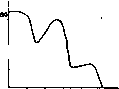
almost completely block infrared rays. Schott blue-violet glass + 1 cm of water completely absorbs all infrared radiation and part of the visible radiation. A thin layer of asphalt varnish blocks visible rays and transmits near infrared rays. Quartz transmits near infrared rays and very distant ones with λ of about 110 μ. Only near infrared rays (approximately from 0.75 to 1.5 μ) cause noticeable photochemical and photoelectric effects. To photograph infrared rays, plates are sensitized with solutions
Figure 3.
of dyes (erythrosine, pinacyanol, alizarin emeraldol, alizarin saprol, cyanine, and especially dicyanine and neocyanine), and with long exposures, sensitivity is achieved up to approximately λ = 1.1 μ. Short-wave infrared rays quench phosphorescence caused in solids by preliminary illumination with ultraviolet or visible rays. This is sometimes used in the study of infrared rays. When illuminated with near infrared rays, some crystals, e.g., molybdenite, change their electrical resistance, which can also be used for the detection of infrared rays. However, the universal instruments for studying any infrared rays, both near and far, are only thermal instruments: thermometers, thermocouples, bolometers, radiometers, and radiomicrometers. The increase in temperature, which accompanies the absorption of infrared rays, is usually quite large due to the intensity of the infrared rays. Herschel, who discovered infrared rays with a thermometer, called them thermal, and for a long time, specific thermal properties were assumed for infrared rays. However, the noticeable reaction of thermal instruments to infrared rays is explained only by the high intensity of these rays. With sufficient energy, thermal instruments react with equal success to visible rays and X-rays. Modern physics has provided another basis for naming infrared rays thermal. The emission and absorption of infrared rays in most practically important cases are caused by thermal rotational and vibrational movements of whole atoms in molecules, while the rest of light radiation is associated with the movements of electrons. As a result of the absorption of infrared rays, electrons are almost unaffected, therefore no chemical or electrical changes occur in the molecule, and only its kinetic energy changes. The study of infrared spectra is of great importance for determining the structure of molecules.

Figure 4.
The therapeutic effect of infrared rays used in medicine is based exclusively on their thermal effect and on the fact that the surface layers of the body are sufficiently transparent to near short-wave infrared rays. By concentrating the light of an incandescent lamp with the help of reflectors or lenses, one can cause local heating at significant depths under the skin. The increase in temperature
Spectral region
Wavelength in μ. Figure 6.
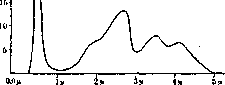
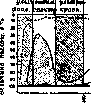
Figure 5. is accompanied by the acceleration of various physicochemical processes in the given part of the organism. Illumination of the eyes with intense infrared radiation causes inflammatory phenomena known as glassblower's or founder's cataract. For protection against infrared rays in industries where workers have to look for long periods at molten incandescent metals or glass, goggles (Fig. 4) are used, equipped with lenses that are sufficiently transparent in the visible spectrum and absorb near infrared rays. Fig. 5 shows the transparency curve of the American protective glass Noviweld from the Corning Glass Works company, and Fig. 6 shows the inverse absorption curve (in percent) of Zeiss protective goggles.
Related articles
Mentioned in
Cite this page
“Infrared Rays.” Soviet Medical Encyclopedia. English translation of Bolshaya Meditsinskaya Entsiklopediya, 1st ed. (Moscow, 1928–1936), ed. N. A. Semashko. https://sovietmedicalencyclopedia.pages.dev/article/infrared-rays/