Heliotherapy
Historical document, translated for reference. It reflects medical knowledge of the 1920s–30s and is not medical advice.
Summary
Heliotherapy is the treatment of diseases using sunlight, with historical applications dating back to ancient Greece and Rome. This article covers the scientific study of heliotherapy, its physical basis, and methods of measurement and application.
Encyclopedia article (1928–1936)
HELIOTHERAPY (from Greek helios-sun and therapeia-treatment), treatment with sun rays. The beginning of the application of H. dates back to many centuries before the Christian era. This method was particularly popular among the ancient Greeks and Romans, for whom a solarium (solarium) was an essential part of their baths. In the Middle Ages, H. was used only as a thermal factor. The scientific study of H. began at the end of the 18th century with Bertrand's work "On the Question of the Influence of Light on Organisms, the Atmosphere, and Various Chemical Bodies" (Paris, 1799). In 1855, in Austria, near Trieste, at an altitude of 800 m, in Veldes, an Institute for hardening and treatment by helio- and aerotherapy (see) was established, whose founder Arnold Rickli, not a physician, drew general attention to these methods with his book "On the Treatment with Air": they began to be studied in clinics and hospitals. The Lyon school, represented by Ollier, Poncet, and Leriche, was the initiator of the propaganda of H. ideas in France; in Russia-Snegirev (in the 1880s); in America-Kellogg. By the end of the 19th century, numerous experimental data had already been accumulated, relating to the study of the biological properties of sun rays and providing scientific justification for H. In 1902, in Switzerland, in the Engadine (Ober-Engadin), Bernhard introduced H. for torpid wounds in the Samaden hospital. In January 1903, Rollier in Switzerland opened the first clinic in Leysin for the systematic study of H. in surgical tuberculosis. Here, at an altitude of 1,300 m, patients took sun baths in winter and summer, achieving a favorable therapeutic effect. At present, H. is based on precise scientific data. Geophysical and physical data. At the boundary of the earth's atmosphere, the total energy of visible and invisible sun rays (integral radiation), expressed in thermal units, amounts to 1,946 calories per square cm of perpendicular surface per minute (solar constant). Different parts of the solar radiation (different parts of the spectrum) are subject to different transmission, scattering, reflection, and absorption and have different energy intensities. As a result, the total energy of all parts of the spectrum after the sun ray passes through the atmosphere generally decreases, and the spectrum changes qualitatively. Different components of the atmosphere absorb solar radiation differently. Nitrogen does not absorb at all; O2, CO2 absorb (very little) the distant parts of infrared rays; water vapor gives a wide absorption band in the infrared part and thin bands in the red, orange, and yellow parts. Ozone, located in the high layers of the atmosphere, has the greatest ability to absorb ultraviolet rays. Thanks to it, a significant part of ultraviolet rays with a wavelength less than 290 mμ, which should come from the sun, heated to 6,000°, does not reach the earth's surface, being detained at an altitude of 20-40 km. The diffuse scattering of solar radiation is a much more complex phenomenon than its absorption, because, in addition to weakening the intensity of the direct sun ray, scattered rays are formed here, reaching us from all directions and partially thrown into world space. Diffuse scattering weakens the brightness of the sun and causes the blue color of the sky, as follows from Rayleigh's law, according to which, when light is scattered by particles of a "turbid medium" much smaller than the wavelength of the incident ray, the intensity of the reflected (scattered) rays is approximately inversely proportional to the fourth power of the wavelength. This also explains the fact that diffuse scattered light (radiation of the blue sky) is richer in blue and violet rays than direct sunlight. From the point of view of physicists who studied this law (Cabannes), "turbid medium" will also be clean air, because it contains molecules of various gases. When the sun is at the zenith, even in the absence of direct absorption, only 1/5 of ultraviolet rays can reach the earth, and the rest are reflected. But if the sun sinks to 60°, then only 1/10 of the ultraviolet rays will reach the earth. Water vapor, like air molecules (gases), can cause scattering of radiant energy, which explains the "lesser transparency" of the atmosphere with increasing humidity with a perfectly clear sky. In the presence of large suspended particles in the air, scattering occurs that changes much less with wavelength but sometimes reaches large sizes; the spectral composition is enriched with red, orange, and yellow rays. The sky is then not blue but whitish, and the radiation (scattered) is poorer in ultraviolet rays. In addition to the qualitative composition of the atmosphere, the simply greater or lesser thickness of air through which the sun rays pass plays a huge role. Thus, when rays fall from the zenith (overhead), when the sun's height reaches 90° above the horizon, the path is the shortest and equal to the thickness of one atmosphere; when the sun's height is 30°, the path for the rays doubles, and when the height is 5°, it increases more than 10 times. Accordingly, less and less of the sun's energy reaches the earth. At great heights, the decrease in radiation intensity is slow, while at small heights it is very fast. With the same duration of a sun bath, completely different amounts of solar energy can be obtained, depending on the height of the sun. On the basis of these same data, the duration of the sun bath can be regulated so that patients receive the same number of calories. On the basis of the works of the Smithsonian Institute in America, it is possible to quantitatively account for in percentages individual groups of visible rays included in the measured total energy of sun rays, and thus know not only the quantitative calories released during sun baths, but also the quality of the sun baths (see Figure 1.-Along the arc, the height of the sun above the horizon is plotted. Circles, divided into sectors, show the distribution in % of colors in sunlight at different heights of the sun. Each radius is divided into 8 parts; the length of the segment of the radius from the center of the circle to the intersection with the dotted line is proportional to the intensity of the energy of sunlight for a given height of the sun). From the diagram (see Figure 1), it is seen that when the sun is high, the spectral composition changes little (approximately between 45-60°), i.e., that in the north in summer, sun baths between 10 a.m. and 2 p.m. are almost identical in the percentage composition of rays of different wavelengths; but in the early morning hours, sun baths differ sharply with each hour. The closer to sunrise, the greater the percentage falls to the red part, and the smaller to the blue-violet. At a sun height of 5°, 62% falls to red rays, and only 2% to blue-violet rays; at a height of 10°, blue-violet rays increase to 6%, and red rays decrease to 48%. At 3°, red rays are 73%, and blue-violet rays are 0. This explains the red tones in the sky at sunrise. Similar relationships are noted as sunset approaches, which also gives red tones (evening and morning red dawn).
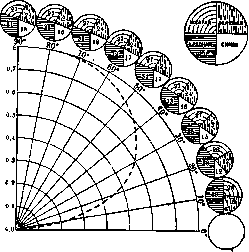
Figure 1. Distribution of energy of individual parts of the spectrum at different heights of the sun.
Dosimetry in H. is very important; measurements are made in two directions. A) Measurement of radiation intensity, expressed in calories (see Figure 2,-A; detailed description of instruments-see Actinometry). B) Measurement of ultraviolet radiation; Arago-Davy-Kalitin. IT IS CARRIED OUT in three ways: a) chemical, b) photographic, and c) photoelectric. a) The chemical action is proportional to the product (Bunsen-Rosco law) of the time during which the radiant energy acted and the intensity of the energy flux itself; therefore it is possible to use a number of chemical reactions to measure radiation. But since waves of different lengths act differently, this method is still
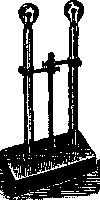
The Hill dosimeter (a solution of methylene blue in acetone) has not been introduced into practice. Chloro- or bromosilver paper is sensitive to ultraviolet, violet, and blue rays; therefore, it was used as a reagent to assess the amount of ultraviolet radiation. Wiesner's insolation apparatus, Vouk's apparatus, and others have not yet found application in heliotherapy. Photographic paper can be sensitized to all rays of the spectrum. The photoelectric method has become most widespread, based on the fact that most bodies subjected to radiant energy emit a stream of electrons from their surface, especially when the irradiated surface is negatively charged. For measurement, a glass (uviole) flask is used, from which the air has been pumped out and hydrogen has been introduced under a pressure of 3-4 mm of mercury (photoelectric cell). Part (side) of the flask is silvered, and a layer of photoactive metal (potassium, sodium, rubidium, or cesium) is deposited on it. This layer is connected by a platinum wire sealed in the glass to the negative pole of a dry battery, and the positive pole is connected through a galvanometer to a ring sealed inside, on which electrons accumulate (anode ring). Radiant energy is directed onto the photoelectric cells, and a reading is taken on the galvanometer.
Meteorological observations must be carried out on a solar platform (solarium), with the equipment installed at the level of the loungers. Comparison of air temperature, relative humidity, and wind speed makes it possible to judge the effective temperature. Actinometric and photoelectric measurements regulate the dosage of sunbaths. Measurement of the reflectivity of the soil (albedo), horizon, etc., makes it possible to establish the regime (in terms of radiation) of a solarium or beach. The installation of Hill's katathermometer and measurement of skin temperature make it possible to judge the cooling coefficient. Due to the variety of combinations of meteorological elements at different solariums, it is necessary to carry out at least the main measurements at each of them. Solariums are arranged in the most diverse ways depending on local conditions: on beaches (Yevpatoria, Yalta), in forest clearings (Abas-Tuman), on terraces (Yalta-Dolosy, Sukhumi-Gulripsh), on roofs (Libani-Georgia) or directly in
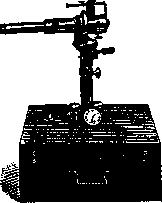
Figure 3.
Michelson's actinometer. parks, gardens, in the steppe—everywhere where there is sufficiently good insolation, 'fresh air' and suitable microclimatic conditions. For special observations, special solariums are also arranged, connected to aeraria, actinometric installations, precise dosimetry and dosage of sunbaths, scientific observations, etc. (see Solariums), although scientific observations can also be successfully carried out in simpler conditions. Bio-physical and bio-chemical data. Physicochemical study of light gives many important facts, which it is still premature to transfer to heliotherapy at the present time due to the small number of control studies. Irreversible reactions: a) direct—on dyes (fading); b) accelerating processes that occur in the dark (oxidation of quinine in the presence of chromic acid); c) photochemical catalysis
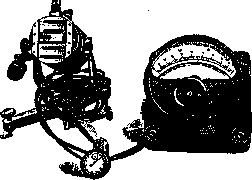
Figure 4. Linke actinometer with a special galvanometer showing directly calories. (decomposition of ozone by visible rays in the presence of Cl; HgCl2 in the presence of Fe only in light gives calomel); c) indirect photochemical catalysis, which continues in the dark just as quickly as it began on light (decomposition of hydrogen peroxide in the presence of yellow or red blood salt); d) combined action of light, for example, the influence of a catalyst on the rate of a pure photochemical reaction. - Reactions are reversible, i.e., such in which under the influence of light a new type of equilibrium is established (the first stage - photochemical action - ends with the formation of a new body, the second stage - in the dark the newly formed body again turns into the original, e.g., transformation of anthracene into dianthracene). Biochemical action of light. a) Photochemical decomposition, when at low t° processes occur analogous to those at high t°; transformation of CO2 into CO and O; decomposition of carbohydrates, with different wavelengths acting differently on aldoses and ketoses; decomposition of amino acids; b) photochemical oxidation and reduction reactions, playing a major role in the assimilation of nitrates by plants; c) photochemical hydrolysis (splitting of sugars); d) photochemical esterification (in plants); e) photochemical polymerization; f) photochemical isomerization; g) photosynthesis, playing a major role in biology (formation of carbohydrates in plants from CO2 of the air; transformation of nitrates into nitrites). The study of isolated sections of the solar spectrum has not yet been introduced into the practice of H., since the solar beam acts on the organism simultaneously with all wavelengths, among which, according to Becquerel, Villard and others, there are antagonists, which forces one to consider the total action of the constituent parts of the spectrum as different from that of its individual rays. Thus, infrared rays 'extinguish' the fluorescence of zinc sulfide caused by ultraviolet rays, destroy prints on a photographic plate and many other things. In addition, a number of reactions, formerly considered specific to ultraviolet rays, have recently become possible for infrared rays under certain, suitable conditions. In addition to thermal action, infrared rays can affect bromo- or chlorosilver paper sensitized to them, i.e., act photochemically, can cause the phenomenon of fluorescence and the photoelectric effect. The antagonism between individual rays, perhaps, will make it possible to explain the relatively high endurance of the organism in relation to solar rays. Biological data. Local action: a) increase in skin temperature by several degrees. This increase apparently extends far into the depth and can be detected on the opposite side. Long-lasting insolation can cause hyperthermia; b) formation of erythema and pigment; c) analgesic action; d) enhancement of hair growth. - General action. Deep penetration of thermal rays directly or after transformation of short-wave rays into long-wave (thermal) rays by the pigment - according to the theory of Rol-Her and Revillet, as well as the action of the visible part of the spectrum and the relatively shallow penetrating ultraviolet rays cause a series of changes in the organism, more or less established by a number of authors: 1) Capillaries of the skin dilate, and since they contain 18-25% of all blood, blood pressure falls. 2) The effect on the excretory capacity of the skin is manifested in three directions: a) sweating, regulated by the vegetative nervous system and neurohormonal influence, compensating for the activity of the kidneys and being one of the moments of thermoregulation, increases, in connection with which the body weight after each solar bath decreases (0.2-0.8 kg) and the specific gravity of the blood increases; b) the significance of fat secretion, reaching large quantities and having a connection with lipid metabolism, is currently in the period of study; c) desquamation of the epidermis is studied to clarify the role of the skin in lipid metabolism. In the superficial layers of the skin (epidermis) there is 19% lipoids and 2.7% phosphorus, and in the deep layers (dermis) - only 0.24% lipoids and 0.1% phosphorus. These data confirm the results obtained in the clinic (Rol-Her): during H. the transformation of cholesterol into vitasterin under the influence of solar rays occurs in the skin. The absorption of insignificant amounts of insolated lipoids is sufficient for them to play in the body a role similar to that attributed to vitamins (Rol-Her). Experiments with ergosterol, present in the skin in combination with cholesterol, showed that its minimal amounts after irradiation with ultraviolet rays caused calcification of bones. It is possible that the ultraviolet part of solar rays has a similar effect on blood lipoids. 4) The disturbed equilibrium of the medium (alkaline-acid) in the bones of rachitic patients and in the decalcified perifocal zones of osteo-articular tuberculosis is restored after sun baths. 5) As an endocrine organ, the skin (correlatively) reacts to the state of other such organs: ovaries, thyroid gland and pituitary gland. Thus, for example, before menses the skin's reaction to insolation is most acute, after menses - weakest and during the interval gradually rises to the next maximum before menses; in pregnant women on the abdomen erythema is much brighter and longer (after ultraviolet rays) than on the chest, and in non-pregnant women - vice versa. 6) Enhancing influence of sun baths on general metabolism: nitrogenous, fat, carbohydrate, mineral. 7) Regulation of vegetative reflexes: heart, intestines (liver, nervous system). 8) Often immediately after a sun bath vagotonia, leukopenia, changes in the alkaline reserve of the blood, etc., were noted. 9) General influence on the blood: increase in the number of erythrocytes and change in the leukocyte formula (lymphocytosis). 10) General tonic (at first relaxing) influence on the nervous system; improvement of sleep. 11) Sharp improvement of general well-being. The preventive significance of heliotherapy and hardening is based on a number of the data presented, on the properties of solar rays to destroy bacteria and toxins and to increase the resistance of the skin and the whole organism to infection and to all kinds of changes in the external environment. - A. The bactericidal action of solar rays has been known since 1885 (Arloing). Apparently, different conditions of experiments did not always give the same results. - B. The antitoxic action of sun baths is also established, as well as the bactericidal one. Antibodies are not destroyed by insolation. Experiments with diphtheria and tetanus toxins confirmed the influence of the sun on toxins in the sense of their destruction. Rol-Her explains the detoxification of tuberculosis patients by the deep action of the thermal rays of the sun, although a thermometer introduced into the rectum does not show a particularly large increase in t°. - C. Pigmented skin destroys tuberculin (without inflammatory reaction) and always contains antibodies, the level of which in the blood runs parallel to the state of the skin. According to some, the skin produces immune bodies, while other researchers tend to attribute to it only the role of a depot of these bodies. - D. Long-lasting insolations strengthen the muscles, apparently due to improved circulation, resp. improvement of muscle nutrition. Without massage and electrification, muscles increase in volume. Therefore, 'schools in the sun' (l'ecole au soleil) of Rol-Her and schools in the open air (l'ecole de plein air) of Armand Delille have been created, where classes are conducted year-round under the open sky without clothing. Winter sports without clothing have also been introduced, for which children are gradually prepared. Under the influence of such sports, the weight of children increases sharply, the muscles increase in volume and become elastic (see Tuberculosis in children). - Some claim that tan is an indicator of improvement in the general condition and even of the tuberculous process and serves1 a 'brown umbrella' against solar rays (Rol-Her); others prove that pigmentation does not run parallel to the decrease in skin sensitivity to solar rays, just as depigmentation ('scorching') does, that solar rays (a certain part of them) pass through the darkest skin and that tan is a simple chemical reaction, coinciding in time (more or less) with hardening of the organism; tan has no prognostic value. Indications and contraindications for heliotherapy. H. can be used as a preparatory,
an independent therapeutic method and as a sequential method (Nachkur). 1) As a preparatory procedure, heliotherapy is applied before operations with the aim of improving the general condition of patients, as well as increasing the resistance of tissues in the area designated for operation. For example, in kidney tuberculosis combined with pulmonary tuberculosis in a non-exacerbated state, heliotherapy together with aerotherapy can improve the condition of the lungs and prevent focal exacerbation (especially considering anesthesia). 2) As post-operative treatment, heliotherapy is applied due to its analgesic and sclerogenic properties, promoting tissue healing. In bilateral kidney tuberculosis, heliotherapy is applied with the aim of slowing the rapid course and increasing the body's protective forces. 3) General heliotherapy is indicated: for diseases of the skin and hair (improving nutrition), blood diseases, metabolic diseases, as heliotherapy reduces the amount of carbohydrates and purines in the blood and increases the excretion of creatinine by the kidneys (Rotman, Pinkussen); basal metabolism also increases; in hypertension (lowers blood pressure), rickets (improvement of Ca, P and lipid metabolism), nervous diseases (toning effect) and especially bone-joint, glandular and pulmonary tuberculosis. In the latter case, heliotherapy should be applied only with great caution. 4) Local heliotherapy is applied as an analgesic, bactericidal treatment, promoting the healing of surface ulcers, sclerogenic, causing calcification of deep foci and resolving infiltrates. These effects are promoted by: the drying effect of the sun, which is an indirect cause of wound sterilization, its direct bactericidal action, v. m. e. t. vi. improved nutrition of the irradiated area due to hyperemia, stimulating and promoting epithelization effect - as a result, the formation of abundant, healthy granulation tissue. General contraindications: advanced age, complicated by arteriosclerosis, inflammatory kidney diseases; increased skin sensitivity, tachycardia, easily occurring headaches, dizziness, nausea, vomiting, sharply increased excitability of the nervous system. Specific contraindications: specific cachectic conditions, high fever, abundant suppurations with amyloid liver and kidneys (Rolley allows cautious heliotherapy), complications from pulmonary tuberculosis in a stage not indicated for heliotherapy. It is always necessary to consider climatic conditions when choosing a location for heliotherapy: in the mountains, by the sea, etc. The application of heliotherapy for various diseases is not always performed with sufficient indications, which determines the very different success. The underdevelopment of indications is evidenced by the prescription of heliotherapy for the most diverse diseases. Heliotherapy is applied with greater or lesser success (data from Durrheim) in chlorosis, anemias, leukemia, Barlow's disease, lymphatism, obesity in children and adults, in metabolic diseases, in diseases of the endocrine glands (Basedow's disease), skin lesions, eczema, psoriasis, erythema exsudativum multiforme, syphilitic and tuberculous skin lesions, fistulas after sutures, in large, poorly granulating, heavily discharging wounds, in burns and frostbite, in delayed formation of bone callus after severe bone fractures, in polyarthritis of various etiologies, myositis, neuritis, neuralgia, fibrositis, in decline of general nutrition, in chronic metritis, oophoritis and metrorrhagias (Snegirev). Snegirev's data have been confirmed by the Yalta Tuberculosis Institute, and it has been established that menses are not a contraindication for sun treatment. The success of heliotherapy in Basedow's disease remains unclear, as in hyperthyroidism a negative relationship to high temperature has been established. Heliotherapy of rickets (see) deserves special attention, in which it is applied with particular success. Heliotherapy of tuberculosis. Heliotherapy for pulmonary tuberculosis is still in the development stage, but for extrapulmonary tuberculosis it is recognized as a very powerful, sometimes the only appropriate method of treatment. The main disadvantage of heliotherapy is the duration of treatment (1-3 years), which has recently prompted German doctors to resort to surgical interventions (e.g., in gonitis) in order to gain time; Leric and Ponce recommended this long ago. Abscesses are first punctured, and then heliotherapy is applied. Sometimes heliotherapy is also used as preoperative preparation. In cases of sequestra of bones (sun baths themselves promote their removal), Bernhard removes them by curettage and sometimes resorts to heliotherapy only after osteotomy. Orthopedics comes to the aid of heliotherapy in the form of devices that promote limb traction, and plaster casts that ensure immobility, straightening of contractures and fixation of limbs; splints are widely used at present (in spinal tuberculosis - corsets). Great attention is paid to the appropriate nutrition of patients, and during prolonged stay in a sanatorium - to school lessons in the fresh air in winter and summer (see above) for children and to a work regimen for adults. Dosage and technique of applying sun baths. The schemes used in heliotherapy in the mountains (in Leysin, Rolley) and on the seashore in France are summarized in the following tables. Table 1. Days in minutes day 1st 2nd 3rd 4th 5th 6th 7th 9-30th 10 15 20 30 45 60 60 5 10 15 20 30 45 60 60 5 10 15 30 45 60 60 10 15 30 45 60 60 5 10 20 30 45 45 5 10 15 5 10 15 Gradually brought to several hours (3-4) in one session Table 2. Days Calves Thighs Abdomen Chest 1st day 15 min. „ 2nd » 25 » -------------------- 3rd » 35 » - 4th » 45 » - 5th » 55 » - 6th » 60 » 15 min. .- 7th » 60 » 25 » - 8th » 60 » 35 » - 9th » 60 » 45 » - 10th » 60 » 55 » - 11th » 60 » 60 » 15 min. - 16th » 60 » 60 » 60 » 10 min. 30th » 120 » 120 » 120 » 60 » 60th « 120 » 120 » 120 » 120 Rolley (Leysin) and Kisch (sanatorium Hohenlychen near Berlin) begin with preparing patients first with air baths for 5-10 days, after which they cautiously begin illumination (from the feet) with 'small doses', bringing it to 7 hours a day in 2-3 sessions. The Yalta Tuberculosis Institute considers it absolutely impermissible to give seven-hour insolation in tuberculosis with cavities, as Kisch does, and limits the duration of heliotherapy to one hour for all forms of pulmonary tuberculosis, allowing up to 3 hours of insolation in surgical tuberculosis (bones, joints, lymphatic glands, peritoneum). The Yalta Tuberculosis Institute has introduced another method of dosing sun baths - the caloric method, which allows avoiding gross errors of the minute method, which allows fluctuations in the amount of calories within 300%. Measurement of calories is performed with the Arago-Devi-Kalitin actinometer. The Michelson actinometer is not suitable, as it gives only part of the solar radiation - direct radiation - and does not take into account scattered radiation. With the Linke actinometer, the amount of ultraviolet radiation can be taken into account. A sun bath is thus evaluated not only by its thermal, but also by its chemical energy and the qualitative composition of its spectrum, which changes depending on the time of day, i.e., on the height of the sun above the horizon. The Yalta method makes it possible to compare sun baths with each other, which is absolutely impossible with the 'minute method' of French authors, where dosimetry is absent. Depending on the form of the disease, the general condition of the patient, the time of day and the season, sun baths are prescribed, starting from 2-3 small calories per 1 sq. cm of horizontal body surface and increasing to 30-120 calories in one to three sessions during the day. With this method, the danger of hyperthermia, possible with the minute method, is eliminated. The best time for sun baths is 7-9 a.m. (June-August in Crimea) and 4-5 p.m. (for pulmonary tuberculosis, weak anemic patients, neurasthenics, etc.). For stronger and compensated patients with surgical tuberculosis, sun baths are given from 9 a.m. to 3 p.m., when they are strongest in terms of ultraviolet rays and calorie content. After baths, a shower and rest in the shade are given. On beaches, after sun baths, sea bathing is prescribed, then - a shower and rest in the shade (on the veranda, in the room). Statistics. Rolley's data, published in 1912 by Witmer, refer to 540 patients (predominantly with bone-joint tuberculosis), of which: 423 cures, 69 improvements, 23 unchanged and 25 deaths. By type of disease, the data are distributed as follows: Table 3. Diseases Spinal tuberculosis . . . Coxitis..... Gonitis...... Tbc of the foot . . . . » shoulder.... » Elbow joint » fingers . . Osteitis...... 9 K a y O 1 Klin, i Quant. 1zled. % ill £ K S o o v 80.8 i 72.8 i - - - - For Anapa, Schenk gives 85% favorable results based on materials covering 250 cases. The statistics of Yevpatoria for 1926-1928 (collective report by Prof. Schenk) for 951 cases are given in table 4. In tuberculosis of the bronchial glands, a cure is generally achieved in 90% (Haberlm, 4,516 cases). Finkelstein (Yalta) found improvement in 75% (92 cases). To obtain a therapeutic effect (improvement, cure) from 10 weeks (Staehelin in Dürkheim) to 4 (D'Espine in Cannes)-8 months (Revillet in Cannes) are required. Sometimes 2-3 summer seasons are necessary (Schenk-Yevpatoria).
The results of treatment for tuberculosis of the lungs have not yet been compiled. Old tables. Diseases Gonitis ... Coxitis ... Spondylitis 216 229 506 Is Si 1 a> 2 я Я» s»a м»

in 12 34 percent 74.1 16.2 0.9 16.5 1.5 74.5 20.3 0.4 o 0.5 1.4 the data of Malgat (Malgat, 1910) indicate: 100% cures in the 1st stage, 65% in the 2nd and 25% in the 3rd. According to the statistics of Philipp (Philipp) for tuberculosis of the larynx in 18 cases - 11% cures, 28% significant improvements, 33% improvements.
Related articles
Mentioned in
Cite this page
“Heliotherapy.” Soviet Medical Encyclopedia. English translation of Bolshaya Meditsinskaya Entsiklopediya, 1st ed. (Moscow, 1928–1936), ed. N. A. Semashko. https://sovietmedicalencyclopedia.pages.dev/article/heliotherapy/