Bach
Historical document, translated for reference. It reflects medical knowledge of the 1920s–30s and is not medical advice.
Summary
This article profiles the life and work of the prominent Soviet biochemist Alexei Nikolaevich Bach, detailing his revolutionary past and his significant contributions to the theory of oxidative processes. It also describes the technical operation and medical application of the 'Bach mercury-vapor lamp,' a device used for ultraviolet therapy.
Encyclopedia article (1928–1936)
BACH, Alexei Nikolaevich, one of the largest modern biochemists, former Narodnik, prominent figure in Soviet public life. Born in the city of Zolotonosha on March 17, 1857, in the family of a distillery technician. In 1875, upon graduating from high school, he entered the Kiev University. In 1878, for participation in student disorders, he was exiled for three years to the city of Belozersk. Upon returning, B. became a member of the Kiev organization of the 'Narodnaya Volya' party, in which he took active part. In 1883 he went underground and became a professional - a revolutionary; at the same time he wrote the famous booklet 'Tsar - Hunger', which first appeared illegally, and in 1905 and later underwent several dozen editions under the title 'Economic Sketches'. After the destruction of 'Narodnaya Volya' in 1884, Bach attempted to restore the organization, but, convinced that 'Narodnaya Volya' had outlived its era, in 1885 he emigrated to Paris and began scientific work (first at the College de France, in the laboratory of the famous Schutzenberger, and later in a small laboratory he himself organized). In 1894 he moved to Geneva, where he remained until 1917. During this time he completed more than 70 experimental works on biochemistry. In 1905 he was secretary of the foreign committee of the Socialist-Revolutionary party, but, differing with the party in views on individual terror, he distanced himself from it, maintaining only formal relations with it. In 1917, after the February Revolution, he returned to Russia, but did not join the Socialist-Revolutionary party, relating negatively to its activities. In 1918 he organized the Chemical Institute of VSNKh named after Karpov, and in 1920 the Biochemical Institute of the People's Commissariat of Health (director of both institutes he remains to this day - 1928). B. is one of the founders and chairman of VARNITSO (see) (All-Union Association of Workers of Science and Technology for the Promotion of Socialist Construction of the USSR). In 1927 B. is elected a member of the USSR CEC and the All-Russian Central Executive Committee; in 1927 he received the title of Honored Worker of Science. The most important scientific works of B. relate to the chemistry of respiratory processes. In 1897 he gave the theory of 'slow oxidation processes', which retains all its significance to this day. B. gave experimental substantiation of his theory in a whole series of works on oxidizing enzymes (oxidase, peroxidase) and on the oxidoreductase enzyme. His theory is accepted by the majority of chemists and physiologists. No less significance have B.'s works concerning the definition of enzymes, their specificity, etc. The majority of B.'s works are printed in 'Berichte der deutschen chemischen Gesellschaft' and 'Biochemische Zeitschrift'; a general summary of works exists in Russian in the monograph 'Chemistry of the Respiratory Process' ('Journal of the Russian Chemical Society', 1912). There are his own notes 'Memoirs of a Narodnik' on B.'s revolutionary activity, printed in 'Bylo' (1917).
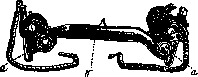
BAHA MERCURY-VAPOR LAMP (Hugo Bach), the so-called 'artificial mountain sun'. The main part of the lamp is a mercury-quartz burner (see Figure 1). The source of radiation is the heated mercury vapors, formed in the quartz burner; the latter is well permeable to ultraviolet rays. To ignite the lamp after turning on the current, one end of the burner is tilted using a special handle, due to which the mercury, located in the pole vessels, flows through the tube and connects both pole vessels; the latter are connected to the electric current by means of metal electrodes. Upon returning the burner to its previous position, the mercury thread breaks, and a light arc forms at the break. The burner is mounted inside an aluminum reflector having the shape of a hemisphere. Unlike the solar spectrum, the spectrum of the mercury-quartz lamp is linear; it lacks red rays, but contains a rich amount of ultraviolet rays with a wavelength up to 200 nm and below (in Hagemann's and solar - up to 289.6 nm). Thanks to this, the biological action of the rays of the mercury-quartz lamp differs from the action of the sun (see Heliotherapy). To make up for the missing infrared and red rays, a so-called Hagemann ring with 8 incandescent light bulbs is attached to B.'s mercury-quartz lamp reflector (see Figure 2). If desired, to exclude the action of short ultraviolet rays, filters made of uviol glass are attached to the reflector.
Figure 1. Mercury-quartz burner: a - pole vessels; b - light tube.
Bach mercury-quartz lamp, proposed in 1911 primarily for general lighting, is manufactured by the Quarzlampengesellschaft (Hanau, Germany) for both direct and alternating current. With the latter, a special transformer is also necessary. The burners for direct and alternating current are different. Models are produced both as hanging (see Figure 2) and as portable on tripods (see Figure 3). Mercury-quartz lamps of the Bach type have now found very wide application in the treatment of various diseases.
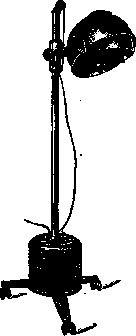
Figure 2. Hanging model of Bach lamp with Hagemann ring up to X=200 nm.
Figure 3. Standard model of Bach lamp on a tripod.
Related articles
Mentioned in
Cite this page
“Bach.” Soviet Medical Encyclopedia. English translation of Bolshaya Meditsinskaya Entsiklopediya, 1st ed. (Moscow, 1928–1936), ed. N. A. Semashko. https://sovietmedicalencyclopedia.pages.dev/article/bach/