Electric Current
Historical document, translated for reference. It reflects medical knowledge of the 1920s–30s and is not medical advice.
Summary
Electric current is the process of electric charge movement, which can be caused by electric field forces (conduction current) or external forces (convection current). The article explains the nature of electric current, its measurement, and the laws governing its behavior in different types of conductors.
Encyclopedia article (1928–1936)
ELECTRIC CURRENT, the process of movement of electric charges. This process can be caused by the forces of an electric field (conduction current) or by some external forces (convection current). An example of a conduction current may be, for example, the current arising in a conductor connected to the two poles of a galvanic cell; an example of a convection current is the displacement of a charged body on an insulating stand by hand. Sometimes they also speak of displacement current, which is essentially the rate of change of the electric field in vacuum or in a given medium. In the usual understanding, E. c. refers to conduction current. The carriers of electric charges, the movement of which determines the occurrence of E. c., are electrons (see) (metallic conductors) or ions (see) (liquid conductors or discharge in gas). By the speed of propagation of E. c. is meant not the speed of movement of these carriers, which is usually small (of the order of 1 mm/sec.), but the speed of propagation of energy, or, what is the same, the speed of propagation of the electromagnetic wave along the conductor, which has a magnitude close to the speed of light (300,000 km/sec.). The direction of E. c. is considered completely conventionally from the positive pole to the negative. In reality, the direction of movement of charges is determined by their carriers and is different in different cases; thus, in metallic conductors electrons move from - to +, in solutions we have simultaneous movement of positive and negative ions in mutually opposite directions. In the case where the direction of the current in the conductor remains unchanged, we have a direct current, if it changes - alternating. Alternating current is characterized by its frequency, which shows how many times per second the current changes direction to the opposite.
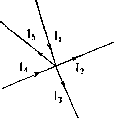
Fig. 1.
The magnitude of E. c., or current strength, is measured by the amount of electricity passing per second through the cross-section of the conductor. The current strength, at which 1 coulomb passes per second through the cross-section of the conductor, is called 1 ampere (A). A derived unit is 1 milliampere (mA) = 0.001A. The current strength (I) in a conductor depends on its electrical resistance (R) and on the potential difference, or voltage (V1-V2), applied to its ends. This dependence is expressed by Ohm's law, which has the following form: I = V/R. The current strength of 1 ampere arises in a conductor with a resistance of 1 ohm (1 Ω) when the potential difference at its ends is equal to 1 volt (1 V). Ohm's law applies both to the entire circuit and to its individual sections. It is valid for solid and liquid conductors and does not apply only to discharge in gas. The resistance of a conductor (R) is proportional to its length (l), inversely proportional to the area of its cross-section (s), the latter dependence is expressed by the coefficient ρ, which is called the specific resistance of the substance. The unit of resistance is 1 ohm. To measure resistances, one usually uses a circuit called a "Wheatstone bridge" (see Gas circuit). To measure the resistance of liquids decomposed by E. c., a modified Wheatstone bridge is used - the Kohlrausch bridge. In the presence of a single unbranched circuit, the current strength in any of its sections is constant. In the case of a branched circuit, the current strength is determined using Kirchhoff's laws. These laws are as follows: 1) The algebraic sum of the current strengths at any branching point is equal to 0. For example, I1- I2- I3+ I4- I5 = 0 (Fig. 1.). 2) In any closed loop, mentally isolated from a given branched circuit, the algebraic sum of the products of current strengths by the corresponding resistances is equal to the sum of the electromotive forces: I1R1 + I2R2
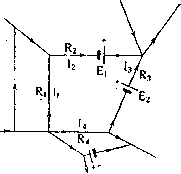
Figure 2. (S) and depends on its material: k. = s-^-; according to B.M.E. vol. XXXV. -IaRa-I4R4= - E].-f-E2 (fig. 2). From these rules it directly follows, for example, that in parallel-connected conductors, the current strengths are inversely proportional to their resistances. For the occurrence of electric current, it is necessary to have a closed circuit composed of conductors, and the existence of a potential difference between two points of this circuit. If this potential difference is not maintained externally by any special source, then due to the transfer of electricity, the potentials equalize and the current ceases. The source maintaining the constancy of the potential difference can be any generator of electrical energy, such as: a galvanic cell, accumulator, dynamo, thermoelement, photoelement, etc. All these sources of electric current convert various forms of energy (mechanical, thermal, light, etc.) into electrical energy. The energy of the electric current, released in a given section of the circuit, is determined by its strength and the potential difference at the ends of this section and is measured in joules or watt-hours. 1 joule equals the work of a current of 1A with a potential difference of 1V for 1 sec.; 1 watt-hour is the work of the same current for 1 hour, 1 watt=107 erg/sec. -j^№ = = 0.24 small calories/sec. Derived units-1 hectowatt-hour (hwh) and 1 kilowatt-hour (kwh). The energy of electric current manifests itself in its various actions, such as: thermal, magnetic, chemical, etc. When electric current passes through a conductor, heat is released, the amount of which is determined by the Joule-Lenz formula Q=0.24 PRt, where Q is the amount of heat in small calories, I is the current strength in amperes, R is the resistance of the conductor in ohms, t is time in seconds. Electric current creates a magnetic field around itself, the intensity of which is proportional to the current strength. (The magnetic field intensity H at a distance r from an infinitely long straight wire with current I is: H= - ; the magnetic field intensity in the center of a circular conductor with radius 2л1 >, with current strength I is: H= -p-.) Passing through non-metallic conductors, in which the transfer of electricity is due to ions, electric current has an electrolytic action on them, i.e., it decomposes them with the release of metals or hydrogen at the negative pole, and other metalloids at the positive pole. The amount of substance released during electrolysis is expressed by Faraday's law: M=elt, where M is the mass of the substance released, I is the current strength, t is time, e is the electrochemical equivalent of the given substance, depending on its atomic weight and valence. To these actions of electric current should be added the ability to excite luminescence when current passes through gas. This phenomenon can occur either in the case of rarefied gases (Geissler tubes, gas-discharge lamps) or at atmospheric pressure (Volta's arc). The passage of current through gases occurs according to special laws. Various practical applications of electric current are based on the use of its listed actions. Various heating devices, incandescent lamps, electric furnaces, apparatus for galvanocautery and other devices use the thermal action of electric current. All kinds of electromagnetic devices, electromotors, etc. are based on the application of the electromagnetic properties of current; galvanoplasty, purification of metals by electrolysis, ionogalvanization-chemical actions of current. The luminescence of gases when current passes through them is used to create light sources both in the visible region of the spectrum (neon, sodium and other gas-discharge lamps) and in the ultraviolet region (quartz mercury lamps). Devices for measuring current strength-ammeters-are also based on these actions of current. For measuring small current strengths, milliammeters (thousandths of an ampere) and galvanometers (up to 10-17 A) are used. The energy of electric current that has passed through a circuit in a certain time is measured by special devices-electric meters showing energy directly in watt-hours. The action of meters is usually based on the electromagnetic properties of current. Rheostats, which are conductors whose resistance can be easily changed, are used to regulate current strength. The rheostat is connected in series with the device whose current strength one wishes to regulate. By changing the resistance of the rheostat, the current strength in it is changed, and consequently in the device connected in series with it. For convenient switching on and off, as well as for changing the direction of current in the circuit, various kinds of switches, commutators, and contact keys are used. Their design is very diverse, depending on the purpose for which they are used. These devices, together with electrical measuring instruments, are often mounted on a distribution board, which serves to control the supply of current to individual installations. Fuses, which protect devices from the passage of current of too great strength, are usually also placed on these boards. They are easily fusible wires connected in series with the device, melting when the current strength exceeds that for which they are designed. Conversion of currents (direct to alternating, low voltage to high voltage, etc.) is carried out with the help of converters, transformers, rectifiers, inductors, etc. The transformer allows changing the voltage of alternating current, the rectifier converts alternating current to direct current, the converter is used for converting the voltage of direct current or converting direct current to alternating current and vice versa. The inverter converts intermittent low-voltage current to high-voltage alternating current. In some cases, to obtain intermittent currents (rhythmic galvanization, powering inductors, etc.), interrupters are included in the circuit, which automatically make and break the current at certain intervals. For obtaining a high frequency of interruption, electromagnetic, rotating, or electrolytic interrupters are used. If it is necessary to make break and contact at relatively large intervals, a contact pendulum or metronome with mercury contacts is used.-Physiological actions of electric current are mainly reduced to muscle contraction when current passes, intratissue physico-chemical and biochemical processes associated with electrolysis, and heating of tissues by heat released when electric current passes (see Excitability). The physiological action of current depends to a large extent on its frequency. Thus, alternating current of high voltage but low frequency has a fatal effect on the body, while the same voltage at high frequency is completely painlessly tolerated by the body.
G. Neutsmine. Electric trauma. The source of injury by electric current can be both current-carrying parts of electrical installations, under voltage or previously de-energized but prematurely or accidentally re-energized, and objects not having direct connection with the electrical network but unexpectedly found under voltage due to damage to the insulation of adjacent current-carrying parts, connection with them by some conductor, induction from them, etc. In the latter case, not only strong current installations (even with low voltage, like lighting networks) but also weak current (up to 100 milliamperes)-telephone, telegraph, radio-can be dangerous. Damage from electric current occurs both from its direct passage through the body and from the energy into which it is converted outside the body during its discharge in the immediate vicinity (heat, light, sound). The general reaction of the body to the passage of electric current is expressed in painful sensations, contraction of the corresponding group of muscles or general tetanus, disturbance of the activity of nerve centers, respiratory and circulatory organs, up to instantaneous death. Local phenomena are reduced to the so-called "marks of current" (Strommarke), burns of varying degrees,?- up to charring and burning of individual parts of the body. Alternating current of low frequency (usual technical current of 50 periods per second) with strength measured in hundreds of milliamperes (0.1-0.5A) is considered the most dangerous. Two-pole inclusion (between the two ends of the wire) is more dangerous than single-pole inclusion (between a current-carrying part and the ground). Branching of current in the body, the role of the nervous system both as a conductor of current and as a conductor of irritation can result in the reaction of corresponding nerve centers and nodes even in cases when the brain and heart do not lie on the shortest path between the point of entry and the point of exit of the current. The role of voltage is relative, because depending on the resistance of the body (the latter varies from thousands to millions of ohms) or objects separating from the current-carrying part and from the ground, the current strength may fall below dangerous values. Patho-anatomical changes in internal organs and systems are either not determined at all (death from primary paralysis of the heart and vasoconstrictors) or are detected in the form of increased blood filling and edema
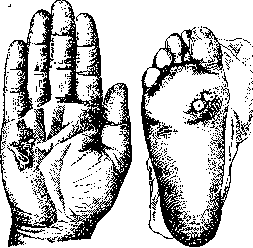
Figure 3.
Figure 4.
Figure 3 and 4. Typical marks of current: fig. 3-point of entry; fig. 4-point of exit.
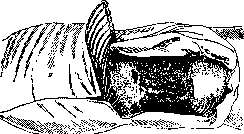
Figure 5. Metal impregnation in the area of the wrist joint.
of the brain, sometimes hemorrhages in it (primary paralysis of nerve centers), or in the form of pulmonary edema, hemorrhages into mucous and serous membranes, subpleural emphysema (death from asphyxia). The histological picture of the nervous system lesion comes down to small hemorrhages in various parts of the brain, vacuolization of gray matter cells, blurring of outlines, etc. Changes in internal organs are rarely observed and are not pathognomonic. The general clinical phenomena come down mainly to disruption of the functions of the respiratory and circulatory organs and nervous, mainly vegetative, disorders, mostly of a functional and transient nature. From the blood side, hemoglobinemia, aneosinophilia, thrombocytopenia, leukocytosis, decrease in alkaline reserve, and as a more constant symptom, hyperglycemia are observed in individual cases. "Current marks"—peculiar changes in the skin under the influence of small amounts of Joule heat and the electrolytic action of the current—represent superficial whitish-gray spots, or callus-like formations with depression in the center, or resemble healing wounds, scratches, etc. (fig. 3, 4). When a metal conductor touching the body burns out, impregnation of the skin with metal is observed (fig. 5). Often the "current mark" is an imprint of the current-carrying part to which the victim touched. The hairs around the "current marks" are mostly not burned, but only twisted. "Current marks" are usually painless. In pure cases, the inflammatory reaction is usually absent. "Current marks" are found mainly at the point of current entry. At the exit point—in cases where the current passes through a sharply limited space, e.g., along a nail in footwear. Microscopically, "current marks" are characterized by the so-called "honeycomb cavities" in the horny layer, brush-like stretching of Malpighi layer cells and similar stretching of hair follicle cells and capillary endothelium. In deeper layers, narrow slits with charred walls—"current paths"—are found. With a more significant formation of Joule heat, local changes usually lose their specificity and give a picture of burns of various degrees, but with prolonged exposure to a strong current and the resulting high temperature, the picture sometimes again becomes peculiar: the skin, having high resistance, chars and burns, muscles, which conduct current well, are exposed, and the corresponding area resembles an anatomical specimen. Bones can melt and give pearl-like formations. "Current marks" and burns are also observed along the path of the current over the surface of the body—in folds and adjacent parts of the skin, most often on the forearm, at the base of the palm (with convulsive flexion of the hand), where the current, encountering great resistance, turns into Joule heat or gives sparks. The tissues closest to the victim are usually in a state of severe edema, caused by changes in the vessel walls and thrombosis. Local changes from the sensory organs are usually caused not by the passage of current through the body, but by its transformation into corresponding other energy (light, sound) outside the body. The course of electrical injury in relation to general symptoms is usually favorable. The phenomena from the internal organs, mainly the cardiovascular system, usually quickly and completely disappear. More prolonged functional disorders of the nervous system, mainly vegetative, are more often observed. As an exception, relapses of severe condition with signs of cardiac dysfunction and increased intracranial pressure are observed (in the nearest hours and days). Local phenomena are distinguished by a very peculiar course. The characteristic difference between electrical burns and thermal burns is that the tissues are found to be more severely affected and over a larger area than can be detected immediately. The tissues closest to the site of visible damage are first for a long time in a state of necrobiosis and subsequently are rejected. When the burn is located near large arteries, very often on the 3rd-4th week, based on similar changes in the vessel wall, abundant hemorrhages are observed, which are difficult to stop and recur due to the usual inability of the vessel to collapse in such cases and its fragility when grasped by a hemostat clamp, when applying ligatures, etc. Subsequently, the process proceeds better than with ordinary burns, showing little tendency to suppuration, and conversely, increased regenerative capacity of tissues and accompanied by a better functional outcome. The treatment of electrical injury in relation to general phenomena is purely symptomatic: observation and bed rest in any serious cases, taking into account the possibility of unexpected deterioration, the fight against which is similar to first aid measures. In relation to local changes, general methods of burn treatment are applied. In view of the above changes in tissues and the nature of the course of the process, surgical interventions should be avoided as much as possible until the formation of a demarcation line. Arterial bleeding is recommended to be stopped with a pressure bandage and tourniquet as much as possible, and only in case of failure—by ligation of the vessel over a distance beyond the existing edema or tissues suspected of being non-viable. In order to prevent blood loss in expected hemorrhages based on burn localization, it is recommended to secure a tourniquet freely encircling the corresponding limb and instruct neighboring patients in the room on the need to immediately tighten it at the first appearance of blood on the surface of the bandage. First aid for electrical injury consists of measures for rescue, resuscitation, measures to combat life-threatening phenomena, and measures aimed at local changes. The victim is freed from the action of the current (taking into account that he himself is
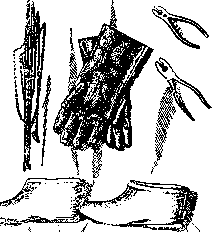
Figure 6. Rescue kit: rubber gloves, galoshes, pliers with insulated handles for cutting wires, and a copper chain for short-circuiting wires.
under voltage) after preliminary insulation of the rescuer from the victim (rubber gloves, wrapping hands in silk or woolen material, grasping not by open parts of the body, but by clothing), as well as-in the case of high voltage currents-from the ground (rubber mat or proper galoshes, dry clothing laid underneath, thick glass, a stack of paper, dry board, etc.). To separate the wire from the victim or the victim from the wire, dry, poorly conductive objects are used: a wooden stick, rope, etc. (fig. C). For currents with a voltage of over 6,000 volts, rescue measures are applied from a distance from the victim by turning off or interrupting the current at the station or on the network by appropriate technical measures. If consciousness or signs of life are present, first aid measures are the same as for non-specific fainting, collapse, or shock, but more urgent, energetic, and persistent due to the greater severity of the causative factor. The absence of signs of life does not yet give the right, in the current state of the question, to consider the victim dead. The theory put forward by Jellinek about the possibility of apparent death in a number of cases in the first moments after electric shock and the observed cases of revival of victims, considered dead at first even by doctors, require urgent, continuous, prolonged, and qualified assistance measures, and in particular and above all artificial respiration, as well as heart massage, electrification of the phrenicus nerve, etc. In cases of cyanosis, venesection is performed, preferably of the saphenous vein; in cases of increased intracranial pressure-spinal puncture. The medicinal agents used are: adrenaline! 1:1000 (in physiological solution) intravenously or intracardially, lobelin 1 cm³ of a 1:1000 solution, coramine 3-4 cm³ of a 25% solution, glucose solution, Ringer's solution, etc. The only indication for stopping revival measures is the appearance of unmistakable signs of death: livor mortis and rigor mortis. Prevention of electric trauma consists in strict observance of safety rules in the installation, repair, and operation of electrical installations, in instruction and familiarization with the dangers and precautions. Similar to technical electricity, atmospheric electricity also produces changes in the body, with the difference that in lightning strikes, the voltage of which is expressed in millions of volts, the dynamic action of the current is particularly sharply manifested, expressed for example in the tearing off of individual parts of the body, the throwing of a person, etc. External injuries in general are similar to the "signs of current". Characteristic figures of lightning injuries are red tree-like, branching stripes on the skin, corresponding to the course of the skin veins (their paralysis, diapedesis, etc.). The help and treatment measures are the same as for injuries from technical electricity. The often practiced burial of victims in the ground has no scientific basis and is merely a waste of time. Lit.: F. Jellinek, Accidents from Electricity, M., 1927; Instructions for Providing First Aid in Case of Electric Shock, M., 1936; Kaplan A., Errors, Dangers and Unexpected Complications in the Treatment of Injuries from Electric Current, Sov. Surg., 1932, № 1; ibid., Injuries from Electric Current, ibid., 1935, № 3; ibid., On the Question of Electric Shock on the Front, Mil.-San. Aff., 1935, № 4; ibid., Injuries from Electric Current (in the book by V. Gorinevskaya, Foundations of Traumatology, M.-L., 1936); New Surgery, 1931, № 3 (articles by A. Kaplan, V. Militsyn, M. Saparov, V. Solomin, A. Sudakevich, N. Syrensky, S. Yakobson); Petrov I. and Libikh S., On the Question of Reviving Victims of Electric Shock, Archive of Biological Sciences, 1932, № 3; VII International Congress of Accidents and Occupational Diseases, Reports, v. I-Lesions Caused by Electricity, Brussels, 1935; Freyberg H., The Electrical Resistance of the Human Body Against Technical Direct and Alternating Current, B., 1934 (literature); Jellinek S., The Electric Accident, B., 1931; ibid., Electric Injuries, Clinic and Histopathology, Leipzig, 1932; Pause F., Injuries to the Nervous System by Technical Electricity, Berlin, 1930.
A. Kaufman. Electric currents of the cerebral cortex, or bioelectric phenomena of the cerebral cortex. As early as 1849, the famous physiologist Du Bois-Reymond established on frogs, turtles, rabbits that the brain, just like nerves and muscles, possesses electrical properties. In 1875, Caton, studying the electric currents of the cerebral hemispheres, showed that the active part of the brain is electro-negative from the point of view of localization; its transition to a state of excitation is therefore accompanied by a negative sign. A number of works by the famous physiologist Danilevsky (1876), Sechenov (1882), Verigo (1889) and a whole series of other authors-Russian and foreign-were also devoted to the study of these same questions. Speaking of the presence of electrogenic properties of the brain, one or another part of the central or peripheral nervous system, the researchers of that period used crude, insufficiently sensitive measuring instruments. Meanwhile, the electric voltages created by the brain, the central nervous system, are so weak (about ten-thousandths of a volt) that extremely sensitive instruments were required to detect them, which only appeared as a product of a later time (string galvanometer). With the help of these devices, significant achievements were undoubtedly made in the study of bioelectric phenomena of living tissues of the body (especially muscles and the peripheral nervous system). These achievements also include the extremely interesting works of Beck and Cybulski, who (1892) studied the bioelectric currents of the central nervous system in dogs and monkeys. In 1900, Fleischl von Marxow obtained action currents from the visual area of the brain when the eye was illuminated. But the level of technology at that time did not yet make it possible, beyond establishing the presence of electrogenic properties of the brain or its individual areas, to speak about the nature of these bioelectric phenomena, their regularities, especially in relation to the bioelectric phenomena of the basic substrate of our neuropsychic activity-the cerebral cortex. The lack of these technical possibilities also explains the absence, after the works of Beck and Cybulski, of more or less significant works on the study of brain biocurrents. The Russian researcher Kaufman, who confirmed the data of Beck and Cybulski on the change in electrical potential in the visual areas of the cerebral cortex with peripheral visual irritations, concludes his interesting work as follows: "one can only wonder why, during the more than 20 years that have passed since the excellent research of Beck and Cybulski, the method of studying bioelectric currents remained as if in oblivion". The development and successes of modern technology, in particular the appearance in relatively recent times of very sensitive measuring instruments and cathode amplifiers, have once again raised before researchers the question of studying the bioelectric phenomena of living tissues of the body and especially the most finely organized of them-nervous tissue, which moreover possesses relatively weak electrogenic properties. The main achievement here is that we are now able not only to determine the presence of bioelectric phenomena in the central nervous system, in particular in the cerebral cortex, but also, by capturing these biocurrents, we are able to amplify them to a considerable extent and record them graphically, which already gives us the possibility to study and establish a number of regularities of the "resting" and active brain (fig. 7). This example extremely clearly shows the importance of the development of technology for science, in this case for psychoneurological science. If we speak of modern achievements in the study of bioelectric currents of the cerebral cortex, then here, along with our current technical capabilities-the presence of powerful amplifiers, the presence of devices (encephalographs) that not only amplify bioelectric currents but also immediately record
Related articles
Mentioned in
Cite this page
“Electric Current.” Soviet Medical Encyclopedia. English translation of Bolshaya Meditsinskaya Entsiklopediya, 1st ed. (Moscow, 1928–1936), ed. N. A. Semashko. https://sovietmedicalencyclopedia.pages.dev/article/electric-current/