Cinematography
Historical document, translated for reference. It reflects medical knowledge of the 1920s–30s and is not medical advice.
Summary
This article from the 1928–1936 Soviet Great Medical Encyclopedia details the early applications of cinematography in biological and medical research, teaching, and sanitary education. It describes techniques such as micro-cinematography, time-lapse, and high-speed filming used to study physiological processes, animal behavior, and microscopic organisms.
Encyclopedia article (1928–1936)
CINEMATOGRAPHY. Contents: History of the application of cinematography in biology and medicine... 686; Cinematography as a method of scientific research... 667; Roentgenocinematography... 668; Kinocyclography... 668; Zeitraffer... 669; Cinematography as a teaching method... 670; Cinematography in sanitary education... 673; Prospects for development... 675; Cinematotherapy... 676; Influence of cinematography on children and adolescents... 677; Occupational hazards of film production... 681. Cinematography in medicine and biology is applied in three different fields: in research work, in teaching, and in sanitary-educational activities; with each passing year, its role and importance are increasing more and more.
History of the application of cinematography in biology and medicine. The enormous scope that cinematography has attained in biology and medicine is best illustrated by several facts cited below. Spitta used cinematography to study the movement of lymph in plant vessels. Köhler conducted similar interesting experiments on the study of osmotic pressure in plant stems and the circulation of plasma in their cells. Furthermore, the same researcher created a series of films—"Amoebae," "Infusoria," "Human Parasites"—depicting these animals, their development, and their role in nature. As the technique of film-shooting equipment improved, the study of the animal and plant world was transferred from the surface of the earth to river and sea depths. Thus, Prof. Wempe, at the marine aquarium of the biological station on Heligoland, produced a series of shots of marine flora and fauna using special devices. Another professor, Berndt, on the same island, filmed jellyfish, starfish, crustaceans, and other animals. The researcher Liesegang performed similar work at the Naples Aquarium, where he filmed the rich world of the sea depths. He demonstrated these films at international scientific congresses. Wandollek investigated the microscopic world of water using a motion-picture camera, and François-Franck investigated the mechanics of respiration (Atmungsmechanik) of marine and terrestrial animals. Bull and Pison filmed the development of an entire colony of polyps at the Photobiological Institute in Paris. The resulting film clearly showed the entire process of the colony's reproduction and its growth.

In the microscopic world, the use of cinema as a tool for scientific research and observation has led to brilliant results. A whole galaxy of major researchers has created bacteriological films that have opened up new, broad possibilities in the study of the microworld. Dr. Comandon is still working particularly actively in this field. He created a film dedicated to the vital activity of the sleeping sickness bacillus. The size of this bacillus is 0.0005 mm. Comandon filmed it at a speed of 32 frames per second. The magnification on the screen compared to the norm is 200,000 times, and the tiniest microbes appear on the screen like eels. This, of course, allows the researcher to study the most interesting phenomena that remain hidden by other methods of investigation. Polimanti studied normal and pathological movements of animals in connection with the extirpation of various sections of the cerebral cortex using cinematography. Braun studied the cardiac impulse using cinematography. A whole series of scientists studied the work of internal organs (heart, lungs, stomach, intestines) by combining cinema with X-rays. Reichardt conducted special experiments on the study of anaphylaxis using cinematography. Braus studied the development of the embryo using cinematography. The same work was conducted in more detail by Ries and Scnewrton. Jellinek created a special scientific film on the material of the consequences of accidents involving electric current. Helfter studied the influence of toxins on the cardiovascular activity of experimental animals using cinematography. In surgery, a number of doctors have created outstanding operative films. In gynecology and obstetrics, Friedenthal released the research film "The Act of Childbirth"; in neurology and psychiatry, a number of pathological movements of patients, nervous tics, abnormal behavior, etc., have been filmed. Dr. Roth's institute has released several dozen films in this field. Most of the films are valuable material for studying the mechanism of neuropsychiatric disorders and are an indispensable teaching aid for students. Gradually, cinema is penetrating the most hidden parts of the human body. Thus, the Berlin scientist J. J. Stutzin achieved significant success in the application of cinema in cystoscopy; he introduced the new term "Kinesmascopie" to denote the application of cinema in cystoscopy. The main difficulties in resolving the issue lay in the limited field of activity (the urinary bladder), the narrowness of the urethra, which hindered the advancement of the instrument into the bladder, and, finally, the weak light source. Nevertheless, these difficulties were overcome, and the resulting motion pictures clearly reveal various defects and diseases of the bladder. The pulsation of the bladder walls, the periodic opening of the ureteral orifice, the ejection of individual portions of urine into the bladder, etc., are visible. Prof. Panconcelli-Calzia, director of the phonetic laboratory of the University of Hamburg, constructed an artificial larynx and vocal cords for cinematographic research.
L. Sukharebsky. Cinematography as a method of scientific research. Our visual apparatus is not capable of capturing extremely slow or, conversely, extremely fast movements, and only with the introduction of cinematography into the number of scientific methods did it become possible to measure in space and time and to register such movements. A standard film is shot and then projected on the screen at a speed of 16 frames (shots) per 1 second. If a smaller number of shots are taken during filming and then projected on the screen at the normal speed, the movement will appear to the viewers as accelerated

Figure 1. Trypanosoma in the blood.
in comparison with the actual movement, and by as many times as the filming was performed slower than normal. The growth of a stem, the opening of a bud, the turning of plants under the influence of light and other agents (tropisms), the movement of certain animals, and many other phenomena can be captured and then studied in detail upon repeated viewing on the screen. In contrast to slow-motion filming, accelerated filming is used to register very fast movements, such as running, jumping, etc. For this purpose, special, specially constructed motion-picture cameras are used, so-called "rapid-cinema" and "time-magnifier" (Zeit-Luppe), which make it possible to usually take 200-300 shots per 1 second. Modern technology has developed apparatuses allowing up to 10,000-15,000 shots per second (ultra-rapid-cinema), which, however, do not have any wide practical application. The technical difficulties in the construction and use of such shooting cameras lie in the need to move the film continuously, and not in jerks as in a standard shooting apparatus. At the same time, the consumption of the latter is extremely high, reaching 240 meters per 1 minute. Accelerated filming for the registration and study of the movements of humans and animals was first applied by Marey, and after him by Ch. Richet. Great successes have been achieved by combining cinematography with the microscope. The newest models of micro-cinematographic apparatuses allow for the easy filming of the processes of nutrition and reproduction of unicellular animals and plants, tissue cultures of higher animals (Levaditi was a pioneer), the movement of spirochetes and trypanosomes (Fig. 1) in the blood of patients with syphilis or sleeping sickness, and many other similar pictures.
In some cases, it is necessary to combine, using a special clockwork mechanism, a micro-cinematograph (Fig. 2) with slow-motion filming (e.g., the extension of pseudopodia by an amoeba, the ingestion of a piece of food by a unicellular organism, complex processes of nuclear division, up to mitosis). The combination of cinematography with a telephoto lens makes it possible for naturalists to film animals from a distance and study their habits in their usual environment. Apparatuses with automatic control, allowing for film shooting without the participation of an operator, have become widely used. For zoologists and biologists, such film shootings are of enormous interest. The cinematographic method has won a definite place among other scientific methods, having made accessible the investigation of processes that were previously not amenable to measurement and registration due to their slowness or, conversely, their enormous speed.
K. Kekcheev. Röntgenokinematography. In röntgenoscopy, we see the work of the lungs, heart, stomach, intestines in dynamics, but we cannot fix this dynamics for a long time. On the contrary, in röntgenography, we can forever fix the picture of an organ, but this will be a static image, since one moment is captured. Cinematography (K.) compensates for this major defect, which is of great importance for diagnosis. In combination with röntgenological equipment, it allows for the long-term fixation of the dynamics of a diseased organ. Thanks to cinematography, it is possible, as many times as desired, by running a film dedicated for example to the heart on the screen, to observe the pathological changes of the latter. This combination of cinematography with röntgenology has created a new branch in cinematography, which has been named röntgenokinematography. As early as 1907, at the III Congress of the German Röntgenological Society in Wiesbaden, Alban-Kohler demonstrated a film which he had shot from a series of photographic plates using a regular motion picture camera. In 1908, the famous röntgenologist Groedel succeeded in using a motion picture to capture the dynamics of the lungs, stomach, and heart. In recent years, röntgenokinematography has made significant progress. Interesting works in this field are associated with the name of the Berlin röntgenologist V. Gotteiner, who has been working on röntgenokinematography for many years together with the famous German photochemist K. Jacobson. Cinemocyclography. Cinematography opens up a wide field of application in the study of working movements and the rationalization of labor processes. A student of Taylor, engineer F. Gilbert, successfully applied cinematography in the rationalization of technical work and selection of the workforce; in one example of machine assembly, he showed by means of cinema how this production process could be reduced from 37½ minutes to 87 minutes. Prof. Münsterberg of Harvard University conducted psychotechnical tests using cinematography. Recently, the method of combining cinematography with cyclograms has come into use. Unlike the cyclography method, which is carried out photographically, this method is called 'cinemocyclography,' since it is carried out by means of cinematography. The German engineer R. Thun was one of the first to widely apply motion picture photography of cyclograms. He formulates the advantage of the new method as follows: 'Such curves of movement can also be found directly by photographic means. The first method of constructing them from a cinematographic film has, however, the advantage that the curve of any point that arouses interest during the study can be depicted, whereas in the second method all these points must be firmly selected before the shooting. Moreover, the first method allows marking periods of complete calm or slight progress, while when depicting curves photographically, such marks coincide with the previous ones and become invisible.' For obtaining stereoscopic images of movements, simultaneous shooting with two small movie cameras is used. Complex working processes are shot in separate stages of the working operation in several shifts. For the fixation of time in cinemocyclograms, Thun approaches the matter in two ways: 1) he either simultaneously also shoots specially constructed clocks onto the film, or 2) he uses the so-called counting film. This film is 2 meters long, is circular (infinite), and contains one hundred numbered frames. During projection on the screen, the counting film is inserted into the apparatus together with the film being projected, and due to the transparency of the numbers of the counting film, the frames of the film receive numbering on the screen, which allows one to judge the time. Time-lapse cinematography. Besides fast and ultra-fast movements, where rapid cinematography is used for shooting, in nature there are slow and very slow processes, the changes in which are sometimes inaccessible to the human eye. With the slow-motion shooting of these processes and their normal projection on the screen, the tempo changes accordingly depending on the degree of slowing down; thus, if we shoot at a rate of one frame per second and project at a rate of 18 frames per second, we will get a numerical expression equal to 1/18, which expresses the compression of time 18 times. Thus, in 1 second, before the viewer's eyes passes a phenomenon that in natural conditions lasts 18 seconds. The apparatuses designed for this purpose have been named 'time-lapse cinematography' (Zeitraffer). Suppose we are studying a rose bud that is about to bloom. This process under normal conditions requires about seven hours. In the filmed movie, this entire process should be shown approximately within one minute. In one minute at normal projection, 20 meters of film pass. Therefore, to reveal this process, 20 meters will be required. On each meter of film, 52 frames are placed. Therefore, the researcher has at his disposal 20 x 52 = 1,040 separate frames. By performing the corresponding division of 7 hours by 1,040 moments, we obtain that each shot should be made with an interval equal to approximately 0.4 minutes. To stand for 7 hours at the apparatus and take one shot every 0.4 minutes is an extremely difficult task. Therefore, the shooting apparatus is connected with a time-lapse cinematography apparatus. The work of the time-lapse cinematography apparatus is very interesting. The apparatus itself automatically before shooting, at certain intervals of time, turns on the light, takes the shot, and then turns off the light until the next shot. Thus, extremely valuable research work is carried out completely automatically. In medicine and biology, time-lapse cinematography has great importance, as it allows the study of the development of slow phenomena.
L. Sukharevsky. Cinematography as a teaching method. Showing rare species of animals and plants, conducting many experiments in secondary or higher schools often become difficult due to the high cost of equipment or the complexity of the experiment itself. In such cases, an excellent solution is to demonstrate the corresponding film. The advantages of cinematography as a teaching method are usually its visual nature and time-saving. Many experiments or surgical operations can usually be seen simultaneously by only 5-6 persons nearby; cinematography, however, allows for filming the entire course of an experiment or operation, showing it to a thousand viewers at once in all details, and certain details - in enlarged form (the so-called "close-up"). A film demonstration takes only a few minutes, since unnecessary preparatory operations, repetitions, and non-essential parts of the experiment or surgical operation are excluded from the films. So-called animations, or live drawings, play a huge role. If the subject matter presented in a lesson or lecture seems complex, one usually resorts to drawing diagrams on the board that simplify the phenomenon being explained and highlight its most essential aspects. Now, when making educational films, there is increasingly frequent use of drawing diagrams on a large number of sheets of paper in strict sequence. Each new drawing corresponds to the position of the parts of the subject at a specific interval of time, for example, every 1/5 second. If all these drawings are filmed sequentially and then demonstrated on screen, the course of the experiment or the progress of a particular phenomenon is captured with great force and remembered for a long time. The animation method is used to illustrate the processes of copulation in unicellular organisms, amitotic and mitotic division of the nucleus, to explain the mechanism of tropisms, the essence of physiological experiments (registration of muscle work, transmission of nerve impulses along afferent 72 and efferent nerves, blood movement in the heart and vessels, etc.), diagrams of childbirth or surgical operations, and in many other cases. - Furthermore, cinematographic demonstration has another advantage over direct experimentation in that the creation of educational films usually involves leading specialists in the given scientific field. However, it must be admitted that being a great expert in one's field is not enough to create a very good educational film. Cinematography has its own laws of shooting, editing, and screening, and in this respect it differs, for example, from the laws of composition in a popular science book. Scientific accuracy, interest of the material, and its comprehensibility to a schoolchild or student - these are the requirements that a good educational film must satisfy. Cinematography as a school teaching method has not yet gained proper recognition in the USSR, and the number of schools equipped with a projection apparatus is still small. In Germany, the network of such schools is quite extensive and is served by a special organization: the "Society of School Cinematography," which has a special assortment of films and its own distribution network (Fig. 3 and 4). Among biological films, so-called expeditionary films should be singled out. For the first time, such a film was shot by Hagenbeck, the owner of the Hamburg zoological garden, during one of his expeditions for wild animals. This film had outstanding success and covered all the expenses of the expedition. Such films have great educational significance, are very interesting, and at the same time quite profitable. - In higher education, on medical and physical-mathematical faculties, cinematography should naturally be applied in a somewhat different form than in secondary schools. Here, short films on one topic come to the forefront; for example, in surgery, students can be shown films depicting various versions of the same surgical operation or rare cases. One of the first to apply cinematography to filming surgical operations was the famous French surgeon Douayen. - Recently, a special camera in the form of a sphere, suspended above the operating table, has been used for filming. It is operated by electricity from an adjacent room. The cameraman can turn the camera in any direction, bring it closer to or move it away from the operating field (while simultaneously adjusting the focus), and vary the lighting of the details being filmed (lamps are placed inside the sphere). The filmed material is then demonstrated by the surgeon during lectures, accompanied by his special explanations of particular moments of the operation. "Fig. 3. School film projector." "Fig. 4. Opened film projector." On lectures in obstetrics, films can be shown depicting the process of normal and pathological childbirth and corresponding obstetric procedures; on lectures in hygiene - methods for determining impurities in the atmospheric air, the design of water supply, sewerage, irrigation fields; in bandaging - methods of applying bandages. Courses in normal and pathological physiology can be illustrated with films in which experiments on blood circulation, respiration, with research on gas exchange, experiments showing the activity of the motor sphere (film "Impact") or sensory organs (films "Eye", "Ear", "Sound", "Radio") are filmed. Pavlov's experiments on inducing conditioned reflexes in dogs and other animals ("Mechanics of the Brain"), experiments on nutrition and digestion ("Nutrition Problem") have been filmed. In the USSR there are films: "Alcohol", "Fatigue", "Rejuvenation" and several others illustrating various chapters from biology and physiology. According to the German "Verzeichnis deutscher Filme" for 1927, German medical films are distributed among individual disciplines as follows: pathology - 19 films, internal diseases - 7, neurology and psychiatry - 37, surgery - 101, orthopedics - 13, gynecology and obstetrics - 18, pharmacology - 9, otorhinolaryngology - 1, eye diseases - 12, dermatology - 4, bacteriology - 9. Most of them were made by the famous film company "UFA" with the participation of the corresponding institutes and clinics.

In higher education, on medical and physical-mathematical faculties, cinematography should naturally be applied in a somewhat different form than in secondary schools. Here, short films on one topic come to the forefront; for example, in surgery, students can be shown films depicting various versions of the same surgical operation or rare cases. One of the first to apply cinematography to filming surgical operations was the famous French surgeon Douayen. - Recently, a special camera in the form of a sphere, suspended above the operating table, has been used for filming. It is operated by electricity from an adjacent room. The cameraman can turn the camera in any direction, bring it closer to or move it away from the operating field (while simultaneously adjusting the focus), and vary the lighting of the details being filmed (lamps are placed inside the sphere). The filmed material is then demonstrated by the surgeon during lectures, accompanied by his special explanations of particular moments of the operation. On lectures in obstetrics, films can be shown depicting the process of normal and pathological childbirth and corresponding obstetric procedures; on lectures in hygiene - methods for determining impurities in the atmospheric air, the design of water supply, sewerage, irrigation fields; in bandaging - methods of applying bandages. Courses in normal and pathological physiology can be illustrated with films in which experiments on blood circulation, respiration, with research on gas exchange, experiments showing the activity of the motor sphere (film "Impact") or sensory organs (films "Eye", "Ear", "Sound", "Radio") are filmed. Pavlov's experiments on inducing conditioned reflexes in dogs and other animals ("Mechanics of the Brain"), experiments on nutrition and digestion ("Nutrition Problem") have been filmed. In the USSR there are films: "Alcohol", "Fatigue", "Rejuvenation" and several others illustrating various chapters from biology and physiology. According to the German "Verzeichnis deutscher Filme" for 1927, German medical films are distributed among individual disciplines as follows: pathology - 19 films, internal diseases - 7, neurology and psychiatry - 37, surgery - 101, orthopedics - 13, gynecology and obstetrics - 18, pharmacology - 9, otorhinolaryngology - 1, eye diseases - 12, dermatology - 4, bacteriology - 9. Most of them were made by the famous film company "UFA" with the participation of the corresponding institutes and clinics.
K. Kevchoev. Institute of Medical Cinematography. The significance of cinematography in medicine became so urgent that the need arose for the organization of a special institute. Such an institute was established in 1923 in the Berlin clinics (Charite) on the initiative of Dr. Roth. The institute occupies two large floors of the surgical polyclinic. The filming processes in it are mechanized and automated. The equipment of the operating room is of greatest interest, where surgical films are shot (Fig. 5 and 6). In addition to the operating room, there are studios for filming nervous patients, studios for filming work on animals, a microcinema cabin, etc. The significance of the institute is enormous. Its films penetrate all countries of the world. Thousands of doctors learn from them. They are shown at scientific conferences and congresses. Cinematography in sanitary education has received extremely wide distribution in recent years and is currently one of the most mass forms of hygienic propaganda. It is quite natural that cinematography, having become a powerful means of political education of the masses, widely used in agitation and propaganda work, could not but be used in sanitary education. In contrast to the academic, divorced from the immediate tasks of life, foreign sanitary educational films showing the struggle for health of 'man in general', Soviet films from the very first days took in their thematic emphasis the service of the tasks of the struggle for the health of the working people. Initially, issues dedicated to the epidemic front, the fight with social diseases predominated; now they are being replaced by problems of improving labor and living conditions. The reconstruction of living conditions, fundamental shifts in the life of the village on the basis of collectivization of agriculture cause the appearance on the screen of corresponding new films on health topics. Basically, all sanitary educational films can be divided by the nature of the script - into feature and popular science films, by size - into feature-length and short films. Individual attempts to create sanitary educational films took place even before the revolution, when the following films were created: 'Alcoholism', 'Tuberculosis', 'Plague'. After the revolution, during the civil war, the following films were made: 'Typhus', under the editorship of Marcinsky, and 'Children - Flowers of Life' - Department for the Protection of Motherhood and Infancy of the People's Commissariat of Health. The serious growth in the production of sanitary films begins only from 1924. In the last 5 years, various film organizations, according to the assignments of the People's Commissariat of Health of the RSFSR and union republics, have shot about 25 popular science and feature sanitary films. Among the largest should be named: 'Struggle for Life' (about malaria), 'The Golubin Mansion' (tuberculosis as a social disease) - a feature film, 'The Truth of Life' (syphilis), 'Reckoning' (gonorrhea), 'The Road to Happiness' (protection of motherhood and infancy), 'Mechanics of the Brain' (the doctrine of conditioned reflexes), 'Nutrition Problem', 'Abortion', 'First Aid', 'For Your Health' (alcoholism), 'Sick Nerves' and a number of others. About a dozen short films on safety techniques and labor protection, several educational military-sanitary films ('Personal Hygiene of the Red Army Man', 'First Aid Packet' and others). Recently, small films, unique film posters, such as: 'A Moment of Attention' (don't buy from street stalls), 'Take Care of Your Home', intended specifically for demonstration as a mandatory addition to the regular program, have begun to be created. Among the films for schools there are also several films on health protection, serving as a guide when students pass the corresponding complex. For the purpose of sanitary education, they also resort to showing some non-specialist sanitary feature films, but indirectly touching one or another social-hygienic problems - the sexual question, prostitution, alcoholism, abortion, etc. At present, sanitary films are released mainly by 'Sovkino' and 'Mezhrabpom-film', as well as by film organizations of the union republics (VUFKU, Belgoskino, etc.). The methodological questions of the application of cinematography in sanitary education were first raised at the All-Russian Conference on Sanitary Education in 1921. The use of cinematography for sanitary education occurs along the line of general distribution, when a sanitary educational film is shown in ordinary cinemas, either filling the entire program or as an addition to the showing of feature films (according to the decree of the Council of People's Commissars of the USSR of 7/XII 1929, one educational film must be included in each program); the main form of using sanitary films is club and rural distribution (in the latter case, mainly through mobile cinemas). Being in its essence one of the most lively forms of the visual method, cinematography provides the actual possibility of synthesizing all methods of sanitary education. The showing of sanitary educational films should be accompanied by, or rather, preceded by a film lecture, which in its methodological construction differs significantly from the usual lecture. It is also very appropriate to organize temporary exhibitions in the foyer on the topic covered by the film, as well as to organize hygienic consultations by specialist doctors, in the intervals between showings the sale of corresponding popular literature and librettos to sanitary educational films, compiled from a certain point of view. At present, the study of the methodology of applying cinematography in sanitary education and the study of the interests of the audience and the effectiveness of film reels in the matter of introducing hygienic knowledge and skills has begun. This work is in the stage of initial searches. In the demonstration part, the invention of daytime projection with the help of a film installation of the 'Duosky' type and others is very important, the special, relatively simple construction of which makes it possible to show in any room, without special, expensive darkening.
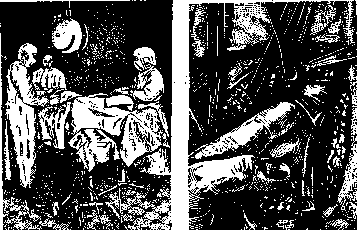
Figure 5.
Figure 6.
Figure 5. Operating room in the Roth Institute, cinematography. Figure 6. Frame from a film made by the Roth Institute: typical appendectomy.
A. Epstein. Prospects for the development of Cinematography. The development of scientific and technical thought has raised a number of the most important technical problems, which will make a complete revolution in Cinematography. The silent, colorless, and flat cinema that has existed until now is leaving the stage, dying. In its place comes sound, color, and stereoscopic cinema. Sound cinema has enormous significance in medicine and biology. In medicine, sound films will allow one to hear the work of the heart and lungs. Abroad, sound films are already being shown that demonstrate the work of the heart. The viewer sees a healthy heart and hears pure tones. Then various defects of the valves, heart muscle, etc., are shown, and these pathological changes are accompanied by changes in the tones. The purity of the tones disappears, noises appear, splitting of tones, muffledness, etc. The same is true for the lungs: various changes in lung tissue—densifications, foci, inflammatory processes—change the normal breathing that is heard by auscultation and give various changes that are well captured even by an inexperienced ear. It is clear that this opens up great possibilities in medical teaching. In the field of biology, sound cinema will find even greater application: the cries of wild beasts, the singing of birds, the sounds made by insects—all this will become the most valuable material both for scientific research and for teaching. Color cinema will allow showing everything in natural colors in medicine. In Germany, France, and the USA, color surgical films are already being shown, which show operations in natural colors. Here the blood is red, the gauze is white, the instruments shine with the silver of nickel, etc. In Berlin, in the clinic of Professor Bier, there is a special cinema installation showing color surgical films. Color cinema will also find wide application in filming laboratory research (urine, blood, sputum, feces), chemical reactions, etc. In biology, color cinema also has a great future: showing the animal world in natural colors. Stereoscopic Cinematography will allow giving an impression of relief in surgical films. The flat operation will die. The viewer will see individual layers of tissue, for example, the skin, subcutaneous tissue, various muscle layers, the intestine, etc., all this will be presented in a three-dimensional, relief form and will give an impression of depth. Similar, and to an even greater degree, will be observed in biology. At present abroad, films that possess all these advantages are already being shown: they are sound, color, and stereoscopic. Showing these films leaves an indelible impression on the viewer. In medicine and biology, they are only just beginning to approach this. There is a huge amount of work to be done here. However, the great significance of this work justifies all the efforts that will be expended in this direction. Undoubtedly, the future in medicine and biology belongs to sound, color, and stereoscopic films. Cinematherapy. The problem of cinematherapy is new. It is only beginning to be put in order. Because of this, the practical and experimental material that could serve as some basis for generalizations and specific directive conclusions has not yet accumulated. Nevertheless, even now a small outline can be made, which after verification will form the basis for the future development of the problems of cinematherapy. As is known, Cinematography has a huge influence on the human psyche. In the movie theater audience, the viewer often cries over touching episodes of films and laughs heartily over humorous situations. How often does one hear that after some films saturated with 'horrors' etc., the viewer feels broken, tired, and conversely, there are films that invigorate him, increase his activity, etc. This is the basis for the immense agitational effect of Cinematography. This influence of Cinematography on the psyche, on the emotional sphere of a person can, with skillful approach, be used for therapeutic purposes. Theoretically speaking, one can create specially selected film programs, compiled on the basis of scientific study of the perceptions of viewers of various categories, including the sick, which will have a certain positive psychotherapeutic effect. This method of using film programs in the treatment of patients has been named the 'cinematherapy' method. The method of cinematherapy can have special significance in that category of diseases which are called psychogenic reactions. With a skillful approach by the physician, the cinematherapeutic method, under proper dosage, can turn out to be one of the most valuable links in the general system of treatment of the patient. This dosage should consist in the fact that it is necessary to carefully study which patients and at what stage of the disease perceive certain films and how the latter affect them. With such a study, one can create a series of graded psychotherapeutic films for each disease or for a group of similar diseases. Thus, for neurasthenia, a series of programs, a series of cinemotherapeutic dosages, can be created. Each of these programs has its own specific number, which determines its setting and content. Roughly comparing, one can point here to the practice of diet canteens, where there are tables of different numbers and each of them is intended for a specific disease (stomach ulcer, achylia, etc.). Consequently, here too one can select special programs for neurasthenia in a mild form. In such a program, material of a soothing and entertaining character should be selected. Therefore, in this program, small scenic (geographical) films, invigorating narrative films, comedies should find their place. On the basis of experimental observations, cinematherapy should also be dosed in time. For one group of diseases, a 30-minute session is sufficient, for another—50 minutes, for a third—70 minutes, etc. To a certain extent, rational cinematherapy can perform the functions of psychotherapy and be instructional in terms of labor processes. The possibilities here are great. Research work in this direction by neuropsychiatric institutions will make it possible to begin the development of standard programs and the gradual cinematization of the network of medical institutions, creating real prerequisites for the rapid development of cinematherapy as a POWER therapeutic factor. L. Sukharebsky. The influence of cinematography on children and adolescents is very great. The significance of Cinematography is determined by the colossal growth of the cinema network. Throughout the world there are up to 55,000 cinemas. In the USA, at present (1930), more than 20,000 permanent cinemas are operating, and their daily attendance reaches 22 million people. The average cinema attendance by children in New York reaches 100,000 people daily. In the USSR, according to approximate calculations, up to 200 million viewers pass through cinemas per year. Children make up to 40% of all visitors. Data from special surveys in some schools showed that 83% of the surveyed children are regular cinema visitors. According to other calculations, 40% of children's leisure time falls on the cinema. Entering into the total sum of environmental factors determining the development of the child, Cinematography has the greater influence that childhood is characterized to a greater degree by visual images. Thanks to this, Cinematography plays the role of a powerful educational factor. Basically, the significance of Cinematography is determined by its effect on the emotional sphere of the child. By giving bright visual perception, cinematography can to a large extent fill the psychological experiences of the child. In the general system of education, Cinematography is one of the most important pedagogical means of influence, unfortunately still insufficiently used in the USSR. By making teaching visual, Cinematography ensures more firm assimilation of school knowledge. In this respect, the prospects for the development of school cinematography are great, and undoubtedly 'cinematography in school will soon occupy as firm a position as the blackboard or book' (Lunacharsky). The problem of the influence of Cinematography on children is receiving much attention lately. Along with this great positive significance of cinematography in its current development, when the content of cinema in the West is determined exclusively by commercial considerations and the desire to cater to the tastes of the bourgeois public, and cinema in the USSR is far from having freed itself from the harmful influence of capitalist cinema—cinematography also turns out to be a negative factor of no less strength. Among the negative influences of cinema, two main groups can be distinguished. Part—purely physical factors (darkness, stuffiness, etc.) and part—purely psychological factors (due to negative images of various detective-adventure films). Cinema is an extremely strong irritant that does not allow for an adequate 'reaction to itself.' Cinema constantly acts on the eye, on the same and most highly developed analyzer. Thanks to this, one strong center of excitation is formed in the nervous apparatus. Numerous experiments have established the fact of the enormous influence of the very demonstration of films on the retina of the eye.
Strong light rays, sharp changes in lighting, rapid projection of the film onto the screen, vibration and continuous flickering, frequent breaks in the film often cause blepharitis (inflammation of the eyelids) and conjunctivitis. Additional harmful effects on the viewer's body result from prolonged stay in stuffy auditoriums. Phenomena of pathological fatigue, reaching the point of nervous exhaustion, are common. However, the phenomena of fatigue are not caused exclusively by external conditions of projection; they are also observed in laboratory conditions of experimental cinema while complying with all requirements of general hygiene. A series of studies in the USSR and abroad has shown that watching a film, even under particularly favorable conditions, reduces the performance capacity of children to a greater extent than a full school day. Thus, according to Nechaev's data, the average coefficient of memory reduction after cinema was 8% (whereas after lessons it is only 6%), the coefficient of attention decreased by 19% (after lessons, on the contrary, it increased by 4%). The speed of writing after cinema decreased by 4% (after lessons, however, it increased by 6%). The Belgian researcher Rouvroy, based on his research, asserts that the performance capacity of children after a morning session lasting 2 hours, including ten two-minute breaks, decreased by as much as 20%. In weak children, fatigue was twice as great as after a day of classes conducted at school. Fatigue is especially strong in nervous, anemic children suffering from poor circulation and 'visual defects'. Attempts to improve the external environment of film projection, proper selection of films according to the age of cinema viewers, and other hygienic measures do not eliminate fatigue. As a result, most researchers come to the conclusion that cinematography cannot be considered a rational form of recreation. Musical accompaniment to films, like any additional stimulus coinciding in time with the main one, further strengthens the already formed dominance. As a result, general overexcitation of the nervous system occurs. Giving the viewer with dizzying speed the most diverse and successive stimuli, cinema does not provide him with the necessary minimum time for their processing in the central nervous system. An incomplete, unfinished reaction results. In particular, cinema deprives the child of the ability to form a stable orienting reflex: he cannot ask his 'why' and 'how' questions. The stimuli from cinema remain unreacted to. Visual images in general are quite persistent, all the more so cinematic gestures. By acquiring a stereotyped character (in the performance of talented actors), they act on the motor centers with special force. Unreacted impulses, particularly in children and adolescents, pass into the sphere of the unconscious. Movements and gestures seen later are reproduced by them automatically, beyond and outside the control of consciousness. Rouvroy's experiments on children who are psycho-physiologically below the norm showed that these children automatically repeat all movements they see on the screen and continue them even after sudden interruptions in projection. In regular cinema-goers suffering from cinemania, frequent nightmares, convulsions, and involuntary movements of the general musculature are observed, which are a consequence of overexcitation of their nervous system. According to observations by Moscow educators, children who frequently attend cinema, knocked out of their normal life path, lag behind in their studies, disrupt the school collective, and need psychotherapy. Moreover: according to Rouvroy's testimony, there were cases when cinema destroyed with great difficulty the restored health of neuropathic children. The influence of cinema on juvenile delinquency. The unlimited influence of cinema on the receptive and easily suggestible child psyche can turn this pedagogically important means into a means of destroying the developing personality. Criminal chronicles are rich in cases in which the methods of crime and the crime itself were suggested by one or another film. The report of the Chief Social Welfare Department states: 'Sensational film plays with criminal-type heroes, surrounded by romantic daring and dizzying success, have a detrimental effect on the psychological nature of children. More often than not, the impulse to commit crime is given to adolescents precisely by films in the cinema'. Among the factors that pushed a young girl into prostitution, according to Prof. Lyubinsky, is often 'the desire for a beautiful and easy life, seen on the screen'. The influence of cinema on juvenile offenders is easily detected from the methods they use. Cases are common when the very desire to go into the cinema pushes unstable adolescents to commit petty thefts, extortions, even robberies, but this applies to cinemaniacs. The influence of cinematographic detective romance on the behavior of youth is
is revealed in the family and school. In juvenile delinquents, the role of cinema is revealed from the very first interview. In the USSR, such special studies have not been conducted. In Germany, however, in 1926, students of Berlin vocational schools were surveyed to determine the nature and extent of the influence on youth of so-called criminal literature, including cinematic plots. Each schoolchild was asked to write the most fascinating criminal story. Without remembering the titles of known criminal stories and films, adolescents in their compositions with sufficient definiteness responded to the abundant bloody romance that feeds them the modern film repertoire. It is characteristic that, judging by the survey data, this youth is interested in the crime itself, not its motives. This reflects the primitiveness and external logic of various film dramas with their stunning scenes of murders, violence, thefts, and robberies, which capture the child's imagination and do not allow them to comprehend what they have seen. So-called detective pictures are little different from these films, whose heroes are usually detectives with their captivating 'tricks' that fascinate the young viewer. This hero is morally unscrupulous. In the fight against the influence of cinema on the criminal behavior of adolescents, exaggerated hopes are placed on censorship. But it takes into account neither the degree of child receptivity nor the fact that even in the best films there are scenes of violence and crime, which are perceived differently by adult and young viewers. The influence of cinema is greater than that of books and pictures, and therefore, in film censorship, it is necessary to have the participation of a pedologist who would take into account the specificity of child perception. Along with censorship, age restrictions are usually applied when attending certain films. However, these measures have a calming effect on parents and educators, while adolescents by all means bypass such prohibitions. However, it would be completely erroneous on the basis of the above to fall into panic and pessimism in assessing the significance of Cinematography for children in general. All that has been said poses a serious task before educators, pedologist-physicians, and film workers to neutralize these harmful aspects and to make maximum use of the richest positive possibilities inherent in Cinematography, which allow making cinema a powerful tool for the social education of the rising generation. For these purposes, the organization of a systematic study of the influence of cinema on children and their perception is extremely important. Unfortunately, systematic research work in this area is still poorly organized. The methodology for studying the film viewer and accounting for their reactions to various kinds of film stimuli is only being developed by a number of scientific institutions (Institutes of methods of school and extracurricular work, Institute of Experimental Psychology, etc.). This study is complicated by the fact that the reactions of the film viewer are mostly hidden. The viewer reacts to film stimuli complexly and sometimes after a considerable period of time. Only one method, the questionnaire method, has found the widest dissemination. It has gone beyond the laboratory and covered many thousands of children and adolescents in a number of places. By this mass method, the interests of children of different ages, sex, and social status in various kinds of films (revolutionary, scientific, artistic, etc.) are being clarified. In order to fully utilize the beneficial possibilities of Cinematography's influence on children and adolescents, it is necessary both to select films suitable for this age from lists compiled by competent pedagogical organizations, and it is especially important to create special children's films designed for different age groups (preschoolers, schoolchildren, etc.). Along with this, a broad pedagogical and medical-pedological work should be developed in children's cinema.--Taking into account the biological peculiarities of childhood, it is necessary to pay double attention to the hygiene of film work. In school, as a rule, the showing of educational films should not exceed 15-20 minutes. Outside of school, at a children's morning performance, the maximum film showing should not exceed 60 minutes, and in the middle of the showing (after the first 30 minutes), a break should be arranged during which children can rest, run around, and play. Furthermore, it is necessary to introduce a whole series of hygienic measures that neutralize the harmful aspects of cinema in a physiological sense (screen size, rhythm, pace of the film, seating arrangement, etc.). Here it is necessary to remember the main points: 1) the film should run evenly, at a somewhat slowed pace, so that the young viewer without excessive strain can manage to read all the subtitles and well grasp the content of the picture; 2) the film should not shake during projection-this tires the audience; 3) the screen should be large, then its content is clear and distinct; 4) the illumination of the screen over its entire surface should be uniformly even; 5) the transition from light to dark and back in the auditorium should be gradual, without sharpness, to allow the eye to adjust; 6) children should not sit closer than 5 meters to the screen; 7) subtitles should be large, clear, and should be well visible to all viewers.
S. Ginzburg. Professional hazards of film production. Cinematographic production includes a wide variety of specialties in physical and creative-artistic labor. Based on the commonality of certain basic factors of professional hazards and the nature of participation in production, all film workers can be divided into the following main groups. 1. Studio workers participating in filming or directly servicing it: actors, directors, cinematographers, lighting technicians. The common factor for this group is exposure to ultraviolet rays of significant power, since open arc lamps are rich in short ultraviolet rays up to a wavelength of about 232 mμ. With sufficient power of the source, rays around 300 mμ and shorter can cause deep changes in the cells and tissues of the body. During filming, the studio is illuminated by numerous arc and mercury lamps with a total light power measured in hundreds of thousands of candles. Work in bright light usually occupies up to 7/8 of the total working time of this group. Meanwhile, even less time is sufficient for one of the medium lamps to cause skin burns, and even less for burns of mucous membranes. Due to the effect of ultraviolet rays, studio workers often experience acute eye disease as a specific professional disease, known as ophthalmia optica (damage to the conjunctiva and cornea). Most often, film actors are affected by this, who, due to the nature of their profession, cannot use protective glasses and are also forced to suppress both conscious and reflexive protective movements against light (closing the eyelids, squinting, movements of the eyeball and head). The lamps used for filming have a brightness of up to 15,000 candles per cm2. This is associated with the danger of 'blinding', especially for lighting technicians who have to monitor the proper burning of the lamps. Another characteristic professional hazard for studio workers is the intensity and sharp fluctuations in the pace of work, as well as the unfavorable sanitary conditions of the studios: poorly ventilated rooms, the air of which is contaminated by products of human respiration, dust released during the dismantling and rearrangement of scenery, transportation and assembly of lighting equipment, and products of physico-chemical changes in the air composition under the influence of radiation (ozone, nitrogen oxides).- Preventive measures: 1) glazing all lighting equipment, which eliminates the effect on workers of rays shorter than 313-320 mμ (these rays are almost completely absorbed by mirror glass); 2) providing workers with glasses with orange, blue-green or gray-green glasses; 3) installation of rational supply and exhaust ventilation; 4) spacious foyers and rest rooms and 5) general sanitary improvement of studios.- 2. Studio workers engaged in setting up and decorating scenery: artists, painters, set decorators. They are characterized by the following general working conditions: 1) the above-mentioned features of sanitary disorganization of the studio, where most of the working time of this group takes place; 2) neuropsychological tension caused by sharp fluctuations in the pace of work, almost complete absence of automatism in work due to the diversity of orders and the need to quickly adapt to the requirements of various films; 3) lack of equipment and constancy of the workplace and the need without any devices to lift any weights, which promotes traumatism.- The main measures for labor protection include transferring as much work as possible to workshops (painting and carpentry) and installing various devices for lifting weights and for introducing some conveniences in work in the studio.-3. Workers of auxiliary workshops of the studio-prop men, makeup artists, costumers, property masters. A prop man is at the same time a sculptor, a locksmith, a carpenter, a bookbinder, and a pyrotechnician. His work takes place in extremely unfavorable sanitary conditions (unsuitability of the workplace, lack of tools, poor ventilation) and requires significant neuropsychological tension due to the diversity, urgency, and inexact formulation of orders. The work of makeup artists, costumers, and property masters is basically similar to the work of hairdressers, tailors, and keepers of museum collections; they are required to be familiar with issues of artistic design of life, knowledge of different eras, national peculiarities, etc. Their work takes place in extremely unfavorable general sanitary conditions (crowding, dust, danger of colds and infection).-4. Laboratory workers working in dark rooms (developers, fixers, printers, winders). An unaccustomed person in dim red light can barely distinguish the outline of objects at a distance of 1 m. This environment causes mental depression and great fatigue. Developers and fixers also work in damp, poorly ventilated rooms, the air of which is contaminated by emissions from fixing and developing tanks (SO2, traces of amyl acetate, products of decomposition of the organic substance of the developer). The work of a developer requires visual strain when monitoring the development process, and the work of a fixer requires handling cold water and significant muscular strain. Printers work in overheated, poorly ventilated rooms, inhale amyl acetate and acetone vapors (see). Developers often have to go out into the light to check the developed film, which is associated with adaptation to sharply different degrees of illumination. This moment is even more sharply expressed in printers when observing the movement of the film in the printing apparatus, and rapid flickering of light occurs. The main measures for labor protection of this group include the installation of general supply and exhaust ventilation, removal of gaseous products from the fixing tank at the place of formation, periodic washing of tanks with formalin, replacement of wooden tanks with ceramic ones, installation of drying cupboards for clothing, and issuance of waterproof footwear.-5. Workers of the editing department: editors, selectors and light setters, controllers, splicers, measurers, and cleaners. The common factor for all workers in this group is the inhalation of acetone and amyl acetate vapors contained in the glue used for splicing the film. This professional hazard factor combines workers of essentially different professions into one group. Amyl acetate was found in the splicing workshop of the Sovkino factory No. 1 in an amount of about 100 mg per 1 m3 of air, acetone - in an amount of 5-7 mg per 1 m3. Literary data and observations of the polyclinic of the Obukh Institute definitely indicate the effect of amyl acetate on the blood and vascular system of this professional group. By the nature of their work, only splicers and editors inevitably have to deal with amyl acetate; others deal with this poison since they work in the same room with them. Editors, controllers, and light setters are a group of mental workers requiring significant strain of the neuropsychological sphere and the organ of vision. Visual strain is also sharply expressed in splicers. Observation of the rapidly moving film causes in the latter, as well as in controllers, a distinct nystagmoid movement of the eyeball, which should have a tiring effect. The entire group has a highly condensed workday. The working posture due to the imperfection of the film winder, the work table, and the seat is incorrect, slightly kyphoscoliotic.-Necessary measures for labor protection: 1) separation of persons dealing with glue from other professions, 2) installation of rational work furniture (chairs and editing tables), 3) provision of special scissors for splicers and editors for cutting and splicing film, 4) removal of acetone and amyl acetate at the place of their formation.- 6. For workers of the washing department, the main professional hazard is work in a damp room and handling cold water, dyes, and varnishes, including 'brown' ones releasing H2S. For workers of the drying department-elevated air temperature (up to 30°) with high relative humidity; for workers of the analytical department-inhalation of H2S and SO2.-Photographers serving the studio during filming and title photographers stand apart. For the former, professional hazards are partly common with cinematographers, partly with developers; for title photographers, the main professional hazard is work under artificial light and handling very bright lamps.
Related articles
Mentioned in
Cite this page
“Cinematography.” Soviet Medical Encyclopedia. English translation of Bolshaya Meditsinskaya Entsiklopediya, 1st ed. (Moscow, 1928–1936), ed. N. A. Semashko. https://sovietmedicalencyclopedia.pages.dev/article/cinematography/