Massage
Historical document, translated for reference. It reflects medical knowledge of the 1920s–30s and is not medical advice.
Summary
Massage is a systematic mechanical method of applying pressure to a patient's body surface using specific techniques. It is based on anatomical and physiological principles, particularly regarding lymphatic circulation, and consists of five main techniques: effleurage, friction, petrissage, tapotement, and vibration.
Encyclopedia article (1928–1936)
Massage, a systematic mechanical method of applying pressure to the surface of a patient's body, consisting of a series of techniques described below. -Anat.-physiol. basis. The technique of massage must be based on knowledge of the conditions of lymphatic circulation. The movement of lymph in tissues occurs under the influence of active and passive muscle movements, displacement of the tissues themselves due to their elasticity, as well as under the influence of respiratory movements. The flow of lymph through the body occurs extremely slowly (about 4 mm in 1 second). If we assume the amount of lymph in the body to be equal to the amount of blood, then all the lymph will pass through the thoracic duct only 6 times a day, while the complete circulation of blood occurs in 1/2 minute. The slow circulation of lymph in tissues occurs because the entire mass of lymph, which is contained in the peripheral network and in internal organs, must pass through the narrow lumen of ductus thoracici. A considerable obstacle to the free flow of lymph are the lymph glands encountered in its path. One of the methods by which the flow of lymph in lymphatic vessels can be enhanced is massage. The effect of massage on lymph movement was proven by experiments of Lassar and Mosengeil. Lassar inserted a glass tube into one of the large lymphatic vessels of a dog's thigh and measured the amount of lymph flowing out during rest and during massage. While at rest lymph flowed out extremely slowly, in separate drops, during massage it began to flow in a stream. Mosengeil injected a rabbit with diluted ink into several joints of a limb, massaged one limb, and left the other at rest for control. Upon dissection, no ink was found in the massaged joints, but in the connective tissue and central vessels Mosengeil found abundant deposition of it. The non-massaged limbs of these animals showed no such changes. Technique and physiol. action of massage techniques. The technique of massage consists of many separate manipulations, which can however be reduced, according to Metzger, to five main techniques: 1) effleurage, 2) friction, 3) petrissage, 4) tapotement, 5) vibration. Effleurage is performed in the direction of lymphatic vessels (fig. 1-3). Depending on the size and shape of the body part being massaged, a flat or cupped palm, the palmar surface of the thumbs, or the tips of all fingers are used. In areas of large musculature, if deep penetration between muscle bundles is needed, the so-called comb-like technique (Kammgriff) is used: the hand is clenched into a fist, and effleurage is performed with the dorsal surface of the fist - the protrusions formed by the interphalangeal joints (fig. 4).-Massage is performed with one, and sometimes two hands (fig. 5-7). Movements are made in one direction. The masseur moves the hand to the proximal joint or the nearest group of glands. The pressure applied during effleurage should not always be the same. In areas where large lymphatic or venous trunks pass, it may be increased. Above all, it should of course be consistent with patho-anatomical changes in the given case. Effleurage should be performed rhythmically and necessarily slowly, corresponding to the slow flow of lymph. Effleurage is the most frequent and repeated technique of massage, with which a massage session begins and ends. The purpose of effleurage is to empty capillaries and lymphatic vessels, accelerate the flow of lymph and blood, resp. resorptive effect in edemas, effusions. The physiological effect of effleurage is first manifested on the skin, which
Figure 1. Effleurage (initial moment).
is freed from scales of the epidermis that clog its pores. At the same time, the excretory ducts of sweat and sebaceous glands are cleansed, from which the blood circulation and secretory activity of the skin coverings improve. During effleurage, an increase in skin temperature is noted. Effleurage has a significant effect on the veins, lymphatic vessels, and the nerve endings embedded in the skin. Friction consists in rubbing the skin or deep tissues in a circular direction. Friction represents a variation of effleurage. The difference from the latter is that in this case the hand does not move over the skin, but, closely touching the surface, moves the underlying layers of tissues accessible to it. The technique is performed as follows: the desired area is grasped between the thumb and index finger in a transverse direction, lifted and compressed or rolled, while one or both hands make a progressive movement (fig. 9). In character, this technique resembles squeezing out a liquid-soaked sponge. As with effleurage, rhythm and slow tempo must be observed here. However, the movements must be strong enough to squeeze out the contents from the tissues. As a rule, effleurage is performed before and after petrissage. On wide parts, on the back, where the muscular belly spreads in a plane, (fig. 10), petrissage is combined with friction to facilitate grasping the muscular belly. The purpose of petrissage is to act mainly on muscle tissue with the aim of causing enhanced contraction of muscle fibers, increasing the contractility of muscle tissue, and pressing out lymph. In addition, petrissage also has a dispeptic effect. By alternately compressing the
Figure 2. Effleurage (2nd moment).
muscular
Figure 3. Effleurage (final moment). (fig. 4).-Massage is performed with one, and sometimes two hands (fig. 5-7). Movements are made in one direction. The masseur moves the hand to the proximal joint or the nearest group of glands. The pressure applied during effleurage should not always be the same. In areas where large lymphatic or venous trunks pass, it may be increased. Above all, it should of course be consistent with patho-anatomical changes in the given case. Effleurage should be performed rhythmically and necessarily slowly, corresponding to the slow flow of lymph. Effleurage is the most frequent and repeated technique of massage, with which a massage session begins and ends. The purpose of effleurage is to empty capillaries and lymphatic vessels, accelerate the flow of lymph and blood, resp. resorptive effect in edemas, effusions. The physiological effect of effleurage is first manifested on the skin, which
Figure 4. Effleurage (comb-like technique).
lymphatic or venous trunks it can be increased. Mainly it should of course be consistent with patho-anatomical changes in the given case. Effleurage should be performed rhythmically and necessarily slowly, corresponding to the slow flow of lymph. Effleurage is the most frequent and repeated technique of massage, with which a massage session begins and ends. The purpose of effleurage is to empty capillaries and lymphatic vessels, accelerate the flow of lymph and blood, resp. resorptive effect in edemas, effusions. The physiological effect of effleurage is first manifested on the skin, which
Figure 5. Effleurage with one hand. Figure 6. Effleurage with two hands. Figure 7. Superficial pressure.
case. Effleurage should be performed rhythmically and necessarily slowly, corresponding to the slow flow of lymph. Effleurage is the most frequent and repeated technique of massage, with which a massage session begins and ends. The purpose of effleurage is to empty capillaries and lymphatic vessels, accelerate the flow of lymph and blood, resp. resorptive effect in edemas, effusions. The physiological effect of effleurage is first manifested on the skin, which
Figure 8. Effleurage and friction.
is freed from scales of the epidermis that clog its pores. At the same time, the excretory ducts of sweat and sebaceous glands are cleansed, from which the blood circulation and secretory activity of the skin coverings improve. During effleurage, an increase in skin temperature is noted. Effleurage has a significant effect on the veins, lymphatic vessels, and the nerve endings embedded in the skin. Friction consists in rubbing the skin or deep tissues in a circular direction. Friction represents a variation of effleurage. The difference from the latter is that in this case the hand does not move over the skin, but, closely touching the surface, moves the underlying layers of tissues accessible to it. The technique is performed as follows: the desired area is grasped between the thumb and index finger in a transverse direction, lifted and compressed or rolled, while one or both hands make a progressive movement (fig. 9). In character, this technique resembles squeezing out a liquid-soaked sponge. As with effleurage, rhythm and slow tempo must be observed here. However, the movements must be strong enough to squeeze out the contents from the tissues. As a rule, effleurage is performed before and after petrissage. On wide parts, on the back, where the muscular belly spreads in a plane, (fig. 10), petrissage is combined with friction to facilitate grasping the muscular belly. The purpose of petrissage is to act mainly on muscle tissue with the aim of causing enhanced contraction of muscle fibers, increasing the contractility of muscle tissue, and pressing out lymph. In addition, petrissage also has a dispeptic effect. By alternately compressing the
1^лd0ё-
Figure 9. Effleurage and petrissage.
muscle tissue, the contractility of muscle fibers is enhanced, their elasticity is increased, and their general tone is raised. Vigorous friction along the course of nerve trunks or at the sites of nerve endings reduces nerve excitability.
V/ i
Ь
!

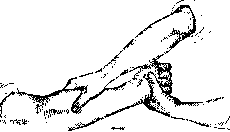
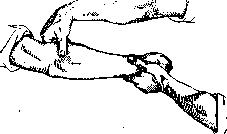
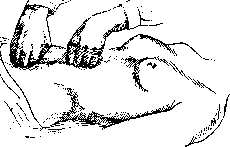
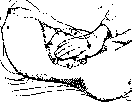


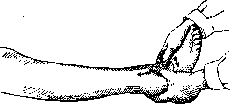

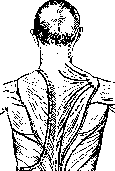
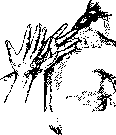
Figure 11. Figure 10. Figure 10. Lines of massage on the back: left - direction of the long musculature, right - of the wide. 1'is. 11. Percussion (chopping). When we massage a mass, so to speak, we free it of its contents. Kneading should be considered as passive gymnastics for muscle fibers; its action promotes not only strengthening but also regeneration of the muscle. Percussion consists of repeated blows (fig. 11). Here a whole series of modifications are distinguished: patting, chopping, puncturing, depending on the way the massaging hand is folded - with the palmar surface, the ulnar edge, the ends of bent fingers, etc. Patting, chopping are performed on wide surfaces of the body (chest, back), puncturing - mainly along the course of nerves. This technique is performed with one or both hands. In massage practice, the skill of performing the technique is often evaluated from the point of view of obtaining the strongest sound. A loud sound in percussion by no means yet indicates correct execution of this technique. In terms of physiological action, percussion is very similar to kneading: it aims to enhance the influx of blood to the tissues and therefore has a strengthening effect on them. The action of the percussion technique amounts to vibration, and its influence is not limited only to the underlying tissues but can extend far into the depth to internal organs: spinal cord, intestines, liver, heart. Vibration consists in transmitting tremulous movements to the body, which must be performed evenly, one after another (see below).-In medical practice, rarely is any one of the described techniques used alone. According to Dollinger, the techniques of M., like individual musical tones, never sound alone for long, but pass into one another, merging into a chord. Hand in hand with the techniques of M., active and passive movements should also be performed, with preference given to introducing elements of active movement. General rules. The surface to be massaged must be completely exposed, muscles and joints must be relaxed (see below). The most convenient time for a session of M. is the morning hours. M. should not be performed earlier than 2-3 hours after a meal. The duration of a local M. session varies from 2-5 minutes (selective M. of individual muscles) to 20 minutes (general segmental M.), the duration of general M. (of the whole body) up to 30-45 minutes. The determining factor is the sensitivity of the tissues of the patient, the nature of the disease, the age of the patient, and finally the size of the massaged surface. The frequency of M. sessions can be from 1 to 3 times a day; repeated sessions are indicated in case of nutritional disorders of tissues from inactivity or in severe neuralgic pains where it is necessary to maintain the analgesic effect. Cleanliness of the air, optimal temperature, rational lighting of the room - basic prerequisites for M. A normal air temperature for M. should be considered 14e. The skin before M. must be washed with warm water and soap, or even better, wiped with alcohol or ether. The latter circumstance is very important, because according to the research of Makhnov and Babes, rubbings can cause penetration of bacteria through the skin into the lymphatic pathways. On the same basis, in order to avoid transferring various skin diseases from one patient to another, the masseur must thoroughly wash his hands before each new M., cut his nails, i.e. carefully observe the hygiene of his hands. One must be cautious about massaging forcefully against the hair, because after a few days the skin may become covered with pustules due to strong irritation. M. should as far as possible not cause painful sharp sensations. On the skin after M. there should be no blue and purple spots (bruises).-The position of the masseur and the patient during M. Relaxation of muscles, firm support, stable equilibrium - these are the basic principles on which the position of the patient and the masseur during M. should be based. The purpose of all this, on the one hand, is to ensure maximum conservation of strength for the masseur, on the other hand, to cause minimum tension of muscles, ligamentous apparatus and other tissues in the patient. The basic position of the patient during massage should be considered the supine position. If M. of the patient in a sitting position is allowed, then the back of the chair should be wide enough to provide sufficient support for the soft parts of the body. The requirements for the masseur. He must have knowledge of massage practice, a healthy heart, lungs, and in particular - be able to breathe correctly. The latter requirement is especially important for him because heavy muscular work, often bent position of the spine, shifted shoulders, variable pace of work - all this creates unfavorable conditions for free proper breathing, causing disturbance of gas exchange in the lungs. The works of Demeny and others show that in a bent position of the spine, the intercostal spaces collapse, and shifted shoulders reduce the respiratory excursion of the chest, resulting in insufficient ventilation of the lungs. The masseur must avoid these harmful moments, not overtire himself with prolonged massage, as far as possible keep the spine straightened during massage. For the same reasons, the masseur should not talk during M. Frequent rest (pause) for the masseur is an obligatory condition in work. The masseur should maintain as comfortable a position as possible, causing minimum static expenditure for him, in order to protect himself from rapid fatigue. He should preferably massage while sitting. Sitting on a stool or on a piano stool is completely not allowed. When sitting on a chair without a back, there is tension of the abdominal and back muscles, and especially the calf muscles tire, all the more when the hands have to perform intense prolonged muscular work. The chair must be very stable and sufficiently high. One should not tuck one's legs or swing them in the air, as this quickly causes fatigue and also enhances synergistic contraction of distant muscle groups. If the masseur sometimes has to perform M. standing, then for the purpose of saving strength, an asymmetrical position (support on one leg, the other extended forward) with a wide area of plantar support is recommended. When working with hands, the masseur's body should not make strong swinging movements, and his muscles should be relaxed and not tense, in order not to cause unnecessary expenditure of strength. The correct technique of massage work depends to a large extent on the ability to control one's neuromuscular apparatus, for which the masseur needs to have well-developed muscular sense. Lubricating substances in M. As a rule, lubricating substances (lanolin, fat, boracic vaseline) should be used when one wants to act on deeper layers of tissues. If it is desirable to cause an influx of blood to the skin by massage or to produce some mechanical irritation of the skin coverings, dry M. should be performed. Lubricating the skin with fatty substances does not facilitate but hinders the performance of certain M. techniques. Kneading, for example, is performed much better on dry skin than on greasy skin. The best lubricating substance should be considered boracic vaseline. "The amount of fatty substance should not be large, as friction between the skin and the hand decreases and the action of M. is almost lost. In addition, the sense of touch is blunted, which is so necessary for the masseur. As lubricating agents in M., sulfuric ether and alcohol are also used, the skin first being dried with alcohol and then treated with ether. Such a method of massage has a great advantage: the pores of the skin are open, the skin is cleansed, the tendency to perspiration is reduced. Indications and contraindications. M. should be applied in all cases when it is necessary 1) to cause active hyperemia, enhance the influx of nutrients, improve metabolism in tissues; 2) to achieve absorption in edemas and effusions; 3) to strengthen and increase the elasticity of muscles, activate the nervous system. - The most frequent area of application of M. is diseases of the motor apparatus: muscular atrophy, pareses, contractures, distortions, hemorrhages into joints, fractures, ingrown scars. In these cases, M. is one of the most important methods of kinesiotherapy. Muscular atrophy existing for months due to inactivity after immovable bandages, immobilization, passes in several weeks with the help of massage. In a short time, hemorrhage into the joint is absorbed, the formation of connective tissue adhesions leading to ankylosis of joints is prevented. Under the influence of M., the healing of granulating wounds is accelerated (Zabludovsky, Mysh). No less favorable effect of M. is also manifested in the formation of bone callus. Lucas-Championniere recommended systematic early (on the first, second day after injury) application of M. in the treatment of fractures. In fractures, M. maintains normal tonus and nutrition of muscles and skin, enlivens blood circulation, especially in the young bone callus, poor in blood vessels, and also has an analgesic effect. By increasing the influx of arterial blood, M. contributes to regeneration and accelerated growth of bone callus."
Bone fractures with treatment according to M. (Massage), according to Gurevich's observations, heal twice as fast than without M. In the first weeks, it is necessary to avoid M. at the site of fracture, as this, with normal healing, leads to excessive formation of callus. The purpose of M. in diseases of the nervous system is to maintain nutrition and partly the function of paralyzed parts. In violation of muscular balance due to weakening, partial paresis of individual muscles, it is necessary in M., following the selective principle, namely strengthening the weaker muscle or an entire group of them, not to forget the antagonists. For example, in pes equinovarus paralyticus, M. should mainly affect the group of remaining extensors of the foot (m. tibialis ant. or m. ext. digitorum communis); as for the flexor group (m. gastrocnemius), the latter is massaged less vigorously. In neuralgias, M. of painful points leads to blunting of increased sensitivity. M. has great therapeutic influence in diseases of internal organs. M. enhances intestinal peristalsis, improves blood circulation of abdominal organs, etc. M. has excellent therapeutic effect in many gynecological diseases (see below). M. is contraindicated in all acute febrile diseases, in malignant tumors (cancer, sarcoma), in purulent processes, etc. Vibrational M. (seismotherapy) - methodical oscillatory movements produced by hand or with the help of apparatus for therapeutic or hygienic purposes. Physiological action of vibrational M. The influence of vibrational M. on the body began to be studied from ancient times. As early as 1878, Granville (Mortimer Granville) began his experiments on studying the effect of vibration on pain relief. With the help of his 'per-cussor' (an apparatus for mechanical massage), Granville tried to introduce dissonance into the rhythm of painful vibrations and thereby change the nature of pain. According to Granville's observations, at a certain rhythm of vibrations, there is a decrease in sensitivity of nerve trunks, as well as a sharp reduction in pain. In 1880, Maggiorani, and then Vigoureux, reported successful results in applying vibration in the treatment of muscle spasm in hysteria. There are indications of the same therapeutic success of treatment with vibrations in migraine and dizziness from Gilles de la Tourette. For treating this group of diseases, a vibrational helmet was used, giving up to 100 movements per second. The effect of vibration on muscles was studied by Bum, Zander, Th. Brandt, and others. According to these authors, vibration causes strong contraction of muscle fibers, increases tonus. The effect of vibration on the heart muscle was studied by Heitler, Hasebroek, and Garnault. According to their observations, under the influence of vibration, there is an increase in the tonus of the heart muscle, decrease in cardiac dullness, the pulse slows down and becomes fuller and stronger. Nebel confirmed the disappearance of arrhythmia. The number of heartbeats decreased in healthy individuals by 5-8 per minute and by 20-40 in patients suffering from tachycardia. There are numerous works on the effect of vibration on the nervous system. According to these studies, the effect of vibration on the nervous system is closely related to the degree of excitability of the nerves subjected to vibrational M.; at the same time, weaker vibrations cause excitation of non-functional nerves (paresis, paralysis), and conversely, relatively strong vibrations lead to a decrease in nervous excitability (neuralgia, convulsions). Such mechanical irritations of vasomotor, sensory, and mixed nerves cause dilation of blood vessels (according to the research of Istomov, Tarkhanov, Grutzner, and Heidenhain). According to Kleen, such hyperemia enhances tissue metabolism and also contributes to the resorption of pathological exudates. Experiments by Colombo proved the great influence of vibrational M. on internal secretion. According to this author's observations, the secretory activity of the gastric mucosa significantly increases 15 minutes after massage. The activity of the gallbladder also increases, and the content of bile, cholesterol, and bile salts increases. With kidney vibration, diuresis significantly increases after only 10 minutes, the urine becomes lighter, and its specific weight decreases. According to Mackenzie, vibrational M. in the submaxillary area can cause increased salivation. According to the same author's observations, vibrations in the epigastric region excite in the patient a feeling of hunger. The effect of general vibration on the body was studied by many authors, whose observations established that in a number of healthy individuals, after 15-20 minutes, there is dilation of the pupils, decrease and slowing of the pulse, slowing of respiration, decrease in temperature, increase in blood pressure, and decrease in pain perception; at the end of the session, many experience drowsiness. Technique of vibrational M. According to Colombo, it is necessary to distinguish the following techniques of vibrational M.: 1) vibration (vibratio) manual and mechanical, 2) shaking (Erschutterung), 3) plucking-pinching (Harfengriff), 4) pushing (propulsio) and 5) shaking (succussio). All these techniques of vibrational M. are based on the fact that the operator's hand, without moving away from the part of the body being massaged, imparts various oscillatory movements to it, starting from the weakest impulse - vibration, in which molecular oscillatory movements of the surface tissues occur, - and ending with a stronger impulse - shaking, pushing and shaking up to the displacement of an entire organ. Most of the listed techniques of vibrational M. were developed by Ling and Georgi, while Colombo introduced into practice pushing and shaking as special techniques of vibrational M. Of all the techniques of vibrational M., the execution of proper vibration (Figs. 12 and 13) requires the most skill and ability. This technique is the most tiring. One should, as much as possible, avoid tension in the auxiliary muscles of the hand and
Figure 12. Vibration
Figure 13. Vibration
finger.
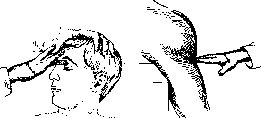
with the finger; all muscle contractions should be localized primarily in the forearm area. The amplitude of movement in the wrist joint during vibratory movements should not exceed 4-5°; the elbow joint should be bent without excessive tension. The masseur, by tensing a large number of muscles, quickly exhausts their strength, losing in their fingers the sensitivity which is sometimes very necessary for obtaining gentle and light vibratory movements. Prolonged vibration (over 10 min.) soon causes the masseur sharp pain in the forearm muscles, which then spreads throughout the arm. As a result of frequent and prolonged sessions of vibration, a spasmodic contraction of the fingers often appears. All this served as an impetus to replace manual vibration with mechanical. The introduction of devices into massage practice has significantly facilitated and expanded the indications for the use of M. in many diseases. Thus, with the help of special devices, it became possible to easily and freely perform vibratory M. in cases where the execution of its individual techniques by hand is extremely tiring (prolonged vibration), or where the performance of manual vibratory M. is difficult due to anatomical-topographical conditions (M. at the exit of nerve trunks of the n. ischiadici, nn. supra- and infraorbitalis), or finally where vibratory M. is little or completely inaccessible to direct finger action (nasal cavity, ureters). The mechanical execution of M. played a major role also in changing the physiological effect on tissues. Depending on the force or frequency of the movements produced during vibratory M., it is possible to a greater or lesser extent to increase or even change as a whole the physiological action of these techniques on tissues. Thus, slow vibrations, up to several hundred per minute, have a purely mechanical effect, fast ones; up to several thousand per minute, act like a strong faradic current (Breitman). Finally, with the help of special regulatory mechanisms that are present in massage devices, it became possible to a large extent to regulate the speed and force of individual massage techniques, sparing the patient and not tiring the working physician. Taking into account all the merits and advantages of this new kinesiotherapeutic method, it should nevertheless be emphasized that M. with apparatuses by no means should replace manual M., but should supplement it, deepening and clarifying the action of individual techniques on the tissues and organs of our body. Systems of apparatuses for vibratory massage and principles of their construction. The prototype of an apparatus replacing manual M. is the muscle-+-! t e l e r Klemm: rubber elastic, hollow inside sticks, connected at one end with a rubber handle. These sticks are of three kinds of length and thickness. With the help of this apparatus, tapping and pounding can be applied. To this group of devices should also be included various massage rollers, handpieces in the form of a ball, button, etc. (fig. 15), still used in the practice of cosmetic vibratory M. With the development of technology, these devices (vibratodes) underwent significant changes and improvements and at present have reached a very large number. In figure 16 various
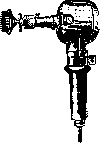
Figure 14.


p^-^-*
Figure 15. forms of vibratodes used in vibratory M. In order to make the vibration gentler, sponge rubber is attached to the surface of the vibratodes. Apparatuses used in seismotherapy can be divided into two large groups: apparatuses for 1) local vibratory M.; 2) for general vibratory M. For local vibratory M., many different designs and types have been proposed, some of which had to be set in motion by feet, others by hands; with the development of technology, an electric motor was used to set in motion devices for vibratory massage. The electric motor is either directly connected to the handle (fig. 14) or mounted on a movable stand allowing the motor to turn in all directions. Of the more complex systems, set in motion by a dynamo machine and giving up to 8,000 vibrations per minute, mention should be made of the apparatuses for mechanical M. of Zander and Herz (Zander, Herz). Zander's apparatuses, built on the principle of a crankshaft: are constructed for almost all
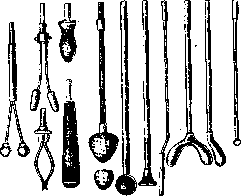
procedures of vibrational massage: shaking, rubbing, patting, etc. Vibrational massage is sometimes combined with electrization or heat, for which the vibrator is connected with an electrode device or equipped with a special thermophore. For general vibration, the vibrating chair or Hertz's vibrating bed are used as instruments. General rules: 1) the motor of the apparatus should not overheat during operation; 2) do not press the tip against the body so that the motor's action is impeded (such impeding, or even stopping of the motor, quickly leads to its damage); 3) avoid frequent and rapid switching from one speed to another; 4) do not bend the flexible shaft too sharply to avoid breaking it; 5) do not turn on the motor at full strength immediately; 6) gradually increase the number and intensity of vibrations (motor speed); 7) during massage, do not grip the handle of the apparatus tightly, as this leads to rapid muscle fatigue; 8) lubricate the apparatus frequently with machine oil. Indications and contraindications. The general indications for vibrational massage are almost the same as for manual massage. It should be added that the scope of application of vibrational massage is much wider than that of manual massage, as with this method it is possible to affect deep organs located in cavities, which were previously completely inaccessible to direct finger action. Seismotherapy is used with great therapeutic success in cases of pareses and paralyses, as well as in neuralgias and neuritis. Vibrational massage is fully indicated for stagnant liver, catarrhal jaundice, causing outflow - depletory action. The same can be said about stones in the kidney, gallbladder, provided there is no bleeding or acute inflammatory phenomena. Catarrhal and atonic conditions of the intestine, especially constipation (vibration of the solar plexus), respond excellently to vibrational massage. Finally, it is necessary to point out the excellent therapeutic effect of massage in various diseases of the larynx and nasopharyngeal space. In gynecological diseases, massage can act as a resorptive agent, as well as to tone the muscles of the uterus (prolapse, change in shape). Vibrational massage is contraindicated in all cases of suppurations, intoxications, aneurysm, phlebitis, malignant neoplasms, acute gonorrhea, etc. It is also absolutely contraindicated to massage the abdomen (stomach and intestines) in the presence of ulcerations and a tendency to bleeding. a. Verbov. Massage in gynecology. Gynecological massage as a therapeutic method was proposed and developed in 1868 not by a physician, but by Major Thure-Brandt of the Swedish service, who was engaged in gymnastics, particularly medical gymnastics; he made great efforts to develop this method and to draw the attention of physicians to it. In Russia, much was done by Professor D. O. Ott and his school to spread gynecological massage. The method has survived the period of enthusiasm and has been preserved within certain limits, occupying a definite place in the treatment of female diseases. For success in the application of massage, the first condition is experienced hands and good orientation during gynecological examination; the second condition, as with any method of treatment, is, besides accurate diagnosis, the establishment of indications; therefore, massage can only be applied by a physician or a specially trained person. Indications for gynecological massage are: incorrect positions of the uterus, deviations backward or to the sides, unfixed and fixed displacements and adhesions of the appendages, remnants of inflammatory infiltrates in the cellular tissue, peritoneum and appendages of the uterus, old hemorrhages, strands, scars and adhesions, stagnant processes in the pelvic organs, chronic inflammation of the uterine muscle in the initial stages, then poor involution of the postpartum uterus, and on the other hand, insufficient development of the uterus (aplasia) with amenorrhea and hyperinvolution. The effect of treatment consists in reducing stagnant phenomena in the blood and lymphatic systems, regulating blood circulation in the muscles and nervous system of the pelvic organs; under the influence of massage, blood supply is significantly improved, infiltrates, hemorrhages and strands are resorbed, mobility of the pelvic organs increases, their interrelationships and tissue nutrition are corrected. Contraindications are acute and subacute inflammatory processes in the pelvic organs, feverish cases and especially purulent accumulations, infectious diseases (general and local) of the pelvic organs, gonorrhea, tuberculosis, any suspicion of malignant neoplasms, presence and suspicion of pregnancy, especially ectopic. Disorders of the nervous system, increased sensitivity may also be contraindications to massage. The appearance of pain during or after massage should also prevent its further application. Technique. Gynecological massage is performed either on a special low bench (the doctor sits on a stool nearby), the foot end of which is raised to reduce tension of the abdominal muscles, with the patient's legs bent at the knee and hip joints, or on any table for gynecological examination, and then the doctor is positioned between the patient's thighs; the bladder and rectum must be emptied; two fingers of one hand are inserted into the vagina, the action of which is mainly to lift and fix the uterus (depending on the need, through one or the other fornix), but in general they remain almost motionless all the time to avoid the possibility of sexual arousal (avoid touching the area of the clitoris); the other, external, hand performs circular movements and rubs and strokes the organs raised by the internal hand and individual areas of tissue; the movements of this hand are made as gently as possible, but sometimes become quite energetic when it is necessary to break adhesions and separate different areas of organs; in some cases, the fingers of the internal hand are inserted into the rectum instead of a sleeve (in virgins or with a narrow sleeve), and sometimes one finger in a sleeve and the other in the rectum. As an auxiliary method in gynecological massage, massage of the abdominal coverings is used, in addition vibrational massage is applied, for which there is a whole assortment of tips of various types depending on the method and place of application of massage (external coverings, abdominal, lumbar muscles, vagina, rectum); these tips are set in motion by special machines similar to dental drills; the drive can be manual, foot or electric. In parallel and in addition to gynecological massage, treatment by the doctor with gymnastics, very carefully developed by the same Thure-Brandt, active and passive, which also gives good results, is very often applied.
l. Krivsky. M. in dermatology. The main goal pursued by the application of local M. in skin diseases is to create more favorable conditions for blood circulation, and to improve through this the nutrition of these areas of the body, which contributes to the more rapid reverse development and resolution of painful foci. With M. of a specific area of skin, the blood flow in the latter is accelerated, which eliminates stagnant phenomena and the often associated dilatation of skin vessels. In addition, M. accelerates the delivery of nutrients from lymphatic pathways to the skin and promotes the removal of waste products from the skin. Thus, the overall metabolism in the skin sharply increases, and where there is a hypertrophic process, a reverse development in the form of regressive metamorphosis may occur, while in atrophic processes, opposite phenomena can sometimes be expected. This explains why sometimes the same M. procedures give an equally favorable therapeutic effect in completely opposite pathological processes. Indications for M. are the following skin diseases: 1) "stagnant" hands of red or bluish-red color, often associated with profession (work in the cold, in water, chilling, etc.); however, such discoloration of the hands, especially in women, is also often encountered without visible external influences, and in these cases it is associated with disorders of the endocrine-vegetative nervous system, with vasomotor disorders, with disorders of the sexual sphere, etc., manifesting quite often in youth. Such changes in skin discoloration of the hands, sometimes accompanied by some thickening of the latter, serve as a quite favorable object for M. 2) Acne rosacea of the face, especially the nose. On the other hand, with faded pale skin caused by insufficient blood supply, the application of appropriate M. can sometimes also achieve favorable results: arterial circulation and nutrition of the facial skin improve, and the latter can acquire a more "fresh" healthy color. The therapeutic effect of local M. of the skin in all these cases is usually very limited, since almost all these skin discolorations are associated with the general condition of the body, with functional disorders of internal organs (gastrointestinal tract, nervous system, etc.). Therefore, local application of M. of the skin should be carried out only in combination with general treatment and a general strengthening regimen. In addition, frequent indications for the application of M. of the face are two opposite processes: on the one hand, flabby, wrinkled skin caused by sharp weight loss (disappearance of subcutaneous fat) after severe infectious diseases, mental experiences, etc., on the other hand-too tense shiny facial skin, with a pronounced puffiness, especially around the eyes, encountered in connection with general obesity as well as with a whole series of other causes (climacteric, frequently recurring erysipelas, dysfunction of the thyroid gland, alcoholism, etc.). M. of the face is also indicated in scar changes of the skin: with appropriate M. techniques in combination with injections of fibrinolysin and iontophoresis with KJ, it is sometimes possible to achieve softening, smoothing, and in some cases complete resolution of scars. The most common application of M. is found in the treatment of acne (comedo, acne vulgaris). Along with the usual types of M., here extrusion of acne and pustular acne are also used to empty their contents, which should also be considered as special M. techniques. Unfortunately, in this area there are frequent abuses by so-called masseuse-"cosmeticians", while M. for acne requires special caution, since inappropriate extrusions and manipulations can sometimes further worsen the process. Contraindications to M. of the skin. A general contraindication is various inflammatory processes of the skin, occurring acutely or showing a tendency to exacerbation; this also includes dermatoses accompanied by suppuration and standing in etiological connection with pus-forming cocci. There are also individual contraindications to M., caused by increased sensitivity of the skin to all kinds of mechanical irritations. Special caution is required in M. of seborrheic skin, which sometimes gives irritation in the form of redness, scaling, up to seborrheic eczema, sometimes very persistent. Along with mechanical irritations, chemical factors also play a role here; in these cases, vaseline and other fats used for M. should not be applied. Techniques in dermatology. One must distinguish between manual and instrumental M. Manual M. consists of a series of techniques, sufficiently well defined by their very names (see above). Various techniques of M. and schemes of direction of massage movements, proposed at one time, have now lost their significance and have mainly historical interest. At present, a M. session usually consists in alternating the above-mentioned techniques, with predominance of some over others according to different dermatoses and purposes of M. Thus, for example, in cases where it is necessary to eliminate swellings (puffiness) and tension of the skin in connection with a pronounced subcutaneous fat layer, such M. techniques as rubbing and stroking are necessary, while for flabby, folded and wrinkled skin, squeezing and kneading are mainly recommended. The latter group of techniques, proposed by Jaquet and Leroy (Jacquot, Leroy) in the form of so-called plastic M., has gained wide distribution and great practical significance due to their simplicity and therapeutic effect. In cases of stagnant skin, with manifestations of acne rosacea, plastic M. is applied in combination with stroking. Finally, in all cases, vibrational M. can be applied. All other M. techniques should be carried out only by an experienced masseur, avoiding various devices, cups, rollers, etc., which more often do harm than good. The skin is not equally sensitive to different M. techniques: deep kneading, alternating squeezing and patting, as well as vibratory movements irritate the skin itself to a lesser extent than stroking, rubbing, and superficial kneading. Therefore, the use of this kind of manipulation requires caution and preliminary testing of the degree of skin sensitivity. In stroking and rubbing, it is sometimes advisable to use a small amount of fat (pure American vaseline, almond oil, etc.), while in other techniques the use of fat is irrational. M. sessions should be conducted no less frequently than every other day, with a session duration of no more than 10-15 minutes.
s. Sladkovich.
Related articles
Mentioned in
Cite this page
“Massage.” Soviet Medical Encyclopedia. English translation of Bolshaya Meditsinskaya Entsiklopediya, 1st ed. (Moscow, 1928–1936), ed. N. A. Semashko. https://sovietmedicalencyclopedia.pages.dev/article/massage/