Mayer
Historical document, translated for reference. It reflects medical knowledge of the 1920s–30s and is not medical advice.
Summary
Julius Robert Mayer (1814-1878) was a German physician and physicist who formulated the first law of thermodynamics. His work established the principle of energy conservation and its transformation between different forms.
Encyclopedia article (1928–1936)
MAYER Julius Robert (Julius Robert Mayer, 1814-1878), one of the scientists who substantiated and formulated the first principle of thermodynamics. Born in Heilbronn. From 1829 he studied theology; in 1832 he transferred to the medical faculty of the University of Tübingen, which he graduated from in 1838. The idea of the first law of thermodynamics occurred to M. in 1840. In final form these ideas were formulated by him the following year. In 1842 M. formulated the 2 axioms of thermodynamics as follows: 1. "Force (it should be understood-energy) is as indestructible as substance". 2. "Ceasing motion transforms into heat" ("Bemerkungen uber die Krafte der unbelebten Natur", Liebigs Ann. d. Chemie, B. XLII. 1842). The basic ideas developed by M. formed the basis of a number of subsequent calculations, 54
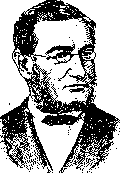
allowing to connect the latent heat at constant pressure and at constant volume. In connection with this view, M. developed in 1846 the theory of the heating of the sun by falling meteorites. Recognition of M.'s merits occurred only with great difficulty, and very few knew about Mayer. M.'s main works were republished after his death - "Die Mechanik der Wärme", hrsg. v. Weyrauch, Stuttgart, 1893; the last edition - in the series Ostwald's Klassiker der exakten Wissenschaften (1911).
Related articles
Mentioned in
Cite this page
“Mayer.” Soviet Medical Encyclopedia. English translation of Bolshaya Meditsinskaya Entsiklopediya, 1st ed. (Moscow, 1928–1936), ed. N. A. Semashko. https://sovietmedicalencyclopedia.pages.dev/article/mayer/