Vasily Dobraztsov
Historical document, translated for reference. It reflects medical knowledge of the 1920s–30s and is not medical advice.
Summary
Biography of Vasily Parmenovich Obraztsov (1851-1921), an outstanding Russian therapist and professor at Kiev University known for developing systematic abdominal palpation and pioneering the clinical diagnosis of coronary thrombosis and myocardial infarction.
Encyclopedia article (1928–1936)
OBRAZTSOV, Vasily Parmenovich (1851–1921), director of the faculty clinic at Kiev University, an outstanding professor and therapist. He graduated from the Medical-Surgical Academy in 1875. In 1879, Obraztsov worked under Virchow, Ponfick, Volkmann, and Gerhardt. In 1880, he defended his dissertation titled "On the Morphology of Blood Formation in the Bone Marrow of Mammals" (St. Petersburg, 1880). From 1888, he served as head of the therapeutic department of the city hospital; in 1891 he became a privat-docent, and in 1893 he was appointed professor of special pathology and therapy at Kiev University. In 1904, he transferred to the chair of the therapeutic faculty clinic, which he held until 1918.
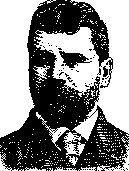
Thanks to his exceptional clinical talent, Obraztsov became a prominent clinician and established his own school, which differed in its research methods of the patient and in its views from contemporary Russian as well as Western European schools. This school produced a number of disciples, many of whom hold chairs both in the USSR and abroad. For the first 15 years, Obraztsov dealt with digestive diseases and abdominal cavity disorders. In connection with this, Obraztsov developed his own methodology for examining the abdominal cavity and created the method of systematic palpation. Russian physicians flocked to Obraztsov's clinic to study, and foreign specialists in digestive diseases also came to familiarize themselves with his original methods and views. The fame of Obraztsov grew particularly when the X-ray method, introduced into the clinic, and broad surgical intervention confirmed the correctness of the views of Obraztsov's school, and Obraztsov's follower Hausmann, through a number of publications and oral propaganda abroad, popularized Obraztsov's teaching. The last years of his life, Obraztsov dealt mainly with cardiology. Not satisfied with the anatomical diagnosis of cardiovascular diseases, Obraztsov, with the aim of determining the functional capacity of the heart at the patient's bedside, set about developing the technique and methodology of heart percussion and auscultation, as well as graphical methods, thereby creating his own methodology for examining cardiac patients. Using it, Obraztsov developed the theory of the mechanism of splitting sounds and gallop rhythm, established new symptoms in certain diseases, and together with Nikolai Strazhesko, by describing the clinical picture of coronary vessel thrombosis, proved that the intravital diagnosis of myocardial infarction is entirely possible. With the introduction of electrocardiography and tone recording into clinical practice, all the views expressed by Obraztsov and his pupils received complete confirmation. As a clinical teacher, Obraztsov was original; his lectures were always interesting and informative. In his final years, Obraztsov also engaged in public activity, serving as the permanent chairman of the Kiev Medical Society. Obraztsov authored about 50 works. The principal ones are: "On the Physical Examination of the Stomach, Intestines, and Heart" (Kiev, 1918) and, in monograph form, "Diseases of the Stomach, Intestines, and Peritoneum" (Kiev, 1924).
Related articles
Cite this page
“Vasily Dobraztsov.” Soviet Medical Encyclopedia. English translation of Bolshaya Meditsinskaya Entsiklopediya, 1st ed. (Moscow, 1928–1936), ed. N. A. Semashko. https://sovietmedicalencyclopedia.pages.dev/article/obraztsov-vasily/