Tait Operation
Historical document, translated for reference. It reflects medical knowledge of the 1920s–30s and is not medical advice.
Summary
The Tait operation is a plastic surgical procedure developed by Lawson Tait in the 19th century to treat old, scarred perineal ruptures without excising tissue. The technique involves a transverse incision through the scar and subsequent longitudinal suturing to restore the pelvic floor muscles and fascia.
Encyclopedia article (1928–1936)
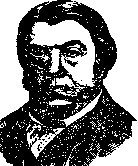
TAIT OPERATION (Lawson Tait) belongs to the plastic operations used to treat old, scarred ruptures of the perineum, predominantly of the second degree. Due to the simplicity of its performance, it enjoyed great popularity in the 1890s. In its anatomical features, the operation differs significantly from the majority of operations proposed for the repair of perineal ruptures. The latter are based on the principle of removing scars present on the vaginal mucosa and on the skin of the perineum by freshening and excising mucosal and skin flaps of various shapes; under Tait's method, tissue is not removed, but is preserved entirely. The author proceeded from the premise that in cicatricial ruptures of the perineum, in the majority of cases, there is a general deficiency or paucity of tissue. By making a transverse incision through the scar, i.e., through the remnants of the perineum, and separating its edges, one enters the loose cellular tissue of the rectovaginal septum; the edges of the wound then become mobile; the wound is sutured along the midline in a longitudinal direction. The shape and resistance of the perineum depend upon the correct restoration of the muscles and fascia. That is why Tait attached no importance to the shape of the incision of the vaginal mucosa and skin, correctly believing that the strength of the perineum depends not on the outer integuments, but on the nature of the arrangement of the muscles and fascia within it and their correct union with sutures.
The operation is performed in the following manner. After preliminary preparation of the external genitalia according to Grossich's method and protection of the operative field with sterile napkins, Kocher clamps are applied to the skin of the perineum in the region of the posterior commissure at an equal distance from the midline; the latter are entrusted to assistants who pull them in opposite directions; a semilunar incision is made through the posterior commissure from one clamp to the other. The middle of the anterior edge of the incision is also grasped with a clamp and fixed with the left hand. The index finger of the right hand, wrapped in gauze, separates the flap of the vaginal mucosa upward. This tissue dissection is not always successful by blunt means; where there is much scar tissue or where the incision has not sufficiently penetrated into the cellular tissue, one has to resort to the help of scissors or a scalpel when pushing back the flap. When separating the flap, it is necessary to expose the deep muscles of the perineum (puborectalis muscle, levator ani muscle), for which purpose one should keep on each side lateral to the midline. The size of the separated flap can be arbitrary; bleeding is insignificant, most often parenchymatous, and is stopped by pressing with gauze. Burial sutures are placed on the tissue of the rectovaginal septum, and subsequent sutures also capture the exposed muscle bundles of the pelvic floor (levator ani). The number of buried sutures varies depending on the size of the exposed area (3-5). The last purse-string suture is made along the free edge of the separated mucosal flap, as a result of which the mucosa is gathered into a fold. Silk sutures or Michel clips are applied to the skin. The Tait operation yields a good immediate result; due to the absence of tension, the healing of the surgical wound proceeds well, and an equally favorable result is observed in functional terms.
Gintoleon.
Related articles
Cite this page
“Tait Operation.” Soviet Medical Encyclopedia. English translation of Bolshaya Meditsinskaya Entsiklopediya, 1st ed. (Moscow, 1928–1936), ed. N. A. Semashko. https://sovietmedicalencyclopedia.pages.dev/article/tait-operation/