Trophoneuroses
Historical document, translated for reference. It reflects medical knowledge of the 1920s–30s and is not medical advice.
Summary
Trophoneuroses are disorders of the autonomic nervous system characterized by impaired tissue nutrition. The term should be understood functionally rather than as a true 'neurosis,' with causes ranging from functional changes to organic lesions in the autonomic system.
Encyclopedia article (1928–1936)
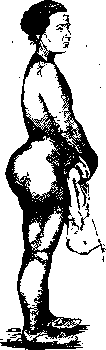
TROPHONEUROSES, diseases of the autonomic nervous system, the main feature of which is disturbance of tissue nutrition. The term T. should be understood conditionally as a functional disorder. Undoubtedly, in very many cases of so-called trophoneuroses, we no longer have the right to speak of any 'neurosis.' In rarer cases, it is possible to identify anatomical lesions in one or another part of the autonomic nervous system; in most cases of T., we know nothing about the essence of the disease and admit only functional changes in the body. Functional changes are caused by prolonged action of various irritants (chemical, mechanical, etc.). Individual signs of T.-or, according to Khoroshko, trophoneuropathies-are often found in organic diseases of the nervous system involving the autonomic apparatuses (tabes, syringomyelia, epidemic encephalitis, tumors, etc.). A satisfactory classification of T. does not yet exist. They are designated either according to the part of the body in which they occur, or according to the affected tissue. Elements of T. are often combined with vascular neuroses and vice versa. Nevertheless, the accumulated material already allows dividing the former general group of vasculo-trophic neuroses into two separate groups. However, the inclusion of such forms as myasthenia and myotonia among trophoneuroses is not yet based on sufficiently convincing data. For many dystrophic forms, the primacy of autonomic disorders over endocrine disorders is debatable. For a number of disease forms, it is necessary to admit the simultaneous action of both factors, either parallel or subordinated one to the other. This especially applies to congenital dystrophies, such as chondrodystrophy. Trophic neuroses rarely limit themselves to only one tissue; much more often they involve several tissues at once. The first disease identified as T. (Romberg, 1846) is progressive hemiatrophy of the face (see Hemiatrophia). To this same group of T. belong a number of forms characterized by muscular dystrophies, such as hemiatrophy of the body, hemihypertrophy of the face and body, and crossed hemihypertrophy. The most striking T. or better trophoneuropathy (neurodystrophy) of the skin is scleroderma (see). A very rare T.-local Gowers' anatrophy. In various parts of the body and face, the size of a palm, atrophy of all tissues down to the bone occurs, i.e., skin, subcutaneous tissue, and muscles. The distribution of such areas does not appear to be regular. A large number of T. have as their site of application fatty tissue (fig.) (see Lipodystrophia). In them, either separately or together, two functions suffer: regulation of fat balance and lipophilic ability of subcutaneous fatty tissue. Some forms of lipomatosis, for example multiple symmetric lipomatosis, reveal their neurogenic character by their location along the course of nerves or in segmental zones. This character is especially emphasized in cases of hemi- or paraplegic distribution of fat. In lipodystrophies, scleroderma-like changes in the skin and nails are not uncommon. Regional lipodystrophies are caused by lesions of the autonomic nervous system in its peripheral or spinal sections. Lipodystrophies resulting from disturbance of the general fat balance depend on lesions of central cerebral apparatuses or the sympathetic border column (Giese). Trophoneurosis of water exchange, Meige's trophic edema (trophoedeme chronique Meige), occurs in the form of both congenital and acquired disease. Most often it is localized in one leg, more rarely it has a paraplegic or hemiplegic type of distribution. Connective tissue fibers in the subcutaneous tissue become loosened and impregnated with fluid. Sometimes they form compact formations with fatty infiltration. At the beginning of the disease, the edema is soft; over the years it becomes dense, board-like. The skin over it is tense and does not form folds. Neurotrophic edema sometimes combines with Basedow's disease, sometimes with localized obesity. Vyelyaminov considers deforming spondyloarthrosis and some forms of chronic progressive polyarthritis as T. Characteristic changes for the latter are thickening of the soft parts of the joints and the presence of villous formations, which speaks in favor of a neurotrophic origin of the disease. It is not yet possible to localize the lesion in the nervous system in this bone-joint T. In trophoneurotic joint diseases, trophic disorders of two kinds are not uncommon: some are localized in the skin over the diseased joints in the form of 'glossy skin' or local scleroderma; in the subcutaneous tissue, edemas and sometimes lipomas form. Other accompanying trophic disorders are located far from the diseased joints and are localized mainly on the periphery, causing hyperhidrosis, hypertrichosis, and changes in the nails.
«
Among nervous dystrophies, individual combinations are observed that do not claim generalization. Thus, Goe-ring (D. Goe-ring) reports an observation where in a 19-year-old young man, over several years, atrophy of the skin of the entire body except the face developed, wasting of muscles, significant atrophy of bones and stiffness of joints, hyperpigmentation of the face, loss of hair on the body, and a tendency to bedsores on the elbow flexures. The differential diagnostic task in relation to T. consists of distinguishing them as independent forms from cases where they appear as syndromes of other organic diseases. The prognosis in T. is unfavorable, as they usually have a progressive chronic course. Therapy is symptomatic in nature. In cases of Meige's edema, sympathectomy has been performed several times with temporary success. For induration of the skin, thermal procedures, in particular mud baths, are indicated. To affect the sympathetic nervous system, 'collars' according to Shcherbak are used, employing galvanic current or diathermy (see Angioneuroses, Angiotrophoneuroses).
Related articles
Mentioned in
Cite this page
“Trophoneuroses.” Soviet Medical Encyclopedia. English translation of Bolshaya Meditsinskaya Entsiklopediya, 1st ed. (Moscow, 1928–1936), ed. N. A. Semashko. https://sovietmedicalencyclopedia.pages.dev/article/trophoneuroses/