Myotonia
Historical document, translated for reference. It reflects medical knowledge of the 1920s–30s and is not medical advice.
Summary
Myotonia is a congenital disease described by Oppenheim in 1900, characterized by severe limitation or complete absence of active movements from birth. The etiology and pathogenesis remain unknown, with various hypotheses proposed including muscular underdevelopment, poliomyelitis, polyneuritis, and endocrine disorders.
Encyclopedia article (1928–1936)
MYOTONIA (from Greek mys - muscle and atonia - weakness, flaccidity) (syn.: amyotonia congenita, disease of Oppenheim), described by Oppenheim (1900) as a congenital disease, usually manifesting from the first days of life and characterized by sharp limitation, and often complete absence, of active movements. In rarer cases, parents notice the presence of this disease only after several weeks or even months, when the child is expected to grasp with hands, hold its head, sit, or walk. In some cases, the disease is detected only after some intercurrent disease - pneumonia, diarrhea, dysentery (Kozhevnikov and Molchanova). Sometimes mothers report that during pregnancy they almost or completely did not feel fetal movements. The etiology and pathogenesis of the disease remain unknown to this day. The disease is congenital, but apparently not familial, although cases of disease in siblings have been described. Regarding pathogenesis, various hypotheses exist. Oppenheim believes that the issue lies in congenital underdevelopment of muscles, either independent or dependent on delayed development of the gray matter of the spinal cord, its anterior horns. Abricosov and Arkhangel'sky believe that the basis of pathogenesis of M. lies in underdevelopment of muscular tissue, either independent or connected with underdevelopment of the entire peripheral motor neuron. Marburg considers M. to be the result of intrauterine poliomyelitis, while Bernhard considers polyneuritis to be its cause. Rothmann, Cavengt and others identify M. with progressive muscular atrophy of Werdnig-Hoffmann. Others seek the cause of the disease in endocrine glands [Baudouin, Concetti - in the thyroid gland, and Spiller - in the thymus]. Finally, some suggest that the basis of M. lies in intrauterine endogenous intoxication, possibly products of improper metabolism in the mother's and fetus's body. The number of patho-anatomical studies is comparatively small. Some authors found only changes in the muscles; muscle fibers are very thin, have a 'hyaline-like' appearance; in them one can find an increase in the number of muscle nuclei and proliferation of connective tissue (Spiller). Abricosov and Arkhangel'sky found a decrease in the number of nerve cells in the anterior horns and almost complete absence of large cells; the number of nerve fibers is also reduced, some of them lack a myelin sheath; in the anterior roots and peripheral nerves there are many non-myelinated fibers and empty neurilemmas; all muscles are very thin due to the extreme thinness of the muscle fibers of which they consist; neither gradual atrophy of muscle fibers, nor multiplication of nuclei, nor proliferation of interstitial connective and fatty tissues was found. Kaumheimer found changes not only in the gray matter of the spinal, but also of the medulla oblongata, and in the peripheral nerves and muscles the changes were identical to those in spinal myopathies. In the symptomatology, movement disorders come to the forefront. Active movements in the limbs, especially in the lower ones, are very limited or even absent. Muscles of the trunk and neck are also very weak; due to this muscular weakness, sick children not only do not walk, but also do not stand, do not sit, do not hold their heads and almost or completely do not grasp with their hands. Facial muscles are rarely affected. Cases of strabismus have been described, but it is apparently accidental and not connected with the main disease. Sometimes intercostal muscles are involved in the pathological process, which makes breathing difficult. The diaphragm, chewing and swallowing muscles apparently never suffer. On objective examination, first of all, one notices sharp hypotonia or even complete atonia of the muscles. This atonia allows passive movements to be performed in a volume significantly increased compared to normal. Sometimes flail joints are noted, and sometimes secondary contractures. On palpation, muscles are found to be thin, flabby, limp, but strong muscular atrophy usually does not occur. False and true hypertrophies are always absent, but sometimes well-developed subcutaneous tissue hides the wasting of muscles, and the limbs appear normal on inspection. Mechanical excitability is sharply reduced or completely absent. Fibrillary twitchings never occur. Tendon reflexes are either sharply reduced or absent; cutaneous and from mucous membranes are preserved. Excitability of muscles to both types of current is reduced. Collier and Wilson note that in some cases, with sharp reduction of excitability to faradic current, excitability to galvanic current was either slightly reduced or not reduced at all - myotonic or amyotonic reaction. Che noted the exact opposite phenomenon. Regeneration reactions usually do not occur. Disorders of sensitivity, sense organs, sphincters and psyche, as well as significant vasomotor disorders usually do not occur. In typical cases, diagnosis does not present great difficulties; it is necessary to exclude acute poliomyelitis, progressive spinal muscular atrophy of the Werdnig-Hoffmann type, multiple neuritis, hematomyelia, etc. Careful analysis of the development of the disease, data from objective examination and the course of the disease ensures a correct diagnosis. The prognosis in M. is not particularly favorable. When intercostal muscles are involved, death often occurs during intercurrent diseases of the lungs and bronchi; according to Tobler, in 33% these diseases are the cause of death. Intercurrent diseases always worsen the condition of patients. In favorable cases, the disease regresses over the years, and sometimes significant improvement occurs: patients begin to walk independently and manage without outside help. Therapy in M. is not completely powerless: first place should be given to electrization, massage and passive gymnastics. Strengthening and tonic treatment is recommended: iron, phosphorus, cod liver oil, etc. In some cases, improvement was noted from the use of calcium salts.
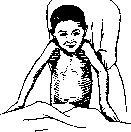
Electroexcitability of muscles is reduced to both types of current. Collier and Wilson note that in some cases, with sharp reduction of excitability to faradic current, excitability to galvanic current was either slightly reduced or not reduced at all - myotonic or amyotonic reaction. Che noted the exact opposite phenomenon. Regeneration reactions usually do not occur. Disorders of sensitivity, sense organs, sphincters and psyche, as well as significant vasomotor disorders usually do not occur. In typical cases, diagnosis does not present great difficulties; it is necessary to exclude acute poliomyelitis, progressive spinal muscular atrophy of the Werdnig-Hoffmann type, multiple neuritis, hematomyelia, etc. Careful analysis of the development of the disease, data from objective examination and the course of the disease ensures a correct diagnosis. The prognosis in M. is not particularly favorable. When intercostal muscles are involved, death often occurs during intercurrent diseases of the lungs and bronchi; according to Tobler, in 33% these diseases are the cause of death. Intercurrent diseases always worsen the condition of patients. In favorable cases, the disease regresses over the years, and sometimes significant improvement occurs: patients begin to walk independently and manage without outside help. Therapy in M. is not completely powerless: first place should be given to electrization, massage and passive gymnastics. Strengthening and tonic treatment is recommended: iron, phosphorus, cod liver oil, etc. In some cases, improvement was noted from the use of calcium salts.
Electroexcitability of muscles is reduced to both types of current. Collier and Wilson note that in some cases, with sharp reduction of excitability to faradic current, excitability to galvanic current was either slightly reduced or not reduced at all - myotonic or amyotonic reaction. Che noted the exact opposite phenomenon. Regeneration reactions usually do not occur. Disorders of sensitivity, sense organs, sphincters and psyche, as well as significant vasomotor disorders usually do not occur. In typical cases, diagnosis does not present great difficulties; it is necessary to exclude acute poliomyelitis, progressive spinal muscular atrophy of the Werdnig-Hoffmann type, multiple neuritis, hematomyelia, etc. Careful analysis of the development of the disease, data from objective examination and the course of the disease ensures a correct diagnosis. The prognosis in M. is not particularly favorable. When intercostal muscles are involved, death often occurs during intercurrent diseases of the lungs and bronchi; according to Tobler, in 33% these diseases are the cause of death. Intercurrent diseases always worsen the condition of patients. In favorable cases, the disease regresses over the years, and sometimes significant improvement occurs: patients begin to walk independently and manage without outside help. Therapy in M. is not completely powerless: first place should be given to electrization, massage and passive gymnastics. Strengthening and tonic treatment is recommended: iron, phosphorus, cod liver oil, etc. In some cases, improvement was noted from the use of calcium salts.
Related articles
Mentioned in
Cite this page
“Myotonia.” Soviet Medical Encyclopedia. English translation of Bolshaya Meditsinskaya Entsiklopediya, 1st ed. (Moscow, 1928–1936), ed. N. A. Semashko. https://sovietmedicalencyclopedia.pages.dev/article/myotonia-2/