POLIOMYELITIS
Historical document, translated for reference. It reflects medical knowledge of the 1920s–30s and is not medical advice.
Summary
Poliomyelitis is inflammation of the gray matter of the spinal cord, specifically the anterior horns. The article distinguishes between acute, subacute, and chronic forms, discussing their etiologies, clinical presentations, and relationships to other conditions like syphilis and progressive muscular atrophy.
Encyclopedia article (1928–1936)
POLIOMYELITIS (from Greek polios-gray and myelon-spinal cord), inflammation of the gray matter of the spinal cord. In practice, the term P. is used only with the epithet "anterior" (poliomyelitis anterior) to denote inflammation of the anterior horns of the gray matter of the spinal cord. The term poliomyelitis posterior ("posterior P."), proposed by some authors (Heine) for designating herpes zoster, has not become widespread, and such use of the term "posterior P." should be considered inappropriate, since herpes zoster is the result of inflammation mainly of the intervertebral ganglia; the gray matter of the posterior horns is involved in the process only in very rare cases. The term "acute anterior P." was first introduced into neurological nomenclature after the Stuttgart physician Heine in 1840 established that the cases of acute developing flaccid paralysis observed in children, previously designated as "infantile paralysis" (paralysis infantilis), depend on the lesion of the anterior horns of the spinal cord (fig. 1 and 2) (see Heine-Medina disease). In this
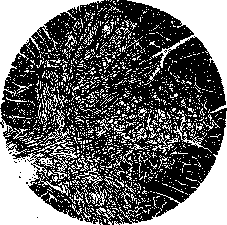
Figure 1. Normal anterior horns (according to Oppenheim).
sense the term "acute anterior P." was used along with synonyms of this term "atrophic spinal paralysis" and "acute atrophic paralysis". Since Medin
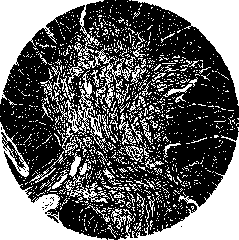
Figure 2. Atrophy of the anterior horn, especially of the ganglion cells, in poliomyelitis (according to Oppenheim). (1887) first drew attention to the epidemic nature of this disease and after subsequent research proved that the localization of this form of infection I in the anterior horns of the spinal cord is although the most frequent but not the only form of manifestation of this disease, "acute anterior P." began to be designated by the term "epidemic P." and began to see in it one of the forms of manifestation of a specific infection of the central nervous system; the pathogenic factor of this infection is a filterable virus. At the suggestion of Wickman (1905), this infectious disease is currently designated by the term "Heine-Medina disease" after the researchers who particularly contributed to elucidating the nature of this disease. Thus, acute, or epidemic P. is currently considered a variety of Heine-Medina disease. More precisely established concepts exist regarding subacute and chronic P. Most of the cases of subacute P. described in the literature represent one of the forms of spinal syphilis; in such cases, subacute atrophic paralysis is caused by a lesion of the anterior horns of the spinal cord due to obliterative endarteritis of the anterior spinal artery. Such vascular-syphilitic lesions of the spinal cord in the form of thrombotic softening of the anterior horns may not be accompanied by changes in the spinal fluid in the form of protein reactions and lymphocytosis. Cases of muscle atrophy developing on the basis of poisonings and self-poisonings should be included in the group of subacute P.; thus, many cases of "lead polyneuritis" anatomically represent a combination of toxic P. and neuritis; poliomyelitic atrophies have been observed during diabetes and etc. Regarding the concept of chronic P., there are significant disagreements. Some completely identify chronic P. with progressive muscular atrophy of spinal type (type Aran-Duchenne), using these two terms as synonyms. Others isolate chronic P. as an independent nosological form, attributing to it the following characteristic features, different from spinal muscular atrophy: atrophies in chronic P. are localized mainly in the proximal parts, whereas in spinal muscular atrophy the small muscles of the hands atrophy first; in chronic P. paralysis precedes atrophy, whereas in spinal atrophy the opposite is observed; the course of chronic P. is more rapid, with wave-like deteriorations, while in spinal muscular atrophy it is slower, gradually progressive. Trauma and syphilis are considered etiological factors of chronic P. However, it should be noted that clinically there are gradual transitions between these two forms, and anatomically the "independence" of chronic P. can be disputed on the grounds that in none of the described cases were clear inflammatory changes found, which is required by the term "poliomyelitis". The term chronic P. is also used by some for a special form of syphilogenic disease of the spinal cord, namely metasyphilitic degeneration of the anterior horns of the spinal cord. Clinically, such forms are completely identical to progressive spinal muscular atrophy. Metasyphilitic forms of progressive spinal atrophy are apparently observed much more frequently than was previously thought, and perhaps Leri is right in asserting that "syphilis is the most frequent cause of spinal cord lesions leading to progressive muscular atrophy". Thus chronic poliomyelitis can be identified with progressive spinal muscular atrophy; in its nature, this disease is a systemic degeneration of the anterior horns of the spinal cord on the basis of congenital abiotrophy or metasyphilitic intoxication.
Related articles
Mentioned in
Cite this page
“POLIOMYELITIS.” Soviet Medical Encyclopedia. English translation of Bolshaya Meditsinskaya Entsiklopediya, 1st ed. (Moscow, 1928–1936), ed. N. A. Semashko. https://sovietmedicalencyclopedia.pages.dev/article/poliomyelitis/