Ultrafiltration
Historical document, translated for reference. It reflects medical knowledge of the 1920s–30s and is not medical advice.
Summary
Ultrafiltration is the separation of the dispersion medium from the disperse phase of a sol by filtering it under increased pressure through a compressed filter. Malfrtano first applied this method in 1904, and Beohhold developed and refined the technique, introducing the term 'ultrafiltration'.
Encyclopedia article (1928–1936)
Ultrafiltration, the separation of the dispersion medium from the disperse phase of a sol by filtering the latter under increased pressure through a compressed filter. Malfritano first applied U. in 1904. Beohhold, who introduced the term 'ultrafiltration', thoroughly developed and improved its technique. -Ultrafiltration pressure. Ordinary filtration of coarser suspensions through compressed filters is often carried out under increased pressure to accelerate the filtration process. In this case, filtration can occur under the slightest pressure; however, increasing it accelerates it many times over. Completely different relationships are observed in the ultrafiltration of colloidal solutions. If an osmotic cell filled with a colloidal solution is immersed in its ultrafiltrate (i.e., in the dispersion medium of the sol, separated from the latter by U.), the colloid absorbs the surrounding liquid through the semi-permeable wall of the cell and exhibits a certain osmotic pressure in this process. As first shown by Starling, in the case of blood serum, this colloid-osmotic pressure is approximately equal to 30 mm of mercury column. If the hydrostatic pressure in the ultrafilter is less, U. of course does not occur at all (the movement of liquid then occurs in the opposite direction). For U. to occur, the ultrafiltration pressure must exceed the osmotic pressure of the sol. Only after passing this threshold can any U. begin, which is then accelerated as the pressure further increases. Ultrafiltration apparatus. Apparatuses used for U. must therefore be constructed in such a way that the filtration membrane can be subjected to increased pressure. The membrane itself is mostly prepared from collodion or gelatin. To give it the necessary mechanical strength, these substances are mostly used to impregnate ordinary paper filters. Beohhold built a special apparatus for impregnating filters, in which the paper filter, located in a closed vessel, is first evacuated before impregnation, removing air from its pores, thanks to which they are easily filled with the impregnating liquid (Fig. 1). Ready-made membranes are secured in the ultrafiltration apparatus on an ebonite sieve supporting them or on a metal mesh. An example of such a device is Beohhold's apparatus, which allows the application of significant pressures (Fig. 2). Its main part consists of a screwing cylindrical steel box, inside of which is placed a filtration funnel (Tg). Between the lower projection of the funnel and the edge of the bottom of the box, a round filter is secured, clamped between two rubber rings. To prevent sagging and rupture, it rests on a metal mesh, which in turn is supported by a metal plate pierced with a series of holes. The funnel is closed from above with a cover D, having in the middle
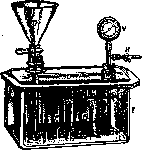
Figure 1. T-thick-walled glass vessel; D - glass cover; 7>-funnel with tap; V-manometer; N - three-way tap; SS-glass crossbar; Pi-paper filters.
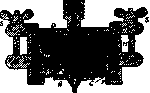
Figure 2. Beohold's apparatus: N-steel round box; N-funnel; B-round steel plate; G-round metal mesh; Fi-ultrafilter; C-rubber ring; Tg-metal funnel; D-cover; S-hinge bolts.
a tube by means of which the apparatus is connected to a bomb filled with some indifferent gas, which provides the necessary pressure for U. In other cases, vessels of clay of one form or another (crucibles, flasks) are used, on the surface or in the walls of which the compacting substance is deposited. As a material for preparing membranes, solutions of collodion in ether, acetic acid collodion (acetyl-cellulose), and gelatin are often used. To turn these liquids into dense membranes, they must be subjected to gelatinization. Gelatinization of the collodion solution can be caused by drying it, and the longer the drying, the denser the membrane becomes. It is much more convenient, however, instead of drying, to treat the collodion with some liquid that causes gelatinization. For example, an ether solution of collodion is gelatinized with benzene or toluene. The density of the membrane varies depending on the concentration of the original collodion solution. Impregnation with a 1% solution gives very permeable membranes, while a 4% solution gives significantly denser ones. A filter impregnated with acetic acid collodion is gelatinized by immersing it in water. Gelatin filters are treated for the same purpose with a weak solution of formaldehyde. The concentration of the original gelatin solution varies from 1% to 10%; the higher it is, the denser the filter. ; Fractionation of colloids. This opens up the possibility of fractionating colloids, separating them by means of U. According to Behnhold, the ability of a colloid to pass through a given membrane or to be retained by it is entirely determined by the relationship between the size of the colloidal micelles and the size of the pores of the membrane. The latter passes small particles and retains larger ones. Confirmation of this explanation is the fact that various colloidal solutions can be arranged in a sequential series in order of decreasing particle size, i.e., increasing degree of dispersion. If an ultrafilter retains one member of this series, it proves to be impermeable to all preceding ones as well. Conversely, the passage of any colloid indicates the permeability of the membrane to all subsequent ones. The following table by Behnhold shows the sequence in which various colloids are retained by gelatin ultrafilters: Gelatin concentration Retained colloid Gelatin concentration Retained colloid 2% Berlin blue Platinum sol (according to Bredig) Hydrosol of iron oxide Casein Arsenic sulfide Gold sol (Zsigmondy L, approx. 40 mµ) Colloidal silver (according to Heidenreich, approx. 20 mµ) 1.6% 8% 10% Gold sol (Zsigmondy L, approx. 1.4 mµ) Gelatin (1%) Hemoglobin (1%) Serum albumin Proalbumos Colloidal silicic acid Deuteroalbumoses A Deuteroalbumoses B Deuteroalbumoses C Such results are of course possible only on the condition of mechanical retention of particles exceeding the size of the membrane pores (the membrane may, however, retain smaller particles if they are adsorbed on the pore walls). If U. depends on the size of the pores, then determining this size should constitute the most important characteristic of the membrane. For this purpose, Behnhold proposed several different methods. One of them is measuring the pressure required to pass the smallest air bubbles through a membrane covered with a thin layer of water. The pressure required to force air through capillary holes immersed in liquid is inversely proportional to the diameter of the latter. There is a simple relationship between these two quantities, illustrated by the following table: Pressure atm. Pore diameter (in µ) Pressure atm. Pore diameter (in µ) 1.0 1.5 2.0 3.0 2.5 2.0 1.5 2.5 3.0 4.0 5.0 1.2 1.0 0.75 0.6 In reality, however, the size of the pores in the membrane is not uniform. It always contains individual larger holes, making it possible for numerous air bubbles to appear at a pressure much lower than that corresponding to the average pore diameter. Measurement of pressure therefore gives only the maximum value, which can greatly exceed the sought average size. Very often, for calibrating the membrane, the rate of filtration of water passing through it is used. The amount of water passing per unit time through 1 cm2 of membrane under a certain pressure is proportional to the square of the diameter of its pores. In this case, it must be assumed that all pores in the membrane have the same diameter. This assumption is in reality never fully justified. Nevertheless, in practice it is very convenient for the relative characterization of the porosity of the membrane to indicate the time required to force a certain amount of water through it. Hatschek proposed for calibrating the ultrafilter to force an emulsion with precisely measured and completely uniform size of suspended particles through it. When forced through cylindrical pores, the suspended droplet undergoes deformation, the more significant the more its diameter exceeds the diameter of the pore. The pressure required to force the emulsion through is proportional to this ratio (droplet diameter/pore diameter) and the interfacial tension between the two phases of the emulsion. By measuring the other values, the pore diameter can be calculated. In reality, however, experience shows that ultrafilters often retain colloidal particles that are significantly smaller in size than the pore size measured by the methods described. Adsorption phenomena on the walls of the ultrafilter, as well as the non-uniformity of its pores along their length and the presence of individual constrictions in them, may play a certain role here. Therefore, the most reliable method should be considered the calibration of the ultrafilter with the help of colloidal solutions, the particle size of which has been measured by other methods. A given membrane can best be characterized by indicating the two closest in size colloidal solutions, one of which passes through it, the other is retained. Having a series of ultrafilters of different porosity and a series of colloidal solutions with a previously known particle size, one can find among the latter one that is retained by the same membranes as the colloid under investigation, and therefore has approximately the same particle size. U. as a method for purifying colloids. If U. thus makes it possible to study colloids and determine their degree of dispersion, it is much more frequently used, like dialysis (see), for purifying a colloid from crystalloid impurities. In this case, there is no need for precise calibration of the ultrafilter. It is only necessary that the latter has sufficient density to completely retain the colloid and that the ultrafiltration itself proceeds at a significant rate, ensuring rapid washing of the colloid. The rate of U. was first increased exclusively by increasing the filtration pressure. Later, Behnhold, instead of mechanical forcing of the liquid, applied the electrical transfer of liquid through the ultrafilter membrane by means of electroosmosis (see). Electroosmosis produces a strong current of liquid through the sol, which washes it much faster than mechanical suction of liquid. This combination of U. and electroosmosis has been named 'electro-ultrafiltration'. For its implementation, various apparatuses have been constructed that allow applying significant potential differences on both sides of the ultrafilter membrane.
Rubinstein.
Related articles
Mentioned in
Cite this page
“Ultrafiltration.” Soviet Medical Encyclopedia. English translation of Bolshaya Meditsinskaya Entsiklopediya, 1st ed. (Moscow, 1928–1936), ed. N. A. Semashko. https://sovietmedicalencyclopedia.pages.dev/article/ultrafiltration/